

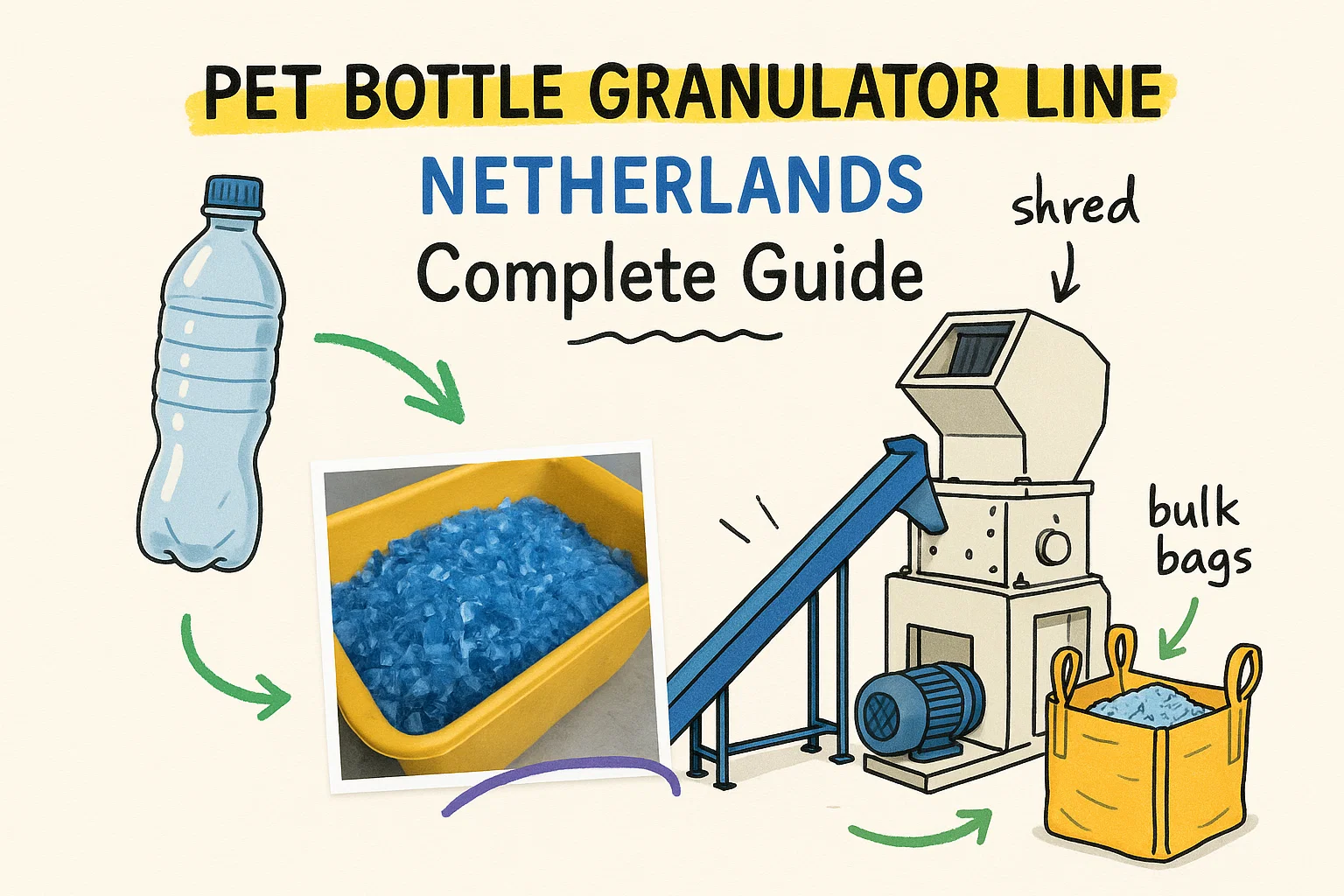
يجب تحديد خط تكسير زجاجات البولي إيثيلين تراي كاربونات (PET) للهولندا كجزء من خطة كاملة للمواد والامتثال. يحدد الكسارة حجم اللب ويؤثر على الترشيح والتجفيف، ولكنها لا يمكن أن تقدم بنفسها نسبة النقاء أو رPET للاتصال بالأغذية. يجب على المشروع أن يربط بين المواد الخام الهولندية، التسوية، الخدمات، المياه العادمة، مستندات المعدات الأوروبية، وتعيين معيار اللب أو البوليتيرفثالات (Pellet) المتسلسل.
Define whether the project is granulation or full recycling
يستقبل عملية التكسير فقط زجاجات مصنفة ونظيفة بشكل كافي وينتج مادة مصغرة لمدة مرة أخرى. قد تشمل خط التكسير الكامل للزجاجات المبللة فتح الحزم، تصنيف الزجاجات، إزالة العلامات، الكشف عن المعادن، التكسير، الغسل البارد أو الساخن، الفصل بناءً على الكثافة، الغسل، التجفيف الميكانيكي والتجفيف الحراري.
أفصح عن حدود المشروع في العرض. وإلا، يمكن لل مشتري مقارنة حزمة الكسارة مع خط الغسل وكأنهما ينتجان نفس المادة. نظام إعادة تدوير زجاجات البولي إيثيلين تيريفثاليت يوضح عملية التكسير كجزء أوسع من العملية.
Audit the Dutch feedstock first
أثبت ما إذا كانت الزجاجات تأتي من تدفق الإيداع والعودة، جمع تجاري، حزم التعبئة المختلطة أو النفايات الإنتاجية. سجل لون PET، حجم الزجاجة، حالة الحزمة المكبوتة، بقايا السائل، الأغطية، العلامات، المعادن، PVC و PET غير الزجاجية.
The Association of Plastic Recyclers’ PET rigid packaging guidance يشرح كيف يؤثر الأغطية، العلامات، اللاصقات، اللون وأصناف الطبقات متعددة الطبقات على استعادة المواد. لا يزال المميكن أن يحتاج المستخلص إلى عينات محلية ممثلة لأن جمع التسوية يحدد المزيج الداخل.
Granulator selection criteria
| Input factor | Design implication | Acceptance evidence |
|---|---|---|
| Whole or pre-shredded bottles | Hopper, rotor geometry and feeding method | Stable feed without bridging or unsafe manual intervention |
| Bale density and bottle size | Debaling, metering and cutting-chamber opening | Sustained input from representative bales |
| Metal and abrasive contamination | Upstream removal and wear protection | Reject log and inspected knife wear |
| Required flake size | Screen opening, knife geometry and clearance | Agreed particle-size distribution and fines |
| Dry versus wet granulation | Water circuit, drainage and downstream washing | Measured contamination removal, water load and wear |
| Cleaning access | Chamber opening, isolation and maintenance space | Safe documented changeover and inspection |
Control feeding before increasing motor power
يمكن للزجاجات البلاستيكية والبالات أن تصل أو تصل في هجمات. يمكن لآلة فتح البالات، المخزن المؤقت، والناقل التحكمي استقرار الحمولة. أسرع معدل تشغيل ممكن هو أعلى معدل مستدام يحافظ على حجم القطع المطلوب، والشوائب المقبولة، حمولة المحرك، والجودة المتجهة.
Force-feeding may help with a defined input but is not a substitute for removing metal or oversized objects. Ask the supplier to demonstrate overload response and recovery using the buyer’s feed.
Specify knives, screen and flake quality together
تؤثر مواد السكين، والتركيب، والفراغ، والحدة، وطباعة المحور على جودة القطع. قد يسبب فتح الشاشة الصغير قطعًا nominal أصغر ولكن يمكن أن يقلل من التدفق، ينتج المزيد من الشوائب أو يزيد من الحرارة. استخدم توزيع حجم الجزيئات بدلاً من قياس أقصى حجم.
خلال التجارب، جمع عينات المحتفظ بها وقياس الشوائب، والقطع الكبيرة، والنسبة الرئيسية. سجّل الحالة الحالية والتدفق مع ارتداء السكاكين. معلومات إضافية. granulator maintenance checklist covers condition-based knife, screen, bearing and drive inspections.
Place the granulator correctly in the washing line
يجب إزالة المواد غير المناسبة قبل أن تصبح أجزاء صغيرة قبل أو أثناء عملية الطحن حسب تصميم الخط. يمكن أن يقلل إزالة العلامات والغسل المسبق من الورق، والغبار، والمواد الحرجة قبل أو حول الطحن.
بعد تقليل الحجم، يتعامل الغسل بالتراب والفصل بناءً على الكثافة مع التلوث السطحي والنسبة المئوية المحددة. غالبًا ما تغرق PET بينما تغرق العديد من غلقات PE أو PP غير المملوءة؛ يمكن أن تغرق PVC مع PET وبالتالي يتطلب التحكم في الهواء أو التحكم بناءً على الحساس. تحديثات جديدة. sink-float guide explains this limitation.
Size capacity on dry saleable output
A granulator’s nominal input rate is not the line’s dry accepted output. Labels, closures, residue, moisture, fines and rejected polymers leave the process. Planned maintenance and changeovers also reduce available running time.
Use representative trials to estimate saleable yield and availability:
Required design input = target saleable output ÷ saleable yield ÷ planned operating availability
تحقق من كل مرحلة - التصفية، الطحن، الغسل، معالجة المياه، الفصل، والجفاف - بناءً على نفس قاعدة التغذية. أضف مخزونًا لحجم الحجم حول العوائق الحقيقية وليس إضافة نسبة عشوائية إلى كل آلة.
موقع هولندي، متطلبات المياه والنفايات
يقدم بوابة الأعمال الرسمية للهولندة نظرة عامة على قواعد إدارة النفايات والتراخيص. يجب على مطور المشروع التأكد من التراخيص والتنبيهات البيئية والتنظيمية، والنفايات السائلة، وتخزين النفايات، والنقل والمعايير الاحترافية للنار المطلوبة للمدينة والنشاط المحددة.
إذا كانت المواد الخام أو الخامات الناتجة تعبر الحدود، تأكد من تصنيف وتدبير شحن النفايات الحالي قبل التعاقد مع النقل. لا تغني اختيار المعدات عن الحاجة إلى نصيحة من السلطة الهولندية المختصة أو خبير بيئي محلي مؤهل.
مستندات الآلات والكهرباء للاتحاد الأوروبي
للآلات الموردة إلى هولندا، تحديد المتطلبات القانونية للاتحاد الأوروبي المطبقة على تكوين الآلة الكامل. علامة CE هي إقرار المصنّع بالتوافق، وليس شهادة التدفق. قم بمراجعة البيان الأوروبي للتوافق، الوثائق التقنية، التعليمات، رسومات الدارات، خفض المخاطر، الحماية والوظائف الأمنية.
يجب التحقق من تواريخ التحويل والتطبيق الحالية للجنة الأوروبية machinery legislation page إذا تم تجميع آلات منفصلة في خط واحد، يجب تحديد المسؤولية عن توافق هذا التجميع.
يحتاج المطالب المتعلقة بالاتصال بالأغذية إلى مسار منفصل
ليس مسحوق PET المبلل أو البولي إيثيلين تريهيدروكسي ستايرين (PET) تلقائيًا مناسباً للاتصال بالأغذية. توضح اللجنة الأوروبية أن البلاستيك المعاد تدويره المقصود بالاتصال بالأغذية خاضع لمتطلبات عملية التدوير، والتحكم في المواد الخام، والتطهير والتحكم في الجودة. قم بمراجعة توجيهات الاتحاد الأوروبي للبلاستيك المعاد تدويره المقصود بالاتصال بالأغذية مع خبير تنظيمي.
حدد السوق المقصود قبل اختيار المعدات. قد تفرض تطبيقات غير غذائية، منتجات الألواح، منتجات الألياف، والمحولين من زجاجة إلى زجاجة قيودًا مختلفة على اللون، البوليفينيل كلوريد (PVC)، الرطوبة، الكثافة الفطرية والتبعية.
اختبار معمل المصنع والموقع
أتفق على بروتوكول الاختبار قبل الطلب. يجب أن يحدد مصدر المواد الخام والتركيب، فترة التشغيل، العينات، توازن الكتلة الجافة، توزيع حجم الجسيمات، القشور، جودة الناتج المقبولة، الكهرباء، تكوين المياه، وقت التوقف، والاختبارات الوظيفية للأمان.
قم بإعادة الفحوصات ذات الصلة بعد التثبيت في هولندا مع الشركات المحلية والسائقين المدربين. يتم قبول الطاقة المدرجة فقط عندما يتحمل الخط الكامل المحدد الناتج والجودة المطلوبة تحت ظروف المواد الخام المحددة.
ابني نموذج المالية من العروض الحالية
استخدم الشروط الحالية للكهرباء، المياه، النفايات السائلة، العمالة، الايجار، جمع النفايات، النقل والنفايات. أضف الماكينات، الشاشات، المروات، التصفية، الاختبارات المخبرية، التراخيص، التأمين، قطع الغيار والتوقف المخطط له. قم بتحديد الإيرادات بناءً على الشروط الكتابية للشراء والناتج الجاف القابل للبيع.
تحضير ورقة بيانات مشروع هولندا.
الأسئلة الشائعة
هل يمكن للخلاط الخاص بـ PET إنتاج رقائق مناسبة للغذاء؟
رقم. تحكم عملية الطحن في تقليل الحجم. يتطلب بولي إيثيلين تري هيدروكسى (rPET) الملامس للغذاء مساراً متوافقًا للجمع، التسوية، الغسل، التطهير والتأكد من الجودة.
ما هو الطاقة التي يجب أن تستخدمها خط إعادة تدوير زجاجات البولي إيثيلين تراي كابتيل (PET) الهولندي؟
حسّن حجمها من إنتاج القابل للتسويق المستهدف، الإنتاج المكتشف في التجربة، التوفر المخطط له، وسعة كل خطوة في العملية—not a generic input range.
هل يجب تكسير زجاجات البولي إيثيلين تراي كاربونات الرغوة جافة أم مبللة؟
إما يمكن أن يناسب خط محدد. قارن أداء القطع، التلوث، حمل دائرة الماء، التآكل، الغسيل السفلي والصيانة باستخدام المواد الخام الممثلة.
Prepare a Netherlands project data sheet
إرسال ممثل Energycle لمستندات المواصفات الخاصة بالبالي، المواد الخام والمنتج النهائي، الكمية المطلوبة من الطاقة القابلة للتسويق، جدول الاستخدام، تخطيط الموقع وتحديد الشروط الواجب توافرها في الترخيص الهولندي. مطحنة البلاستيك الرطب أن يتم اختباره كجزء من عملية قابلة للقياس واحدة.
