

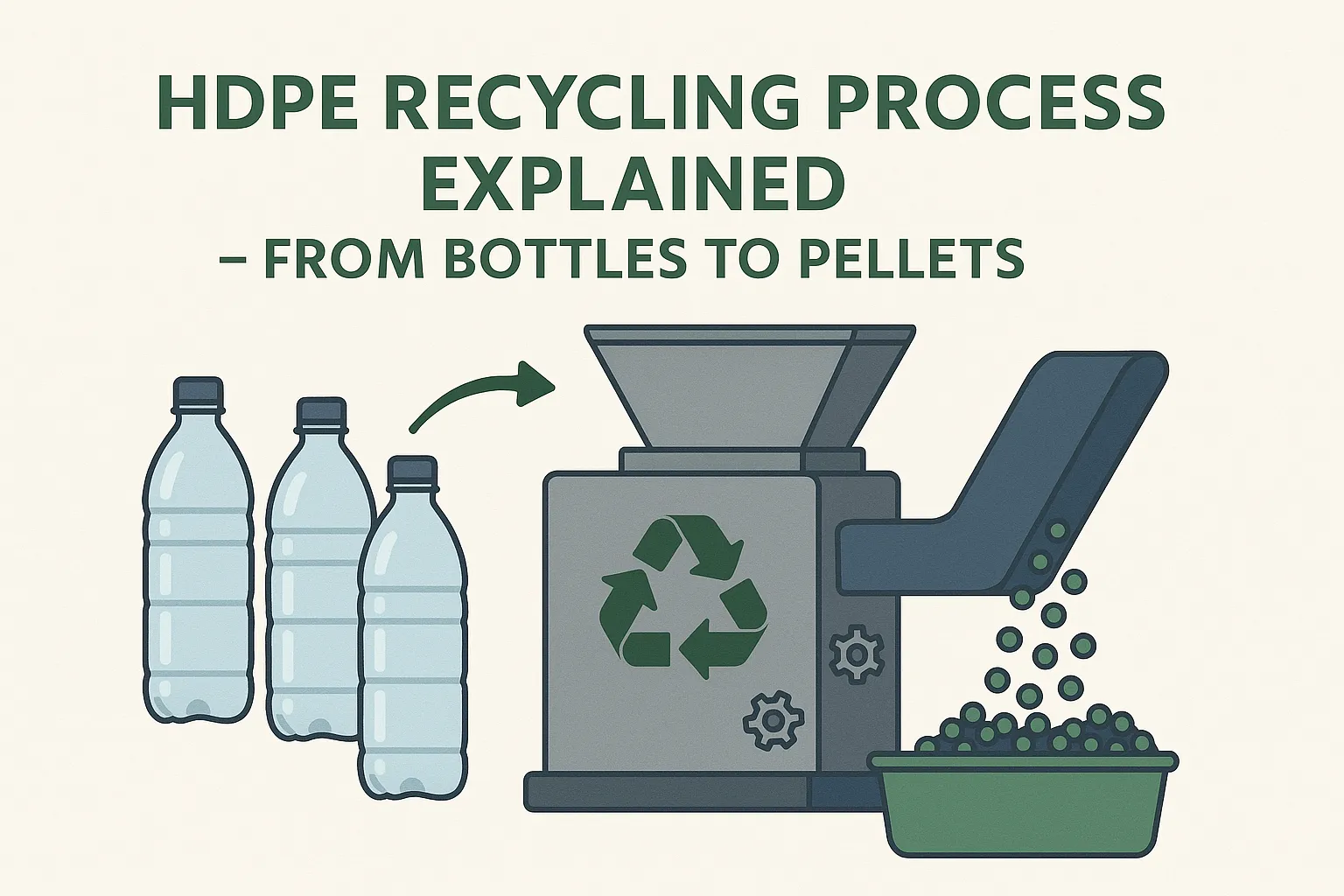
High-Density Polyethylene (HDPE, resin code #2) is one of the most recycled plastics worldwide. Found in milk jugs, detergent bottles, pipes, and crates, HDPE’s high melt strength and low moisture absorption make it ideal for closed-loop recycling back into pellets. This guide walks through each step of the HDPE recycling process with the equipment specifications that matter at production scale.
HDPE Recycling Process: 8 Steps from Bale to Pellet
1. التجميع والفرز
Post-consumer HDPE (bottles, containers, rigid packaging) is collected from curbside bins, MRFs, and commercial sites. Automated sorting uses near-infrared (NIR) sensors to separate HDPE (RIC #2) from other resins. Pre-sorted HDPE bales typically trade at $200–$400/ton depending on color and contamination level.
2. إزالة البالات والفحص الأولي
Compressed bales are opened by a آلة تفكيك البالات that cuts strapping wire and loosens material for conveyor feeding. Operators perform visual QC to remove non-HDPE contaminants (metals, paper, film bags). A شاشة طبلة can remove dirt, sand, and small debris at this stage.
3. Size Reduction (Shredding)
HDPE bottles and rigid items are reduced to 10–20 mm flakes by a آلة تمزيق ذات عمود واحد with screen. For thick-wall HDPE (pipes, crates), a كسارة بلاستيك may be used first for primary size reduction. Consistent flake size is critical for uniform washing and extrusion downstream.
4. Washing and Cleaning
This is the most critical step for pellet quality. The washing sequence typically includes:
- Pre-wash: أ غسالة برغي الاحتكاك removes loose dirt and labels at the feed stage.
- Hot wash (optional): أ غسالة ساخنة مستمرة at 60–85°C dissolves adhesives, oils, and residual product (critical for food-grade applications).
- High-speed friction wash: أ غسالة احتكاك عالية السرعة spinning at 1,000+ RPM scrubs contaminants off flake surfaces.
- فصل الغرق والطفو: HDPE (density ~0.95 g/cm³) floats while heavier contaminants like PVC, PET, and dirt sink. A خزان فصل بالوعة وعائمة achieves 99%+ purity when properly configured.
- Final rinse: Clean water rinse removes any remaining detergent or fine particles.
5. Dewatering and Drying
Washed HDPE flakes must reach <1% moisture before pelletizing. A two-stage drying process is standard:
- نزح المياه ميكانيكياً: أ مجفف الطرد المركزي spins flakes at high speed to remove surface water (reduces moisture from ~30% to ~5%).
- التجفيف الحراري: أ مجفف حراري أو pipeline hot air system brings moisture below 1% for optimal extrusion.
6. Extrusion and Pelletizing
Dried HDPE flakes are fed into an extruder that melts, degasses, and homogenizes the material. A مغير الشاشة filters out remaining micro-contaminants. The molten HDPE is then pelletized using one of two methods:
- شاين بيليتيزينج: تبرد خيوط الصفيح في حوض مائي ويتم قطعها إلى كرات أسطوانية. بسيط وفعال من حيث التكلفة لأغلب تطبيقات HDPE.
- بيليتيزينج بالحلقة المائية: ينتج قطع القاطع السطحي كرات دائرية متساوية. يفضل لخطوط الإنتاج عالية الكفاءة.
7. مراقبة الجودة والاختبار
كل دفعة من كرات HDPE يجب أن تمر بفحوصات الجودة قبل الشحن:
- مؤشر تدفق الذوبان (MFI): يحدد قابلية التشغيل؛ يتراوح قيمة rHDPE العادية بين 0.3-8 جرام/10 دقيقة بناءً على التطبيق.
- اختبار الكثافة: يؤكد فئة المواد (0.941-0.965 جرام/سم3 للHDPE).
- محتوى الرطوبة: يجب أن يكون أقل من 0.1% للعناصر التشغيلية بالحقن.
- اللون والملوثات: فحص مرئي + اختبار محتوى الرماد للنسب المئوية للمكملات.
- قوة التمدد: تؤكد أن الخصائص الميكانيكية تتناسب مع معايير الاستخدام النهائي.
8. التعبئة والتغليف والتوزيع
تعبئة كرات HDPE المصرح بها في أكياس بوزن 25 كجم أو أكياس كبيرة بوزن طن (FIBCs). تُستخدم كرات HDPE المعاد تدويرها في التعبئة، تصنيع الأنابيب، قطع السيارات، مواد البناء، والمنتجات الاستهلاكية. يتراوح سعر كرات HDPE النظيفة، ذات اللون الطبيعي، المعاد تدويرها في السوق الحالي بين $600-$1,000/طن.
تكوين خط إعادة تدوير HDPE
يضم خط إعادة تدوير زجاجة HDPE إلى كرات عادةً الآلات التالية في ترتيب متتابع:
مفك الأكياس → طبل → خلاط → غسالة بالتراب → غسالة ساخنة → غسالة بالتراب → خزان السقوط-الإغراق → مجفف مركزي → مجفف حراري → مكبس + بيليتيزير
تتراوح قدرة الخط من 500 كجم/ساعة إلى 3,000 كجم/ساعة بناءً على التكوين. للحصول على نظام كامل مع الأسعار، راجع صفحة خط إعادة تدوير زجاجة HDPE أو اطلب عرض أسعار من خلال قائمة أسعار الآلات لعام 2026.
مقارنة HDPE مع البلاستيك الأخرى: لماذا HDPE أسهل للإعادة التدوير
يملك HDPE عدة خصائص تجعله من أكثر البلاستيك تفاعلية في الإعادة التدوير:
- إمتصاص الرطوبة المنخفض: على عكس نايلون أو PET، لا يتطلب HDPE تجفيفًا مكثفًا قبل الطباعة.
- نطاق معالجة واسع: يذوب عند 130-135°C مع تدهور أعلى من 300°C – حجز أمان كبير.
- فصل الكثافة: في 0.95 جرام/سم3، يطفو HDPE في الماء، مما يجعل فصل السقوط-الإغراق من PET (1.38) وPVC (1.40) فعالًا جدًا.
- Minimal quality loss: HDPE can be recycled 10+ times with only gradual property degradation, making it suitable for closed-loop applications.
- Strong end-market demand: rHDPE is accepted in pipe, film, and blow molding applications with growing regulatory mandates for recycled content.
Investment and ROI
A complete HDPE recycling line (500 kg/h) typically costs $80,000–$150,000 for the washing line and $30,000–$60,000 for the pelletizing line. Key factors for ROI:
- Feedstock cost: $200–$400/ton for baled HDPE bottles
- Output value: $600–$1,000/ton for clean rHDPE pellets
- Gross margin: $200–$600/ton before operating costs
- Payback period: Typically 12–24 months at 500+ kg/h utilization
For a detailed cost-benefit analysis, see our دليل تكلفة بدء تشغيل إعادة تدوير البلاستيك.
الأسئلة الشائعة
ما هو عملية إعادة تدوير HDPE؟
The HDPE recycling process converts used HDPE plastic (#2) back into reusable pellets through 8 steps: collection, debaling, shredding, washing, sink-float separation, drying, extrusion/pelletizing, and quality testing. The entire process takes HDPE from post-consumer waste to production-ready raw material.
هل يمكن إعادة تدوير البولي إيثيلين عالي الكثافة إلى مادة مناسبة للأغذية؟
Yes, but it requires an FDA-compliant or EFSA-compliant process with hot washing (85°C+), super-clean decontamination, and documented challenge testing. Standard mechanical recycling produces industrial-grade rHDPE suitable for pipes, containers, and non-food packaging.
ما الأجهزة التي أحتاجها لتحويل HDPE؟
A complete HDPE recycling line needs: a ديبالر, آلة التقطيع, غسالة الاحتكاك, خزان الغرق العائم, مجفف الطرد المركزي, thermal dryer, and آلة التكوير. Optional: hot washer for food-contact applications, DAF system for water treatment.
كم تكلفة بدء مشروع إعادة تدوير HDPE؟
A 500 kg/h HDPE recycling line (washing + pelletizing) costs approximately $110,000–$210,000 for equipment. Total startup costs including facility, utilities, and working capital typically range $200,000–$500,000. Payback is usually 12–24 months at steady utilization.
ما هو الفرق بين إعادة تدوير HDPE وLDPE؟
HDPE (rigid bottles, pipes) and LDPE (films, bags) use different shredding and washing equipment. HDPE is processed as rigid flakes with sink-float separation. LDPE requires specialized film washing lines with squeeze drying and film squeezers because film material behaves differently in water and tends to wrap around rotating equipment.
