

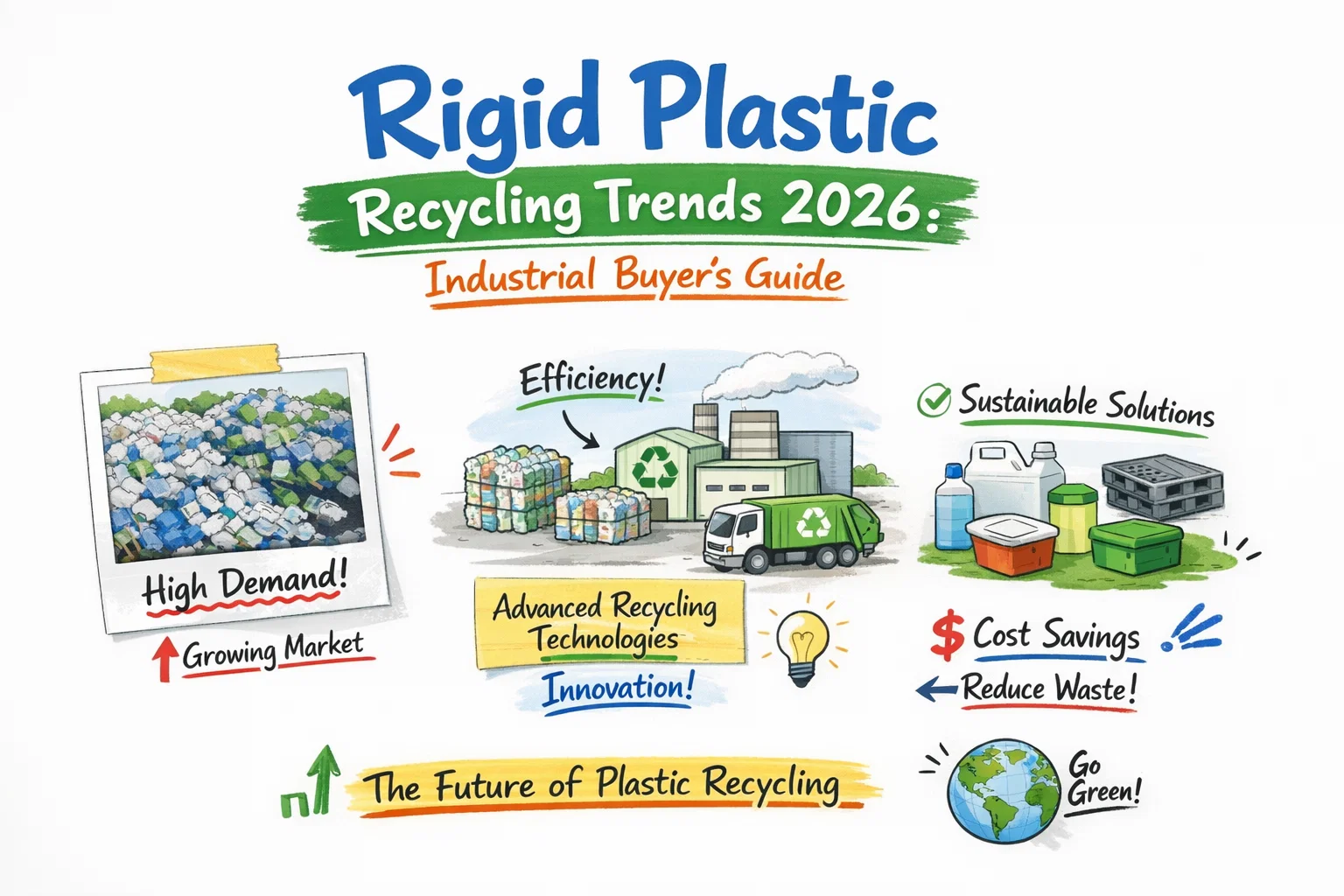
اتجاهات إعادة تدوير البلاستيك الصلب 2026: الأدلة وانعكاساتها على المشترين
مراجعة: 12 أغسطس 2026. أهم اتجاهات إعادة تدوير البلاستيك القاسي ليست آلة جديدة واحدة أو نسبة نقاء غير مدعومة. إنها متطلبات منتجات أشد، بيانات مدخلات ومدخلات قابلة للتعقب، ضغط تصميم للإعادة التدوير، تحسين التحقق من تصنيف الجودة، استخدام الموارد القياسي واستخدام الاختبارات التي تربط أداء المعدات بمادة قابلة للبيع.
ما الذي يعتبر بلاستيكًا قاسيًا؟
تتضمن تدفقات البلاستيك القاسي قوارير، غطاءات، أوعية، قوالب، صناديق، أساطين، أدراج، أنابيب، أقطاب وقطع صب بالحقن. قد تحتوي على PET، HDPE، PP، PVC، PS أو البوليمرات الهندسية، بالإضافة إلى العلامات، الغطاءات، المملؤات، طلاءات وبقايا المنتج.
“البلاستيك القاسي” هو فئة تجميعية وليس تحديدًا عملية. تحتاج خطPET، خط القارورة الطبيعية من HDPE وخط الصناديق المختلطة إلى تصنيف وتحكم جودة مختلفين. يجب على المشترين تحديد البوليمر وتطبيق المنتج قبل مناقشة المعدات.
اتجاه 1: تحويل الدليل إلى متطلب مشروع
دخل قانون تنظيم الأكياس والتغليف والنفايات التغليفية حيز التنفيذ في عام 2025 ويطبق بشكل عام من 12 أغسطس 2026، وفقًا لما ذكرته مقدمة إلى نفايات التغليف. لها تواريخ معينة وتنفيذ مفصل، لذا لا يجب على المُعيدون التدوير تقليل هذا التشريع إلى دعوى محتوى مُعيد التدوير واحد.
خارج الاتحاد الأوروبي، تختلف المتطلبات من دولة إلى أخرى ومن ولاية إلى أخرى. يحدد استراتيجية الولايات المتحدة الوطنية لمكافحة تلوث البلاستيك الإجراءات عبر التصميم، تقليل النفايات، جمع وإعادة التدوير. لذلك، يجب أن يوضح مذكرة الاستثمار لعام 2026 المنتجات، الأسواق والالتزامات القانونية بدلاً من المطالبة بمعيار “EPR العالمي” واحد.
اتجاه 2: تصميم الاستدامة يؤثر على جودة الدخل
العلامات، اللاصقات، الألوان، الأغلاق، الطبقات المتعددة والمكملات تؤثر على ما إذا كان يمكن تصنيف الحزمة واستعادتها إلى مخرج مفيد. يتعين على المُعيدون التدوير بشكل متزايد تصنيف هذه الميزات التصميمية بدلاً من تسجيل رمز البوليمر الرئيسي فقط.
يُنشر من قبل اتحاد مُعيدو تدوير البلاستيك إرشادات محددة للمادة PET rigid packaging و natural HDPE packaging. استخدم هذه الإرشادات لإنشاء فئات الاستقبال والملوثات، ثم قم بتحديد حدود المشتري الفعلية.
اتجاه 3: توازن الكتلة المتتبع يُستبدل بكمية الإنتاج الرئيسية
معدل الدخل للماكينة لا يوضح كمية البوليمر الجاف القابل للبيع التي يتم إنتاجها. الرطوبة، العلامات، الأوساخ، البوليمر غير المناسب، الحبيبات الدقيقة والرفض يترك الخط. في عام 2026، يعتمد تقييم المشاريع الجاد بشكل متزايد على توازن الكتلة المتتبع:
الناتج الجاف القابل للتسويق = إنتاج الجاف المقبول ÷ إدخال الجاف
سجّل المورد، الكتلة، تكوين العلف، الرطوبة، ظروف التشغيل، المرفوضات وأنتاج المعمل. هذا الدليل يدعم تصنيف المشتري، إصلاح المشاكل وتقديم مطالبات إعادة التدوير موثوقة. كما يمنع من أن يجعل إدخال الرطب أو القذر من خلال تدفق يبدو مرتفعًا بشكل غير طبيعي.
اتجاه 4: يتم تقدير تقنية التصفية بناءً على نتائج التطبيق
نظام أجهزة الاستشعار بالأشعة تحت الحمراء، والألوان، والمعادن وأجهزة الاستشعار الأخرى يمكن أن تحسن التصفية، ولكن “تصفية الذكاء الاصطناعي” ليست معيار أداء. الدقة تتغير بناءً على تقديم العنصر، تحميل الحزام، حجم الجسيمات، اللون، العلامات، الرطوبة وزوج البوليمر المستهدف.
طلب جدول اختبار يوضح تكوين العلف، النقاء المستهدف، التعافي، المرفوضات الزائفة، التدفق وعمليات التشغيل المتكررة. بعض الأزواج لا تزال تحتاج إلى طرق مختلفة: على سبيل المثال، خزان المياه يرسل PET وPVC كلاهما إلى الفئة السائلة. نحن sink-float separation guide يوضح لماذا لا يمكن حل كل تقسيم البوليمرات بمجرد كثافة واحدة.
اتجاه 5: أصبحت "النقاء العالي" متطلبًا مكتوبًا
زعم 99.9% عامةً لا قيمة له دون طريقة اختبار وقائمة الملوثات. رقائق PET، HDPE الطبيعية وPP الألوان المختلطة لديها مشترين مختلفين وحدود. يمكن أن يخفي "النقاء" أيضًا الرطوبة، الرماد، اللون، الرائحة أو فشل تدفق الذوبان.
أنشئ ورقة بيانات منتج توضح تكوين البوليمر، الملوثات المحددة، الرطوبة، الرماد، حجم الجسيمات، اللون، كثافة الحجم والخصائص الخاصة بالتطبيق.حدد تردد العينة وطرق المعمل. يجب أن تكون القبول على أساس الشروط الكاملة، وليس نسبة واحدة.
اتجاه 6: قياس الماء والطاقة لكل طن مقبول
الماء المغلق أو المُعاد تدويره ليس ماءً معالجًا تلقائيًا. يجب على المُعيدون التدوير تتبع إضافة الماء العذب، المواد السائبة، الرواسب، الكيميائيات المعالجة والنفايات. يمكن أن يعود التلوث إلى المنتج دون التحكم في المواد السائبة عند التدوير الزائد.
على نحو مماثل، قدم تقرير الكهرباء أو الوقود الكامل للخط الكامل لكل طن جاف مقبول. شامل تصنيف، غسل، مضخات، إزالة الماء، تجفيف حراري، استخلاص وإخراج مرفوض. يمكن أن يساعد المحركات بسرعة متغيرة واستعادة الحرارة فقط عندما يُعالجون حالة تشغيل قياسية.
Trend 7: mechanical dewatering comes before added heat
يجب على المجفف الدوراني أو الضغط أو الضغط المضغوط إزالة الماء المجرد الاقتصادي قبل التجفيف بالهواء السخن. يتوقف التسلسل المطلوب على رقائق البلاستيك الصلب مقارنة بالفيلم، الرطوبة النهائية وتعاملات المرحلة التالية.
Specify incoming moisture, final moisture, sampling point and test method. Our thermal drying guide shows how to calculate water-removal duty instead of applying one generic moisture target.
Trend 8: modularity means defined interfaces
المعدات المدمجة مفيدة فقط عندما تتطابق الطاقة، التحكم والمواد المقدمة. إضافة ثاني معالج للغرامات لا يضاعف الإنتاج إذا كانت التصفية، الغسل، معالجة المياه أو التجفيف عائقًا.
للمرتبة، يجب تحديد الطاقة الرطبة أو الجافة، حجم الجسيمات، الرطوبة، الحجم الزائد، تبادل الإشارات والسلسلة الآمنة للوقف. تأكد من المسؤول عن التطابق والأداء عندما تصبح الآلات من مختلف الموردين جزءًا من تجميع واحد.
Trend 9: feed-specific acceptance testing is replacing brochure claims
يجب أن يستخدم اختبار القبول في المصنع مادة ممثلة ومدة تشغيل مسبقة الاتفاق عليها. سجل الدخول الجاف، المرفوض، الإنتاج المقبول، الجودة، الكهرباء، إضافة الماء، وقت التوقف غير المتوقع وتدخل المُشغل.
هذا يحمي كلاً من المشتري والمورد: بيان الطاقة يبقى موصلاً بالشروط التي تم عرضها تحت.
اتجاه 10: التحكم في العمال والمجتمع جزء من تصميم الخط
المزيد من الحساسات والتحكم الآلي لا يزيل المخاطر من المقصات، الناقلات، المعدات الساخنة، الغبار، الدخان، المياه والنفايات المخزنة. الحماية، عزل الطاقة الخطرة، الوصول الآمن للصيانة، التهوية، الحماية من الحريق وتعامل مع المياه العادمة يجب أن تكون جزءًا من التخطيط والميزانية.
عند تغيير معدل التدفق، قم بتقييم التعرض والترتيبات الطارئة بدلاً من افتراض أن التحكم الأصلي يتكيف تلقائيًا.
2026 buyer checklist
| اطلب | لماذا يهم |
|---|---|
| Feed and output specifications | Prevents a generic rigid-plastic claim |
| Dry mass balance | يظهر الكمية القابلة للتسويق والكمية المرفوضة |
| Sorting purity and recovery | Reveals losses hidden by purity alone |
| Water and energy per accepted tonne | Normalises resources against useful output |
| Factory and site test protocol | Makes capacity and quality verifiable |
| Current regulatory responsibility matrix | Assigns permits, declarations and assembly conformity |
| Maintenance and critical spares plan | Connects reliability to real wear points |
الأسئلة الشائعة
ما هو الاتجاه الأكبر في إعادة تدوير البلاستيك القاسي لعام 2026؟
التحول من الإنتاجية والنقاء المعلن عنها إلى الأدلة القابلة للتحقق والتطبيق المحدد: توازن الكتلة الجافة، مواصفات المنتج الكاملة والاختبارات المقبولة الم��دة.
هل ينطبق قانون PPWR الأوروبي على كل منتج صلب من البلاستيك؟
لا. يتعامل مع التعبئة والتعبئة والتخلص منها. يمكن أن تنطبق قواعد منتجات صلبة أخرى والأسواق تحت قواعد مختلفة، وتتضمن أحكام PPWR تواريخ تطبيق محددة وتفاصيل.
هل يجب على المشتري طلب نقاء 99.9%؟
فقط إذا تم تحديد الملوث المستهدف، طريقة العينة، الاسترجاع والطلب المتسلسل. تحديد شامل للمواصفات الجودة أكثر فائدة من نسبة جامعة واحدة.
تحويل الاتجاهات إلى متطلبات قابلة للقياس
Use the broader دليل معدات إعادة تدوير البلاستيك للتنسيق بين الآلات والعمليات. ثم أرسل ممثل Energycle بيانات الصناديق البلاستيكية القاسية، مواصفات المشتري، الخدمات الموقعية والكمية الجافة القابلة للتسويق المطلوبة لخط عرض اقتراح.
