

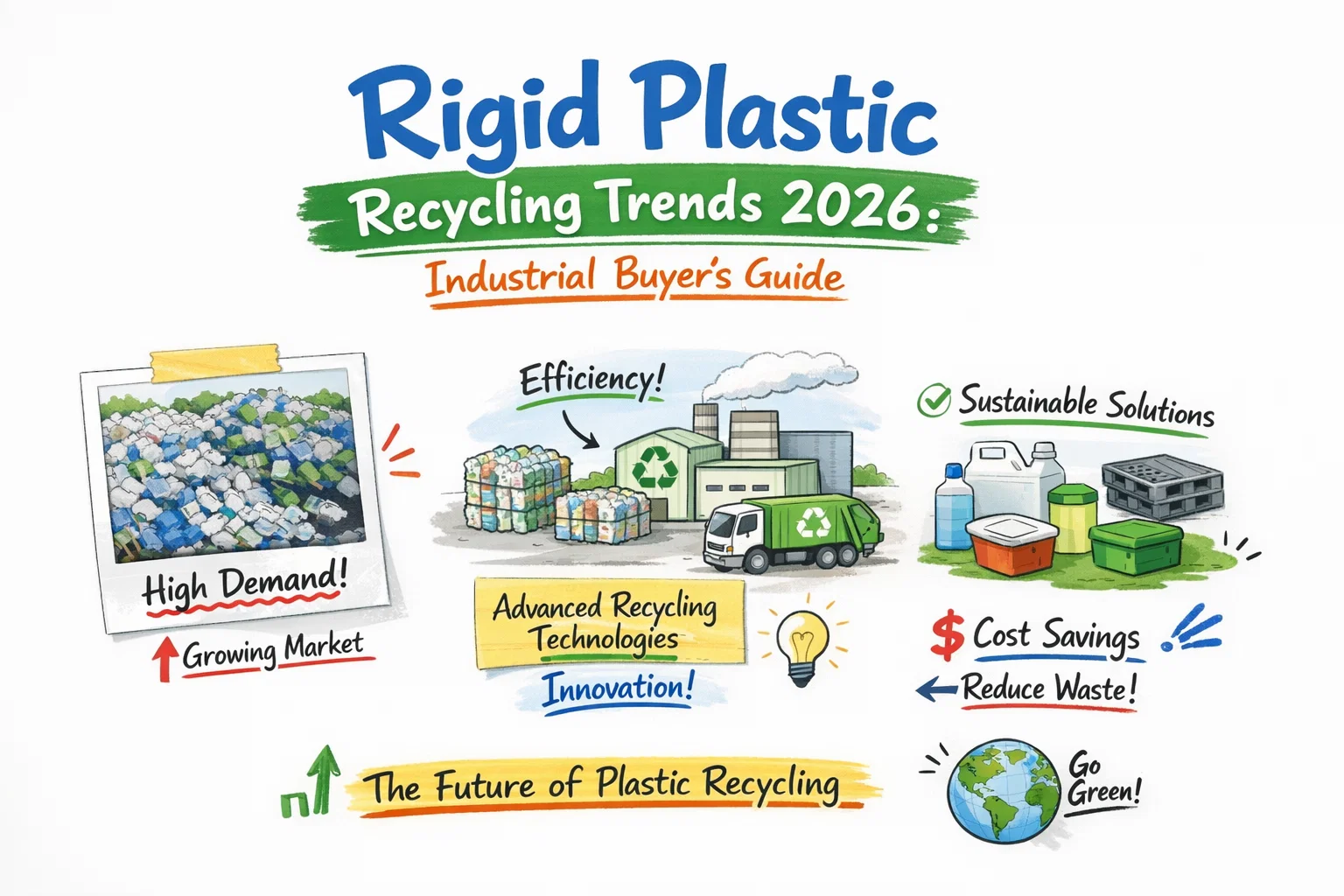
2026 경질 플라스틱 재활용 동향: 근거와 구매자 시사점
Reviewed: 12 August 2026. 가장 중요한 고정형 플라스틱 재활용 트렌드는 단 하나의 새로운 기계나 지지되지 않은 순도 퍼센트가 아니라, 더 긴요한 제품 요구사항, 추적 가능한 원료와 출력 데이터, 재활용 설계에 대한 압력, 더 나은 정리 인증, 측정된 자원 사용 및 장비 성능과 판매 가능한 재료를 연결하는 수용 시험입니다.
What counts as rigid plastic?
고정 흐름은 병, 캡슐, 탱크, 트레이, 크래트, 배커, 드럼, 파이프, 프로파일 및 인젝션 모ールド 부품을 포함합니다. PET, HDPE, PP, PVC, PS 또는 엔지니어링 폴리머, 레이블, 캡슐, 채우기, 코팅 및 제품 잔여물이 포함될 수 있습니다.
“고정형 플라스틱”은 모음 카테고리이며, 과정 사양이 아닙니다. PET 병 라인, 자연 HDPE 병 라인 및 혼합 크래트 라인은 다른 정리 및 품질 관리가 필요합니다. 구매자는 장비 논의 전에 폴리머와 제품 응용 프로그램을 정의해야 합니다.
트렌드 1: 규제가 증거를 프로젝트 요구사항으로 전환하고 있습니다
The EU Packaging and Packaging Waste Regulation entered into force in 2025 and applies generally from 12 August 2026, according to the European Commission’s packaging-waste overview. 개별 조항에는 자신의 날짜와 상세한 실행이 있으므로, 재활용자는 규제를 하나의 재활용 내용 주장으로 축소하지 않아야 합니다.
Outside the EU, requirements vary by country and state. The U.S. EPA’s National Strategy to Prevent Plastic Pollution 디자인, 폐기물 감축, 수거 및 회수 전반에 걸친 조치를 규정합니다. 따라서 2026년 투자 계획서는 단일한 글로벌 "EPR 기준"을 표방하기보다는 대상 제품, 목표 시장 및 구체적인 법적 의무를 명확히 파악하여 수립되어야 합니다.
Trend 2: design for recycling affects incoming quality
라벨, 접착제, 색상, 캡슐, 다층 및 추가제가 패키지가 분류되고 재활용될 수 있는지에 영향을 미칩니다. 재활용업자는 주요 수지 코드만 기록하는 대신 이러한 설계 기능을 분류해야 하는 경우가 늘어나고 있습니다.
플라스틱 재활용 협회는 PET rigid packaging 그리고 natural HDPE packaging. Use those guides to create intake and contaminant categories, then align them with the actual buyer’s limits.
Trend 3: traceable mass balance replaces headline throughput
A machine’s input rate does not show how much saleable dry polymer is produced. Moisture, labels, dirt, incompatible resin, fines and rejects leave the line. In 2026, serious project evaluation increasingly depends on a traceable mass balance:
Saleable dry yield = accepted dry output ÷ dry input
공급업체, 랩트, 원료 구성, 습도, 운영 조건, 반품 및 실험실 결과를 기록합니다. 이 증거는 구매자 자격, 문제 해결 및 신뢰할 수 있는 재활용 주장을 지지하며, 습기나 더러운 원료가 처리량이 인공적으로 높아보이도록 하는 것을 방지합니다.
Trend 4: sorting technology is judged by application results
근적외선(NIR), 색상, 금속 및 기타 센서 시스템은 선별 효율을 높일 수 있지만, 단순한 "AI 선별"이라는 문구 자체가 성능 사양이 될 수는 없습니다. 정확도는 대상물의 투입 형태, 벨트 적재량, 입도 크기, 색상, 라벨, 수분 및 분리 대상 폴리머 조합에 따라 달라집니다.
원료 구성, 목표 정순도, 회수, 오류 반품, 처리량 및 반복 운행을 보고하는 테스트 매트릭스를 요청하십시오. 일부 쌍은 다른 방법이 필요합니다: 예를 들어, 물 기반 탱크는 PET와 PVC를 모두 심층 분리에 보내는 경우가 많습니다. 우리는 sink-float separation guide explains why density alone cannot solve every polymer split.
Trend 5: “high purity” is becoming a written specification
시험 방법과 오염 물질 목록이 명시되지 않은 일률적인 99.9% 순도 주장은 실질적인 가치가 거의 없습니다. PET 플레이크, 내추럴 HDPE, 혼합 색상 PP는 구매처와 허용 기준이 각각 다릅니다. 또한 단순한 "순도" 수치 이면에는 수분, 회분, 색상, 악취 또는 용융 흐름 지수의 결함이 숨겨져 있을 수 있습니다.
폴리머 조성, 제한 오염 물질, 수분, 회분, 입도, 색상, 부피 비중 및 용도별 특성을 명시한 제품 사양서(PDS)를 작성하십시오. 샘플링 주기와 공인 분석 시험 방법을 규정하고, 단 하나의 백분율 수치가 아닌 포괄적인 기술 사양에 기반하여 납품 인수를 진행해야 합니다.
추세 6: 물과 에너지는 수용된 톤당 측정됩니다
폐쇄 루프 또는 순환 수처리 시스템이라고 해서 공정 용수가 자동으로 깨끗하게 유지되는 것은 아닙니다. 재활용 사업자는 신수 보충량, 부유 물질(SS), 슬러지, 수처리 약품 및 방류 기준을 철저히 관리해야 합니다. 고형물 제어 없는 과도한 순환은 생산물에 오염 물질을 다시 유입시킬 수 있습니다.
동일하게, 수용된 건조 톤당 전력 또는 연료를 전체 라인으로 포함하여 보고하십시오. 정리, 씻기, 펌프, 물 제거, 열 건조, 추출 및 거부된 출력을 포함합니다. 변속 드라이브와 열 회수는 측정된 운영 조건을 해결할 때만 도움이 될 수 있습니다.
Trend 7: mechanical dewatering comes before added heat
centrifugal dryer, press 또는 squeezer는 열 공기 건조 전에 경제적인 무료수를 제거해야 합니다. 필요한 순서는 고정된 파이프와 필름, 최종 습기 및 하류 처리에 따라 다릅니다.
Specify incoming moisture, final moisture, sampling point and test method. Our thermal drying guide shows how to calculate water-removal duty instead of applying one generic moisture target.
Trend 8: modularity means defined interfaces
모듈형 장비는 용량, 제어 및 재료 전달이 일치할 때만 유용합니다. 두 번째 granulator를 추가하면 분류, 씻기, 수처리 또는 건조가 약점이 아니라면 출력이 두 배가 되지 않습니다.
각 인터페이스에서 습도 또는 건조 용량, 입자 크기, 습도, 급격한 증가량, 신호 교환 및 안전 정지 시퀀스를 정의하세요. 다른 공급업체의 기계가 하나의 조립으로 되어 있을 때 일치와 성능에 대한 책임자를 확인하세요.
Trend 9: feed-specific acceptance testing is replacing brochure claims
공장 수용성 시험은 대표적인 재료와 합의된 운행 시간을 사용해야 합니다. 건조 입력, 반려물, 수용된 출력, 품질, 전기, 물 조성, 정지 시간 및 운영자 개입을 기록하세요. 현장 수용성 시험은 설치된 설비와 훈련된 운영자와 관련된 기준을 반복해야 합니다.
이는 구매자와 공급업체 모두를 보호합니다: 용량 설명은 표시된 입력 및 출력 조건에 따라 연결됩니다.
추세 10: 노동자와 지역 사회 제어는 라인 설계의 일부입니다
센서와 자동화가 증가하더라도 절단 나이프, 컨베이어, 고온 장치, 분진, 유증기, 용수 및 적재 폐기물로 인한 위험이 저절로 사라지지는 않습니다. 안전 방호 가드, 위험 에너지 차단(LOTO), 안전한 정비 점검 동선, 환기 배기, 화재 방호 및 폐수 처리는 초기 공장 레이아웃과 예산에 반드시 반영되어야 합니다.
생산량이 변경될 때, 원래의 제어가 자동으로 확대된다고 가정하는 대신 노출과 긴급 조치를 재평가하세요.
2026 buyer checklist
| 요청하세요 | 그 중요성 |
|---|---|
| Feed and output specifications | Prevents a generic rigid-plastic claim |
| Dry mass balance | Shows saleable yield and reject load |
| 순도와 회수 정리 | 순도만으로 숨겨진 손실을 밝혀냅니다 |
| 수용량당 물과 에너지 | 유용한 출력에 대한 자원을 정규화합니다 |
| 공장 및 현장 테스트 프로토콜 | 용량과 품질을 검증할 수 있게 합니다 |
| 현재 규제 책임 표 | 허가, 선언 및 조립 일치성을 할당합니다 |
| 유지보수 및 중요한 부품 계획 | 신뢰성을 실제 손상점에 연결합니다 |
Frequently asked questions
2026년에 가장 큰 고정형 플라스틱 재활용 트렌드는 무엇인가요?
헤드라인 용량과 순도 주장에서 추적 가능한, 응용 특정 증거로의 전환: 건조 질량 균형, 전체 제품 사양 및 인증된 수용 시험.
EU PPWR는 모든 고정형 플라스틱 제품에 적용됩니까?
아니요. 이는 포장과 포장폐기물을 다룹니다. 다른 고정된 제품과 시장은 다른 규칙에 따를 수 있으며, PPWR 조항은 특정 적용일과 세부사항을 가지고 있습니다.
구매자가 99.9% pureness를 요구해야 하나요?
타겟 오염물질, 샘플 방법, 회수 및 하류 요구사항이 정의된 경우에 한해. 완벽한 품질 규격은 일반적인 퍼센트보다 유용합니다.
추세를 측정할 수 있는 요구사항으로 변환합니다
더 포괄적인 플라스틱 재활용 장비 가이드 기계를 공정에 맞추기 위해 지정합니다. 그런 다음 Energycle 대표 레이디지 플라스틱, 구매자 규격, 현장 공용 설비 및 필요한 건조 판매 가능한 출력을 제공하여 특정 피드 라인 제안서를 보내세요.
