

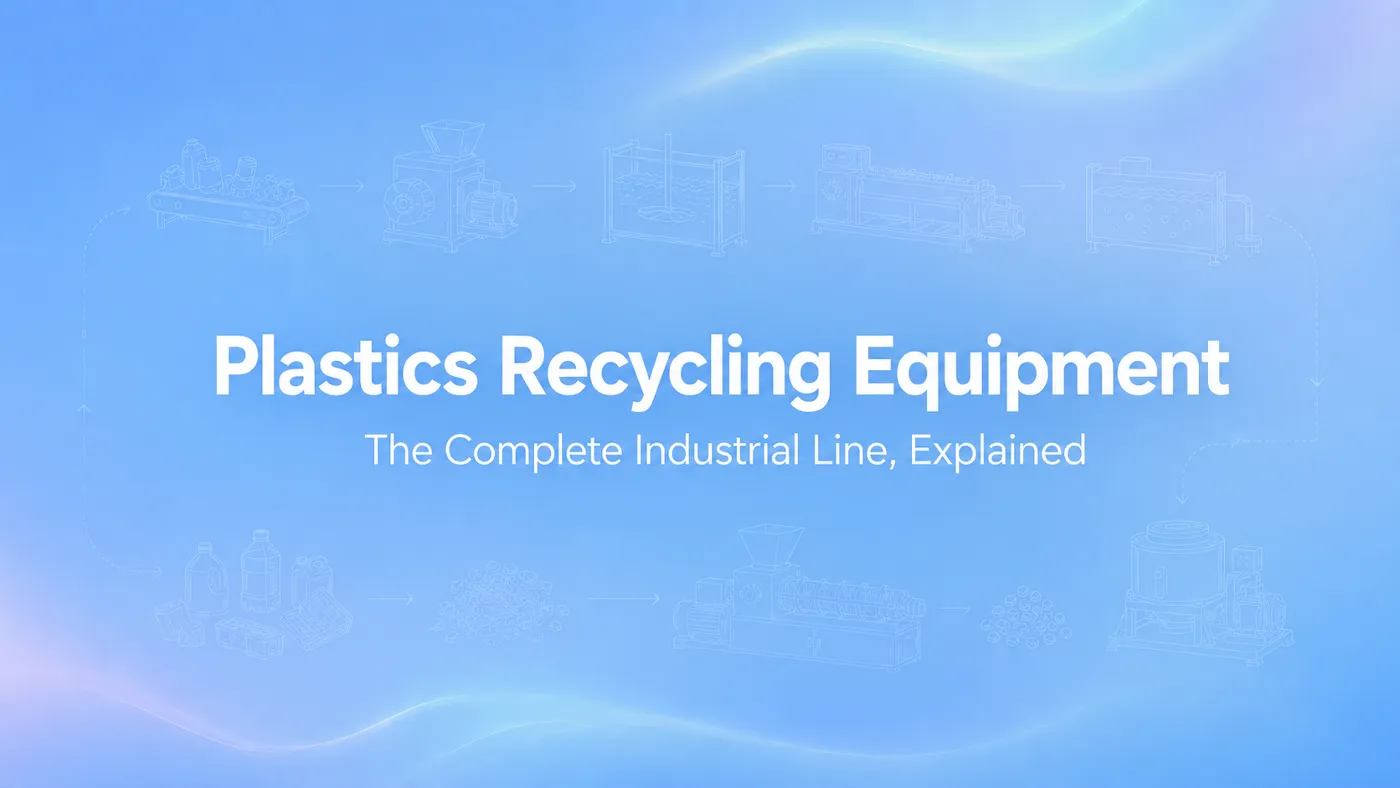
جواب سريع: تعتبر معدات إعادة تدوير البلاستيك الآلات الصناعية التي تحول النفايات البلاستيكية المستهلكة أو الصناعية إلى مواد أولية قابلة لإعادة الاستخدام نظيفة — عادةً كرات أو شرائح. تشمل الخط الكامل ست مراحل متوافقة: التسلسل الأولي وتقليل الحجم، الطحن، الغسل، التجفيف، إنتاج الكرات، والتحقق من الجودة. يعتمد الجهاز المناسب على البوليمر (PET، PE، PP، HDPE، PVC، EPS)، النظافة المدخلة، والقدرة المستهدفة على التدفق.
ما يعنيه معدات إعادة تدوير البلاستيك بالفعل
عندما يبحث المشتركون عن معدات إعادة تدوير البلاستيك، عادةً ما يعنيون إحدى الأمرين: جهاز واحد يقوم بمرحلة واحدة (مطحنة، طاحونة، كرات)، أو خط إعادة تدوير كامل يدمج عدة أجهزة في عملية مستمرة. يغطي هذا المقال كلاهما — لكن التركيز هو على الخط، لأنه هو الذي يحدد ما إذا أصبح المشروع مربحًا أو لا.
خط كامل لمعدات إعادة تدوير النفايات البلاستيكية يأخذ المدخلات البلاستيكية المختلطة أو المفصولة (زجاجات، فيلم، إعادة التدوير، مخلفات صناعية) ويخرج مواصفات المواد التي سيكتب عنها مشتريات السلسلة البوليمرية — شرائح نظيفة، إعادة التدوير المسحوقة المسحوقة، أو كرات تحتوي على MFI (مؤشر تدفق الذوبان) وماء محكم. كل مرحلة في الخط إما تضيف قيمة (التنظيف، التسوية، التسوية) أو تكون تكلفة مخفية (طاقة، ماء، عمل). مهمة اختيار الأجهزة هي تقليل الثانية بينما حماية الأولى.
النقطة الرئيسية: شراء الأجهزة خطوة بخطوة يكلف عادةً أكثر من تصميم الخط مسبقًا. عدم التساوي في القدرة بين المراحل يخلق عوائق تثبط الخط بأكمله.
مراحل خط إعادة تدوير البلاستيك الستة
تتبع تقريبًا كل نظام إعادة تدوير البلاستيك الصناعي، بغض النظر عن السلعة المدخلة، نفس الست مراحل. قد يختلف الأجهزة التي تملأ كل مرحلة بناءً على البوليمر والظروف المدخلة، لكن التسلسل هو متسق.
| # | منصة | معدات | ما يفعله | القدرة النموذجية (كجم/ساعة) |
|---|---|---|---|---|
| 1 | التسلسل الأولي وتقليل الحجم | المطاحن، الكسارات، المبالغات | يقلل من الحزم أو المخلفات الكبيرة إلى قطع قابلة للتعامل | 300 – 3,000 |
| 2 | الطحن | المطاحن مع أحجام الشبكة 8–20 مم | يحول البلاستيك المقطوع إلى شرائح متساوية | 300 – 2,500 |
| 3 | غسيل | المغسلات بالتراب، خزانات الغسل الساخن، مفاتيح السقوط والطرف | يزيل العلامات، الأوساخ، الزيوت، بقايا الطعام، والبوليمرات غير المرغوب فيها | 500 – 4,000 |
| 4 | التجفيف | المجففات الدوارة، المجففات الحرارية، خزانات التخزين | يقلل من الرطوبة إلى <1% قبل الطباعة | 500 – 4,000 |
| 5 | إنتاج الكرات/الطحن | مضخات السلك الواحد أو الثنائي مع التفريغ | يذوب الشرائح وينتج كرات متساوية تحتوي على MFI (مؤشر تدفق الذوبان) محكم | 300 – 2,000 |
| 6 | التحقق من الجودة والتصنيف | مستشعرات المعادن، مفاتيح التيار المتردد، تصنيف الأشعة تحت الحمراء | يزيل التلوث المعدني والمواد غير المقبولة قبل التعبئة | قدرة الخط الكامل |
Stage 1 — Pre-sorting and size reduction
Every line starts here. A bale of post-consumer PET is too dense to feed directly into a washing tank; a single soft-drink bottle is too small to handle without reducing it to a controlled particle size. آلات تقطيع — single-shaft for soft input like film, twin-shaft for mixed rigid input — reduce material to roughly 30–80 mm pieces. Output goes directly to the granulator unless the line includes a pre-wash step for very dirty feedstock.
Stage 2 — Granulating
حبيبات take the shredded output and produce uniform flakes (commonly 8–14 mm for PET, 10–16 mm for film). Screen size determines flake consistency and washing efficiency. Smaller flakes wash more thoroughly but cost more energy to produce and create more fines that are lost in downstream stages.
Stage 3 — Washing
Washing is the most expensive line in the budget after the pelletizer — and the most important. A weak washing stage is the single biggest reason recycled-plastic pellets sell at a discount. For PET bottles, a full hot-wash with caustic dosing removes glue residues from labels; for PE/PP film, friction washers remove agricultural soil and pesticide residue. Sink-float tanks separate PET (sinks) from PP/PE caps and labels (float) — this single separation can double the value of the output.
Stage 4 — Drying
Wet flakes destroy extruder output. PET in particular hydrolyses at extrusion temperature if moisture exceeds 50 ppm — the resulting IV drop makes pellets unsuitable for fibre or sheet applications. Centrifugal dryers handle bulk water removal; thermal dryers or vacuum hoppers bring the final moisture to spec.
Stage 5 — Pelletizing and extrusion
ال الطارد melts, filters, degasses, and re-forms the polymer. Twin-screw extruders are now standard for PET because the venting is needed to remove residual moisture and volatile contaminants. Single-screw extruders remain the workhorse for clean PE, PP, and HDPE regrind. Underwater pelletizing produces spherical pellets favoured by injection moulders; strand pelletizing produces cylindrical pellets favoured by fibre and sheet producers.
Stage 6 — Quality control
نظام التصنيف بالأشعة تحت الحمراء القريبة يساعد في التعرف على نوع البوليمر بسرعة كبيرة ويتيجب رفض المواد غير المطابقة للمواصلات قبل أن تتسبب في تلويث التدفق الخارجي.</|.
Choosing plastics recycling equipment by polymer
Polymer chemistry dictates almost every equipment decision. The same line cannot economically process PET and LDPE film without major reconfiguration. The table below summarises the equipment differences for the four most common industrial feedstocks.
| Polymer | Typical input | Critical equipment | Common output | Pitfall to avoid |
|---|---|---|---|---|
| حيوان أليف | Post-consumer bottles, bottle flakes | Pre-wash, hot-wash with caustic, sink-float, thermal dryer, twin-screw extruder with venting | Bottle-grade pellets, fibre-grade pellets | Skipping caustic wash → glue residue → IV drop |
| PE / PP Film | Agricultural film, shopping bags, industrial film | Single-shaft shredder, friction washer, centrifugal dryer, densifier, twin-screw extruder | Recycled film pellets | Wet pellets — film holds water; under-drying ruins output |
| HDPE / PP Rigid | مقاعد، صناديق، أجزاء سيارات | مطحنة شفطية بثلاثة شفرات، معالج، غسل حار، مكبس ببرغي واحد | كريات الصلبة لمصنعي الأنابيب بالتفجير والحقن | تلوث البوليمر المختلط — يجب أن يكون الغرق والاستنزاف إلزامي |
| EPS/البوليستايرين | صناديق السمك، نفايات التعبئة والتغليف | مكبس أو مضغوط، معالج، مكبس ببرغي واحد | كريات EPS المضغوطة، كريات GPPS | محاولة شحن EPS منخفض الكثافة — التضغيط عند المصدر لا يمكن التفاوض عليه |
تقدير الكفاءة: مطابقة المعدات إلى التدفق
قد تكون قدية الطاقة المقدمة من المصنع نادرةً ما تحصل عليها في الإنتاج. العدد المنشور عادةً هو أقصى معدل الإنتاج مع مادة إدخال نظيفة جافة، حجمها مثالي — ظروف لا توجد إلا في التجارب المخبرية. يتراوح الطاقة الحقيقية في نطاق 60-80% من العلامة التجارية، اعتمادًا على تلوث الإدخال ووقت التوقف.
قاعدة تخطيط مفيدة:
- تحديد هدف التغذية السنوية (مثل، 6،000 طن سنويًا من كريات PET النظيفة).
- تحويل إلى تدفق ساعي بناءً على 6،000 ساعة تشغيل سنويًا — في هذا المثال، 1،000 كجم/ساعة.
- تحديد المعدات بقدرة اسمية 1.3 مرات أعلى من التدفق الساعي المطلوب، أي 1،300 كجم/ساعة.
- تقدير كل مرحلة تقدمية على الأقل 1.2 مرات المرحلة التالية — معالج الكريات يكون عادة العائق ويجب ألا يكون جائعًا.
النقطة الرئيسية: إذا كان طاحونة الأكياس تعمل عند معدل استغلال 80% بينما تعمل خط الغسل عند 50%، فقد أنفقت المزيد من الأموال على قدية الغسل. وإذا كان العكس، فإن طاحونة الأكياس لن تتمكن من الوصول إلى هدفها المحدد. قم بمزامنة الخط، ثم قم ببيع الأكياس.
الجديد مقابل المعدات المستعملة لتحويل البلاستيك
المعدات المستعملة لتحويل البلاستيك متاحة على نطاق واسع — هناك سوق مستعمل نشط للخلاطات، المعالجات، وخطوط الغسل. يلي مقارنة صادقة؛ الإجابة الصحيحة تعتمد على مرحلة المشروع وملاءمة المخاطرة.
| عامل | معدات جديدة | معدات مستعملة |
|---|---|---|
| تكاليف الاستثمار | أعلى — سعر كامل بالإضافة إلى التثبيت | من 30-60% من السعر الجديد؛ وحدات أقدم 70-80% بأسعار مخفضة |
| مهلة | من 8-16 أسبوعًا للنماذج القياسية | متاحة فور العثور عليها |
| الضمان | من 12-24 شهرًا، قطع الغيار والعمل | عادة ما تكون 'كما هي' أو محدودة 30 يومًا |
| كفاءة الطاقة | كفاءة المحركات والتحكم الحالية | تستهلك المحركات الأقدم 15-30% من الكهرباء لكل طن |
| قطع الغيار | متاحة من الشركة المصنعة طوال مدة الحياة المنتجة | خطر الأجزاء القديمة على الآلات التي تعمل لأكثر من 15 عامًا |
| أفضل لـ | إنتاج طويل الأمد، مخرجات حساسة للتنظيم، مخرجات ملامسة للغذاء | خطوط تجريبية، قدرة ثانوية، مخرجات سلعية بأسعار منخفضة |
ما يجب أن تسأله شركات تصنيع معدات إعادة تدوير البلاستيك (قائمة مراجعة الطلبات المقدمة بالأسعار)
معظم طلبات التقديرات تفشل من جهة واحدة أو الأخرى لأن التفاصيل ضعيفة جدًا. القائمة التالية هي المعلومات القليلة الأدنى التي تحتاجها شركة تصنيع جادة لتقديم تقدير معني وخطي زمني واقعي.
مواصفات الإدخال
- نوع/أنواع البوليمر ودمج النسبة المئوية
- الشكل: مكدسة، متفرقة، مسحوقة، مغسولة/غير مغسولة
- مستوى التلوث: عضوي %، معدني %، بوليمر غير مستهدف %
- كثافة الحجم و حجم جزيء المادة المدخلة
- محتوى الرطوبة (خاصة للفيلم والPET)
مواصفات الإخراج
- منتج الهدف: رقائق، إعادة تدوير، أو كريات
- ورقة مواصفات الهدف: نطاق MFI، IV (للPET)، كثافة الحجم، لون، رطوبة متبقية
- مستوى الاستخدام النهائي: ملامسة للغذاء (مستوى FCM)، ألياف، تغليف، صب بالحقن
- شكل الكريات و حجمها إذا كان ذلك مهما
نطاق التدفق و التشغيل
- كمية الtons المطلوبة سنويًا، بالإضافة إلى ساعات التشغيل/السنة المفترضة
- عدد الورديات (1، 2، أو 3)
- المساحة المتاحة — خريطة الأرضية مع الأبعاد
- الموارد المتاحة: kW متصلة، معدل تدفق الماء، هواء مضغوط، بخار
التأمين التجاري وخدمة ما بعد البيع
- شروط الضمان كتابية، مع وقت التبديل للأجزاء الاستبدالية
- مراقبة التثبيت وتدريب القائد متضمنة أو إضافية
- شبكة الخدمة في منطقتك — وقت الاستجابة على الفور
- عملاء مرجعيين لديهم بوليمر و نطاق تدفق مقارن
خمس أخطاء باهظة الثمن عند شراء معدات إعادة تدوير البلاستيك
هذه هي الأخطاء التي رآها مهندسونا غالبًا عند إعادة التجهيز أو إنقاذ خطوط إعادة التدوير التي لم تؤدِ كما هو متوقع ضد خطط الأعمال.
- Sizing the pelletizer first, then everything else. The washing stage is the value step. Size washing for input volatility, then match downstream capacity.
- Buying a generic line for a specific polymer. PET hot-wash equipment ruins PE film; LDPE friction washers cannot handle PET. Single-polymer dedicated lines outperform.
- Skipping the metal detector to save $8,000. يمكن لقطعة معدنية واحدة وحدها أن تتسبب في توقف آلة الخراطة بطراز $250,000 عن العمل لمدة أتان أسبوعين، كما يُنصح دائمًا بتركيبها قبل الآلة مباشةً.
- Under-sizing the drying stage. نعم، هذا صحيع. تجاوز المواصفات في مرحلة التجفيف قد يضر بكفاءة الأجزاء الفرعية اللاحقة في الخط المصنعي.
- Ignoring downstream offtake before commissioning. Equipment design is downstream of buyer specs. If the buyer wants 0.85 IV PET pellets, the line cannot be commissioned around a single-screw extruder.
Frequently asked questions about plastics recycling equipment
كم يكلف خط إعادة تدوير البلاستيك الكامل؟
A complete plastic waste recycling equipment line ranges from roughly $250,000 for a small EPS densifier setup to $3–5 million for a full PET bottle-to-pellet line at 2,000 kg/h. The single biggest cost drivers are the washing stage and the extruder configuration (single vs twin screw, vented vs unvented).
ما معدات إعادة تدوير البلاستيك التي أحتاجها للبدء؟
The minimum viable line for any polymer needs five matched stages: shredding or size reduction, granulating, washing, drying, and pelletizing. Quality control sensors (metal detectors first, NIR sorters second) are technically optional but pay back inside 12–18 months for any line above 500 kg/h.
هل استخدام معدات إعادة تدوير البلاستيك فكرة جيدة؟
المعدات المستعملة تتناسب مع خطوط التجربة، الطاقة الإضافية، والمنتجات التجارية حيث لا يهم كثيرًا كفاءة الطاقة ولكن يهم الاستثمار الأولي. إنها خيار سيء للمنتجات التي تلامس الطعام، منتجات الألياف، أو أي منتجات تتطلب مراقبة تنظيمية حيث يهم وقت تشغيل الخط والتبعية.
ما هو الفرق بين الطاحونة البلاستيكية والكسارة البلاستيكية؟
A shredder reduces bulky input (bales, drums, large parts) to coarse pieces, typically 30–80 mm. A granulator takes those pieces and produces uniform flakes, typically 8–16 mm. Most industrial lines need both — a shredder upstream of a granulator. A few low-throughput lines combine them in a single machine called a granulator-shredder.
هل يمكن للآلة نفسها معالجة فيلم البولي إيثيلين (PET) والبولي بروبيلين (PE/PP)؟
Not economically. PET washing uses high temperatures and caustic dosing that would destroy PE film and damage equipment seals; PE film friction washers cannot generate the residence time needed to remove PET label adhesive. Build dedicated lines per polymer family, or accept significant changeover time and quality loss.
ما هي النتائج التي يمكن أن يتوقعها المشتري من طن من القمامة البلاستيكية المختلطة؟
Yield depends heavily on input cleanliness. A well-sorted PET bottle bale yields 850–920 kg of bottle-grade pellets per ton (the rest is labels, caps, and process loss). A mixed post-consumer film bale yields 600–750 kg per ton because organic contamination and unwanted polymers must be removed. Pilot tests with your actual feedstock are the only way to forecast yield accurately.
Putting it together
يمكنك ذلك بكل سهولة من خلال استخام محرك البحث المتوفر على الموقع للبحث عن المنتجات المناسبة. يمكنك أ.
Energycle تصمم وتورد خطوط إعادة تدوير البلاستيك الصناعية لـ حيوان أليف, فيلم PE/PP, HDPE/PP rigidو العائد على السهم feedstocks, from 300 kg/h pilot capacity to multi-ton-per-hour production lines. If you are at the specification stage, we can review your input/output requirements and return a line configuration with capacity-matched components within five working days.
Next step: Request an equipment configuration and quote. Send us your input feedstock and target output spec — we will return a stage-by-stage proposal.
