

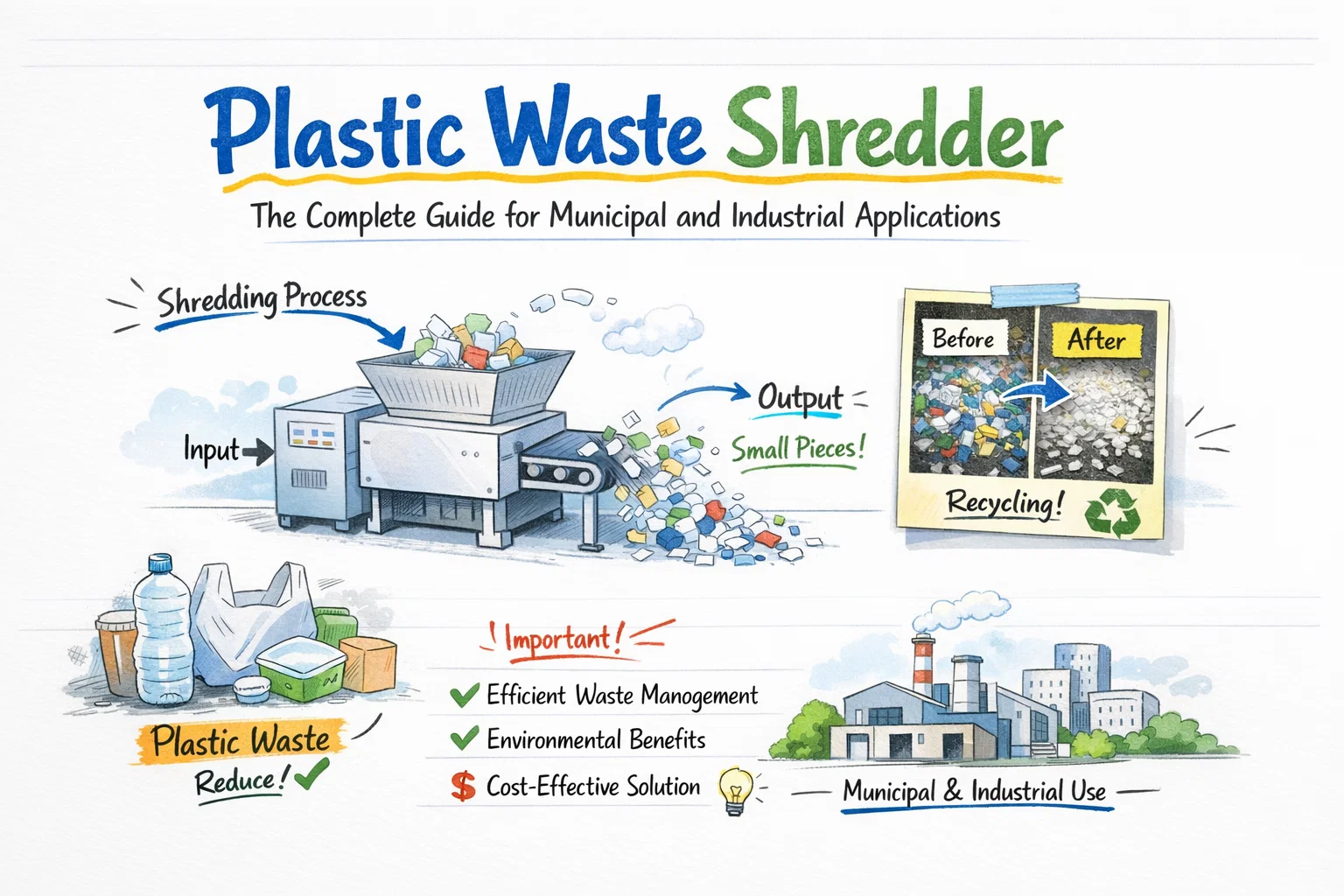
أ آلة تقطيع النفايات البلاستيكية نحن نقدم مجموعة كاملة من معدات تكسير البلاستيك، بما في ذلك آلات التفتيت والسحق لتحويل النفايات البلاستيكية إلى جزيئات متجانسة تصلح للتصنيف والغسيل أو إعادة التدوير.
نعم، يمكننا توفير هذا الدليل. يرجى إرسال طلبك لكrequest a quote من خلال صفحة الاتصق بنا على الموقع.
What Is a Plastic Waste Shredder?
A plastic waste shredder is industrial size-reduction equipment designed to break down plastic items — bottles, drums, pipes, film, pallets — into consistent output fragments, typically 30–150 mm in size. According to equipment specialists, shredders serve as the critical first stage in almost every plastic recycling process, making downstream washing, optical sorting, and pelletizing significantly more efficient.
على عكس الطواحين التي تعمل بسرعة عالية وتتطلب مدخلات مفرومة مسبقًا، تستخدم مكائن تقطيع النفايات البلاستيكية low-speed, high-torque cutting action — typically 20–80 RPM — that handles bulky, contaminated, or mixed feed without pre-cutting. This makes them the entry point for both municipal solid waste (MSW) streams and industrial post-production scrap.
Types of Plastic Waste Shredder Machines
ليس كل آلة تفتيت تتعامل مع جميع أنواع البلاستيك بنفس الكفاءة. اختيار التكوين الخاطئ يُعدّ واحدٯا من أكثر الأخطاء شيوعًا وتكلفةً في تصميم محطات إعادة التدوير.
آلات تمزيق أحادية المحور
يستخطب هذا النوع من المفتتات محور دوار واحد مزود بشفرات ثابتة تقابل سكينًا مضادة ثابتة. وهو يتميز بأدائه الممتاع في... film, bags, lightweight rigid plasticsوالبلاستيك المستهلك بعد الاستخدام لأن حجم الخامس يتم التحكم فيه بواسطة شبكة السفلية.
- Throughput range: 200 kg/h – 2,000 kg/h
- Motor power: 15–75 kW
- الأفضل لـ: PET bottle bales, LDPE film rolls, injection molding scrap
- النطاق السعري: $10,000 – $40,000
آلات تمزيق ثنائية المحور
A double-shaft (twin-shaft) shredder uses two counter-rotating shafts that pull material inward and shear it. It delivers higher torque and handles rigid, thick-walled plastics — أنابيب البولي فينيل كلوريد (PVC)، أنابيب البولي إيثيلين (HDPE)، ومرسى السيارات — التي ستقف مكونة وحدة واحدة بالفرشاة.
- Throughput range: 500 kg/h – 5,000 kg/h
- Motor power: 30–200 kW
- الأفضل لـ: Mixed rigid plastic bales, large hollow containers, industrial plastic scrap
- النطاق السعري: $25,000 – $80,000
آلات التقطيع ذات الأربعة أعمدة
أضافت طاحونة الأربعة شفرات شفرتين ثانويتين لمرور ثانوي للقطع، مما ينتج tighter, more uniform particle sizes in a single machine. This design is preferred in RDF (Refuse-Derived Fuel) production and high-purity recycling lines where output consistency is critical.
- Throughput range: 1,000 kg/h – 10,000+ kg/h
- Motor power: 75–1,250 kW
- الأفضل لـ: Mixed MSW plastics, large MRF pre-treatment, RDF/SRF preparation
- النطاق السعري: $60,000 – $250,000+
Choosing the Right Type: Quick Reference
| المعيار | عمود واحد | عمود مزدوج | Four-Shaft |
|---|---|---|---|
| Best plastic types | Film, light rigid | Rigid, thick-walled | Mixed/heterogeneous |
| التحكم في حجم الإخراج | Screen-controlled | معتدل | Tightest uniformity |
| Handles contamination | قليل | واسطة | عالي |
| MSW/MRF integration | Secondary stage | Primary + secondary | Primary large-scale |
| Entry price | $10K | $25K | $60K+ |
The Challenge of Processing Mixed Plastic Waste
نفايات البلاستيك المختلطة تُعدّ من أصعب سلاسل التغذية التي يمكن أن تواجهها آلات التفتيت. Contamination, variable density, and incompatible polymer types all reduce effective throughput and increase blade wear. According to Reworld, mixed plastics cannot be efficiently recycled without proper sorting into individual polymer types — and shredding is the step that makes sorting possible in the first place.
Three specific challenges drive most operational headaches:
- Density variation: A single feed batch may contain lightweight LDPE film (density ~0.92 g/cm³) alongside rigid HDPE drums (density ~0.95 g/cm³) and heavy PVC pipe (density ~1.4 g/cm³). The shredder must handle all without jamming.
- Contamination load: Soil, food residue, metal fasteners, and glass shards inside plastic waste accelerate blade wear. Budget for blade replacement at 800–1,500 operating hours for heavily contaminated streams.
- Oversized or tangled materials: Long plastic pipes, strapping bands, and baled film wrap around shafts. Machines with automatic reverse rotation يتم توفير ميزة الوقاية من الانسداد التلقائي (المتوفرة كميزة قياسية في معظم غرارات المحركات ذات المحور المزدوج) تلقائيًا لمنع حدوذ معظم حالات الانسدةات.
Pre-Sorting Requirements Before Shredding
Running unsorted waste directly into a shredder without pre-conditioning is the fastest way to damage cutting blades and create dangerous jams. For both municipal and industrial operations, a المرحلة المسبقة للتصنيف تساعد في حماية آلة التفتيت لديك وتُطيل عمرها الافتراعي..
Minimum pre-sort steps for MRF applications:
- Bag breaking: Open garbage bags with a dedicated bag-breaker machine before the shredder receives feed. Intact bags trap air and cause inconsistent shredding.
- Coarse trommel screening: A rotating drum screen (typically 80–150 mm mesh) removes fines, organics, and undersized material that don’t need shredding — reducing the load on the shredder by 15–30%.
- Ferrous metal removal: Install an فاصل مغناطيسي فوق النطاق above the infeed conveyor. Metal fragments left in the feed destroy cutting blades in hours.
- Manual pick station: A human inspection point (or AI-assisted vision system) removes hazardous items — gas cylinders, batteries, large glass — that could cause catastrophic machine failure.
ل industrial post-production plastic scrap, pre-sorting requirements are simpler: separate by resin type (PET vs. HDPE vs. PP) if purity of the shredded output matters. If the output feeds an RDF line, mixed resins are acceptable.
Throughput Planning: How to Calculate Real Output
Manufacturer-rated capacity figures are almost always higher than real-world output. A shredder rated at 1,000 kg/h on clean HDPE flakes will deliver far less on contaminated mixed municipal plastics.
Use this two-step adjustment formula to calculate realistic throughput:
Step 1 — Material Hardness Index (MHI) adjustment: Real output = Rated capacity × MHI
Common MHI values:
- Clean PET/HDPE bottles: 0.80–0.90
- Mixed rigid plastics: 0.60–0.70
- Mixed MSW plastics (contaminated): 0.45–0.60
Step 2 — System Efficiency Coefficient (SEC) adjustment: Effective output = Step 1 result × SEC (typically 0.70–0.85 for continuous operations)
Example: A shredder rated at 2,000 kg/h on mixed rigid plastics (MHI = 0.65) operating with a SEC of 0.75:
- خطوة 1: 2,000 × 0.65 = 1,300 كجم/ساعة
- خطوة 2: 1,300 × 0.75 = 975 كجم/ساعة إنتاج حقيقي
هذا يعني أن مصنعاً يخطط لمعالجة 15 طناً/يوم (ثماني ساعات عمل) يحتاج في الواقع إلى آلة تقييمها حوالي 2,000 كجم/ساعة على الأقل وليس 1,000 كجم/ساعة. دائماً تضخم، وليس تقليلًا. شريحة المطرقة الصغيرة تؤدي إلى انسداد الخط بأكمله؛ بينما تضيف الشريحة الكبيرة فقط تكلفة إضافية ضئيلة للطن.
مطحنة نفايات البلاستيك في خطوط التجميع والتفرز لمواد القمامة
أ آلة مطحنة نفايات البلاستيك تقع في مرحلة المعالجة الأولية لمحطة استعادة المواد — قبل معالجي الضوء، فصل الهواء، ومفصلات الكثافة. مهمتها ليست فصل البلاستيك؛ بل تقليل حجم الجزيئات حتى يمكن للآلات الفصلية العمل بدقة.
سلسلة التكامل في محطة التجميع
- مكب استقبال → إدخال النفايات المختلطة الخام
- كسارة الأكياس + شبكة الترومل → التحنيط
- مطحنة نفايات البلاستيك → تقليل الحجم إلى 50–150 مم
- مغناطيس فوق الحزام → إزالة المعادن الحديدية
- مستقطب التيار الدائري → إزالة المعادن غير الحديدية
- مفصل هوائي / مفصل رياضي → فصل الكتلة الخفيفة والثقيلة
- مفصل ضوئي NIR → تحديد وإطلاق PET / HDPE / PP / PVC
- بالقاطرة أو الحزام إلى المرحلة التالية → تجميع أجزاء البلاستيك إلى المزود
حجم مخرج المطرقة يحدد دقة كل مرحلة فصل تالية. على سبيل المثال، يعمل مفصل الضوء NIR بشكل أفضل على الجزيئات بين 40–120 مم — إدخال كبير جدًا أو صغير جدًا يقلل من نقاء الفصل.
التكامل مع مطاحن البلاستيك لـ Energycle
تم تصميم خط مطحنة نفايات البلاستيك لـ Energycle للتكامل المباشر مع معدات فصل محطة التجميع. تتضمن المطاحن التحكم PLC والشبكات الخروج القابلة للتعديل، مما يسمح للعاملين بضبط حجم الجزيء لتلائم متطلبات مفصلات الضوء NIR أو خطوط الغسل. للمعاملات التي تتعامل مع صناديق صلبة، فإن آلة تمزيق البلاستيك الصلب السلسلة تتعامل مع HDPE، PVC، وABS على نطاق صناعي.
تكلفة خلاط نفايات البلاستيك: ما هو الميزانية المطلوبة لعام 2026
وفقاً لبيانات أسعار Energycle، تتراوح أسعار آلات خلاط نفايات البلاستيك بين $10,000 إلى $80,000 باعتماد تكوين المحور، عرض العمود، مادة السكين، وسعة المحرك.
| نوع الماكينة | السعة | %% | أفضل تطبيق |
|---|---|---|---|
| مخروط شفرة واحدة | 200–2,000 kg/h | $10,000 – $40,000 | الفيلم، الزجاجات، الأكوام الخفيفة |
| آلة تقطيع ذات عمودين | 500-5,000 كجم/ساعة | $25,000 – $80,000 | الأكوام القاسية، الأكوام ذات الجدران السميكة |
| خلاط ذو محاور أربعة | 1,000–10,000+ كغ/ساعة | $60,000 – $250,000+ | إنتاج MSW، MRF، RDF |
| نظام المبداة (خلاط + معالج + حزام نقل) | 100–500 كغ/ساعة | $15,000 – $60,000 | مستوردين صغيرين، خطوط تجريبية |
مكلفات رئيسية تتجاوز سعر الآلة:
- مادة السكين: تكلفة فولاذ الأدوات D2 أعلى في البداية ولكنها تستمر 2–3× أطول من سكين الفولاذ الكربوني القياسية على التغذية المزعجة.
- Motor power: كل 15 كيلوواط من زيادة قوة المحرك يضيف حوالي $3,000–$8,000 إلى تكلفة الآلة.
- مضخة هيدروليكية: يضيف المحرك الدفع المتكامل من 5,000 إلى 15,000 دولار ولكن هو ضروري للمواد ذات الكثافة القليلة مثل أكوام الفيلم.
- يستثمر مصنعون معالجون كميات كبيرة من الفوم بين $10,000 إلى $30,000 في معدات متوسطة النطاق. توازن هذه الأجهزة بين الكفاءة، والفعالية، والتكلفة. يُعتبر جهازنا تخصيص 10-15% من تكلفة الآلة للتركيب على الموقع، خاصة في دمج نظام التجميع المعاد تدويره (MRF) مع أنظمة النقل.
خلاصة النقاط الرئيسية والخطوات التالية:
اختيار خلاط نفايات البلاستيك هو قرار قدرة وتكامل، وليس مجرد شراء آلة فقط. مطابقة نوع خلاطك إلى تدفق البلاستيك الخاص بك، تطبيق تعديلات MHI وSEC لتعديل حجمه بشكل صحيح، وتحديد معدات التصفية المسبقة لحمايته. عند دمجها بشكل صحيح في خط تصفية MRF أو MSW، يقلل خلاط معين بشكل صحيح من تكاليف معالجة الدفق السفلي، يتحسن نقاء التصفية، ويطيل عمر كل آلة بعد ذلك.
هل أنت مستعد لتعيين الآلة الصحيحة لعملياتك؟ استكشف مجموعة Energycle من آلات خلاط البلاستيك أو الاتصال فريق الهندسة لتحديد قدرة التدفق المخصصة لمصرف النفايات الخاص بك.
الأسئلة الشائعة
ما هو خلاط نفايات البلاستيك؟
خلاط نفايات البلاستيك هو آلة صناعية تستخدم سكاكين دوران بسرعة منخفضة وقوة عالية لتقسيم وتقطيع نفايات البلاستيك إلى أجزاء متساوية، عادة ما تكون 30–150 ملم، للإعادة التدوير أو معالجة النفايات. يتعامل مع جميع أنواع البلاستيك من الفيلم الخفيف إلى الأكوام القاسية ويشكل الخطوة الرئيسية لتقليل الحجم في سلسلة عمليات MRF وخطوط إعادة التدوير.
هل يمكن للخلاط التعامل مع نفايات البلاستيك المختلطة؟
نعم، يمكن للآلة المزودة بشaftين أو أربعة شافطات تقسيم النفايات البلاستيكية معالجة تدفقات النفايات البلاستيكية المختلطة، بما في ذلك النفايات البلاستيكية الملوثة والمتنوعة من النفايات البلدية. ومع ذلك، يتطلب ذلك تصنيفًا مسبقًا فعالًا — تكسير الأكياس، إزالة المعادن الم المغناطيسية، وتصفية التروميل الخشنة — لحماية الشفطات وتحقيق تدفق مستمر. يقلل تدفق النفايات المختلطة الملوثة من الطاقة التشغيلية بنسبة 40-55% مقارنة بإدخال عينات بلاستيكية نظيفة واحدة.
كم تكلفة خلاط نفايات البلاستيك؟
تتراوح أسعار أجهزة تقسيم النفايات البلاستيكية من 10،000 دولار أمريكي لآلة شافت واحد صغيرة إلى أكثر من 250،000 دولار أمريكي لنظام صناعي عالي الكفاءة بأربعة شافطات. وفقًا لبيانات أسعار Energycle لعام 2026، يتراوح النطاق الأكثر شيوعًا لأجهزة تقسيم الشافتين المعدة للإنتاج لاستخدام MRF أو مصنع إعادة التدوير من 25،000 إلى 80،000 دولار أمريكي، مع أن تكلفة النظام المثبت بالكامل (بما في ذلك أنظمة النقل والتحكم) تكون عادة 25-40% أعلى من سعر الآلة فقط.
