

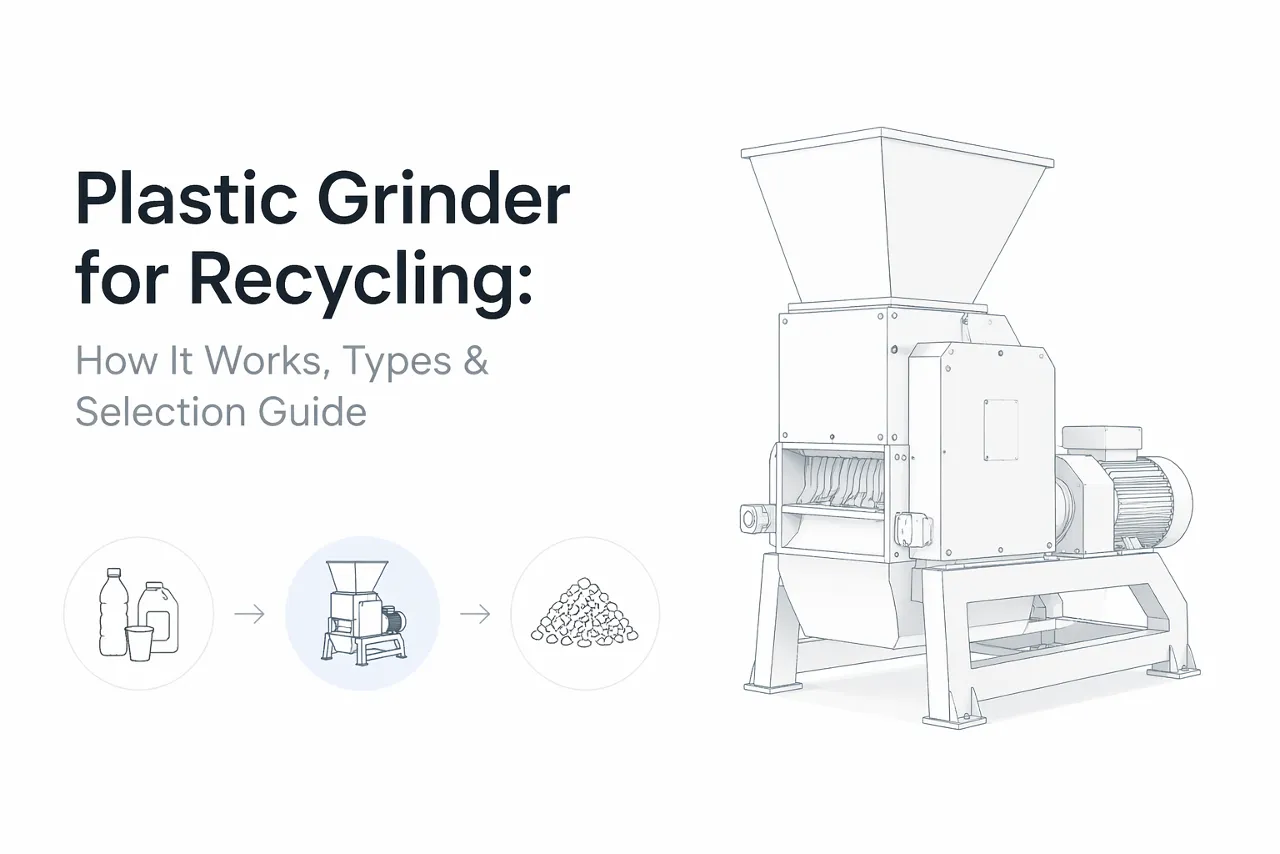
مطحنة البلاستيك للنفايات البلاستيكية تحول النفايات البلاستيكية - القوارير، الأنابيب، الصناديق، الفيلم، والملامح - إلى حبيبات متساوية صغيرة بما يكفي لتغذيتها مباشرة إلى المضخة أو الطاحونة. بدون هذه الخطوة لتقليل الحجم، لا يمكن لمعظم خطوط التدوير معالجة المواد المستلمة على نطاق واسع. يغطي هذا الدليل كيفية عمل الآلة، وأي أنواع موجودة، وما هي المواصفات التي تهم حقًا، وكيفية مطابقة الآلة المناسبة لمتطلباتك الخاصة في المواد والقدرة على التدوير.
ما هو مطحنة البلاستيك للنفايات البلاستيكية؟
مطحنة البلاستيك - تُسمى أيضًا الطاحونة البلاستيكية أو الكرش البلاستيكي في الأسواق المختلفة - هي آلة لتقليل الحجم تقطع النفايات البلاستيكية الكبيرة إلى جزيئات صغيرة ومتساوية، عادة ما تكون من 4-25 مليمتر في قطر. يتم إنتاج المخرجات (تُسمى إعادة التدوير أو الحبيبات) بجوانب نظيفة، تتحرك بحرية، جاهزة للمرحلة التالية: الغسل، الدمج، أو إعادة الطباعة مباشرة إلى الحبيبات الجديدة.
تستخدم مصطلحات الطاحونة، الطاحونة، والكرش بشكل متبادل في صناعة إعادة تدوير البلاستيك، رغم أن هناك فرق تقني:
- حبيبات — قطع دقيق عند سرعة المحور المتوسطة (200-600 دورة في الدقيقة)، إنتاج حبيبات متساوية مع أقل كمية من الغبار؛ الخطوة النهائية لتقليل الحجم القياسية
- الطاحونة — تقليل الحجم بسرعة أعلى وأكثر تطرفًا للمواد المدخلة الصعبة أو الكبيرة الحجم
- كسارة — تقليل الحجم الأولي للمواد الكبيرة أو الحوائط السميكة (القوارير، الصناديق، الأنابيب السميكة) قبل الطحن؛ راجع لدينا دليل ماكينة كسارة البلاستيك للتفاصيل الكاملة
في الواقع، تتعامل الآلة الواحدة غالبًا مع جميع هذه الوظائف الثلاث. لا يهم اختيار اسم الآلة عادة ما يعكس فرق أداء معين — ما يهم هو تصميم المحور، سرعة القطع، و حجم الشاشة.
كيف تعمل مطحنة البلاستيك
تشارك جميع مطاحن البلاستيك نفس المبدأ التشغيلي: محور متحرك مزود بلوحات قطع يعمل ضد لوحات محور ثابتة لتقطيع البلاستيك القادم إلى قطع صغيرة تدريجيًا. يمر العملية بخمس مراحل:
- يٌطعم — يدخل المواد إلى غرفة القطع من خلال صندوق التغذية، يتم تغذيتها يدويًا، أو عبر الناقل، أو مباشرة من خط الإنتاج.
- القطع الأولي — تمر لوحات المحور (التحرك) بجانب لوحات المحور ( الثابتة) عند تضيق كبير، تقطع البلاستيك. سرعة المحور تتراوح بين 200-900 دورة في الدقيقة بناءً على نوع الآلة والمادة.
- الطحن مرة أخرى — القطع التي لا تزال كبيرة جدًا للخروج تُعيد تدويرها داخل غرفة القطع وتُقطع مرة أخرى.
- إطلاق الشاشة — تتحكم شبكة مفتورة في قاع الغرفة في حجم الجزيئات المخرجة. فقط الجزيئات الصغيرة بما يكفي للعبور تخرج من الآلة. قطر فتحات الشبكة القياسية: 6، 8، 10، 12، 15، 20، 25 مليمتر.
- التجميع. — تسقط الحبيبات الناتجة في صندوق التجميع أو تنقل جويًا إلى المرحلة التالية من العملية (المغسلة، المجففة، المضخة).
الشاشة هي ميكانيكية التحكم في الحجم الرئيسية. تغيير الشاشة يغير حجم الجزيئات الناتجة دون أي تعديل آخر للآلة. تسمح معظم الطاحونات التجارية بتغيير الشاشة دون أدوات في أقل من خمس دقائق.
أنواع مطاحن البلاستيك للنفايات البلاستيكية
بموجب تصميم المحور
يحدد شكل المحور ما هي المواد التي تتعامل معها الآلة بشكل أكثر فعالية. الأربعة تصميمات الأكثر شيوعًا هي:
| نوع الدوار | أفضل مادة | السرعة المعتادة |
|---|---|---|
| محور مفتوح (السبيكة أو السهم) | المواد الصلبة السميكة الحجم — أنابيب HDPE، غرف ABS، مكونات PA | 200-400 دورة في الدقيقة |
| مروحة مغلقة (فواصل متداخلة) | أجزاء جدارية رقيقة، مادة التطهير، أقطاب مرنة | 300–600 لفة في الدقيقة |
| مروحة التغذية المقطعية | طحن مستمر على الخط من خلال المروحين والمقودات من قالب التحضير | 400–900 لفة في الدقيقة |
| مروحة دواسلة | البلاستيك المجمع المختلط أو الملوث، صناديق خالية كبيرة | 50–150 لفة في الدقيقة |
طحن رطب مقابل طحن جاف
هذه الفرقة غير معترف بها في معظم دليلات الشراء، ولكنها تؤثر بشكل كبير على جودة الإنتاج والتوافق في العمليات المتتابعة.
الطحن الجاف هو الوضع التشغيلي القياسي. يعمل حجرة القطع بدون ماء. الناتج هو حبيبات جافة جاهزة للبوليمرية أو المركبة فورًا. يمكن أن يؤدي ارتفاع معدل التدفق أو المواد الصعبة القطع إلى تدهور الرسابات الحساسة للحرارة (PVC، PET).
الطحن الرطب يضيف تدفق ماء محكم إلى حجرة القطع أثناء التشغيل. الفوائد تشمل:
- التبريد يمنع تدهور الرسابات الحساسة للحرارة
- يغسل الماء الغبار الدقيق من الحجرة بشكل مستمر
- تُغسل العلامات، الأوساخ، والتلوث السطحي جزئيًا أثناء الطحن
الطحن الرطب هو المعيار في خطوط إعادة تدوير زجاجات PET، حيث تكون الحساسية للحرارة وتلوث العلامات مشكلة — انظر إلى مزايا الطحن الرطب للزجاجات البلاستيكية للتحليل التفصيلي. العيب: يجب أن يمر الحبيبات الجافة الرطبة من خلال مجفف مركزي أو مجفف هواء ساخن قبل العمليات المتتابعة، مما يزيد من تكلفة الاستثمار والتشغيل.
بحسب حجم الآلة وتطبيقها
- طحنات صغيرة/مقياس مختبر (7.5–22 كيلوواط): إنتاج 50–300 كيلوغرام/ساعة. تستخدم في ورش إعادة التدوير الصغيرة، مختبرات الأبحاث، أو على الخط مع آلة تحضير واحدة لاعادة تدوير المروحين والمقودات.
- طحنات صناعية متوسطة المدى (22–90 كيلوواط): إنتاج 300–1,000 كيلوغرام/ساعة. هي العمود الفقري لمعظم مرافق إعادة تدوير البلاستيك التي تتعامل مع تدفقات مواد متسقة واحدة أو اثنتين.
- طحنات صناعية ثقيلة (90–250+ كيلوواط): إنتاج 1,000–5,000 كيلوغرام/ساعة. للمنشآت الكبيرة التي تتعامل مع النفايات بعد الاستخدام، البايلات البلاستيكية، أو قطع التبريد الكبيرة.
توصيات محددة للمادة
ليس كل آلة طحن البلاستيك تعمل بنفس الكفاءة مع جميع أنواع الراتنجات. فخصائص المادة مثل الصلابة ودرجة حرارة الذوبان والشكل ومستوى التلوث تحدد الإعدادات المناسبة للآلة. يمكنك استخدام هذا الجدول كنقطة انطلاق.
| مادة | Main Challenge | Recommended Configuration |
|---|---|---|
| زجاجات PET | Heat-sensitive resin; label contamination; caps | Wet granulator, tangential feed rotor, 8–10 mm screen, metal detector upstream |
| البولي إيثيلين عالي الكثافة / البولي بروبيلين الصلب (crates, drums, thick pipe) | High impact loads; large input dimensions | Heavy-duty open rotor, 200–350 RPM, pre-shredding recommended for pieces over 500 mm |
| PE / PP film (packaging, agricultural) | Material wraps around rotor; feeding inconsistency | Anti-wrap rotor design, force-feed roller system, 10–15 mm screen, slower intake speed |
| PVC profiles and pipe | Chlorine off-gassing; rapid blade wear; fine dust | Closed rotor with hardened blades (SKD11 or carbide), dust extraction system, dry grinding only — see our PVC grinding vs. crushing guide |
| ABS / PS (electronics, housings) | Brittle fracture; metal contamination risk from e-waste | Metal detector upstream, slow-speed grinder, 6–8 mm screen, sound insulation enclosure |
| Nylon / engineering plastics | Tough and abrasive; heat build-up in chamber | Water cooling or wet grinding, tungsten carbide-tipped blades, 6–10 mm screen |
الخلاصة الرئيسية: لتمكين المعالجة المتزامنة لأكثر من نوع من المواد على نفس الخط، يُنصح باختيٯار آلة تكرير بحاويات شاشات قابلة للتغيير بسرعة مزودة بهندسة دوارة مناسبة لأكثر المواد صعوبة في المعاللة، ثم تعديل حجم الشاشات ومعدل التغذية للمواميل الأخف.
Key Specifications to Evaluate Before You Buy
المواصفات الفنية للمصنعين غالبًا ما تركز على أرقام السعة القصوى. غير أهمية هذه الأفراد في التطبيقات العملية ما يلي:
سعة الإنتاج
Rated in kg/h, but always request capacity figures for your specific material and screen size. A machine rated at 600 kg/h on rigid HDPE regrind may deliver only 150–200 kg/h on flexible PE film. Ask for a material test or include a capacity guarantee in the purchase contract.
Cutting Chamber Width and Rotor Diameter
Chamber width determines the maximum input dimension the machine accepts without pre-cutting. Rotor diameter affects cutting energy: a larger-diameter rotor at the same RPM delivers higher blade peripheral speed and more shearing force. For pipe or profile recycling, confirm chamber width covers your largest cross-section.
Screen Hole Diameter
This is the direct control over output particle size. Standard options: 6, 8, 10, 12, 15, 20, and 25 mm. Most downstream extruders and compounders require 6–12 mm granulate — confirm your pelletizer’s feed specification before specifying the screen. Our دليل آلة تحبيب البلاستيك covers the full downstream requirements.
قدرة المحرك
Undersized motors cause repeated thermal shutdowns and shortened motor life. As a practical rule: for rigid plastics, allow 1 kW per 5–8 kg/h of rated throughput. For flexible or low-density material (film, foam), allow 1 kW per 10–15 kg/h. Always size for your peak throughput, not your average.
Blade Material and Replacement Cost
Blades are a consumable with a direct impact on operating cost. D2 tool steel blades (hardness HRC 58–62) handle most standard applications. For abrasive materials — glass-filled nylon, PVC, contaminated post-consumer waste — SKD11 or tungsten carbide insert blades extend service life by 3–5x but cost more upfront. Confirm blade replacement price and local availability before committing to a machine. For a detailed breakdown, see our guide to selecting plastic granulator blades.
Noise Level and Dust Control
Industrial granulators typically generate 85–100 dB(A) without enclosures. EU and US workplace safety regulations require hearing protection above 85 dB(A) and engineering controls above 90 dB(A). Ask for the machine’s measured sound pressure level at 1 m with the standard hopper installed — not the theoretical value. Dust extraction connection (typically 150–250 mm ducting) is essential for PVC, ABS, and any dry grinding of contaminated material.
Plastic Grinder vs. Shredder vs. Crusher: What’s the Difference?
These three machine types sit at different points in the size-reduction chain. Using the wrong one — or skipping one — creates bottlenecks and poor regrind quality.
| Plastic Grinder / Granulator | آلة تمزيق البلاستيك | كسارة بلاستيك | |
|---|---|---|---|
| حجم الخروج | 4–25 mm (screen-controlled) | 20–150 mm (coarse, irregular) | 10–80 mm (medium) |
| Output uniformity | High — consistent particle shape | Low — strips and chunks | واسطة |
| نطاق الإنتاجية | 50–5,000 kg/h | 200–15,000+ kg/h | 100–3,000 kg/h |
| Primary role | Final size reduction for extrusion-ready regrind | Volume reduction of bulky waste; primary processing of mixed waste | نقصان متوسط في الحجم بين آلة التفتيق والجرانولاتور. |
| Typical position in line | Last size-reduction step before washing or extruding | First step — primary reduction | Between shredder and granulator |
For most post-consumer plastic recycling operations, the optimal sequence is: Shredder → Washer → Crusher → Granulator → Pelletizer. صفحة المقارنة بين المعدات<」. shredder vs. granulator vs. pelletizer selection guide.
Plastic Grinder Maintenance: What to Monitor
لتحقيق أعلى مستويات المتانة وأطول عمر تشغيلي ممكنين، يجب إيلاء اهتمام دوري لثل
Blade Inspection and Sharpening
Dull blades produce irregular particle shapes, more fines, higher energy consumption, and heat build-up. Inspect blades every 200–500 operating hours depending on material abrasiveness — PVC and glass-filled resins wear blades 3–5x faster than clean HDPE or PP. Most granulator blades can be resharpened 3–5 times before replacement. Keep a spare set so the machine is never down during blade service.
Screen Inspection
Check the screen for cracks, deformation, or enlarged holes after every 500 operating hours. A damaged screen allows oversized particles to pass, directly contaminating your regrind and potentially causing blockages in downstream extruders. Keep at least two spare screens per machine — one installed, one ready.
Bearing Temperature and Lubrication
Rotor bearings operate under continuous high load. Monitor bearing temperature during operation — sustained readings above 80°C indicate inadequate lubrication, misalignment, or overload. Regrease according to the manufacturer’s schedule: typically every 500–1,000 hours for sealed bearings, more frequently in dusty or high-humidity environments. Always use the grease type specified by the bearing manufacturer — mixing grease types accelerates wear.
الأسئلة الشائعة
ما هو الفرق بين الطاحونة البلاستيكية والمجلفنة البلاستيكية؟
In the plastic recycling industry, the terms are used interchangeably. Both describe a machine that reduces plastic waste to small, screen-controlled particles using a rotor-and-stator cutting system. If a technical distinction is made: a granulator produces highly uniform granules at medium speed (200–600 RPM) with minimal fines, while a grinder may operate at higher speed for more aggressive size reduction of bulkier or tougher material. The machine function matters more than the label.
هل يمكن للطحن الكهربائي معالجة جميع أنواع البلاستيك؟
Most commercial granulators handle the six common recyclable plastics — HDPE, PP, PET, PVC, ABS, and PS — but material properties require different configurations. PET requires wet grinding to manage heat sensitivity; PE film needs an anti-wrap rotor and force-feed system; PVC requires hardened blades and dust extraction. A single granulator can be configured for multiple materials by swapping screens and adjusting feed rate, but it cannot be optimized for all materials simultaneously. Multi-material operations typically run material-dedicated machines or maintain a library of screen and blade configurations.
كم يكلف طاحونة البلاستيك الصناعية؟
Entry-level granulators (7.5–15 kW) for sprue and runner recycling start at $3,000–$8,000 USD. Mid-range industrial units (22–55 kW, 300–800 kg/h) typically cost $15,000–$50,000. Heavy-duty systems for post-consumer recycling lines (90 kW+, 1,000+ kg/h) range from $60,000 to over $200,000 depending on rotor design, automation level, wet or dry configuration, and manufacturer. Request a formal quotation with specifications locked to your material type and throughput requirement — capacity-to-cost ratios vary significantly by configuration.
ما هو حجم الجسيمات التي ينتجها الطحن البلاستيكي؟
Output particle size is directly controlled by the screen installed in the cutting chamber. Standard screen hole diameters range from 6 mm (fine granulate for direct extrusion) to 25 mm (coarse regrind for pre-drying or washing). For feeding a standard single-screw or twin-screw extruder, 6–12 mm granulate is most common. Changing the screen — a five-minute operation on most machines — changes the output size. No other machine adjustment is needed.
Choosing the Right Plastic Grinder for Your Recycling Line
The right plastic recycling grinder is defined by three parameters: your input material, your required throughput, and your downstream process. Get these three inputs wrong and no amount of machine quality compensates.
Start with your material — its density, stiffness, contamination level, and heat sensitivity determine rotor type, blade material, screen size, and whether you need wet or dry grinding. Then size the motor and chamber width for your peak throughput, not your average. Finally, confirm the output particle size your downstream pelletizer or compounder requires and specify the screen accordingly. Our detailed plastic granulator selection guide يقوم بشرح هذه العملية خطوة بخطوة.
Energycle manufactures industrial plastic granulators and plastic grinders for recycling lines handling everything from clean injection molding scrap to mixed post-consumer film and rigid waste. اتصل بفريقنا الهندسي with your material type, input dimensions, throughput target, and required output particle size — we will recommend the correct configuration and provide a formal quotation.
