

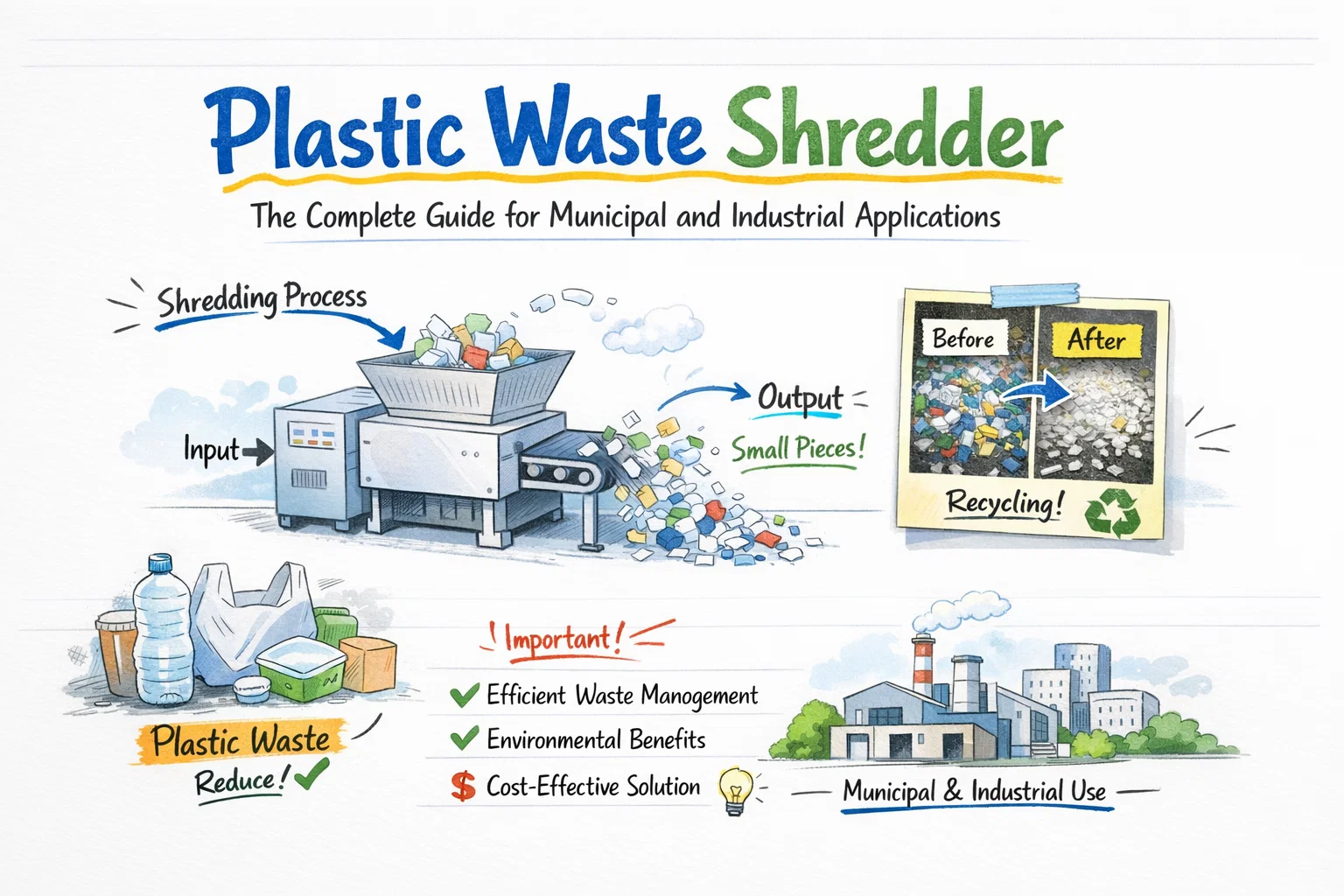
Egy műanyag hulladék aprító Összefoglalva, a robbogó gép ezek a célokra használható, de nem felel meg minden esetben a kívánt eredményeket nyújtani.
Íme a részletes leírás a számlázást és vevőelőkészítéset vezető munkatársak számára: itt találhatók a gép típusai, a előforduló elősortolási elvárások, a termelési kapacitás tervezése, a MRF és MSW linéumok integrálása, illetve a valós árparancsok.
What Is a Plastic Waste Shredder?
A plastic waste shredder is industrial size-reduction equipment designed to break down plastic items — bottles, drums, pipes, film, pallets — into consistent output fragments, typically 30–150 mm in size. According to equipment specialists, shredders serve as the critical first stage in almost every plastic recycling process, making downstream washing, optical sorting, and pelletizing significantly more efficient.
A granulátoroktól eltérően, amelyek magas sebességgel működnek és előre széttört anyagot igényelnek, a műanyag hulladék szalagkészítők használják alacsony sebességű, nagy nyomatékú Íme a szöveg magyarul: A kiszárító működésének során a gép általában 20–80 RPM sebességben működik, és képes kezelni bővformátú, kontaminált vagy mélang fejlesztőanyagokat bezáró előkészítés nélkül. Ezért alkalmas az olyan anyagok kezelésére, amelyek származnak a komunal összetett hulladékforráskölökból vagy a gyártási utáni irokokból a iparágban.
Types of Plastic Waste Shredder Machines
A helyes szektori specifikációkkal rendelkező szűrőt választva, a recykkelési üzemekben gyakran előforduló hibák között egyeket elkerülhető.
Egytengelyes aprítógépek
Egy egyszerű szélképű szikrázó egy forgó szélképet használ, amelyen találhatók fix félek, és amelyek ellentétes irányban mozognak egy távolíthatatlan, álló ellenfél-kard ellen. Ez a típus a következő területeken kiemelkedik: film, bags, lightweight rigid plasticsa felhasznált utánfutó csomagolás, mert az eredmény mérete a alsó szűrővel van szabályozva.
- Throughput range: 200 kg/h – 2,000 kg/h
- Motor power: 15–75 kW
- Legjobb: PET bottle bales, LDPE film rolls, injection molding scrap
- Árkategória: $10,000 – $40,000
Kéttengelyes aprítógépek
Egy két lábú (kép-lábú) szűrő összeomló, ellentént irányban forgó két lábot használ, amelyek bevonják a anyagot belép és megsemmisítenek azt. Ez biztosítja higher torque and handles rigid, thick-walled plastics — HDPE-edény, PVC csövek, autóvédőberakatok — amelyek leállíthatnák a egytengásos egységet.
- Throughput range: 500 kg/h – 5,000 kg/h
- Motor power: 30–200 kW
- Legjobb: Mixed rigid plastic bales, large hollow containers, industrial plastic scrap
- Árkategória: $25,000 – $80,000
Négytengelyes aprítók
Négytollas szalagvágó két további szalagfűtést ad hozzá második szárításához, ami így készül tighter, more uniform particle sizes in a single machine. This design is preferred in RDF (Refuse-Derived Fuel) production and high-purity recycling lines where output consistency is critical.
- Throughput range: 1,000 kg/h – 10,000+ kg/h
- Motor power: 75–1,250 kW
- Legjobb: Mixed MSW plastics, large MRF pre-treatment, RDF/SRF preparation
- Árkategória: $60,000 – $250,000+
Válassza ki a Megfelelő Típust: Gyors Utánzó
| Kritériumok | Egytengelyes | Dupla tengely | Négytengelyes |
|---|---|---|---|
| Legjobb műanyag típusok | Fólia, könnyű merev | Merev, vastag falú | Keverett/szelektív |
| Kimeneti méret szabályozása | Szűrővezérelt | Mérsékelt | A legnagyobb egyenletesség |
| Tisztítási problémák kezelése | Alacsony | Közepes | Magas |
| MSW/MRF integráció | Második szakasz | Első + második szakasz | Első nagy skálájú |
| Bevezető ár | $10K | $25K | $60K+ |
A Keverett Műanyag Hulladékfeldolgozás Kihívása
A keverett műanyag hulladék a legrugalmasabb táplálékforrás, amelyet egy daraboló gépnek kell kezelnie. Tisztítás, változó sűrűség és nem kompatibilis polimer típusok mind csökkentik az hatékony kapacitást és növelik a vágólap kopását. A Reworld szerint a keverett műanyagok nem lehetnek hatékonyan újrahasznosítva megfelelő szűrés nélkül az egyes polimer típusokra — és a darabolás az a lépés, amely lehetővé teszi a szűrés lehetőségét először.
Három specifikus kihívás okozza a legtöbb működési problémát:
- Sűrűség változatossága: Egyetlen táplálék adag lehet tartalmazni könnyű LDPE fóliát (sűrűség ~0.92 g/cm³) mellett merev HDPE edényeket (sűrűség ~0.95 g/cm³) és nehéz PVC csőket (sűrűség ~1.4 g/cm³). A daraboló gépnek kezelnie kell mindent, anélkül, hogy elzáródna.
- Tisztítási terhelés: Föld, ételmaradék, fém rögzítők és üveg darabok a műanyag hulladékban gyorsítják a vágólap kopását. Szánjon 800–1,500 működési órára vágólap cserére a jelentősen szennyezett folyamatok esetén.
- Nagyobb vagy összefont anyagok: Hosszú műanyag csövek, kötőszalagok és bádogozott fólia körbe ölelik a tengelyeket. A gépek, amelyek automatikus visszaforgatásos forgást (általánosan előrejelzett a legtöbb kettős tengelyes modellben) megelőzi a legtöbb elzáródást működtető beavatkozás nélkül.
Darabolás Előtti Szűrés Előírásai
Running unsorted waste directly into a shredder without pre-conditioning is the fastest way to damage cutting blades and create dangerous jams. For both municipal and industrial operations, a A pre-sorolásos szakasz segíti megőrizni a szűrődést, és hosszabb ideig használható legyen..
Minimum pre-sort steps for MRF applications:
- Bag breaking: Open garbage bags with a dedicated bag-breaker machine before the shredder receives feed. Intact bags trap air and cause inconsistent shredding.
- Coarse trommel screening: A rotating drum screen (typically 80–150 mm mesh) removes fines, organics, and undersized material that don’t need shredding — reducing the load on the shredder by 15–30%.
- Ferrous metal removal: Install an sáv feletti mágneses szeparátor A legfontosabb különbség a fém részecskék tartózkodása a bevonó konveier felett. A bevitett anyagban maradó ők az órák alatt megsemmisíthetik a csúcsoló lábokat.
- Manual pick station: Íme a magyarul változtatott versió: „Egy manuális ellenőrzési pont vagy AI-támogatott kékszolgálatrendszer használata lehetőséget ad arra, hogy kockázatos objektumokat – pl. gáz cilindereket, akkumulátoreket és nagy méretű szükszétlenek a gép hibás működése vagy teljes károsodása.
For industrial post-production plastic scrap, pre-sorting requirements are simpler: separate by resin type (PET vs. HDPE vs. PP) if purity of the shredded output matters. If the output feeds an RDF line, mixed resins are acceptable.
Throughput Planning: How to Calculate Real Output
Manufacturer-rated capacity figures are almost always higher than real-world output. A shredder rated at 1,000 kg/h on clean HDPE flakes will deliver far less on contaminated mixed municipal plastics.
Use this two-step adjustment formula to calculate realistic throughput:
Step 1 — Material Hardness Index (MHI) adjustment: Real output = Rated capacity × MHI
Common MHI values:
- Clean PET/HDPE bottles: 0.80–0.90
- Mixed rigid plastics: 0.60–0.70
- Mixed MSW plastics (contaminated): 0.45–0.60
Step 2 — System Efficiency Coefficient (SEC) adjustment: Effective output = Step 1 result × SEC (typically 0.70–0.85 for continuous operations)
Example: A shredder rated at 2,000 kg/h on mixed rigid plastics (MHI = 0.65) operating with a SEC of 0.75:
- Step 1: 2,000 × 0.65 = 1,300 kg/h
- Step 2: 1,300 × 0.75 = 975 kg/h real output
This means a plant planning to process 15 tonnes/day (two 8-hour shifts) actually needs a machine rated at approximately 2,000 kg/h minimum — not 1,000 kg/h. Always size up, not down. A túl kis szűrőegyensúlyozó az összes folyamatliniát korlátozza, míg egy túl nagy egység csak kisebb növekedést hozhat el a tonna alapján az üzemeltetési költségekben.
Plastic Waste Shredder in MRF and MSW Sorting Lines
Egy plastic waste shredder machine Íme a magyarul változtatott szöveg:.
Typical MRF Integration Sequence
- Receiving hopper → raw mixed waste input
- Bag breaker + trommel screen → pre-conditioning
- Plasztik hulladék szalagfűrész → size reduction to 50–150 mm
- Overband magnet → ferrous metal removal
- Aluláramlás szélesítős → non-ferrous metal removal
- Air classifier / ballistic separator → light vs. heavy fraction separation
- NIR optical sorter → PET / HDPE / PP / PVC identification and ejection
- Baler or conveyor to downstream → baled plastic fractions to recycler
The shredder’s output size directly determines the accuracy of every separation stage that follows. A NIR optical sorter, for example, performs best on particles between 40–120 mm — feed that is too large or too small reduces sort purity.
Integration with Energycle’s plastic shredders
Energycle’s plastic waste shredder line is designed for direct integration with downstream MRF sorting equipment. The shredders include PLC control and adjustable output screens, allowing operators to dial in particle size to match the requirements of their NIR sorters or washing lines. For plants processing rigid containers, the Merev műanyag aprítógép series handles HDPE, PVC, and ABS at industrial scale.
Plastic Waste Shredder Cost: What to Budget in 2026
According to Energycle’s pricing data, plastic waste shredder machines range from $10,000 és $80,000 között a tengelybeállítás, a rotor szélessége, a vágóanyag és a motor teljesítménye függvényében.
| Géptípus | Teljesítmény | Árkategória (USD) | Legjobb Alkalmazás |
|---|---|---|---|
| Egytengelyes daráló | 200–2,000 kg/h | $10,000 – $40,000 | Film, palackok, könnyű merev |
| Dupla tengelyű aprító | 500–5,000 kg/h | $25,000 – $80,000 | Merev, vastag falú tárolóedények |
| Négytengelyes szalagvágó | 1,000–10,000+ kg/h | $60,000 – $250,000+ | MSW, MRF, RDF gyártás |
| Indítási rendszer (vágó + granulátor + szállítószalag) | 100–500 kg/h | $15,000 – $60,000 | Kis hulladékgyűjtők, pilótalínek |
A gép ára feletti fő költséghajtók:
- Vágóanyag: A D2 eszközhöz használt acél előre nagyobb költséget jelent, de 2–3× hosszabb ideig tart, mint a szabványos szénacél vágók az abrasív anyagoknál.
- Motor power: Minden 15 kW hozzáadott motorerő körülbelül $3,000–$8,000-t ad hozzá a gép árához.
- Hydraulikus toló: Egy integrált tolóegység 5,000–15,000 forintba kerül, de elengedhetetlen a film tömbökhoz hasonló alacsony tömegtömegű anyagokhoz.
- Telepítés és üzembe helyezés: Szánjon 10–15% gépáronyi összeget a helyszíni telepítésre, különösen a MRF integrációval együtt a szállítóberendezések esetében.
Fontos megállapítások és következő lépések:
A műanyag hulladék szalagvágó kiválasztása egy kapacitás és integráció döntés, nem csak egy gép vásárlása. Illesztsen a szalagvágó típusát a műanyag bejárati folyadékhoz, alkalmazza az MHI és SEC módosításokat a helyes méretezéshez, és jelölje meg a előrendezési berendezéseket az védelmére. Ha helyesen integrálják egy MRF vagy MSW rendszerezési vonalba, a megfelelően meghatározott szalagvágó csökkenti a további feldolgozási költségeket, javítja a rendszerezési tisztaságot, és meghosszabbítja minden gép élettartamát, amely után következik.
Kész a megfelelő gép meghatározására működéséhez? Fedezze fel a Energycle műanyag szalagvágó sorozatát vagy lépjen kapcsolatba az mérnöki csapattal egyedi áramlási értékelés érdekében.
Gyakran feltett kérdések
Mi egy műanyag hulladék szalagvágó?
A műanyag hulladék szalagvágó egy ipari gép, amely alacsony sebességű, nagy nyomatékú forgó vágókkal használja fel a műanyag hulladékot egyenletes darabokra tépni és vágani, általában 30–150 mm, újrahasznosítás vagy hulladékfeldolgozás céljából. Minden műanyag típusot kezel, a vékony filmektől a merev tárolóedényekig, és a MRF és hulladékfeldolgozó üzem működési folyamatokban a fő méretcsökkentési lépés.
Képes-e a szalagvágó kezelni a kevert műanyag hulladékot?
Igen, a kétszárnyú vagy négy szárnyú műanyag hulladék szalagvágó gép képes feldolgozni vegyes műanyag hulladékáramokat, beleértve a szennyezett és heterogén önkormányzati műanyag hulladékot. Azonban hatékony előrendszerezés — tasakbontás, mágneses fém eltávolítás, és vastag trommel szűrés — szükséges előtte, hogy védje a vágókat és fenntartsa a folyamatos áramlást. A szennyezett vegyes áram 40–55%-kal csökkenti az hatékony kapacitást a tiszta egyreszterű bemenethez képest.
Mennyibe kerül egy műanyag hulladék szalagvágó?
Műanyag hulladék szalagvágó árai 10,000 dollárról indulnak egy kis egy szárnyú egységtől, és meghaladhatják a 250,000 dollárt egy nagy kapacitású négy szárnyú ipari rendszer esetében. Az Energycle 2026-os árazási adatai szerint a leggyakoribb árkategória egy gyártásra kész kétszárnyú szalagvágó gép esetében az MRF vagy hulladékgyűjtő üzem használatára 25,000–80,000 dollár között van, és a teljes telepített rendszer költsége (szállítószalagok és vezérlők beértetve) általában 25–40%-kal magasabb, mint a gép ára önmagában.
