

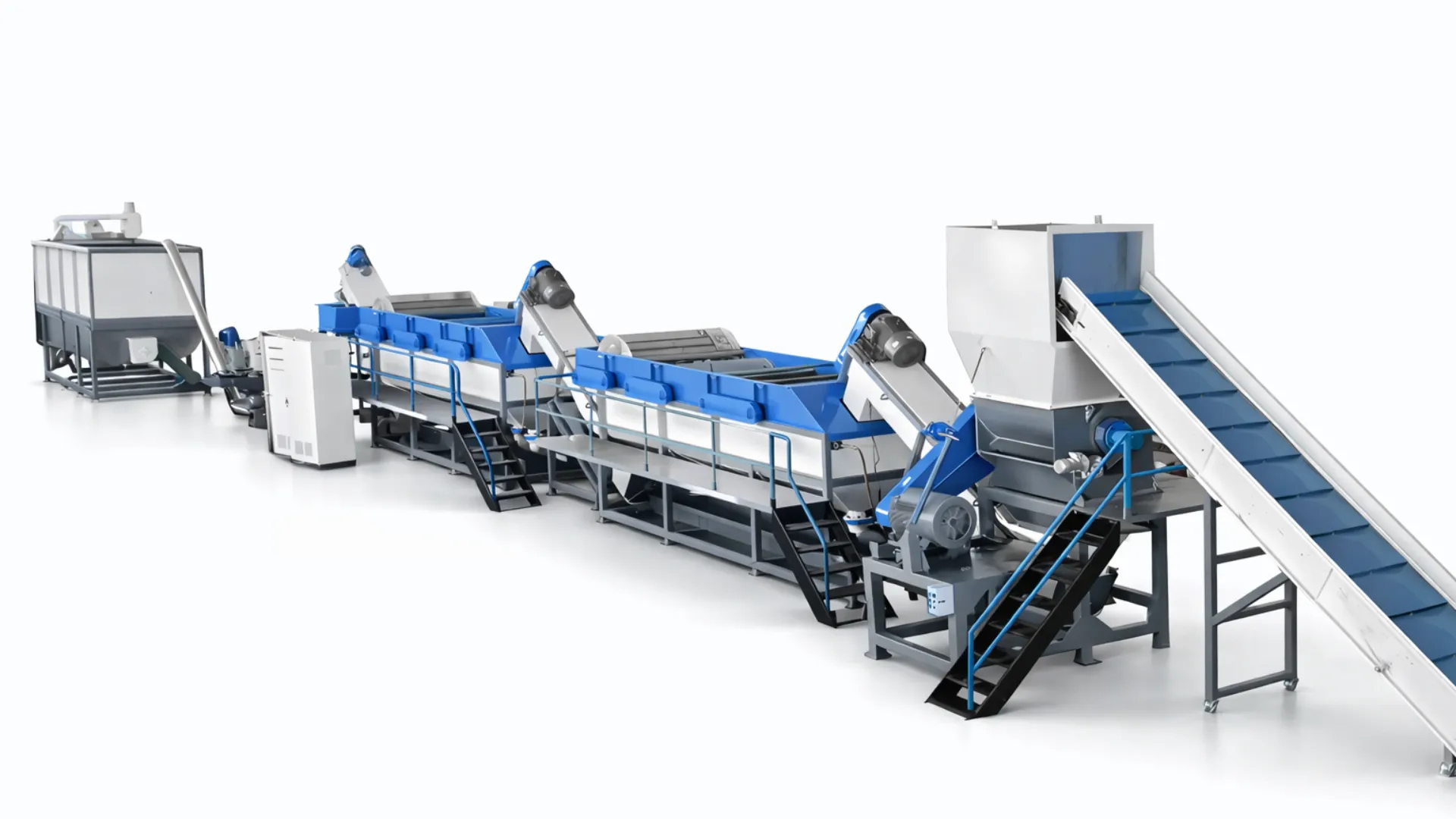
A hard plastic recycling line in Kenya should be designed around a verified stream of HDPE, PP or another target resin, the contamination actually collected, available utilities and a buyer’s product specification. A “500 kg/h line” or any other nameplate rate does not establish saleable output, food-contact suitability or project profitability. Those results require feed trials, a mass balance, quality testing and a site-specific business case.
Start with material and market evidence
قبل اختيار المعدات، قم بتوثيق مصدر البلاستيك القاسي، كم يمكن توفيره عبر التغيرات الموسمية وما هي المنتجات التي تحتوي عليه. يمكن أن تشمل المجاري الشائعة القوارير، الصناديق، الدلاء، الأحواض، الأغطية والنفايات المصنوعة بالحقن. قم بفصل HDPE الطبيعي، HDPE الملون، PP والبلاستيك القاسي المختلط عندما يكون البائعون المستهدفون يقدرون الفرق بينهم.
الحصول على متطلبات القبول المكتوبة من مشترين المحطات أو البالات المحتملين. الخصائص ذات الصلة قد تشمل تحديد البوليمر، اللون، الرطوبة، الرماد، كثافة الحجم، تدفق الذوبان، الرائحة، حجم الجسيمات، والتلوث المحدود. "البالات النظيفة" ليست مواصفة قابلة للتحقق.
Kenya compliance belongs in the project plan
Kenya’s Sustainable Waste Management Act establishes a national framework for sustainable waste management. NEMA publishes the current نفايات مطبوعة، مسؤولية المنتج الممتد وأحكام إدارة البلاستيك وينبغي التحقق من الوثائق العملية.
يجب على المُعيد التدوير التأكد من التراخيص المعمول بها، التقييم البيئي، نقل النفايات، بيئة العمل، سحب أو إطلاق المياه، متطلبات المحافظة والنار مع السلطات الكينية المختصة والمستشارين المحليين المؤهلين. قد تتغير المتطلبات وتعتمد على الموقع والنشاط، لذا فإن تقديم عرض للآلات ليس موافقة على الامتثال.
Recommended process development sequence
| منصة | غاية | الأدلة التي يجب جمعها |
|---|---|---|
| Feed audit | Define resin, format and contamination | Lot weights, samples, photographs and seasonal supply |
| فرز | Remove incompatible or unsafe items | Reject categories and mass |
| تقليل الحجم | Create a controlled, washable particle | Size distribution, fines and motor load |
| غسيل | Remove soil, labels, product residue and other target contaminants | Samples after each washing stage |
| الفرز بناءً على الكثافة | Split a defined float and sink fraction | Purity and recovery at both outlets |
| التصفية الجافة والتجفيف | Meet storage or extrusion moisture requirement | Moisture using an agreed test method |
| Pelletizing if required | Homogenise, filter and form pellets | Filtration, melt flow, colour and application tests |
1. Sort rigid plastics before shredding
يمكن استخدام التصفية اليدوية، المغناطيسات، الكشف عن المعادن أو التصفية بالأجهزة الحساسة وفقًا للتيار الداخل. قم بإزالة البطاريات، الأكياس تحت ضغط، النفايات الطبية وأكياس تحتوي على بقايا خطيرة غير معروفة عبر إجراء معتمد. احفظ البلاستيك PVC والأحماض اللاصقة الأخرى خارج تدفق البولي أوليفين حيث يحد المشتري منها.
التصفية بعد تقطيعها أصعب لأن العلامات والشظايا الصغيرة توزع عبر المدخل. حدد قواعد قبول الموردين وإرجاع بيانات التلوث المتكررة إلى شركاء التجميع.
2. اختر تقليل الحجم من العنصر الفعلي
يمكن للكسارة تقبيل الأشياء الكبيرة أو ذات الجدران السميكة وتقديم تغذية محكمة إلى الكسارة. تنتج الكسارة رقائق صغيرة من إعادة التدوير للغسل أو الطباعة. قد تحتاج بعض الأنواع النظيفة من إعادة التدوير إلى مرحلة واحدة فقط؛ بينما قد يستفيد الدروع الكبيرة أو الصناديق أو التغذية الكبيرة المختلطة من مرحلتين.
حدد أكبر عنصر، سمك الجدار، كثافة الحجم، خطر المعادن و حجم الإطلاق المطلوب. تأكد من وصول السكين، تغيير الشاشة، حماية من التآكل، التحكم في الغبار والضوضاء. يجب مجموعة مسحوقة البلاستيك تقييمه عن طريق اختبار المواد بدلاً من الطاقة الاستيعابية المسمية فقط.
3. Build washing around the contaminant
يمكن للغسل المسبق إطلاق الرمل والتراب العشوائي قبل معدات مكثفة. يغسل الغسل بالتراب الأسطح، بينما يمكن النظر في الغسل الساخن لزيت محدد، لصق أو بقايا منتج. زيادة درجة الحرارة والكيمياء تزيد من متطلبات الغسل، التسخين و المياه العادمة ويجب تبريرها بالتجارب.
يمكن للخزان المائي القائم على السقوط عادةً الحفاظ على HDPE وPP غير المملوء في جزء السقوط بينما تنغرق العديد من الأحجار، المعادن والمواد البلاستيكية الكثيفة. لا يمكنه الفصل بشكل موثوق بين HDPE وPP، وقد يتغير سلوك المركبات أو المكونات المرفقة. انظر إلى sink-float separation guide.
4. تصميم دائرة المياه قبل التشغيل
قائمة بتحضير الماء، التدوير، إزالة المواد الصلبة، معالجة الطين، والنفايات النهائية. يمكن استخدام إعادة تدوير الماء فقط إذا بقي التلوث السائل والمحلول داخل الحدود للعملية. قم بقياس التركيب الفعلي والنقل الزائد خلال التجارب بدلاً من التزام بنسبة إعادة التدوير الثابتة.
تتوفر المياه في كينيا وظروف الإطلاق محددة للموقع. قم بتصميم الأحواض والمعالجة حول كمية التلوث، ساعات التشغيل، والتنظيف المطلوب، مع تقديم إعداد للعينات وإزالة الطين بشكل آمن.
5. Dewater to a written output requirement
يستخدم جافي التناضح إزالة الماء الحر والموجود على السطح من الفلakes الصلبة. يمكن أن يتبعه الهواء الدافئ حيث تحتاج التخزين أو الطباعة إلى مستوى رطوبة منخفض. القيمة المطلوبة تعتمد على البوليمر، تصميم الطباعة، وقت التخزين، وشروط العميل؛ إنها ليست نسبة عامة.
خذ العينة بعد التشغيل المستقر واستخدم طريقة رطوبة مسجلة. قم بفحص التدفق، حالة الشاشة، حمل المحور، والنظام الهوائي قبل إضافة المزيد من الحرارة. آلة التجفيف الدوارة is one component, not a guarantee of final moisture.
6. قم بتحويل البلاستيك إلى كرات فقط عند الحاجة
يقبل بعض المشترين الطحن المعاد التدوير بعد الغسل؛ بينما يحتاج الآخرون إلى كرات مفلترة. يضيف الطحن عملية التذوب، التصفية، التبريد، القطع، الطاقة، والصيانة. يمكن أن يتحسن التغذية والتساوي، لكنه لا يتحول النفايات المختلطة أو غير الآمنة إلى رزين مناسب للأغذية.
يتطلب البلاستيك المعاد تدويره الملامس للطعام مسار تحكم في التغذية وتنظيف مناسب وفقًا للأنظمة في السوق المستهدفة. لا تُعرف المواد العادية المغسولة أو المسحوقة على شكل كريستال كـ "معدنية للطعام" دون التصريح اللازم والاختبار والموافقة من العملاء.
Calculate capacity with a mass balance
حدد الكمية القابلة للبيع وتقدير إنتاج الكتلة الجافة القابلة للبيع من التجارب الممثلة:
Required design input = target saleable output ÷ saleable yield ÷ planned operating availability
ثم قم بفحص الطاقة المستمرة في كل مرحلة بنفس التغذية. قد يوفر الخط المعد للدخل المسمى إنتاجًا جافًا أقل بعد إزالة العلامات، الأوساخ، الرطوبة، البلاستيك غير المناسب والنفايات الدقيقة. تضمين قدرة الفئة حيث يعمل عملية بشكل متقطع.
Develop Kenya-specific operating costs
استخدم الأسعار الحالية وبيانات الموقع للبلاستيك المجموع، النقل، رسوم الطاقة، الرسوم المطلوبة، الماء، المياه العادمة، العمالة، الإيجار، المستهلكات، تآكل الشاشة والسكين، الصيانة، التراخيص، الاختبارات المخبرية والتمويل. تقدير الإيرادات من الشروط المكتوبة للشراء وإنتاج الكتلة الجافة القابلة للبيع بشكل محافظ.
تشغيل حالات الحساسية للإنتاج الأقل، سعر البيع الأقل، التوفر المقلص والتعقيم الأعلى. لا يمكن للسعر التقليدي للكريستال أو معدل التحويل أو فترة الاسترداد إثبات الاقتصاد لمشروع كيني.
Factory acceptance and site acceptance
أتفق على ظروف الاختبار قبل الطلب. يجب أن يستخدم الاختبار في المصنع المادة الممثلة ويسجل الدخل الجاف، النفايات، الإنتاج القابل للبيع، الكهرباء، إضافة الماء، وقت التوقف عن العمل والنتائج الجودة لفترة مستقرة مسبقًا. يجب أن تكرر الاختبارات في الموقع المعايير ذات الصلة بعد أن تكون الخدمات المحلية والسكان جاهزين.
تدريب مشغل الوثائق، فترات الصيانة، قطع الغيار الحرجة والتحقق من السلامة. لا يجب بدء الإنتاج حتى يتم تشغيل الحماية، الأجهزة الطارئة، الحماية الكهربائية، التحكم في الغبار أو الدخان، وأنظمة المياه للإعداد المثبت.
الأسئلة الشائعة
هل يمكن للخط الكيني الصلب البلاستيكي معالجة HDPE وPP معًا؟
قد يتم معالجتهما في حملتين منفصلتين، ولكن الناتج المختلط مناسب فقط إذا قبل المشتري به. لا يمكن لمخزن المياه فصل HDPE غير المملوء من PP بشكل موثوق.
هل يصبح البلاستيك المعاد تدويره مناسباً للغذاء بعد عملية الغسيل والتحويل إلى كريستال؟
No. Food-contact suitability requires an approved feed and recycling pathway, decontamination evidence, testing and compliance with the destination market’s rules.
كيف يمكن للمشتري التحقق من قدرة الخط المعدة؟
استخدم مادة غذائية نموذجية، فترة تشغيل مسبقة بالاتفاق، وتوازن الكتلة الجافة. تأكد من جودة الإنتاج القابل للبيع واستهلاك الموارد والوقت غير المستخدم.
Prepare a material and site brief
إرسال عينات ممثلة من Energycle، تحليل التغذية، الإمداد الشهري المتوقع، تحديد المواصفات، تخطيط الموقع وأنظمة الخدمات. خط غسل البلاستيك القاسي يمكن بعد ذلك تكوينه وتحقيقه ضد متطلبات قابلة للقياس للمشروع الكيني.
