

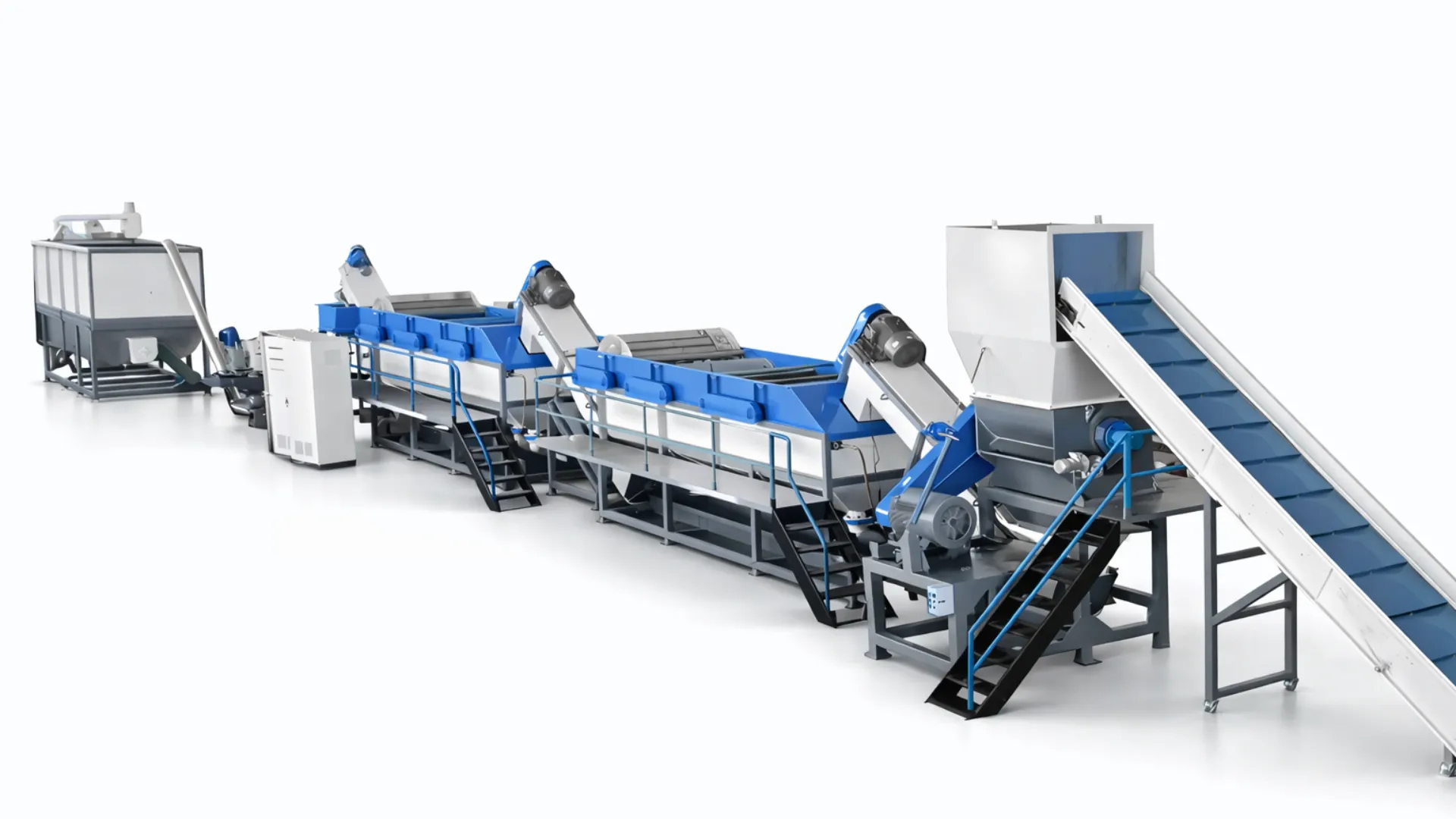
Eine harte Kunststoffrecycling-Anlage in Kenia sollte um einen überprüften HDPE-, PP- oder anderen Zielrohstoffstrom, die tatsächlich gesammelte Kontamination, verfügbare Einrichtungen und die Produktspezifikation des Käufers konzipiert werden. Ein “500 kg/h-Band” oder jeder andere Namen auf dem Schild stellt keine verkaufsfähige Ausgabe, Eignung für den Lebensmittelkontakt oder Projektrentabilität dar. Diese Ergebnisse erfordern Versuchsreihen, eine Massenbilanz, Qualitätsprüfungen und einen spezifischen Geschäftsfall vor Ort.
Beginnen Sie mit Material- und Marktbelegen
Bevor Sie Ausrüstung wählen, dokumentieren Sie, woher der harte Kunststoff kommt, wie viel durch saisonale Änderungen geliefert werden kann und welche Produkte ihn enthalten. Gemeinsame Ströme können Flaschen, Kisten, Eimer, Fässer, Verschlüsse und Spritzgussabfälle umfassen. Trennen Sie natürlichen HDPE, farbigen HDPE, PP und gemischte harte Kunststoffe, wenn die beabsichtigten Käufer sie unterschiedlich bewerten.
Erhalten Sie schriftliche Annahmeverpflichtungen von potenziellen Schrottkäufern oder Pelletkäufern. Relevante Eigenschaften können Polymeridentifikation, Farbe, Feuchtigkeit, Asche, Schüttgutdichte, Schmelzfließverhalten, Geruch, Partikelgröße und begrenzte Kontamination umfassen. “Reine Schrotte” ist keine überprüfbare Spezifikation.
Kenia-Konformität gehört in den Projektplan
Das Sustainable Waste Management Act von Kenia schafft einen nationalen Rahmen für nachhaltige Abfallwirtschaft. NEMA veröffentlicht die aktuellen gazetted waste, erweiterte Herstellerverantwortung und Plastikverwaltungsvorschriften und sollte auf operative Dokumente überprüft werden.
Ein Recycler sollte gültige Lizenzen, Umweltbewertungen, Abfalltransport, Arbeitsplatz, Wasserentnahme oder -abgabe, Bezirks- und Feuervorschriften mit den zuständigen kenianischen Behörden und qualifizierten lokalen Beratern bestätigen. Anforderungen können sich ändern und von der Stelle und der Aktivität abhängen, daher ist ein Ausrüstungsangebot keine Konformitätsbestätigung.
Empfohlene Prozessentwicklungskette
| Bühne | Zweck | Zu sammelnde Beweise |
|---|---|---|
| Futterprüfung | Definieren Sie Rohstoff, Format und Kontamination | Losgewichte, Proben, Fotos und saisonale Lieferung |
| Sortierung | Entfernen Sie inkompatible oder unsichere Gegenstände | Kategorien und Masse ablehnen |
| Zerkleinerung | Erstellen Sie einen kontrollierten, waschbaren Partikel | Größenverteilung, Feinanteile und Motorbelastung |
| Waschen | Entfernen Sie Erde, Etiketten, Produktreste und andere Zielkontaminationen | Proben nach jeder Waschstufe |
| Dichtungsunterscheidung | Teilen Sie eine definierte Schwimm- und Sinkfraktion | Reinheit und Erholung an beiden Ausgängen |
| Entfeuchtung und Trocknung | Erreichen Sie die Speicher- oder Extrusionsfeuchtigkeitsanforderung | Feuchtigkeit mit einem vereinbarten Testverfahren |
| Pelletisierung, wenn erforderlich | Homogenisieren, filtern und Pellets formen | Filtration, Schmelzfließverhalten, Farbe und Anwendungstests |
1. Sortieren Sie harte Kunststoffe vor dem Zerkleinern
Manuelle Sortierung, Magnete, Metaldetektion oder Sensor-Sortierung können je nach Eingangsstrom verwendet werden. Entfernen Sie Batterien, gasgefüllte Behälter, medizinischer Müll und Behälter mit unbekannten gefährlichen Rückständen durch ein genehmigtes Verfahren. Halten Sie PVC und andere inkompatible Harze aus einem Polyolefinstrom heraus, wo der Käufer sie begrenzt.
Sortieren nach dem Zerkleinern ist schwieriger, da Etiketten und kleine Fragmente im Futter verteilt werden. Definieren Sie die Annahmerichtlinien des Lieferanten und senden Sie wiederkehrende Kontaminationsdaten an die Sammlungspartner.
2. Wählen Sie die Zerkleinerung aus dem tatsächlichen Objekt
Ein Zerkleinerer kann voluminöse oder dickewandige Gegenstände verarbeiten und eine kontrollierte Fütterung an einen Granulator liefern. Ein Granulator produziert kleineren Rezyklat für die Reinigung oder Extrusion. Einige saubere Produktionsabfälle benötigen nur eine Stufe; große Fässer, Kisten oder gemischte voluminöse Futter könnten von zwei Stufen profitieren.
Geben Sie die größte Objektgröße, Wanddicke, Schüttmasse, Metallrisiko und erforderliche Entladungsgröße an. Bestätigen Sie den Zugang zu Messern, den Wechsel von Sieben, den Verschleißschutz, Staub- und Lärmbekämpfung. Die Plastic Granulator Range sollte durch Materialprüfungen und nicht nur durch die Nennkapazität bewertet werden.
3. Bauen Sie die Reinigung um den Verunreiniger herum auf
Vorwaschen kann Sand und lose Erde vor intensiven Geräten lösen. Reibungsreinigung schürft Oberflächen, während heiße Reinigung für definierte Öle, Klebstoffe oder Produktreste in Betracht gezogen werden kann. Temperatur und Chemie erhöhen die Anforderungen an Spülung, Heizung und Abwasser und sollten durch Versuche gerechtfertigt werden.
Ein wasserbasiertes Sink-Float-Tank kann oft unfgefülltes HDPE und PP in der Schwimmfraktion halten, während viele Steine, Metalle und dichtere Kunststoffe sinken. Er kann HDPE nicht zuverlässig von PP trennen, und Füllstoffe oder angebundene Komponenten können das Verhalten ändern. Siehe die überarbeitete sink-float separation guide.
4. Planen Sie den Wasserkreislauf vor der Inbetriebnahme
Liste Wasserzusammensetzung, Wiederaufbereitung, Feststoffentsorgung, Schlammbehandlung und Endabwasserung auf. Die Wiederverwendung des Wassers ist nur nützlich, wenn sichgelöste und gelöste Verunreinigungen innerhalb der Grenzen des Verfahrens halten. Messen Sie tatsächliche Zusammensetzung und Übertragung während der Tests anstelle eines festen Wiederverwendungprozentsatzes.
Die Verfügbarkeit von Wasser und die Abwasserverhältnisse in Kenia sind standortspezifisch. Größen Sie Behälter und Behandlungsanlagen nach der Kontaminationsbelastung, Betriebszeiten und erforderlicher Reinigung ab, mit Vorkehrungen für Probenahme und sichere Schlammentsorgung.
5. Entwässern auf einen schriftlichen Ausgangsbedarf
Ein Zentrifugalentfeuchter entfernt freies und Oberflächenwasser aus festen Schuppen. Heißer Luft kann folgen, wo Lagerung oder Extrusion eine niedrigere Feuchtigkeit erfordert. Der erforderliche Wert hängt vom Polymer, dem Extruderdesign, der Lagerzeit und der Kundenanforderung ab; es ist kein universeller Prozentsatz.
Nach stabiler Betriebs- und Nutzungsdauer sowie Anwendung eines dokumentierten Feuchtigkeitsmessverfahrens überprüfen Sie das Abflussrohr, den Siebzustand, die Rotorbelastung und das Luftsystem, bevor Sie mehr Wärme hinzufügen. Das Zentrifugalentwässerungsmaschine ist ein Bestandteil, stellt jedoch keine Garantie für die endgültige Feuchtigkeit dar.
6. Pelletieren Sie nur, wenn der Markt dies erfordert
Einige Käufer akzeptieren gewaschene Recyclingschredder; andere benötigen gefilterte Pellets. Das Pelletieren erhöht den Schmelz-, Filtrations-, Kühlungs-, Schnitt-, Energie- und Wartungsaufwand. Es kann das Fördern und Homogenisieren verbessern, wandelt jedoch nicht gemischten oder unsicheren Müll in Lebensmittelqualität um.
Recyceltes Kunststoffmaterial für den Lebensmittelkontakt erfordert unter den Vorschriften des Zielmarktes eine angemessene Fütterungs- und Dekontaminationskette. Beschreiben Sie gewöhnliches gewaschenes oder pelletisiertes Material nicht als „Lebensmittelqualität“ ohne die erforderliche Prozessgenehmigung, Tests und Kundenfreigabe.
Berechnen Sie die Kapazität mit einem Massenbilanz
Definieren Sie den erforderlichen verkaufsfähigen Ausstoß und schätzen Sie den trockenen verkaufsfähigen Ertrag aus repräsentativen Versuchen:
Required design input = target saleable output ÷ saleable yield ÷ planned operating availability
Überprüfen Sie dann die kontinuierliche Kapazität jeder Stufe bei gleicher Fütterung. Eine Linie mit einem Nennwert kann nach Entfernung von Etiketten, Schmutz, Feuchtigkeit, inkompatiblen Kunststoffen und Feinmaterial weniger trockenen Ausstoß liefern. Fügen Sie Pufferkapazität hinzu, wenn ein Prozess intermittierend läuft.
Entwickeln Sie spezifische Betriebskosten für Kenia
Verwenden Sie aktuelle Kostenvoranschläge und Standortdaten für gesammelten Kunststoff, Transport, Stromtarif und Nachfragegebühren, Wasser, Abwasser, Arbeitskraft, Miete, Verbrauchsmaterialien, Sieb- und Messerabrieb, Wartung, Genehmigungen, Laborprüfungen und Finanzierung. Schätzen Sie den Umsatz aus schriftlichen Kaufbedingungen und konservativen verkaufsfähigen Ausstoß.
Führen Sie Sensitivitätsanalysen für niedrigeren Ertrag, niedrigeren Verkaufspreis, reduzierte Verfügbarkeit und höheren Verunreinigungen durch. Ein allgemeiner Pelzpreis, Umsatzfaktor oder Amortisationszeitpunkt kann die Wirtschaftlichkeit eines kenianischen Projekts nicht nachweisen.
Fabrikannahme und Standortannahme
Einvernehmen über die Testbedingungen vor der Bestellung. Der Fabriktest sollte repräsentatives Material verwenden und trockene Eingaben, Abfälle, verkaufsfähige Ausgaben, Strom, Wasserzusatz, Stillstand und Qualitätsresultate über einen vereinbarten stabilen Zeitraum aufzeichnen. Der Ortsbetriebstest sollte die relevanten Kriterien nach Bereitstellung der Versorgungsanlagen und lokalen Betreibern wiederholen.
Dokumentieren Sie die Bedienerausbildung, Wartungsintervalle, kritische Ersatzteile und Sicherheitsprüfungen. Die Produktion sollte erst beginnen, wenn die Schutzvorrichtungen, Notstopps, elektrische Schutzmaßnahmen, Staub- oder Rauchkontrollen und Wassersysteme für die installierte Konfiguration in Betrieb genommen wurden.
Häufig gestellte Fragen
Kann eine kenianische starre-Plastik-Linie HDPE und PP gemeinsam verarbeiten?
Es kann beide in separaten Kampagnen verarbeiten, aber ein gemischter Ausgang ist nur dann geeignet, wenn der Käufer es akzeptiert. Ein Wasserspeicher trennt HDPE, das nicht vollständig gefüllt ist, nicht zuverlässig von PP.
Macht die Reinigung und Pelletisierung recycelten Kunststoff food grade?
Die Eignung für den Lebensmittelkontakt erfordert einen genehmigten Futter- und Recyclingpfad, Belege der Dekontamination, Tests und Einhaltung der Regelungen des Zielmarktes.
Wie kann ein Käufer die zugesicherte Linienkapazität überprüfen?
Verwenden Sie repräsentatives Futter, eine vereinbarte Laufzeit und eine trockene Massenbilanz. Überprüfen Sie gemeinsam mit dem Energieverbrauch und der Standzeit den verkaufsfähigen Ausstoß und die Qualität.
Erstellen Sie eine Material- und Standortübersicht
Senden Sie Proben des Energycle-Vertreters, Materialanalyse, erwartete monatliche Lieferung, Produktspezifikation, Standortlayout und Versorgungsinformationen. Die starre Kunststoff-Waschanlage kann dann konfiguriert und gemäß messbaren Anforderungen für das kenianische Projekt getestet werden.
