


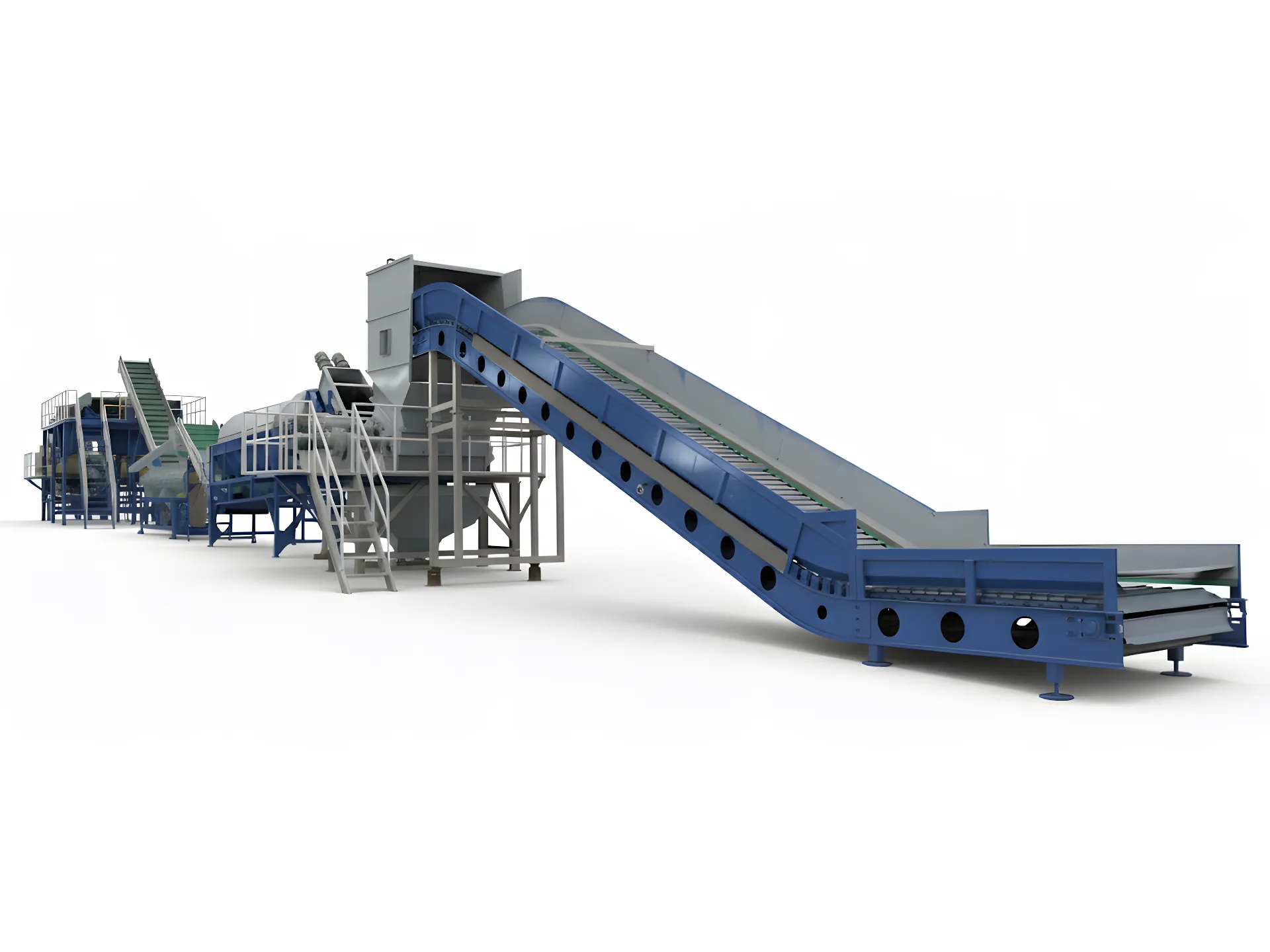
HDPE Bottle Recycling Line
Turn post‑consumer HDPE bottles (milk jugs, detergent, shampoo, household chemical containers) into clean, dry flakes. This HDPE Bottle Recycling Line combines sorting, hot washing, friction cleaning and sink‑float separation to remove labels, sand and heavy polymers for stable downstream extrusion or pelletizing.
Zašto odabrati ovu liniju
High‑purity HDPE flakes, reliable throughput, and modular configurations tailored to your bottle mix and target applications.
High Purity HDPE Flakes
Sorting, hot wash, and friction cleaning reduce paper, glue, and oils; optional optical sorting upgrades color consistency and purity.
Učinkovito i pouzdano
Robusne komponente minimiziraju vrijeme zastoja; opcije zatvorenog kruga vode smanjuju troškove komunalnih usluga i ispuštanje.
Modularno i skalabilno
Configure debaling, crushing, hot wash, sink‑float separation, drying, and optional flake sorting to meet your targets.
Tijek procesa
Debaliranje i predsortiranje
Debaler opens bales; magnets and manual picks remove metals, stones, and non‑plastic contaminants.
Pre‑wash & Fines Removal
Trommel / pre‑washer removes sand and fines; label loosening and pre‑rinsing reduce paper and glue load.
Crushing (Wet Granulation)
Crusher / wet granulator cuts bottles into uniform flakes with water flushing for pre‑cleaning and cooling.
Vruće pranje i trenje
Hot washing removes oils, glue and residues; friction washer strips remaining dirt and label fragments.
Sink‑Float Separation
Removes heavy polymers and contamination: HDPE/PP float while PET/PVC and metals sink (optional multi‑stage separation).
Ispiranje, odvodnjavanje i sušenje
Final rinse, centrifugal dewatering, and thermal drying typically achieve ≤1–2% moisture; optional flake sorting upgrades quality.
Ključne komponente linije
Debaler
Otvara kompaktne bale kako bi se stvorio stalan protok boca.
Pre‑washer / Trommel
Removes sand, stones and fines; reduces the load for downstream washing.
Crusher / Wet Granulator
Reduces bottles to uniform flakes with water flushing for pre‑cleaning.
Sink-Float Tank
Density separation removes PET/PVC and heavy contaminants from HDPE/PP flakes.
Vruća podloga + trenje
Removes oils, glue and labels for cleaner HDPE flakes.
Odvodnjavanje i sušenje
Centrifugalno odvodnjavanje i termičko sušenje za nisku vlažnost.
Tehničke specifikacije
| Kapacitet (kg/h) | Instalirana snaga (kW) | Potrebna površina (m²) | Potrebno osoblje | Potrebna para (kg/h) | Potreban komprimirani zrak (MPa) | Potrebna voda (m³/h) |
|---|---|---|---|---|---|---|
| 500 | 220 | 400 | 8 | 350 | 0,6–0,8 | 1 |
| 1000 | 500 | 750 | 10 | 500 | 0,6–0,8 | 3 |
| 2000 | 700 | 1000 | 12 | 800 | 0,6–0,8 | 5 |
| 3000 | 900 | 1500 | 12 | 1000 | 0,6–0,8 | 6 |
| 4500 | 1000 | 2200 | 16 | 1300 | 0,6–0,8 | 8 |
| 6000 | 1200 | 2500 | 16 | 1800 | 0,6–0,8 | 10 |
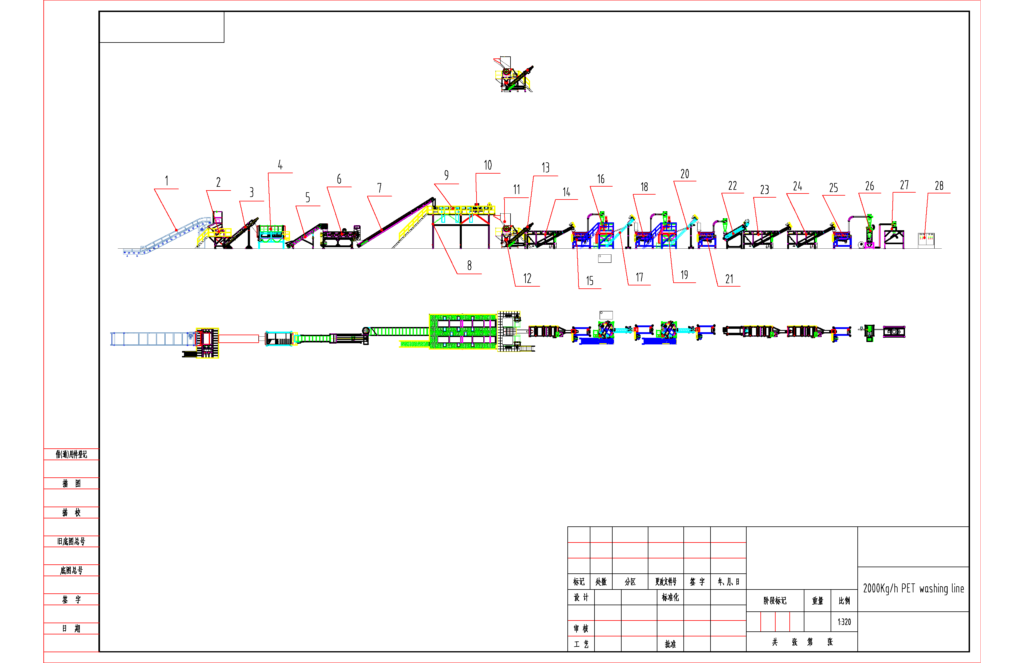
Tipični raspored
A clear, modular flow from de‑baling to clean HDPE flakes with optional color sorting and closed‑loop water options.
U akciji


Zatražite ponudu
Tell us your input (HDPE bales vs. loose bottles vs. flakes), contamination level (labels, sand, oils), and target capacity. We support EU 400V/50Hz and US 460V/60Hz with CE/UL‑ready options.
FAQ
Kakvu kvalitetu izlaza možemo očekivati?
With hot washing, friction cleaning and sink‑float separation, HDPE flakes typically reach ≤1–2% moisture with low paper/glue and reduced heavy‑polymer contamination (PET/PVC).
What HDPE bottles can this line process?
Common inputs include milk jugs, detergent bottles, shampoo bottles and household chemical containers. For heavily contaminated bottles (oil/chemical residue), we can add stronger pre‑washing and hot‑wash configurations.
How do you handle caps, labels and mixed plastics?
Pre‑washing and friction cleaning remove label fragments; sink‑float separation removes heavy polymers. PP caps are close in density to HDPE, so optional optical sorting can further improve resin purity when needed.
Water usage, recycling, and compliance?
Closed‑loop water systems with filtration minimize consumption and discharge; DAF and sludge handling can be integrated to meet local regulations. EU lines typically run 400V/50Hz, US 460V/60Hz (others on request) with CE/UL‑ready options.
