

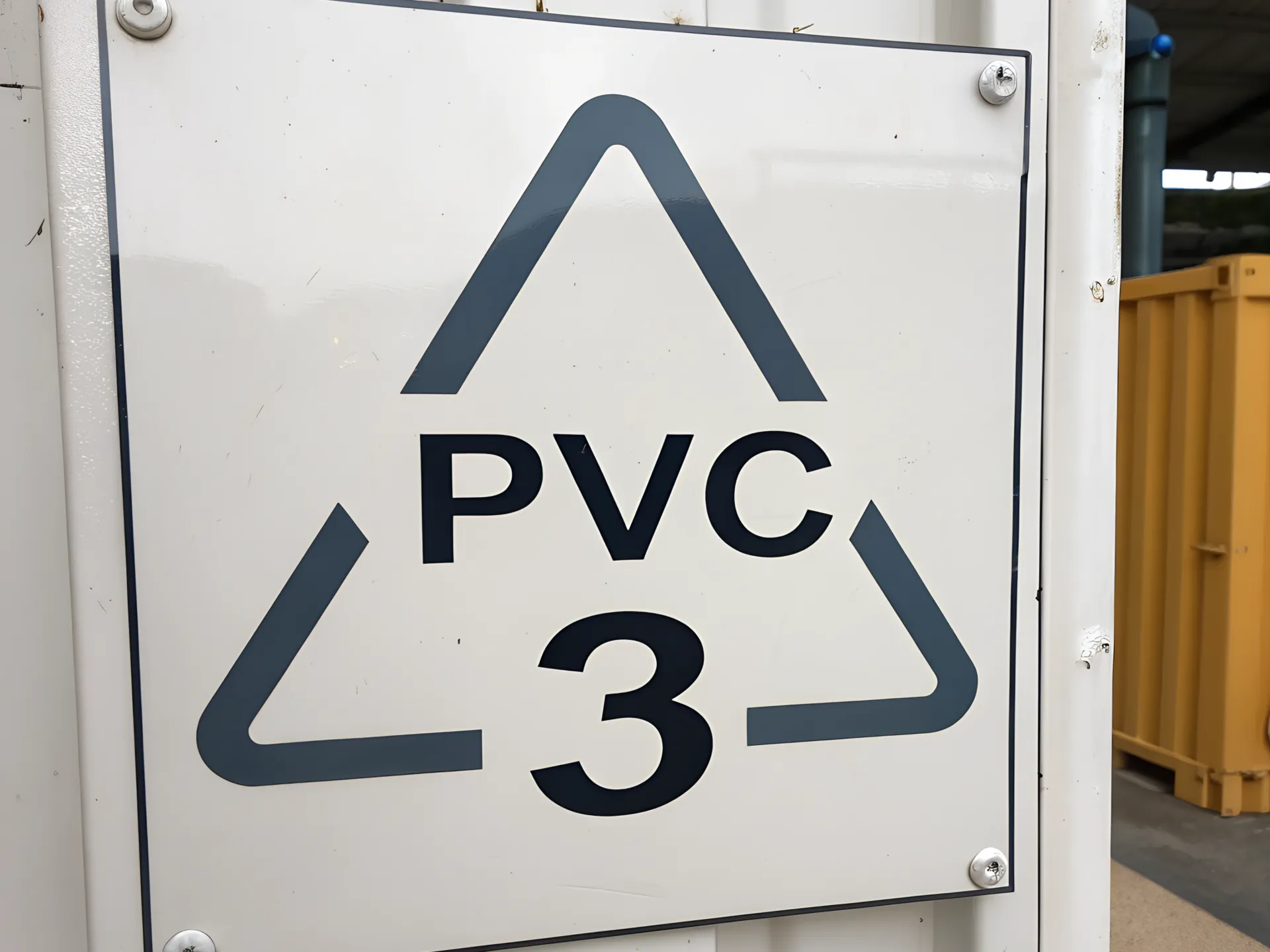
PVC is identified by resin identification code 3, usually accompanied by the abbreviation PVC or V. The code identifies the plastic resin family; it does not mean that a product is accepted in curbside collection or recyclable in every local system.
ASTM D7611 states that resin identification codes are used to identify the plastic resin in a manufactured article. The standard’s purpose is classification, not a recyclability guarantee. That distinction is especially important for PVC because rigid pipe, flexible flooring, cable insulation and multilayer packaging can contain very different formulations.
What does plastic code 3 mean?
Code 3 refers to polyvinyl chloride. Common applications include:
- Rigid pressure and drainage pipe
- Window profiles, siding and other construction products
- Sheet, flooring and wall coverings
- Cable insulation and flexible hose
- Selected packaging, cards and coated fabrics
These products do not form one interchangeable recycling stream. Rigid and flexible PVC use different additives and have different end-use histories. A recycler needs the product type, formulation where available, contamination and target recycled grade—not only the number 3.
Why the resin code is not a recycling instruction
Collection and recycling depend on local markets and facilities. A code can help sort material after it has entered an appropriate system, but it cannot show whether:
- The local program accepts that PVC product
- The article contains compatible additives or attachments
- The stream is sufficiently clean and homogeneous
- A processor and end market exist for the resulting material
- The product is safe and lawful to handle in the intended route
Consumers should follow the official rules of their municipality or collection provider. Do not place a code 3 item in a bin simply because it carries a triangular mark.
Rigid and flexible PVC need different controls
بولي فينيل كلوريد جامد
Pipe, profile and sheet scrap can be attractive when it is collected separately and its formulation is known. Clean production offcuts may be sorted, reduced in size, metal-protected and reprocessed with relatively little washing. Post-use construction products require removal of metal, rubber, glass, seals, fasteners and other materials.
بولي فينيل كلوريد مرن
Flexible products may contain plasticizers and other formulation-specific additives. Cable, flooring, hose and coated textiles also introduce copper, fibers, adhesives or backing materials. These streams should be characterized and processed separately unless a documented end-product specification permits blending.
A result that works for rigid window-profile scrap should not be applied to flexible cable compound. The PVC varieties and grinding guide explains how formulation and product form change size reduction.
Why PVC contamination matters in other plastics
PVC is an unwanted contaminant in many PET and polyolefin streams. It behaves differently during heat processing and can reduce product quality at low concentrations. Sorting should therefore remove PVC articles and fragments before extrusion.
In PET bottle recycling, labels, sleeves and look-alike containers need particular attention. The PVC-in-PET contamination guide covers detection, sorting and process controls for that application.
PVC additives and legacy material
PVC formulations can contain stabilizers, plasticizers, fillers, pigments and processing aids. Their type and concentration vary by product, age and region. Recyclers should not infer a formulation from code 3 alone.
Legacy construction products may contain substances restricted in newer products. Where relevant, use supplier documentation, product age, source segregation and laboratory testing. Regulatory requirements can limit the recycled material’s next application even when mechanical processing is technically possible.
For European operations, the EU lead limits for PVC recyclers provides a focused compliance overview. Current legal requirements should always be checked for the plant and intended product.
A typical mechanical recycling route
A controlled rigid-PVC stream may follow:
source segregation → manual and automated sorting → metal removal → shredding or crushing → washing where required → drying → fine grinding or controlled regrind production → blending and reprocessing to specification.
The route changes with pipe, profile, sheet, cable or flexible products. A PVC pipe and profile crusher handles primary size reduction for compatible rigid items, while other products may need cable separation, delamination or different cutting equipment.
Heat history must be controlled during grinding and extrusion. Appropriate ventilation, dust control, guarding and process monitoring are part of the equipment specification.
How recyclers verify a code 3 stream
- Define the product family. Separate pipe, profile, sheet, flooring, cable and packaging.
- Confirm composition. Use supplier records, identification technology and testing where needed.
- Remove attachments. Control metals, seals, labels, backing, textiles and other polymers.
- حدد المستوى المستهدف. حدد حجم الجسيمات، التلوث، التركيب الكيميائي والاستخدام التالي.
- إجراء تجارب نموذجية. قياس الكفاءة، الفصل، درجة الحرارة، الغبار وخصائص المعالجة مرة أخرى.
- تحقق من توافق اللوائح. تأكد من أن التركيب المكتسب مسموح به في السوق المقصود.
تعامل مسؤول للمنازل والشركات
بالنسبة لمتاع المنزل، تحقق من القائمة الرسمية المحلية للجمع أو استشر السلطة المعنية حول البولي فينيل كلوريد. إذا لم يتم قبول الرمز 3، استخدم برنامجًا متخصصًا معتمدًا حيث يكون ذلك ممكنًا. لا تحرق البولي فينيل كلوريد في نار مفتوحة أو جهاز غير محكم.
الشركات التي تحتوي على أنابيب، ألواح، أرضيات، أسلاك أو مخلفات إنتاج يجب أن تُبقِ السوائل منفصلة وتحتفظ بمعلومات عن المصدر والتكوين. يمكن لمُعيد معالجة البولي فينيل كلوريد المتخصص تقييم مادة أكثر نظافة وتتبعًا من المخلفات العامة المختلطة.
تدوير البولي فينيل كلوريد في سياق
يمكن تدوير البولي فينيل كلوريد ميكانيكيًا في تيارات محكومة مناسبة، ولكن “قابل للتدوير بالكامل” وعدد محدد من دورات التدوير ليست ادعاءات عالمية مسؤولة. تدهور المادة، تاريخ المضافة، التلوث وتعريف المنتج التالي يحدد ما إذا كان دورة معالجة أخرى مناسبة.
يرى شرح إعادة تدوير مادة PVC لرؤية نظرة عامة أوسع للعملية دليل معدات تدوير البولي فينيل كلوريد للفرق بين طرق إعادة التدوير، السنات والرمال.
الأسئلة المتكررة
ما هو رمز إعادة التدوير للبولي فينيل كلوريد؟
يستخدم بولي فينيل كلورايد رمز التعرف على الراتنج 3، ويظهر غالبًا مع PVC أو V. يحدد رمز العائلة الراتنجية ولكنه لا يضمن جمعه المحلي أو إعادة تدويره.
Can PVC marked with code 3 be recycled?
بعض تيارات البوليفينيل الكلوريد المسيطر عليها يمكن إعادة تدويرها ميكانيكيا. يعتمد القبول على المنتج، التركيبة، التلوث، معالج الموقع والسوق النهائي.
هل يمكن إعادة تدوير البولي فينيل كلورايد والبولي إيثيلين تيريفثاليت معًا؟
رقم البولي فينيل كلورايد هو ملوث خطير في إعادة تدوير البولي إيثيلين تيريفثاليت ويجب إزالته عن طريق التحكم في المصدر والفرز قبل المعالجة الحرارية.
