
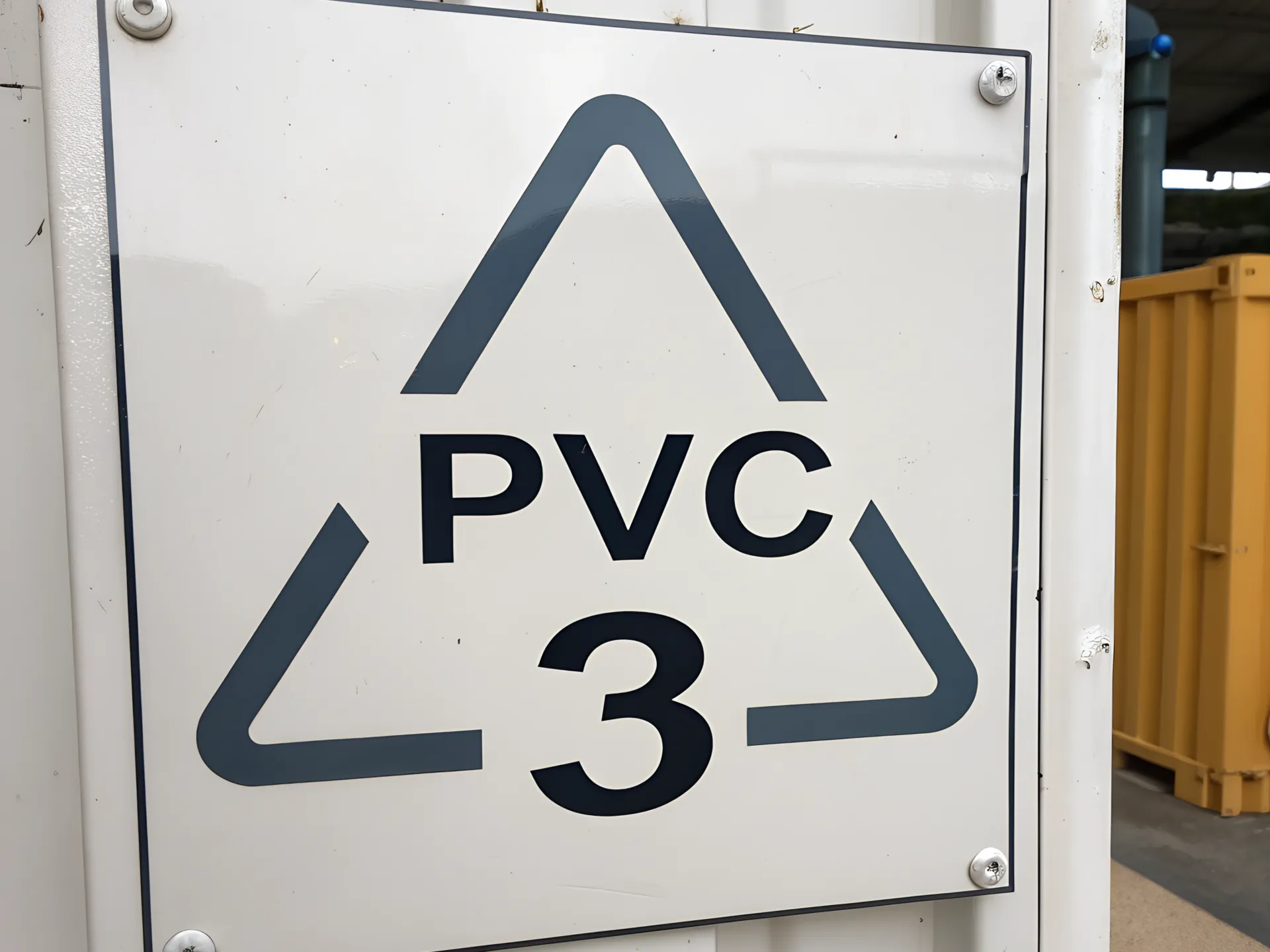
PVC is identified by resin identification code 3, wird in der Regel durch die Abkürzung PVC oder V begleitet. Der Code identifiziert die Familie der Kunststoffharze; er bedeutet nicht, dass ein Produkt im Mülleimer gesammelt oder in jedem lokalen System recycelt werden kann.
ASTM D7611 states that resin identification codes are used to identify the plastic resin in a manufactured article. The standard’s purpose is classification, not a recyclability guarantee. That distinction is especially important for PVC because rigid pipe, flexible flooring, cable insulation and multilayer packaging can contain very different formulations.
What does plastic code 3 mean?
Code 3 refers to polyvinyl chloride. Common applications include:
- Rigid pressure and drainage pipe
- Window profiles, siding and other construction products
- Sheet, flooring and wall coverings
- Cable insulation and flexible hose
- Selected packaging, cards and coated fabrics
Diese Produkte bilden keinen austauschbaren Recyclingstrom. Rigid und flexible PVC verwenden unterschiedliche Additive und haben unterschiedliche Endverwendungsgeschichten. Ein Recycler benötigt die Produktart, wo verfügbar die Formulierung, Kontamination und das Zielrecyclingkriterium – nicht nur die Nummer 3.
Warum der Harzcode keine Recyclinganweisung ist
Sammlung und Recycling hängen von lokalen Märkten und Einrichtungen ab. Ein Code kann helfen, Material nach dem Eintreten in ein angemessenes System zu sortieren, aber er kann nicht zeigen, ob:
- Das lokale Programm diesen PVC-Produkt akzeptiert
- The article contains compatible additives or attachments
- Der Strom ausreichend sauber und homogen ist
- Es existiert ein Verarbeiter und ein Endmarkt für das resulting Material
- Das Produkt ist sicher und rechtlich in der vorgesehenen Route zu handhaben
Verbraucher sollten die offiziellen Regeln ihrer Gemeinde oder des Sammelanbieters befolgen. Setzen Sie ein Code 3-Objekt nicht einfach in einen Behälter, nur weil es ein dreieckiges Zeichen trägt.
Rigid and flexible PVC need different controls
Hart-PVC
Rohr-, Profil- und Blechabfälle können attraktiv sein, wenn sie getrennt gesammelt und ihre Formulierung bekannt ist. Saubere Produktionsabfälle können sortiert, verkleinert, metallgeschützt und mit relativ wenig Reinigung wiederverarbeitet werden. Nachverwendete Bauprodukte erfordern das Entfernen von Metall, Gummi, Glas, Dichtungen, Schrauben und anderen Materialien.
Flexibles PVC
Flexible Produkte können Weichmacher und andere formulationsbezogene Zusätze enthalten. Kabel, Bodenbeläge, Schläuche und beschichtete Textilien führen auch Kupfer, Fasern, Klebstoffe oder Trägermaterialien ein. Diese Ströme sollten charakterisiert und getrennt verarbeitet werden, es sei denn, eine dokumentierte Endprodukt specification gestattet die Mischung.
Ein Ergebnis, das für den Abfall von festen Fensterprofilen funktioniert, sollte nicht auf flexible Kabel compound angewendet werden. The PVC varieties and grinding guide explains how formulation and product form change size reduction.
Why PVC contamination matters in other plastics
PVC ist ein unerwünschter Kontaminant in vielen PET- und Polyolefin-Strömen. Er verhält sich während des Wärmebehandlungsprozesses unterschiedlich und kann die Produktqualität bei niedrigen Konzentrationen verringern. Daher sollte PVC-Artikel und Fragmente vor der Extrusion sortiert werden.
Bei der PET-Flaschenrecycling, benötigen Etiketten, Schalen und ähnliche Behälter besondere Aufmerksamkeit. Die PVC-in-PET contamination guide deckt die Detektion, Sortierung und Prozesskontrollen für diese Anwendung ab.
PVC-Zusätze und Altmaterialien
PVC-Rezepturen können Stabilisatoren, Weichmacher, Füllstoffe, Farbstoffe und Verarbeitungshilfsmittel enthalten. Ihr Typ und die Konzentration variieren je nach Produkt, Alter und Region. Recycler sollten nicht aus dem Code 3 allein eine Rezeptur ableiten.
Altbauprodukte können Substanzen enthalten, die in neueren Produkten eingeschränkt sind. Bei Bedarf verwenden Sie Lieferantenunterlagen, Produktalter, Quelltrennung und Laborprüfungen. Regulatorische Anforderungen können die nächste Anwendung des recycelten Materials limitieren, selbst wenn mechanische Verarbeitung technisch möglich ist.
Für europäische Betriebsbedingungen, die EU-Blei-Grenzwerte für PVC-Recycler bieten eine fokussierte Einhaltungsoberübung. Aktuelle rechtliche Anforderungen sollten stets für das Werk und das beabsichtigte Produkt überprüft werden.
Ein typischer mechanischer Recyclingweg
Ein kontrollierter harter-PVC-Strang kann wie folgt folgen:
Quelltrennung → manuelle und automatische Sortierung → Metallausscheidung → Zerkleinern oder Zerkleinern → bei Bedarf Waschen → Trocknen → Feingrindung oder kontrollierte Wiederverwertungserzeugung → Mischen und Verarbeiten nach Spezifikation.
Der Weg ändert sich je nach Rohr, Profil, Blatt, Kabel oder flexiblen Produkten. Ein PVC-Rohr- und Profilzerkleinerer verarbeitet die primäre Größe für kompatible harte Artikel, während andere Produkte möglicherweise Kabeltrennung, Entschichten oder anderes Schneidegerät benötigen.
Die Wärmehistorie muss während des Mahlens und Extrudierens kontrolliert werden. Geeignete Lüftung, Staubkontrolle, Schutzeinrichtungen und Prozessüberwachung sind Teil der Gerätespezifikation.
Wie Recycler einen Code 3-Strang überprüfen
- Definieren Sie die Produktfamilie. Trennen Sie Rohr, Profil, Blatt, Bodenbelag, Kabel und Verpackung.
- Bestätigen Sie die Zusammensetzung. Verwenden Sie Lieferantenprotokolle, Identifikationstechnologie und Tests, wo erforderlich.
- Entfernen Sie Anbauteile. Kontrollieren Sie Metalle, Dichtungen, Etiketten, Unterlage, Textilien und andere Polymere.
- Den Zielgrad festlegen. Partikeldurchmesser, Verunreinigung, Formulierung und nächste Anwendung definieren.
- Repräsentative Versuche durchführen. Ertrag, Trennung, Temperatur, Staub und Eigenschaften des wiederverarbeiteten Materials messen.
- Regulatorische Konformität überprüfen. Stellen Sie sicher, dass die wiederhergestellte Formulierung für den beabsichtigten Markt zugelassen ist.
Verantwortungsvolle Handhabung für Haushalte und Unternehmen
Für Haushaltsgegenstände überprüfen Sie die offizielle lokale Sammelliste oder fragen Sie die Abfallbehörde nach PVC. Wenn Code 3 nicht akzeptiert wird, verwenden Sie ein autorisiertes Spezialistenprogramm, wenn eines vorhanden ist. Verbrennen Sie PVC nicht in einem offenen Feuer oder einem unkontrollierten Gerät.
Unternehmen mit Rohr, Profil, Bodenbelag, Kabel oder Produktionsabfall sollten die Ströme trennen und Informationen über die Quelle und die Formulierung aufbewahren. Ein PVC-Recycler kann dann ein saubereres und besser nachverfolgbares Material als gemischten allgemeinen Müll bewerten.
PVC-Recycling im Kontext
PVC kann in geeigneten kontrollierten Strömen mechanisch recycelt werden, aber “vollständig recycelbar” und eine festgelegte Anzahl von Recyclingzyklen sind keine verantwortungsvollen universellen Ansprüche. Materialabrieb, Additivhistorie, Verunreinigung und die Spezifikation des nächsten Produkts bestimmen, ob ein weiterer Verarbeitungszyklus geeignet ist.
Sehen PVC-Recycling erklärt für eine umfassendere Prozessübersicht und die PVC-Recyclinggeräteanleitung für die Unterschiede zwischen Rückschliff, Granulaten und Pulverrouten.
Häufig gestellte Fragen
Was ist der Recyclingcode für PVC?
PVC wird mit dem Rezyklatkennzeichnungscod 3 gekennzeichnet, oft mit PVC oder V dargestellt. Es identifiziert die Rezyklatfamilie, gewährleistet jedoch keine lokale Sammlung oder Recyclingfähigkeit.
Kann PVC mit dem Code 3 recycelt werden?
Einige kontrollierte PVC-Ströme können mechanisch recycelt werden. Die Akzeptanz hängt vom Produkt, der Formulierung, der Kontamination, dem lokalen Verarbeiter und dem Endmarkt ab.
Kann PVC und PET gemeinsam recycelt werden?
Nr. PVC ist ein schwerwiegendes Kontaminant im PET-Recycling und sollte durch Quellkontrolle und Sortierung vor der Wärmebehandlung entfernt werden.
