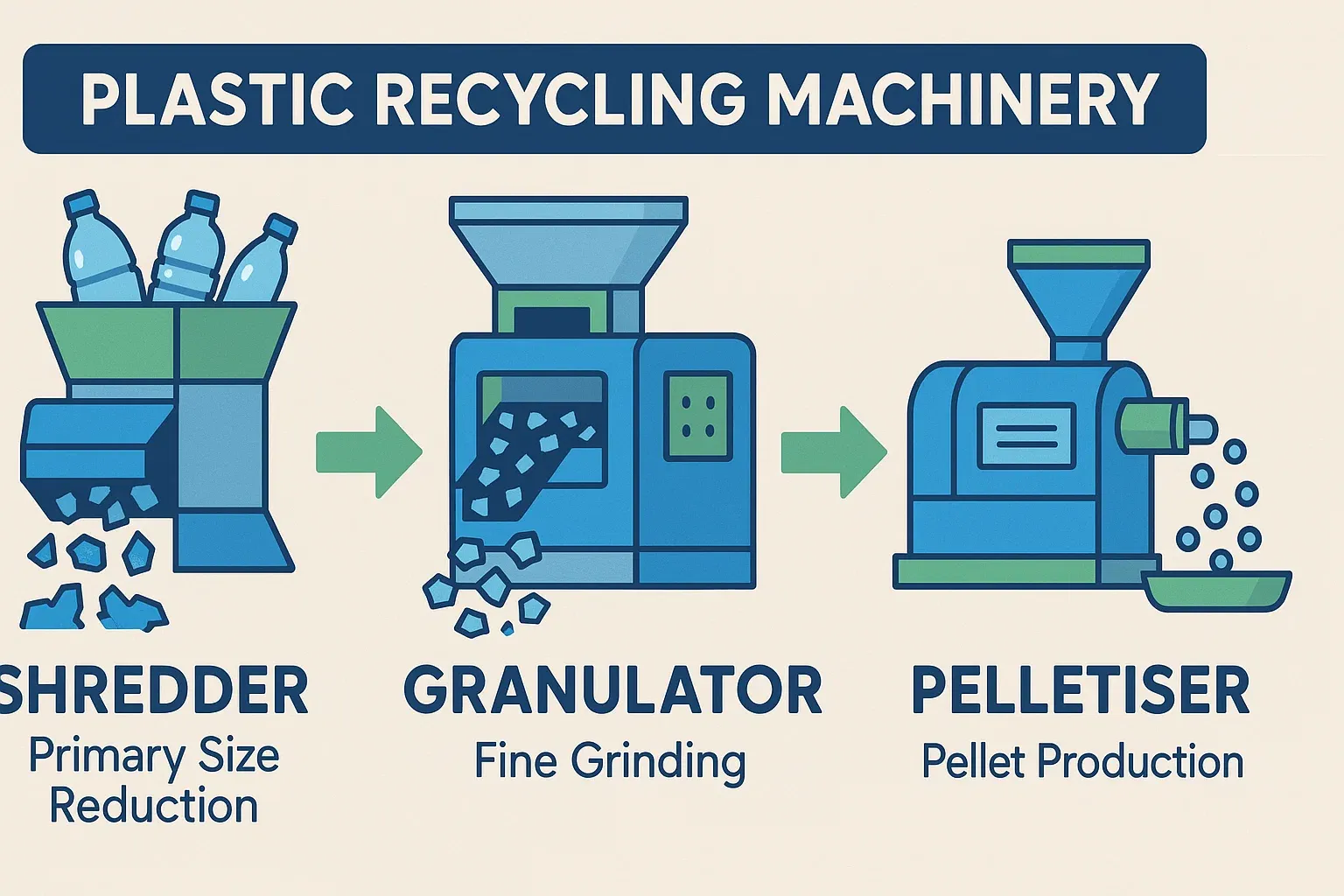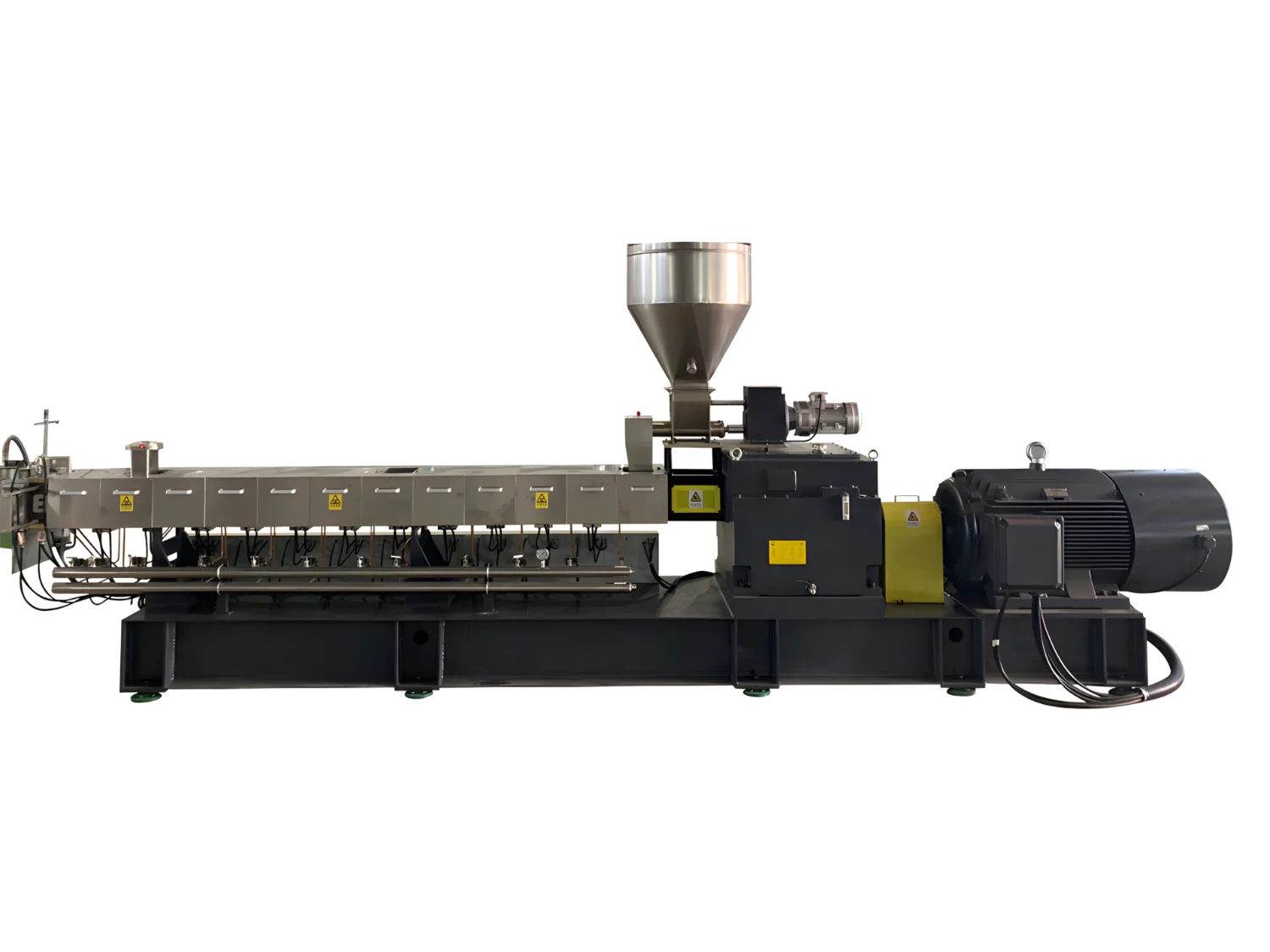
Egy műanyag pelletizáló gép melts shredded, washed, or densified plastic waste and reshapes it into uniform pellets — the standard raw material form that injection molders, extruders, and film blowers purchase and process. Pelletizing is the final value-adding step in plastic recycling: it converts low-value flakes or regrind into market-ready pellets worth $400–$1,200/ton depending on polymer type and quality. This guide covers every pelletizer type, real specifications, material-to-machine matching, cutting system selection, and a framework for specifying the right pelletizing line for your operation.
What Is a Plastic Pelletizing Machine?
A plastic pelletizing machine (also called a pelletizer or granulating extruder) melts plastic input material through a heated screw-and-barrel system, filters out contaminants via a screen changer, then pushes the melt through a die plate where a cutting system chops it into cylindrical or spherical pellets of 2–5 mm diameter. The pellets are cooled (by water or air), dried, and collected in bags or silos. Learn the fundamentals in our guide: What Is a Plastic Pelletizer and How Does It Work?
Key components of every pelletizing line:
- Etetőrendszer — force feeder, crammer, or cutter compactor that densifies and feeds material into the extruder
- Extruder — single-screw or twin-screw barrel that melts, homogenizes, and pressurizes the plastic
- Screen changer — hydraulic or manual filter that removes contaminants (paper, metal, dirt) from the melt
- Die plate — perforated plate that shapes the melt into strands or directly into pellets
- Vágórendszer — strand cutter, water ring cutter, or underwater pelletizer that forms final pellet shape
- Cooling and drying — water bath, air cooling, or centrifugal dryer that solidifies and dries pellets
Műanyag pelletizáló gépek típusai
Egycsigás pelletizáló
The most common type for recycling applications. A single rotating screw inside a heated barrel melts and conveys plastic forward. Simple, reliable, and lower cost than twin-screw systems. Best for clean, pre-sorted feedstock (PE, PP, PET flakes, PS). Throughput: 100–1,500 kg/h. See our single-screw pelletizing machine range.
Twin-Screw Pelletizer
Two co-rotating or counter-rotating screws provide superior mixing, venting, and degassing. Required for materials that need intensive compounding (color concentrates, filled plastics, engineering plastics) or that contain high moisture or volatile content. Higher cost (1.5–2.5× single-screw) but produces better pellet quality for demanding applications. Throughput: 200–3,000 kg/h.
Cutter Compactor Pelletizer
Integrates a high-speed cutter compactor (agglomerator) directly before the extruder. The cutter compactor shreds, densifies, and pre-heats film, fiber, and lightweight materials through friction — then feeds directly into the extruder barrel. This eliminates the need for a separate agglomerator or densifier, saving floor space and energy. Ideal for PE/PP film, woven bags, nonwoven fabric, and raffia. See our cutter compactor pelletizing line.
Two-Stage Pelletizer
Uses two extruders in series: the first melts and filters, the second homogenizes and builds pressure for pelletizing. The two-stage design provides extra melt filtration, better degassing (two venting zones), and more consistent melt quality. Best for heavily printed film, post-consumer mixed plastics, and materials with high contamination. Higher investment but produces premium-quality pellets.
Pelletizer Type Comparison
| Típus | Áteresztőképesség | Motorteljesítmény | Legjobb | Relatív költség |
|---|---|---|---|---|
| Single-Screw | 100–1,500 kg/h | 22–250 kW | Clean PE/PP/PET flakes, regrind | 1× (alapértelmezett) |
| Twin-Screw | 200–3,000 kg/h | 37–400 kW | Compounding, engineering plastics, high-moisture | 1.5–2.5× |
| Vágóprés | 200–1,500 kg/h | 55–300 kW | PE/PP film, woven bags, nonwoven, raffia | 1.2–1.8× |
| Two-Stage | 300–2,000 kg/h | 75–400 kW | Printed film, post-consumer mix, high contamination | 1.5–2.0× |
Cutting Systems: Strand vs. Water Ring vs. Underwater
The cutting system determines pellet shape, quality, and throughput. Choosing the right one depends on your polymer type, required pellet geometry, and production speed. For an in-depth comparison, see strand vs. underwater pelletizing for rPET.
| Cutting System | Pellet alakja | Legjobb | Áteresztőképesség tartomány | Előnyök | Hátrányok |
|---|---|---|---|---|---|
| Szálvágás | Hengeres | PE, PP, PET, PS — most recycling | 100–1,500 kg/h | Simple, low cost, easy maintenance | Strand breakage with low-melt-strength materials |
| Water Ring Cutting | Semi-spherical | PE, PP — especially film recycling | 200–1,500 kg/h | Compact, no strand handling, consistent pellets | Not ideal for high-melt-flow materials |
| Underwater (UWP) | Gömbölyű | PET, PA, TPE, engineering plastics | 500–5,000+ kg/h | Perfect pellet shape, high-speed, dust-free | Expensive, complex, higher maintenance |
See our water ring pelletizing system for PP/PE woven bag applications.
Material-to-Pelletizer Matching
Different plastics require different extruder configurations, temperatures, and cutting systems. Here is our recommendation based on 500+ installations:
| Anyag | Recommended Pelletizer | Cutting System | Key Notes |
|---|---|---|---|
| PE Film (LDPE/LLDPE) | Cutter Compactor + Single-Screw | Water ring or strand | Film needs densifying; cutter compactor is ideal. See PE/PP film pelletizer |
| PP Woven Bags / Raffia | Cutter Compactor + Single-Screw | Water ring | High bulk — compaction essential before extrusion |
| PET palackpehely | Single-Screw (with crystallizer/dryer) | Strand or underwater | Must dry to <50 ppm moisture; iv loss control critical. see PET pelletizer |
| Rigid HDPE/PP (crates, drums) | Single-Screw | Strand | Easy to pelletize; force-feeder sufficient. See rigid PP/HDPE pelletizer |
| Nonwoven / Meltblown | Cutter Compactor + Single-Screw | Water ring | Ultra-light material requires aggressive densification. See nonwoven pelletizing line |
| PA / Nylon | Twin-Screw (with vacuum venting) | Underwater or strand | Hygroscopic — needs drying + vacuum degassing |
| Keverett utófogyasztói | Two-Stage | Strand or water ring | High contamination requires double filtration + degassing |
For detailed material compatibility, read Milyen típusú műanyagokat lehet pelletizálóval feldolgozni?.
Pelletizáló specifikációk hivatkozási forrása
Representative specifications from Energycle's single-screw pelletizer range:
| Modell | Csavarátmérő | L/D arány | Áteresztőképesség | Motorteljesítmény | Tipikus alkalmazás |
|---|---|---|---|---|---|
| SJ-65 | Ø65 mm | 28:1–33:1 | 80–150 kg/h | 22–37 kW | Kis mennyiségű, merev újrahasznosított anyag |
| SJ-85 | Ø85 mm | 28:1–33:1 | 150–300 kg/h | 37–55 kW | PE/PP film, szövetes táskák |
| SJ-100 | Ø100 mm | 28:1–33:1 | 250–500 kg/h | 55–90 kW | Közepes újrahasznosítási vonalak |
| SJ-120 | Ø120 mm | 28:1–33:1 | 400–800 kg/óra | 90–132 kW | Nagy mennyiségű újrahasznosítás |
| SJ-150 | Ø150 mm | 28:1–33:1 | 600–1,200 kg/h | 132–200 kW | Nagy ipari vonalak |
| SJ-180 | Ø180 mm | 28:1–33:1 | 800–1,500 kg/h | 200–250 kW | Maximális áramlási teljesítmény |
Látogassa meg a plastic pelletizer termékoldal Teljes specifikációk és konfigurációs lehetőségekért. Árazási iránymutatásért lásd plastic pelletizer gép költségfaktorok és budget vs. high-end pelletizer comparison.
5 lépéses kiválasztási keretrendszer
Step 1: Define Input Material
Identify polymer type (PE, PP, PET, PS, PA, etc.), form (film, flake, regrind, fiber), contamination level (clean in-house vs. dirty post-consumer), and moisture content. This determines extruder type, number of stages, and whether you need a cutter compactor or pre-dryer.
Step 2: Set Throughput Target
Calculate required pellet output in kg/h. Match upstream washing/drying line output to pelletizer capacity. Always size the pelletizer 20–30% above your current throughput for surge capacity and future growth. Running a pelletizer at 80% of rated capacity extends screw and barrel life significantly.
Step 3: Choose Cutting System
Strand cutting for simplicity and most recycling applications. Water ring for film recyclers wanting compact, consistent pellets. Underwater for PET, engineering plastics, and high-speed production where pellet shape matters for end customers.
Step 4: Specify Pellet Quality
Define target pellet size (typically 3–4 mm), acceptable moisture content (<0.5% for most applications, <50 ppm for PET), color consistency requirements, and maximum contamination levels. These specifications determine screen changer mesh size, number of filtration stages, and cooling/drying system design.
Lépés 5: Számítsa ki a megtérülést
Pellets sell for $400–$1,200/ton depending on polymer and quality — 2–5× the value of washed flakes. A 500 kg/h pelletizer running 8 hours/day, 300 days/year produces 1,200 tons annually. At $200/ton margin over flake value, that is $240,000/year gross margin from a machine investment of $80,000–$200,000 — payback in 6–12 months.
Maintenance Essentials
- Napi: Inspect die plate for blocked holes; clean screen changer; check water temperature in cooling system
- Heti: Verify screw torque and motor amperage (rising amps indicates barrel wear); inspect pellet cutter blades
- Havi: Lubricate gearbox; check heater band function on each zone; inspect screen changer seals
- Every 2,000–4,000 hours: Measure screw and barrel wear (replace when clearance exceeds 0.5 mm per side)
- Évente: Full inspection of screw, barrel, die plate, gearbox, and electrical systems
For complete maintenance programs, see our pelletizer maintenance checklist és pelletizálási módszerek útmutatója.
Getting Started with Energycle
Energycle manufactures plastic pelletizing machines from 80 kg/h laboratory units to 1,500 kg/h production lines, plus complete turnkey recycling systems from washing through pelletizing. We provide:
- Free material testing — send us your plastic samples and we test pellet quality on our machines
- Custom line design — extruder, cutting system, and feeding system configured for your specific material and throughput
- Installation and training — on-site commissioning and operator training included
- After-sales support — spare screws, barrels, die plates, and cutter blades with fast delivery
Contact our engineering team with your material type, throughput requirement, and desired pellet specifications — we will recommend the right configuration and provide a quotation within 48 hours.
Gyakran ismételt kérdések
Mennyibe kerül egy műanyag pelletizáló gép?
Small single-screw pelletizers (100–200 kg/h) cost $25,000–$60,000. Mid-range systems (300–800 kg/h) cost $60,000–$150,000. Large production lines (800–1,500 kg/h) range from $150,000–$350,000. Complete turnkey lines including washing, drying, and pelletizing cost $200,000–$800,000. Cutter compactor systems add 20–50% over basic single-screw models.
Mi a különbség a pelletizáló és a granuláló között?
A pelletizer melts plastic and extrudes it through a die to form uniform pellets — it changes the physical form of the material through heating. A granulator mechanically cuts solid plastic into small pieces (regrind) without melting. Pellets are market-ready raw material; regrind is an intermediate product. See our detailed comparison: pelletizer vs. granulator.
Which pelletizer type is best for PE film recycling?
A cutter compactor pelletizer is the best choice for PE/PP film. The integrated cutter compactor densifies lightweight film through friction heating before feeding it into the extruder — solving the biggest challenge in film recycling (low bulk density). A water ring cutting system produces consistent, dust-free pellets. Expect 200–1,500 kg/h throughput depending on model size.
What throughput can I expect from a plastic pelletizer?
Throughput depends on screw diameter, motor power, and material type. A Ø65 mm single-screw handles 80–150 kg/h; a Ø120 mm handles 400–800 kg/h; a Ø180 mm reaches 800–1,500 kg/h. Film materials pelletize faster than rigid flakes due to easier melting. Actual throughput is typically 75–85% of rated maximum during sustained production.
How do I choose between strand cutting and water ring cutting?
Strand cutting is simpler and cheaper — melt exits the die as strands, passes through a water bath, and is cut by a rotary blade. Best for rigid plastics with good melt strength. Water ring cutting cuts melt directly at the die face in a water chamber — produces rounder pellets with no strand-handling issues. Best for film-grade PE/PP where strand breakage would be a problem.
Can I pelletize PET bottle flakes?
Yes, but PET requires special handling: flakes must be crystallized and dried to below 50 ppm moisture before extrusion (PET degrades rapidly with moisture at melt temperatures). Use a single-screw or twin-screw pelletizer with vacuum venting. Strand cutting or underwater pelletizing works best. IV (intrinsic viscosity) loss should be monitored — target less than 0.02 dL/g drop through the extruder. See our PET flake pelletizer sizing guide.
What maintenance does a pelletizer require?
Daily: clean screen changer and inspect die plate. Weekly: check motor amperage and cutter blade sharpness. Monthly: lubricate gearbox and inspect heater bands. Every 2,000–4,000 hours: measure screw and barrel wear. The screw and barrel are the highest-cost wear items — budget $3,000–$15,000 for replacement depending on size. Running clean material and maintaining proper temperatures extends wear life 2–3×.
Is plastic pelletizing profitable?
Yes — pelletizing adds $200–$600/ton in value over washed flakes. A 500 kg/h line running one shift (8h/day, 300 days/year) produces 1,200 tons of pellets annually. At a conservative $200/ton value-add, gross margin is $240,000/year from a $100,000–$200,000 equipment investment. Most operations achieve payback within 6–12 months. Post-consumer recycled pellets with food-grade certification command even higher premiums.
Kapcsolódó források
- Plastic Pelletizers — Product Range
- Egycsigás műanyag pelletizáló gép
- PP/PE fólia pelletizáló gép
- Rigida PP/HDPE Pelletizáló Gép
- Vízgyűrűs pelletizáló rendszer
- PET Flake Single-Screw Pelletizer
- Single-Screw Pelletizer for PET: Sizing Guide
- Vágóprés pelletizáló sor
- PP olvadtfúvott nemszőtt pelletizáló sor
- Strand vs. Underwater Pelletizing for rPET
- Pelletizer Machine Cost Factors
- Budget vs. High-End Pelletizer Comparison
- Granuláló karbantartási lista
- Gyűrűgyártó vs. Gyűrűszedő különbségek
- What Plastics Can Be Pelletized?
- Plasztikus hulladékgyűjtő gép: Teljes útmutató
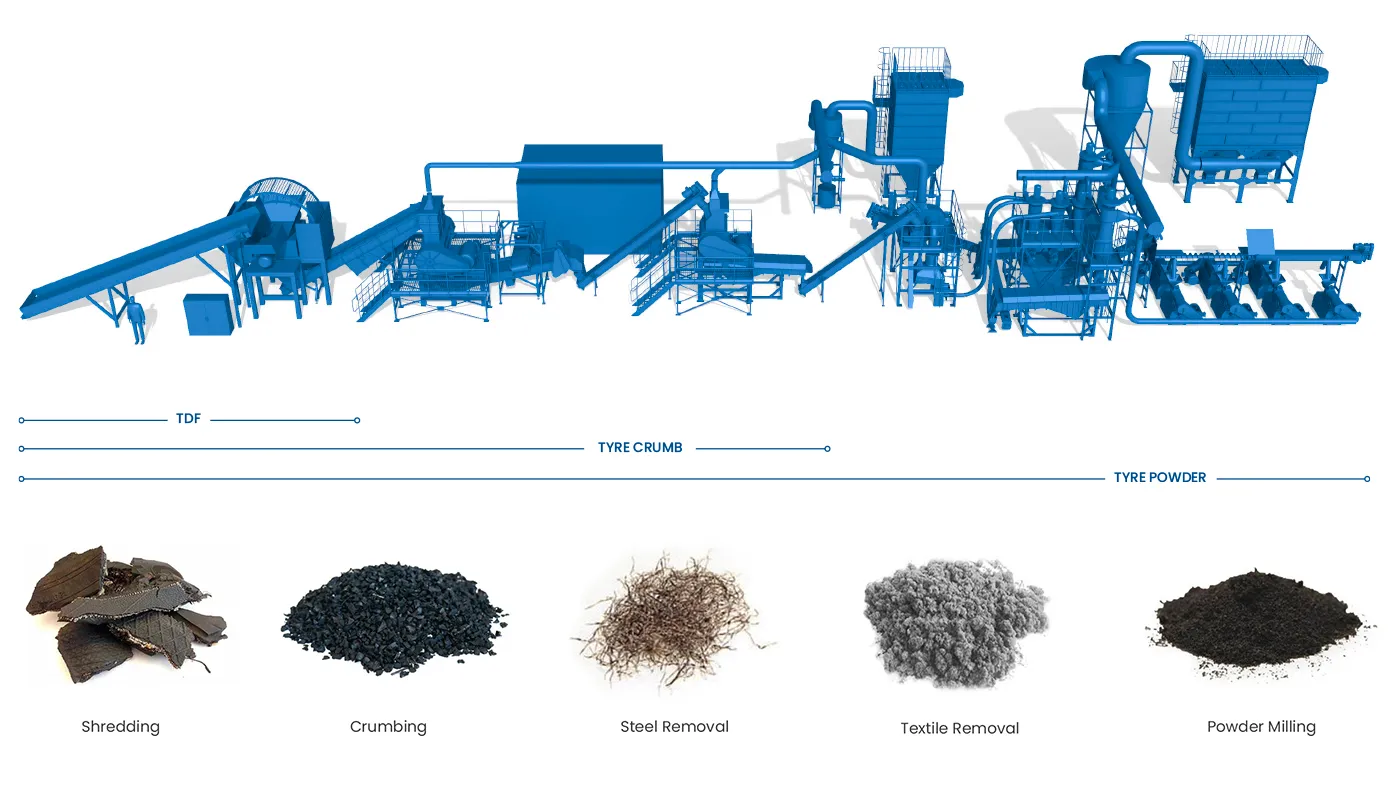
Egy gumiabroncs-újrahasznosító gép transforms end-of-life tires — passenger car, truck, OTR (off-the-road), and industrial — into reusable materials: crumb rubber, rubber powder, steel wire, and fiber. With an estimated 1.5 billion waste tires generated globally each year and landfill bans tightening across North America, Europe, and Asia, tire recycling is both an environmental necessity and a profitable business. This guide covers every machine type in the tire recycling process, real specifications, output products and their markets, and a step-by-step framework for building or upgrading a tire recycling line.
What Is a Tire Recycling Machine?
A tire recycling machine is any equipment used to break down waste tires into reusable raw materials. No single machine processes a whole tire into finished product — tire recycling requires a sequence of specialized machines, each handling a specific stage: debeading (removing steel bead wire), shredding (primary size reduction), granulating (secondary size reduction), steel separation, fiber separation, and grinding (fine powder production). The term "tire recycling machine" typically refers to the complete line or to the primary shredder that anchors the system.
The Tire Recycling Process: Step by Step
Understanding the complete process helps you specify the right equipment for each stage. Here is the standard mechanical tire recycling process used in ambient-temperature processing:
1. Szakasz: Gyűjtés és ellenőrzés
A hulladék abroncsok autókereskedőktől, autószervizektől, flottakezelőktől és önkormányzati gyűjtőpontokból érkeznek. Ellenőrizze a szennyeződéseket (még a kerékhajtók a helyükön vannak, túlzottan sáros, kémiai szennyeződés) és osztályozza típusuk szerint: személyautó abroncsok (PCT), teher- és autóbusz abroncsok (TBT), valamint az OTR abroncsok, amelyek különböző feldolgozási paramétereket igényelnek méretük és acéltartalmuk különbsége miatt.
2. Szakasz: Abroncskereketesztelés
Egy abroncskereketesztelő gép kivonja az abroncs oldaláról a vas kereket. Ez a lépés kritikus: az abroncsban maradt kerekek károsítják a darabolóvágókat és szennyezik a gumi kimenetét. Egy egykaros kereketesztő óránként 60–120 személyautó abroncsot képes feldolgozni. A kerekek eltávolítása 30–40%%-kal energiahatékonyabbá teszi a következő darabolást, mert a daraboló nem kell átmásolnia a kemény vas kábelt.
3. Szakasz: Oldalú kereketesztelés (opcionális)
Nagy teherautó és OTR abroncsok esetében abroncskereketesztelő gép elválasztja az oldalú kerekeket a futórétegétől. Ez csökkenti a anyag méretét, amely a fő darabolóba kerül, és lehetővé teszi az oldalú kerekeket és a futórétegeket külön vagy értékesítve külön különböző alkalmazásokhoz (pl. oldalú gumi a szállítószalag burkolataihoz). További információkért lásd a oldalú kereketesztelés fontosságáról a gumiújraköszöntésben.
4. Szakasz: Alapvető darabolás
A gumiabroncs-aprító bármely abroncsújraköszöntési vonal központi gépe. Egy alacsony sebességű, magas nyomatékú kéttengelyes aprító tears whole tires (or pre-cut sections) into rough chips of 50–100 mm. Alapvető darabolók az abroncsújraköszöntéshez általában 30–110 kW motorokat használnak és 500–3,000 kg/h kapacitással dolgoznak, a gép méretétől és az abroncs típusától függően. Az ezen a szakaszban kimenő - nevezett abroncsújraköszöntési fűtőanyag (TDF) darabok - már kereskedelmi értéket képviselnek mint alternatív tüzelőanyag.
5. Szakasz: Másodlagos darabolás / Granulálás
Egy gumiabroncs granulátor a 50–100 mm darabokat 5–20 mm granulátumokra csökkenti. Ezen a szakaszban, a, acélkábel szabadul fel a gumi mátrixból és eltávolítható mágneses szeparátorokkal. A textil szál is elválasztódik és eltávolítható levegőszeparátorokkal vagy rezgőrácsokkal. Az eredmény egy gumi granulátumok, szabad acélkábel és szál keveréke. Lásd részletes útmutatónkat a hulladék abroncs granulátorokról és kimeneti specifikációkról.
6. Szakasz: Acél és szál szétválasztása
Overband mágneses szeparátorok és mágneses tárcsák eltávolítják az acélféle darabokat a gumi granulátumokból - általában elérve a 99%+ acél eltávolítást. Levegőszeparátorok és rezgőrácsok eltávolítják a textil szálakat (nitril, polipropilén szál). Az elválasztott acélt hulladékacélként értékesítik ($100–$200/ton); a szálat hőszigetelésre vagy tüzelőanyag kiegészítőként használják.
7. Szakasz: Finom darabolás (opcionális)
Magas értékű alkalmazásokhoz rubber pulverizer/grinder további csökkenti a granulátumokat finom gumi porrá (40–80 mesh / 0.2–0.4 mm). A finom gumi por magas áron ($300–$600/ton) értékesíthető, használata célzott gumi termékekben, aszfalt módosításában és sportburkolatokban. A kriogén darabolás (a gumi lefagyasztása folyékony nitrogén segítségével a darabolás előtt) még finomabb porat készít, de hozzáad $50–$100/ton költséget a feldolgozásban.
Abroncsújraköszöntő gép típusai
Itt található minden géptípus, amelyet egy abroncsújraköszöntési vonalban használnak, a Energycle gyártási tartományának specifikációival együtt:
| Gép | Funkció | Áteresztőképesség | Motorteljesítmény | Kimeneti méret |
|---|---|---|---|---|
| Gumiabroncs-lehúzó | Extract bead wire from tire sidewall | 60–120 tires/h | 7.5–15 kW | Whole tire (wire removed) |
| Gumi vágó | Vágja le a kerekek oldalfalát | 40–80 kerekek/h | 5.5–11 kW | Oldalfal szalagok + futókerék körök |
| Elsődleges szalagvágó (Kettős tengelyű) | Szalagvágó: teljes kerekeket darabolja chipekké | 500–3,000 kg/h | 30–110 kW | 50–100 mm chipek |
| Gumiabroncs granulátor | Csökkentse a chipeket granulátumokká, szabadítsa meg a drótot | 300–2,000 kg/h | 22–75 kW | 5–20 mm granulátumok |
| Mágneses szeparátor | Távolítsa el a drótot a granulátumokból | Egyezik a vonal sebességével | 1.5–4 kW | Tisztítsa meg a granulátumokat + drótot |
| Levegő osztályozó / Fátyol szétválasztó | Távolítsa el a textil fonalat a granulátumokból | Egyezik a vonal sebességével | 3–7.5 kW | Tisztítsa meg a granulátumokat + fonalat |
| Gumi porlasztó | Darabolja a granulátumokat finom porrá | 200–800 kg/h | 37–75 kW | 40–80 szűrő por |
Kimeneti termékek és piaci érték
A gumiújranyergelési vonal több bevételi forrást termel. Az output termékek és piacuk megértése segíti, hogy meghatározza, mennyire dolgozza fel és mely berendezési szakaszokba fektessen be:
| Kimeneti termék | Méret | Piaci ár | Alkalmazások |
|---|---|---|---|
| TDF Chips | 50–100 mm | $30–$80/ton | Cementgyár tüzelőanyag, erőmű tüzelőanyag (kölcsönhatásos a szénrel) |
| Karbantartott gumi (sűrű) | 5–20 mm | $120–$250/ton | Játékok felületei, sportpályák, kertészeti mulcs |
| Krumplrubber (finom) | 1–5 mm | $200–$400/tonna | Aszfalt-rubber (utak burkolása), formázott termékek, sportterületek |
| Rubber Powder | 40–80 szűrő | $300–$600/ton | Rubber compound adalékanyag, vízálló bevonat, autóalkatrészek |
| Steel Wire | — | $100–$200/ton | Acélvágány újrahasznosítása (öntodák, mini-öntodák) |
| Textile Fiber | — | $20–$50/ton | Hőszigetelés, tüzelőanyag kiegészítés, geotextil töltőanyag |
Egy átlagos utasautó gumiabroncsa 8–10 kg súlyú és körülbelül 70% gumi, 15% acél és 15% textil szál tartalmaz súly szerint. 1,000 gumiabroncs feldolgozása körülbelül 7 tonna gumi, 1.5 tonna acél és 1.5 tonna szál termel.
TDF vs. TDA vs. Krumplrubber: Végtermék összehasonlítás
A gumiújrahasznosítás három fő termékkategóriája teljesen különböző piacokat szolgál. A feldolgozási mélység határozza meg, mely termékeket értékesíthetsz:
| Termék | Feldolgozás szükséges | Tőkebefektetés | Bevétel/tonna | Piaci kereslet |
|---|---|---|---|---|
| TDF (Gumiújonnan származó tüzelőanyag) | Szakítás csak (1 szakasz) | Alacsony ($80K–$200K) | $30–$80 | Stabil — cementgyárak, erőművek |
| TDA (Gumiújonnan származó törmelék) | Szakítás + szűrés | Alacsony-Közepes ($100K–$250K) | $50–$120 | Növekvő — civil engineering fills, drainage |
| A szálmentes rugalmas darabok széles körben használatosak biztonságos, hosszantartó talajburkolóként játszótereken, valamint díszítő, vízmentes mulcshulladékként kertészetben. Ellentétben a fahulladékkal, nem bomlik le, nem szívja fel a vizet, és nem vonzza az rovarokat. | Szakítás + granuláció + szétválasztás | Közepes-Alacsony ($200K–$600K) | $120–$600 | Erős — sportfelületek, aszfalt, formázott termékek |
Új működésre ajánlásunk: Kezdje a TDF gyártással (legkisebb tőkebevetés, azonnali bevétel), majd adjon hozzá granulációs és szétválasztó berendezéseket, amennyiben a cash flow megengedi. A TDF gyártáshoz vásárolt daraboló berendezés a crumb rubber vonal első szakaszává válik – nulla elhasznált befektetés. Részletes piackutatásért lásd a gyűjtőkönyvünket a gumikulcs visszanyerési piacokról: TDF vs. TDA vs. CRM.
Paszenvagon vs. Teherautó vs. OTR gumikulcs feldolgozása
Különböző gumikulcs típusok különböző berendezésméreteket és feldolgozási módszereket igényelnek:
| Paraméter | Paszenvagon gumikulcs | Teher- és autóbusz gumikulcs | OTR gumikulcs |
|---|---|---|---|
| Súly | 8–10 kg | 40–70 kg | 200–4,000 kg |
| Átmérő | 550–700 mm | 900–1,200 mm | 1,800–4,000 mm |
| Acéltartalom | 10–15% | 15–25% | 10–20% |
| A debeading | Standard egykarmos | Erősebb debeader | Hydraulikus OTR debeader |
| Elővágás | Választható | Ajánlott | Szükséges |
| Daraboló mérete | 30–55 kW | 55–90 kW | 90–200+ kW |
| Mennyiség (daraboló) | 500–2,000 kg/h | 800–2,500 kg/h | Projekt alapján egyedi |
Teljes gumikulcs visszanyerési vonal beállítások
Basic TDF Line (Lowest Investment)
Debeader → primary shredder → magnetic separator → screening. Output: 50–100 mm TDF chips + steel wire. Throughput: 500–2,000 kg/h. Investment: $80,000–$200,000. Payback: 12–24 months at 8 hours/day operation.
Crumb Rubber Line (Medium Investment)
Debeader → primary shredder → granulator → magnetic separator → air classifier → vibrating screen. Output: 1–5 mm clean crumb rubber + steel + fiber. Throughput: 300–1,500 kg/h of finished crumb. Investment: $200,000–$600,000. Payback: 8–18 months. Watch our tire recycling line trial run.
Fine Rubber Powder Line (Highest Value)
Full crumb rubber line + rubber pulverizer + fine screening + packaging. Output: 40–80 mesh rubber powder. Throughput: 200–800 kg/h of powder. Investment: $400,000–$1,000,000+. Payback: 12–24 months. Highest revenue per ton but requires larger capital and more skilled operators.
5 lépéses kiválasztási keretrendszer
Step 1: Define Your Feedstock
Passenger car tires, truck tires, or OTR tires? Mixed or single type? Expected daily/monthly volume in tons? Tire type determines every machine specification in the line — a 500 kg/h passenger car line is a completely different setup from a 500 kg/h truck tire line.
Step 2: Choose Your End Product
TDF chips (simplest), crumb rubber (best balance of investment vs. revenue), or fine rubber powder (highest value, highest investment)? Research local market demand — a crumb rubber line is pointless if no buyers exist within economical shipping distance. Identify at least 2–3 potential buyers before investing.
Step 3: Size Your Line
Calculate required throughput from your tire supply volume. A facility processing 50 tons/day of passenger car tires needs approximately 3,000–4,000 kg/h primary shredding capacity (accounting for 8-hour shifts and 80% uptime). Always size equipment for peak capacity plus 20% margin.
Step 4: Plan Your Layout
A complete crumb rubber line requires 500–2,000 m² of covered space plus outdoor tire storage area. Plan material flow: tire receiving → debeading → shredding → granulation → separation → screening → product storage. Include space for maintenance access, spare parts, and future expansion.
Lépés 5: Számítsa ki a megtérülést
Revenue = (rubber tonnage × rubber price) + (steel tonnage × steel price) + tipping fees (if charged for tire acceptance). Costs = equipment depreciation + electricity + labor + maintenance + rent. Most tire recycling operations charge $1–$3 per tire as a tipping/acceptance fee — this alone can cover 30–50% of operating costs. A 1,000 kg/h crumb rubber line typically generates $300,000–$600,000 annual gross revenue with 40–60% margins.
Maintenance Essentials
Tire recycling equipment operates in harsh conditions — abrasive rubber, embedded steel wire, and high torque loads. A disciplined maintenance program is non-negotiable:
- Napi: Inspect shredder blades for chipping, clear jammed material, check oil levels on hydraulic systems
- Heti: Verify magnetic separator strength, check conveyor belt tension and alignment, inspect granulator screens for wear holes
- Havi: Lubricate all bearings, inspect electrical connections and motor temperatures, check shredder shaft seals
- Every 500–1,000 hours: Rotate or replace shredder blades (tire processing wears blades 2–3× faster than standard plastic shredding due to steel wire contact)
- Évente: Full machine inspection, replace worn screens and liners, check gearbox oil, verify safety systems
Blade costs are the largest maintenance expense — budget $5,000–$15,000 annually for a mid-size line. Using wear-resistant blade materials (D2, DC53, or hardfacing) extends blade life 40–80%. See our shredder blade metallurgy guide.
Getting Started with Energycle
Energycle manufactures complete gumiabroncs-újrahasznosító gép lines — from debeading through shredding, granulation, separation, and grinding. With installations across Africa, Southeast Asia, the Middle East, and South America, we provide:
- Free project consultation — tell us your tire supply, target product, and budget; we design the optimal line configuration
- Turnkey line supply — all machines, conveyors, electrical panels, and controls from a single source
- Telepítés és üzembe helyezés — our engineers install on-site and train your operators
- Spare parts and blade supply — fast delivery of wear parts to minimize downtime
Contact our engineering team with your tire type, daily volume, and target end product — we will design a line and provide a complete quotation within one week.
Gyakran ismételt kérdések
Mennyibe kerül egy gumiújszállítógép?
A basic TDF shredding line (debeader + shredder + magnetic separator) costs $80,000–$200,000. A complete crumb rubber line costs $200,000–$600,000. A fine rubber powder line with pulverizer costs $400,000–$1,000,000+. Individual machines: tire shredders $30,000–$150,000, debeaders $8,000–$25,000, granulators $20,000–$80,000. Payback periods range from 8–24 months depending on configuration and local market prices.
What is the tire recycling process?
The standard mechanical tire recycling process has 6–7 stages: (1) collection and sorting, (2) debeading (steel bead wire removal), (3) optional sidewall cutting, (4) primary shredding to 50–100 mm chips, (5) granulation to 5–20 mm, (6) magnetic and air separation to remove steel wire and fiber, and (7) optional fine grinding to 40–80 mesh powder. Each stage adds value to the output product.
Is tire recycling profitable?
Yes — tire recycling generates revenue from multiple streams: crumb rubber ($120–$600/ton depending on fineness), steel wire ($100–$200/ton), tipping fees ($1–$3 per tire accepted), and fiber ($20–$50/ton). A mid-size crumb rubber operation processing 1,000 kg/h typically generates $300,000–$600,000 annual gross revenue with 40–60% profit margins after operating costs.
What size shredder do I need for tire recycling?
For passenger car tires: a 30–55 kW double-shaft shredder handles 500–2,000 kg/h. For truck tires: 55–90 kW for 800–2,500 kg/h. For OTR tires: 90–200+ kW, custom-engineered. Always size for peak volume plus 20% margin, and account for 80% uptime (maintenance, shift changes, feeding gaps).
What is the difference between TDF, TDA, and crumb rubber?
TDF (tire-derived fuel) is coarsely shredded tire chips (50–100 mm) burned as alternative fuel in cement kilns. TDA (tire-derived aggregate) is shredded tire pieces used as lightweight fill in civil engineering projects. Crumb rubber is finely granulated rubber (1–5 mm) used in sports surfaces, asphalt modification, and molded products. Each requires progressively more processing equipment but commands higher prices.
Can I recycle truck tires and car tires on the same line?
Yes, but the line must be sized for the larger tire. A shredder designed for truck tires easily handles passenger car tires, but not vice versa. The main difference is debeading — truck tires need a heavy-duty debeader. Feed rate drops when processing larger tires because each tire takes longer to shred. Many operators process car tires and truck tires in separate batches.
How long do tire shredder blades last?
Tire shredder blades last 500–1,000 operating hours before needing rotation or replacement — roughly 2–4 months at 8 hours/day. Steel bead wire in tires causes 2–3× faster blade wear compared to standard plastic shredding. D2 and DC53 tool steel blades offer the best cost-to-life ratio; tungsten carbide-tipped blades last longer but cost 4–6× more upfront.
What permits do I need for tire recycling?
Requirements vary by jurisdiction but typically include: waste processing/recycling license, environmental permit (air emissions, noise, water discharge), fire safety clearance (tire storage is a significant fire risk), and business operating permits. Some regions also require tire storage limits (maximum number of tires on-site). Consult your local environmental agency before investing in equipment.
Kapcsolódó források
- Tire Recycling Machine — Product Range
- Gumiabroncs-aprító
- Gumiabroncs-újrahasznosítási piacok: TDF vs TDA vs CRM specifikációk
- Szilárd hulladék gumiparcolók: Hogyan működnek
- Gumi granulátorok: Szálseparáció és darált gumi specifikációk
- Egyetlen horogú gumiabroncs-huzal szálcsiszoló gép
- Hulladék gumiabroncs vágógép
- Gumiabroncs gumi újrahasznosítás porlasztó daráló
- Why Is the Sidewall Cut During Tire Recycling?
- Hulladék gumiabroncs-újrahasznosító sor próbaüzeme
- Double Shaft Shredder for Plastic, Metal & Tire
- Shredder Blade Metallurgy Guide
- Plasztikus hulladékgyűjtő gép: Teljes útmutató
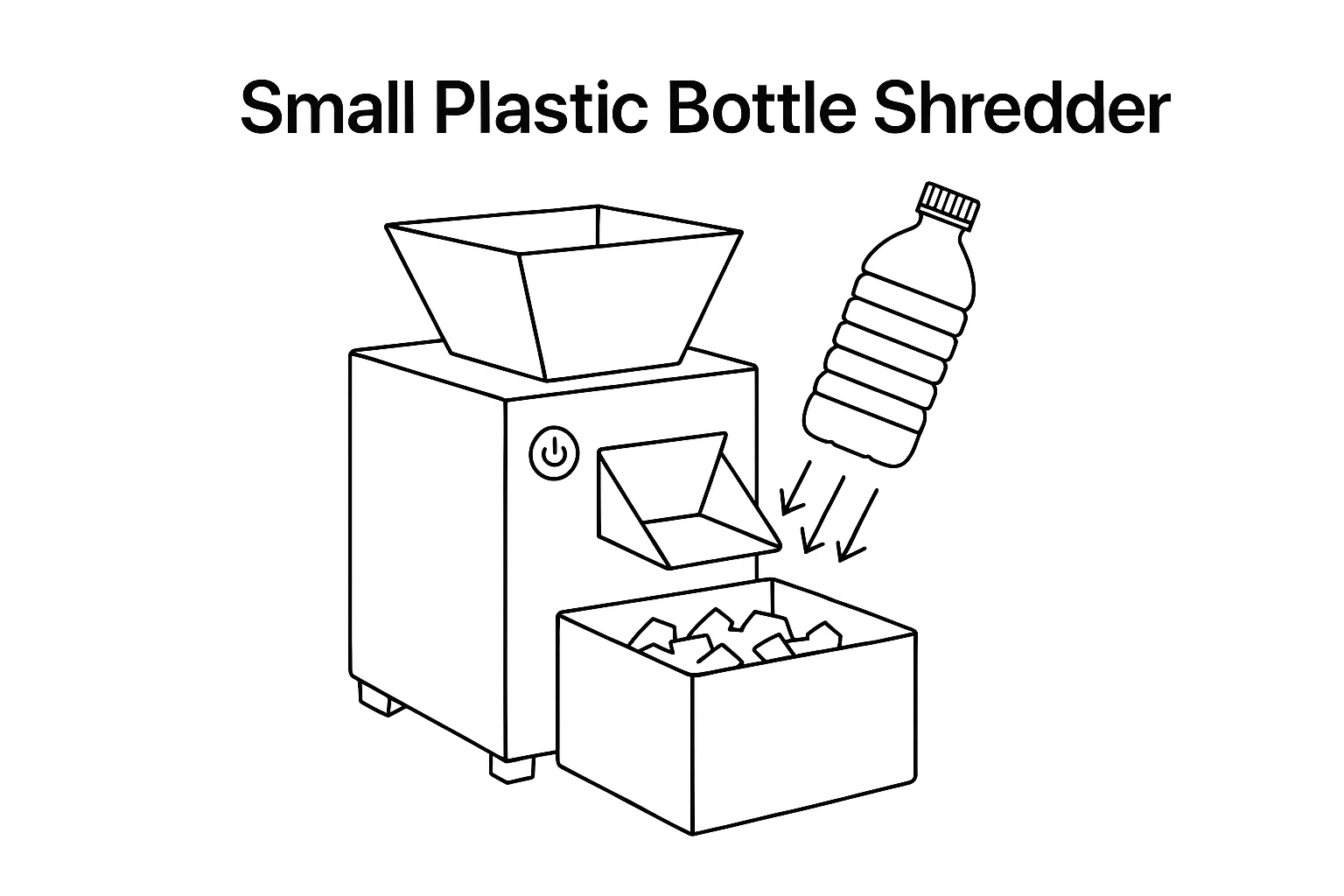
Egy örvényáramú szeparátor (ECS) recovers non-ferrous metals — aluminum cans, copper wire, brass fittings, zinc die-castings — from mixed waste streams by exploiting electromagnetic repulsion. If your recycling line processes municipal solid waste (MSW), auto shredder residue (ASR), electronic scrap, incineration bottom ash (IBA), or PET bottle flakes contaminated with aluminum closures, an eddy current separator is how you pull the non-ferrous value out. This guide covers the physics behind the technology, every ECS type Energycle offers, real operating parameters, and a step-by-step framework for specifying the right separator for your application.
What Is an Eddy Current Separator?
An eddy current separator is an electromagnetic sorting machine that separates non-ferrous metals from non-metallic materials on a conveyor belt. The core mechanism: a high-speed magnetic rotor spinning inside a non-metallic shell drum generates rapidly alternating magnetic fields. When conductive metals pass through these fields, electric currents (eddy currents) are induced inside the metal pieces, creating their own magnetic fields that oppose the rotor's field. The resulting repulsive force launches non-ferrous metals forward off the belt, while non-conductive materials (plastic, glass, wood, paper) simply fall off the belt end by gravity.
The separation force depends on a material's conductivity-to-density ratio. Aluminum (high conductivity, low density) separates most easily. Copper and brass (high conductivity but higher density) require stronger fields or slower belt speeds. Stainless steel and lead respond poorly to eddy current separation due to low conductivity or very high density.
How Does an Eddy Current Separator Work?
The working principle follows Faraday's Law of electromagnetic induction and Lenz's Law. Here is the step-by-step process:
1. lépés: Anyagadagolás
Pre-sorted material (ferrous metals already removed by magnetic drum or overband separator) feeds onto the ECS conveyor belt as a thin, uniform layer. A vibratory feeder upstream ensures monolayer distribution — stacked particles reduce separation efficiency by 30–50%.
Step 2: Magnetic Field Exposure
As material reaches the head pulley, it passes over the magnetic rotor spinning at 2,000–5,000 RPM inside a stationary shell. The rotor contains alternating N-S-N-S permanent magnets (typically NdFeB rare-earth) arranged around its circumference. This creates a rapidly changing magnetic field at the belt surface.
Step 3: Eddy Current Induction
When a conductive metal piece enters this alternating field, circulating electric currents (eddy currents) are induced within the metal. Per Lenz's Law, these eddy currents generate their own magnetic field that opposes the external field — creating a repulsive (Lorentz) force that pushes the metal piece away from the rotor.
Step 4: Trajectory Separation
Three forces act on each particle simultaneously: (1) the eddy current repulsive force (forward/upward), (2) belt conveyor momentum (forward), and (3) gravity (downward). Non-ferrous metals, receiving the additional repulsive kick, follow a longer trajectory and land in the "metals" collection bin. Non-conductive materials simply drop off the belt end into a separate "non-metals" bin. An adjustable splitter plate between the two bins lets operators fine-tune the cut point.
Types of Eddy Current Separators
Different applications require different ECS designs. The main distinction is rotor geometry — concentric vs. eccentric — which determines the magnetic field pattern and optimal particle size range.
Concentric Pole Rotor ECS
The magnetic rotor is centered inside the shell drum. This produces a uniform, symmetrical field pattern ideal for standard recycling applications where particle sizes range from 20–150 mm. Concentric ECS units are the industry workhorse — used in MSW recycling, construction & demolition (C&D) waste, auto shredder residue, and general scrap processing. They offer reliable separation at high throughput with lower maintenance costs.
Eccentric Pole Rotor ECS
The magnetic rotor is offset (eccentric) inside the shell, creating an intense but localized field zone. This concentrates maximum magnetic energy at the separation point, making eccentric ECS units effective for fine particles down to 5 mm. Applications include IBA (incinerator bottom ash) processing, zorba/zurik sorting, WEEE (waste electrical and electronic equipment) recovery, and fine aluminum recovery from glass cullet. Our high-recovery ECS for fine aluminum uses this design.
High-Frequency ECS
Uses more magnetic poles (typically 18–30 poles vs. 12–16 on standard units) and higher rotor speeds to create rapid field alternation. This design targets the smallest non-ferrous particles (5–20 mm) where standard concentric units lose effectiveness. High-frequency ECS is essential for fine fraction processing in IBA plants, wire-chopping lines, and small WEEE recycling.
Wet Eddy Current Separator
Folyékony víz habarában dolgozik, nem száraz szalagon. Használják, ahol a bejárati anyag már nedves (pl. kohászati hűtési víz, nehéz médiaplanta utótermék), vagy ahol a porkezelés kritikus. Kevésbé gyakori a száraz ECS-nél, de szükséges bizonyos kohászati és bányászati alkalmazásokban.
Eddy Current Separator Típusok Összehasonlítása
| Típus | Részecske Méret Távolsága | Rotor sebessége | Pólusok | Legjobb alkalmazások | Rekuperációs arány |
|---|---|---|---|---|---|
| Konzektrikus (Standard) | 20–150 mm | 2,000–3,500 RPM | 12–16 | MSW, C&D, autóvágó, általános hulladék | 90–95% |
| Eccentric | 5–50 mm | 3,000–5,000 RPM | 14–22 | IBA, WEEE, zorba/zurik, finom alumínium | 85–93% |
| Magasfrekvenciás | 5–20 mm | 3,500–5,000 RPM | 18–30 | Finom frakció IBA, drótvágás, kis WEEE | 80–90% |
| Nedves | 5–80 mm | 1,500–3,000 RPM | 12–18 | Lomfeldolgozás, nedves bányászati utótermék | 75–88% |
Kulcsfontosságú Működési Paraméterek
Öt paraméter határozza meg az eddy current separator teljesítményét. Ezek optimalizálása az Ön anyagáramának megfelelően a különbség a 70% és a 95% visszanyerési arányok között.
1. Rotormerülés (RPM)
A rotormerülés növelése növeli a mező váltakozási frekvenciáját és a kilöktőerőt – de csak egy bizonyos pontig. A megfelelő RPM-t meghaladva a teljesítmény elér egy csúcsot vagy csökken, mert a részecskék túl rövid ideig vannak mező expozíció alatt. Tipikus működési tartomány: 2,000–5,000 RPM. Start at 3,000 RPM and adjust based on recovery results. Fine particles need higher RPM; large aluminum cans separate well at lower speeds.
2. Belt Speed
Belt speed controls three factors: material burden depth (faster = thinner layer), dwell time in the magnetic field (faster = less exposure), and particle trajectory after separation. Optimal belt speed creates a single-particle-thick layer without stacking. Typical range: 1.5–3.0 m/s. Increase belt speed for high-throughput applications; decrease for fine-fraction recovery.
3. Splitter Position
The adjustable divider between metal and non-metal collection bins. Moving the splitter closer to the belt increases metal purity but reduces recovery; moving it further away increases recovery but allows more non-metal contamination. Set the splitter position based on whether your priority is maximum recovery (recycling revenue) or maximum purity (downstream process requirement).
4. Feed Layer Uniformity
The single most overlooked parameter. Stacked material blocks magnetic field access to lower layers, cutting recovery by 30–50%. Use a vibratory feeder to spread material into a uniform monolayer before it reaches the ECS head pulley. For wet or sticky material, install a pre-screening stage to remove fines that cause bridging.
5. Ferrous Pre-Removal
Ferrous metals (steel, iron) must be removed before the ECS. Steel pieces attract to the magnetic rotor shell, wrapping around it and damaging the belt, reducing non-ferrous separation effectiveness, and causing costly downtime. Always install a mágneses szeparátor upstream — overband magnets, magnetic drums, or pulley magnets remove 99%+ of ferrous contamination.
Material Separation Performance
Not all non-ferrous metals separate equally. The governing factor is the conductivity-to-density ratio (σ/ρ) — higher ratios produce stronger separation forces. Here is how common materials rank:
| Anyag | Conductivity (MS/m) | Density (kg/m³) | σ/ρ Ratio | ECS Separation |
|---|---|---|---|---|
| Alumínium | 37.7 | 2,700 | 14.0 | Excellent — primary target metal |
| Magnesium | 22.6 | 1,740 | 13.0 | Kiváló |
| Copper | 59.6 | 8,960 | 6.7 | Good — needs slower belt or higher RPM |
| Brass | 15.9 | 8,500 | 1.9 | Moderate — larger pieces only |
| Zinc | 16.6 | 7,130 | 2.3 | Mérsékelt |
| Lead | 4.8 | 11,340 | 0.4 | Poor — density too high |
| Stainless Steel | 1.4 | 7,900 | 0.2 | Very poor — use sensor-based sorting |
This table explains why aluminum cans are the easiest material to recover with an ECS (highest σ/ρ ratio), while stainless steel requires sensor-based sorting technologies instead.
Specifications Reference
Energycle manufactures eddy current separators in working widths from 600 mm to 2,000 mm. Here are representative specifications across our range:
| Modell | Szalag szélessége | Áteresztőképesség | Motorteljesítmény | Rotor átmérője | Rotor sebessége |
|---|---|---|---|---|---|
| ECS-600 | 600 mm | 1–3 t/h | 4 kW | Ø300 mm | Up to 4,000 RPM |
| ECS-800 | 800 mm | 2–5 t/h | 5,5 kW | Ø300 mm | Up to 4,000 RPM |
| ECS-1000 | 1,000 mm | 3–8 t/h | 7,5 kW | Ø350 mm | Up to 3,800 RPM |
| ECS-1200 | 1,200 mm | 5–12 t/h | 11 kW | Ø350 mm | Up to 3,800 RPM |
| ECS-1500 | 1,500 mm | 8–18 t/h | 15 kW | Ø400 mm | Up to 3,500 RPM |
| ECS-2000 | 2,000 mm | 12–25 t/h | 22 kW | Ø400 mm | Up to 3,500 RPM |
All models feature VFD (variable frequency drive) for rotor speed adjustment, NdFeB rare-earth magnets, replaceable non-magnetic shell, and adjustable splitter plate. Visit our eddy current separator product page for full specifications and configuration options.
Ipari alkalmazások
Eddy current separators serve every industry that needs to recover non-ferrous metals from mixed material streams:
Municipal Solid Waste (MSW) Recycling
In materials recovery facilities (MRFs), ECS recovers aluminum cans and other non-ferrous metals after magnetic separation removes steel. A typical MRF processes 20–50 t/h and recovers 95%+ of aluminum cans with a single ECS pass. The recovered aluminum generates $800–$1,500/ton revenue — often the highest-value stream in MSW recycling. See our complete Telepszichiátriai hulladék válogató gép sorozat.
Automata aprító maradványanyag (ASR)
Az életciklus végén lévő járművek darabolása után a vegyes kimenet tartalmaz alumínium motorrészeket, réz vezetékeket, bronz illesztéseket és cink öntvényeket a műanyag és a üveg között. Többfázisú ECS kezelés (sűrű frakció + finom frakció) 85–92% nemfémfémet reciklál ASR-ből, hozzáadva $50–$120 autóhoz a reciklált fémmértékben.
Burning Bottom Ash (IBA)
A hulladékkárosító erőmű alsó égetési hamu tartalmaz 5–12% nemfémfémet súly alapján — főként alumíniumot és rézt. Az IBA feldolgozása szűrés, mágneses szétválasztás és excentrikus/magasfrekvenciás ECS során 40–80 € értékű fémeket reciklál az égetett hamuból. Ez az alkalmazás finom szemcseméretű ECS képességét igényli (5 mm-ig), mivel az IBA granulált természetű.
Elektronikus hulladék (WEEE)
A darabolás után az elektronikus hulladék tartalmaz rézt, alumíniumot, bronzot és értékes fémeket a műanyag és a áramkör darabokkal keverve. Az ECS a nagy mennyiségű nemfémfémet reciklálja; a folyamatban lévő érzékelőalapú szétválasztás vagy sűrűség alapú szétválasztás további tisztítást végez. Tipikus reciklás: 80–90% alumínium és réz a darabolott WEEE-ből.
PET palack újrahasznosítás
Alumínium zárási és körök eltávolítása szükséges a PET darabok folyamatához a élelmiszerminőségű tisztaság elérése érdekében. Egy az összetörés és a mosás után elhelyezett ECS 98%+ alumínium szennyeződést távolít el, a fémmértéket a 50 ppm szükséges határérték alá hozva a palackból-palackba való reciklás érdekében. További információk a ≤50 ppm fémmérték a recikált granulátumokban.
Építési és Demolíciós (C&D) Hulladék
A bontási hulladék tartalmaz alumínium ablakkereteket, réz csöveket és vezetéseket, bronz illesztéseket és más nemfémfémeket. Az első összetörés és a vas eltávolítása után az ECS ezeket a magas értékű fémeket reciklálja a vegyes törmelék, fa és beton folyamatból.
Ahová az ECS beilleszkedik a reciklás vonalba
Az eddy current szétválasztó soha nem működik egyedül. Íme a tipikus pozíciója a reciklás vonalban és az equipment, amelyekkel együtt működik:
Tipikus feldolgozási sorrend:
- Méretcsökkentés — daráló vagy összetörő a anyag feldolgozható méretére bontása
- Szűrés — trommel vagy rezgő szűrő az anyag méretfrakcióira való szétválasztása
- Vas eltávolítása — mágneses szeparátor (távolító, kerék vagy húzórúd) eltávolítja a vasat és az acélt
- Eddy current szétválasztás — ECS a maradék folyamatból nemfémfémeket reciklál
- További szétválasztás — érzékelőalapú szétválasztás, sűrűség alapú szétválasztás vagy kézi minőségellenőrzés a végleges tisztaság érdekében
A maximális reciklás érdekében sok üzem két ECS egységet használ sorban: egy concentric egységet a sűrű frakcióhoz (>20 mm) és egy excentrikus vagy magasfrekvenciás egységet a finom frakcióhoz (5–20 mm). Ez a kétfázisú megközelítés 15–25% több nemfémfémet reciklál, mint egyetlen átfutásos rendszer.
5 lépéses kiválasztási keretrendszer
Ez a keretet használja, amikor egy eddy current szétválasztót rendel a működéséhez:
Lépés 1: Azonosítsa a Bejövő Anyagot
Azonosítsa a jelen lévő nemfémfémeket (alumínium, réz, bronz, ónt), aukciós méreteloszlásukat, a bejövő anyagban való súlyarányát és a nedvességtartalmat. Ez meghatározza, hogy szükséges-e concentric, excentrikus vagy magasfrekvenciás ECS tervezés és milyen reciklás arányt várhat el.
Lépés 2: Határozza meg a Szükséges Kapacitást
Mérje meg a bejövő áramot tonna órában. Az ECS szalag szélessége kezelnie kell ezt a mennyiséget, miközben fenntartja a monolayer bejövő eloszlást. Egy 1,000 mm széles szalag 3–8 t/h mennyiséget kezel, a anyag tömörűsége függvényében; szélesebb szalagok magasabb kapacitás esetén. Mindig méretezzen a csúcskapacitásra plusz 20% marégra.
Lépés 3: Válassza ki a Rotor Konfigurációt
Concentric rotor a 20 mm-nél nagyobb szemcseméretű anyagokhoz (standard alkalmazások). Excentrikus rotor a 5–50 mm szemcseméretű anyagokhoz (finom frakció, IBA, WEEE). Magasfrekvenciás rotor a 5–20 mm szemcseméretű anyagokhoz (maximum finom szemcseméretű reciklás). Ha a bejövő anyag tartalmaz mind sűrű, mind finom frakciókat, tervezzen két ECS egységet sorban.
Lépés 4: Ellenőrizze a Felsőbb Eszközöket
Megerősítse, hogy a vas előkezelés megfelelő (≤0.5% vas az ECS táplálásában). Győződjön meg róla, hogy a szűrés/szelektálás megfelelő méretarányú osztályt eredményez az Ön ECS típusához. Győződjön meg arról, hogy rezgő adagoló vagy terjesztő konvektor van a egyenletes monolayer eloszlás érdekében. Az előző lépés hiánya jelentősen csökkenti az ECS teljesítményét.
Lépés 5: Számítsa ki a megtérülést
becslje meg az éves nem vasos visszanyerési tonnázst × tonnánkénti érték = bruttó bevétel. Vonja le az ECS működési költségeit (elektromosság, szalagcserézés minden 12–18 hónapban, rotor ház cseréje minden 3–5 évben, karbantartási munka). A legtöbb ECS telepítés 6–18 hónapon belül megtérül, alapvetően a visszanyert fém érték alapján — az alumínium visszanyerése 95% arányban $800–$1,500/ton bevételt generál.
Karbantartás és hibaelhárítás
Az eddy current szétkülönítők más hulladékgyűjtő berendezésekhez képest viszonylag alacsony karbantartást igényelnek, de rendszeres ellenőrzések elkerülik az költséges leállásokat:
| Intervallum | Feladat | Részletek |
|---|---|---|
| Napi | Látható ellenőrzés | Ellenőrizze a szalag követését, a szétválasztó pozícióját és a kiadási területeket anyaggyűjtésre |
| Heti | Szalagfeszültség ellenőrzése | Ellenőrizze a szalagfeszültséget és az egyensúlyt; az eltérés egyenetlen kopást és csökkentett szétkülönítést okoz |
| Havi | Kerékpárlubricáció | Kenje be a gyártó ütemtervének megfelelően a rotor és hajtó kerékpárokat |
| Havi | Shell inspection | Ellenőrizze a nem mágneses házat a vas szennyezésből származó kopásnyomokra; cserélje ki, ha kopott át |
| Negyedévente | Mágneses mező ellenőrzése | Ellenőrizze a rotor mágneses mező erősségét gaussmérővel — az NdFeB mágnesek évente <1% értékben avasodnak |
| Évente | Szalagcserézés | Cserélje ki a konvektor szalagot; ellenőrizze a hajtó alkatrészeket, görgőket és kerékpárokat |
| 3–5 years | Shell replacement | Cserélje ki a nem mágneses rotor házt (karbonfiber vagy rozsdamentes acél), amikor kopott a legkisebb vastagság alatt |
Gyakori problémák és megoldások:
- Alacsony visszanyerési arány → Ellenőrizze a táplálási réteg egyenlőségét (a leggyakoribb ok), győződjön meg róla, hogy a rotor sebessége megfelel a részecskeméretnek, ellenőrizze a szétválasztó pozícióját
- Fém a nem fémes konténerben → Növelje meg a rotor sebességét, csökkentse a szalag sebességét, vagy mozga a szétválasztót a szalagtól távolabb
- Nem fémes a fémes konténerben → Csökkentse a rotor sebességét, növelje a szalag sebességét, vagy mozga a szétválasztót a szalag közelebb
- Szalagkárosodás → Vas szennyezés éri el a rotort; javítsa az előtti mágneses szétkülönítést
- Excessive vibration → Check rotor balance, bearing condition, and belt tracking alignment
Getting Started with Energycle
Energycle manufactures örvényáramú elválasztók in concentric and eccentric configurations with belt widths from 600 mm to 2,000 mm. We also provide complete sorting and recycling line integration including:
- Free material testing — send us a sample of your waste stream and we test separation performance on our ECS units
- Custom rotor configurations — pole count, magnet grade, and rotor speed optimized for your specific material
- Complete line design — from shredding through screening, magnetic separation, eddy current separation, and sensor sorting
- After-sales support — pótalkötelek, cserélhető héjak, távoli hibakeresés és helyszíni üzembe helyezés
Contact our engineering team az Ön anyag típusához, kapacitásához és a kívánt fém visszanyeréshez – javasoljuk a megfelelő ECS konfigurációt, és 48 órán belül részletes árajánlatot küldünk.
Gyakran ismételt kérdések
Hogyan működik az eddy current szepárotor?
Az eddy current szepárotor úgy működik, hogy egy mágneses rotorot 2,000–5,000 RPM sebességgel forgat a nem mágneses héjdrumban. Amikor a nem fémfémek áthaladnak a rotoron a szalagon, a gyorsan változó mágneses mező eddy áramokat indít el a fémekben. Ezek az eddy áramok ellenmágneses mezőket hoznak létre (Lenz törvénye alapján), amelyek egy taszító erőt generálnak, amely kilököli a fémeket a szalagról egy külön gyűjtőbe, míg a nem vezető anyagok egyszerűen leesnek a végéről.
Milyen fémeket tud visszanyerni az eddy current szepárotor?
Az eddy current szepárotor nemfémfémeket nyer vissza, beleértve az alumíniumot (cikkek, extrudálások, öntvények), a rézt (vezeték, cső, csatlakozók), bronzot, ónt, és más vezető nemmágneses fémeket. Az alumínium a legmagasabb visszanyerési arányt (95%+) érheti el, mivel a magas vezetőképességű-tömeg aránya magas. A réz és bronz visszanyerése is jó (85–92%) megfelelő rotor sebesség és szalag sebesség optimalizálásával.
Milyen a különbség a koncentrikus és excentrikus eddy current szepárotor között?
A koncentrikus ECS a rotort a héj közepén helyezi el, amely egyenletes mezőt hoz létre, ideális 20–150 mm méretű részecskék számára – a szabványos választás a legtöbb hulladékkezelési alkalmazásban. Az excentrikus ECS a rotort eltolja, hogy a maximális mezőintenzitást a szepározási pontra összpontosítsa, lehetővé téve a finom részecskék hatékony visszanyerését 5 mm méretig. Válassza a koncentrikust általános hulladékkezeléshez; az excentrikust IBA, WEEE és finomfractions alkalmazásokhoz.
Milyen részecskeméretet tud feldolgozni az eddy current szepárotor?
A szabványos koncentrikus ECS egységek hatékonyan szepározzák el 20 mm és 150 mm közötti részecskéket. Az excentrikus és magas frekvenciás modellek a alsó határértéket 5 mmig bővíthetik. Az 5 mm alatti részecskék általában nem szepározhatók az ECS által, és más technológiákat igényelnek, mint például az elektromos szepárotás vagy a nedves gravitációs koncentráció. A legjobb eredmények érdekében szűrje anyagát méretfrakciókra, és használja megfelelő ECS típust minden frakcióhoz.
Mennyibe kerül egy eddy current szepárotor?
Kis ECS egységek (600 mm szalag szélesség, 1–3 t/h) körülbelül $15,000–$25,000 áron kezdődnek. Középkategóriás modellek (1,000–1,200 mm, 5–12 t/h) $30,000–$65,000 között cost. Nagy ipari egységek (1,500–2,000 mm, 12–25 t/h) $70,000–$150,000 között vannak. A legtöbb telepítés 6–18 hónap alatt megtérül a visszanyert fém értékéből – egy 100 kg/h alumínium visszanyerésű létesítmény jelenlegi piaci áron $80,000–$150,000 éves bevételt generál.
Miért szükséges a vas eltávolítása az eddy current szepárotor előtt?
A vasfémek (acél, vas) a mágneses rotorhoz vonzódnak, nem pedig taszítják. Azok körülölelik a héjat, károsítják a szalagot, blokkolják a nemfémfémek szepározását, és költséges sürgős leállításokat igényelnek a eltávolításukhoz. Mindig telepítsen mágneses drums, overband magnets vagy pulley magnets-et a ECS előtt, hogy 99%+ mennyiségű vasfémet távolítson el.
Kaphat-e az eddy current szepárotor visszanyerni rézt?
Igen, de a réz nehezebben szepározható az alumíniumnál, mivel a sűrűsége magasabb (8,960 kg/m³ az alumínium 2,700 kg/m³-hez képest). Bár a réz kiváló vezetőképessége van, a alacsonyabb vezetőképességű-tömeg aránya gyengébb taszító erőt eredményez a gravitációval szemben. Optimalizálja a réz visszanyerését lassúbb szalag sebességgel, magasabb rotor sebességgel és excentrikus rotor tervezéssel. Várható 85–92% réz visszanyerés megfelelő optimalizálással.
Milyen karbantartást igényel egy eddy current szepárotor?
Napi: a szalag követése és a kiadási ellenőrzése. Heti: a szalag feszültség ellenőrzése. Havi: tengelyágy kenése és héj kopás ellenőrzése. Évente: szalag cseréje. Minden 3–5 évben: rotor héj cseréje. Az NdFeB mágnesek évente kevesebb mint 1% romlandó és általában 15–20+ éven át tartanak. Az éves karbantartási költség általában 3–5% az eszköz beszerzési árából – sokkal kisebb, mint a legtöbb hulladékkezelő gép.
Kapcsolódó források
- Eddy Current Magnetic Separator – Termékoldal
- Fejlett örvényáramú leválasztó újrahasznosításhoz
- Magas visszanyerési arányú ECS finom alumíniumhoz
- Felfüggesztett önkisülő mágneses szeparátor
- Szűrőgépek a műanyag újrahasznosításához
- Telepszichiátriai hulladékválogató gépek
- Zsáktörő a települési hulladék válogatásához
- E-Scrap daráló WEEE-hez
- Hogyan érhetjük el a ≤50 ppm fémet a visszanyert granulátumokban
- Plasztikus hulladékgyűjtő gép: Teljes útmutató
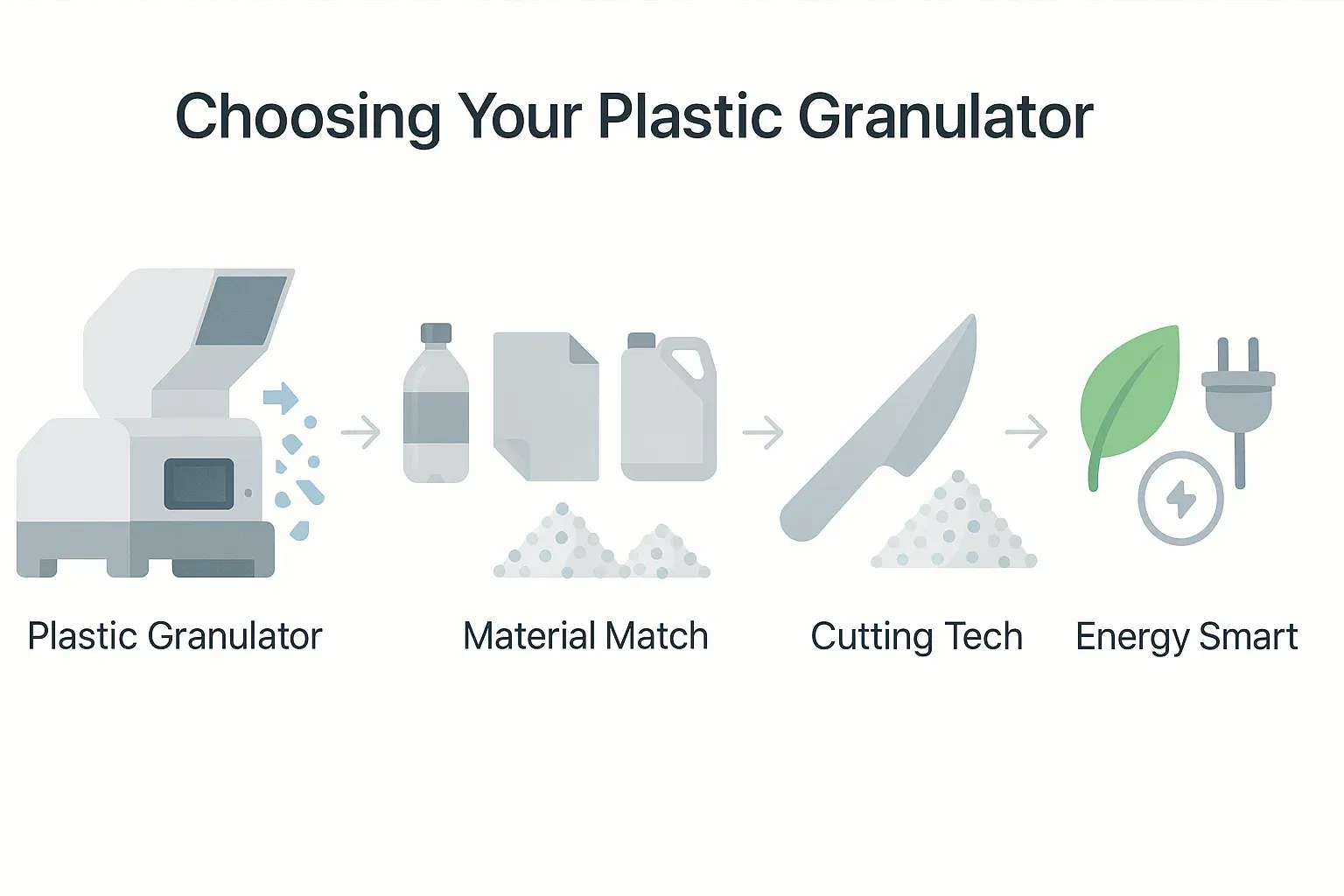
Plasztikus hulladékgyűjtő gép: Teljes útmutató a típusokhoz, kiválasztáshoz és feldolgozó vonalakhoz