

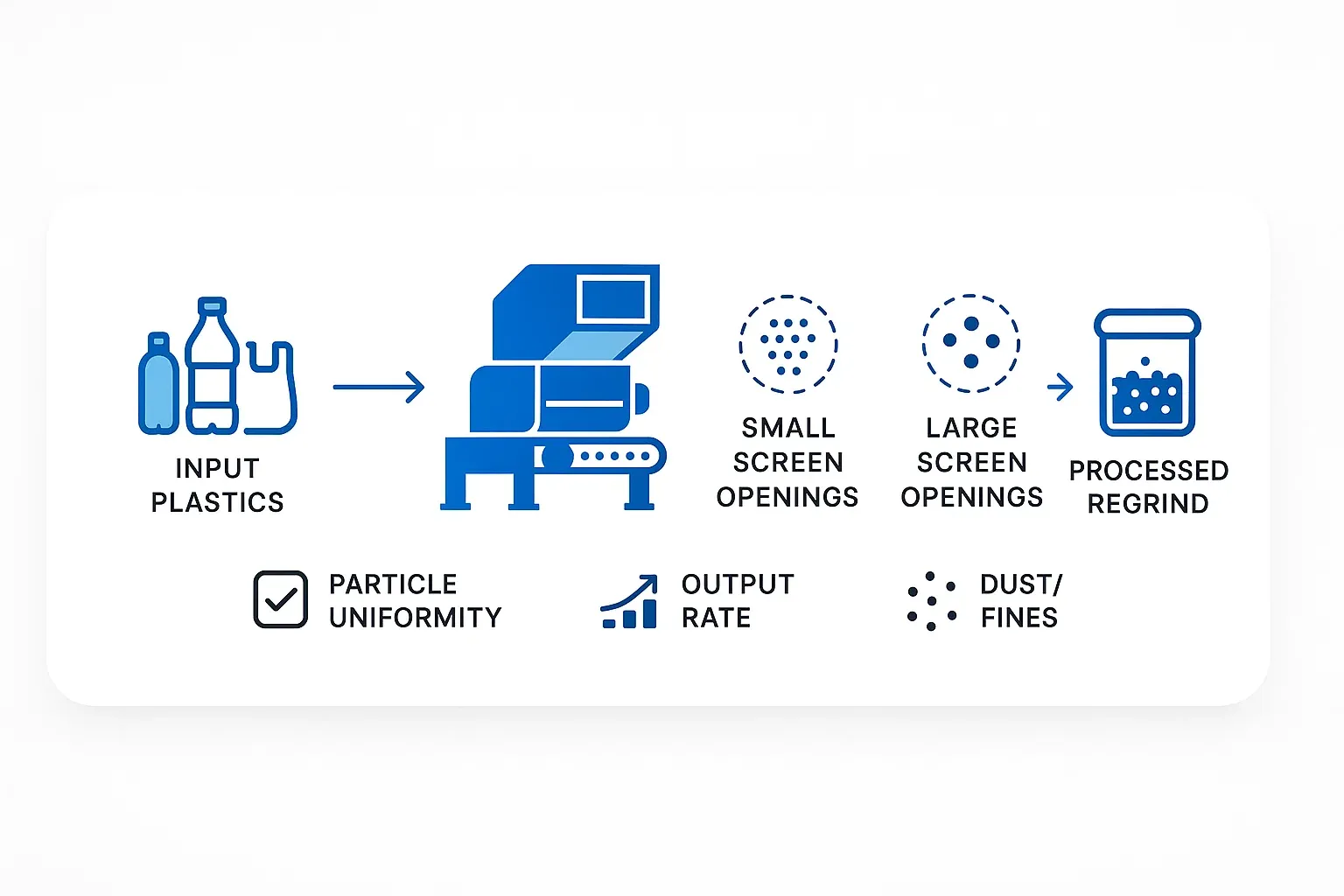
الشاشة الصحيحة للغرانولاتور البلاستيكي هي التي تنتج توزيعًا مقبولًا للحجم النهائي للجسيمات في عملية التالية عند تحميل مستقر. قطر الثقب مهم، لكنه ليس المspecification الكامل. شكل الثقب، مساحة الفتح، سمك اللوحة، المادة، الدعامة والوضع جميعها تؤثر على سرعة خروج الطحن من الماكينة.
هذا الدليل يقدم عملية اختيار للشراء ومهندسي المصنع. للحصول على تفسير أعمق لما يغيره تقليل أو زيادة الفتحات، انظر كيف يؤثر حجم شاشة الغرانولاتور على جودة الخروج.
ابدأ بطلب المتطلبات السفلية
لا تبدأ بطلب شاشة المزود ’الاستاندارد”. حدد ما يجب أن يقوم به الطحن التالي:
- غسل: يجب أن تمر الجسيمات عبر الفلاتر، خزانات الفصل والمجففات دون وجود حبيبات صغيرة زائدة أو قطع كبيرة.
- التصنيع بالضغط أو التشكيل: يجب أن يتم تغذية البلاستيك المكرر بشكل مستمر ومزج مع أي مادة أخرى تستخدم في الوصفة.
- التقليل في الحجم ثانوياً: قد يحتاج الآلات الأولى فقط إلى قطعة وسطية محكمة التحكم.
- البيع كبلاستيك مكرر: قد يحدد العميل توزيع الشبكة، الحد الأقصى للقياس، حد الأتربة وحدود التلوث.
كتابة المتطلبات كتوزيع قابلة للقياس بدلاً من حجم nominal واحد. الشاشة ذات الثقوب المستديرة لا تنتج جسيمات كروية من هذا القطر. يمكن أن تمر الأوراق الرقيقة، القطع الصغيرة والقطع الطويلة بناءً على اتجاهها، لذا يجب اختبار الناتج وتصفيته أو قياسه بطريقة أخرى.
الموارد التي تحدد اختيار الشاشة
Polymer behavior
تتصدع البلاستيك القاسي، بينما يمكن للمواد القابلة للتمدد أو المرنة أن تتمدد، تلتوي أو تلوث. قد يذوب البلاستيك الحساس للحرارة عند زيادة وقت التوقف والارتباط. قد تكون البلاستيك المملوء أو المضخم أكثر قسوة. يؤثر هذا السلوك على الحبيبات الصغيرة، تآكل الشاشة والمجال التشغيلي المفيد.
شكل التغذية والحجم الأقصى
تختلف طريقة تحميل الروتور للفيلم، الزجاجات، الأجزاء المعدة بالصب، المضارب، اللوحة، الأنابيب والتفريغ. لا يمكن للشاشة تصحيح صندوق التغذية غير المناسب أو غرفة القطع. قد تحتاج الأجزاء الكبيرة أو السميكة إلى تقطيع مسبق قبل أن يمكن للمعالج إنتاج الطحن النهائي بشكل آمن ومستقر.
الروتور، السكاكين وفراغ
سرعة المحور، هندسة السكين، عدد القطع لكل دورة وفرق المحور-السطح-سكين يؤثر على شكل الجسيمات قبل وصولها إلى الشاشة. يمكن أن يخلق السكين التالفة أو غير المعدل بشكل صحيح ذيلاً ودفئاً حتى مع الشاشة المتوقعة مثبتة. قم بتقييم تجارب الشاشة فقط بعد أن يكون نظام القطع في حالة معروفة.
كمية الإنتاج اللازمة للخط
عادةً ما يحافظ فتحة أصغر على المواد في المعدة لفترة أطول، ولكن تأثير الكفاءة يعتمد على المواد والمعدات. يمكن أن تصبح استقرار التغذية، مساحة الشاشة المفتوحة، التخلص من الفائض والتحويل العكسي عوامل محددة. احتاج إلى إنتاج نقي مستمر من المواد الخام المقصودة بدلاً من زيادة أو انخفاض نسبية عامة.
مواصفات الشاشة المحددة
حجم وشكل الثقب
الثقوب المستديرة شائعة وتقدم قطر nominal واضح. يمكن استخدام أشكال أخرى للجسيمات المحددة أو متطلبات المساحة المفتوحة. يجب على المورد توضيح سلوك الإطلاق المقصود وتقديم رسم، وليس فقط حجم شفوي.
فتحة الشاشة هي متغير بدءي، وليس حجم حبة الأجزاء المضمون. عادةً ما يؤدي الحلقة nominal الصغيرة إلى تحريك التوزيع إلى الحجم الأصغر، ولكن يجب قياس النتيجة النهائية باستخدام الرسينة الفعلية ووضع السكين.
منطقة مفتوحة
المساحة المفتوحة هي مجموع مساحة الفتحات مقسومة على مساحة الشاشة الفعالة. يمكن أن يكون لدي شاشتين بنفس قطر الفتحات مساحة مفتوحة مختلفة بسبب التداخل والنمط. يمكن أن تحسن المساحة المفتوحة الإفراج، ولكن يجب أن تبقى القوة، الدعم والاستهلاك كافية.
عند مقارنة العروض، طلب الأبعاد الفعالة، نمط الفتحات، التداخل والنسبة المئوية المحسوبة للمساحة المفتوحة. الرسم يمنع الارتباك حول الحدود، مناطق التثبيت والمناطق المحجوبة من قبل الدعامات.
سمك اللوحة والمادة
سمك اللوحة، نوع الفولاذ، المعالجة الحرارية والدعم يحدد كيفية مقاومة الشاشة للصدمة والارهاق. قد تكون اللوحة السميكة أكثر قوة، ولكنها تغير هندسة الطريق. قد تحتاج الخدمة الرطبة، التلوث المسمم والملء المزعج إلى مادة مختلفة أو حماية من الاستهلاك. تأكد من التوافق مع الآلة الحالية نظام التثبيت.
عملية بدء الشاشة العملية
- تحديد الهدف. سجّل توزيع الجسيمات المطلوب، حد الأتربة، الطاقة الإنتاجية، والعمليات التالية.
- وصف المواد الخام. تضمين البوليمر، شكل المنتج، الأبعاد، السماكة، كثافة الحجم، الرطوبة والملوثات.
- تحقق من حدود الآلة. تأكد من نطاق الشبكة المعتمد من قبل الشركة المصنعة، بناء اللوحة والدعم.
- اختر إثنين أو أكثر من الشبكات التجريبية. حدد النتيجة المتوقعة بدلاً من الاعتماد على توصية الكتالوج النهائية.
- اختبار تحت ظروف متطابقة. احافظ على إعداد المواد الخام، حجم اللوحة، حالة السكين، والطريقة العينية.
- اختر من بين المقايضة القياسات. اختر الأكبر فتحات التي تفي بطلب الحجم والجودة التالية، بشرط أن تكون حمولة الآلة والأمان مقبولين.
النقطة الأخيرة تجنب التدوير غير الضروري. إنها ليست قاعدة لاستخدام أكبر شبكة متاحة؛ إنها طريقة لتجنب استخدام شبكة أكثر دقة مما يتطلبها تفضيل المنتج.
ماذا قيس خلال التجربة
| قياس | لماذا يهم |
|---|---|
| الإنتاج القابل للاستخدام | يفرق بين الطحن القابل للبيع أو الاستخدام من معدل الإدخال والرفض |
| توزيع حجم الجسيمات | يظهر الأحجام الكبيرة، النسبة المطلوبة والأتربة بدلاً من المتوسط فقط |
| التيار الكهربائي العادي والأقصى | Reveals load stability and overload risk |
| Material and chamber temperature | Identifies heat buildup or softening |
| Dust and fines | Affects handling, yield, cleaning and downstream melt quality |
| Stoppages and interventions | Captures bridging, wrapping and screen blinding |
| Screen and knife condition | Provides a wear baseline and exposes contact or abnormal loading |
شغل لفترة طويلة كافية لتصل إلى التشغيل المستقر وتجمع عينات في عدة مرات. قد تفوت عرض قصير تغطية الشاشة، تراكم الحرارة أو تغيير التغذية.
Material-specific cautions
Film and flexible plastics
الثقوب الصغيرة لا تحل مشكلة التلفيف أو التغذية السيئة. يمكنها زيادة وقت البقاء والحرارة. استعرض خزان، تصميم نهاية المحور، فجوة السكين والإزالة معًا. قد تحتاج الفيلم المسحوق إلى معالجة الطحن الرطب لاحقًا squeezing step.
Bottles and rigid containers
تحقق من أن حجم القطع المناسب للغسل، الفصل العلامات، والجفاف. بالنسبة للPET، استخدم خليط ممثل من حجم القوارير، العلامات، والغلق. دليل مزج زجاجات بولي إيثيلين تريهيدروكسى أكسيد يغطي عملية الاختيار والقبول الكاملة.
Thick parts and purgings
قد تسيطر كميات الصدمة العالية والتغذية البطيئة على النتيجة قبل الشاشة. تأكد من أن الكسارة يجب أن تصنع قطعة وسطية. لا تقلل من فتحات الشاشة لتعويض المحور الذي لا يمكنه التفاعل مع التغذية بشكل مستمر.
البلاستيك الكاشط أو المملوء
الزجاج، المادة المعدنية، الرمل والملوثات المعدنية يمكن أن يسرع من التآكل. قم بقياس نمو الثقوب، الشقوق حالة السكين في فترات محددة. مادة الشاشة ومدة الاستبدال يجب أن تكون في مقارنة تكاليف التشغيل.
أخطاء شائعة في اختيار الشاشة
- الافتراض أن قطر الثقب يساوي أطول طول لكل جزيء منتج
- مقارنة حجم الثقب دون مقارنة المساحة المفتوحة وبنية اللوحة
- اختبار الشاشات باستخدام حالة سكين مختلفة أو إعداد التغذية
- تقديم تغذية الخزان بدلاً من الناتج القابل للاستخدام الفعلي
- استخدام فتحات أصغر لمعالجة التغذية السيئة، التشابك أو السكاكين المعدة
- تجاهل قدرة الغسيل، النقل أو الطباعة في الخط السفلي
- استمرار تشغيل الشاشة المكسورة، المعدة بشكل غير صحيح أو الموضوعة بشكل غير صحيح
صيانة وتغيير التحكم
افحص الشاشات لوجود شقوق، تشوه، ثقوب موسعة، تغطية غير طبيعية حول الدعامات. اتبع إجراءات الفصل، إغلاق المحور ورفع المحرك المقدمة من الشركة المصنعة قبل فتح الخزان. سجل معرف الشاشة المثبتة، ساعات أو أطنان معالجة والسبب في الاستبدال.
عند تغيير الشاشة، تعامل معها كتحول في العملية. سجل توزيع الجزيئات الجديدة، الحمل والدرجة الحرارة بدلاً من افتراض أن الإعدادات السابقة لا تزال قيد التطبيق. احفظ رسومات الشاشة وتاريخ الفحص مع مواصفات تشغيل الكسارة.
ملخص اختيار حجم الشاشة
اختر من متطلبات الجزيء في الخط السفلي، تأكد من بناء الماكينة الم hyväksytty ja كرر اختبار أكثر من فتحة واحدة باستخدام تغذية ممثلة. يجب تحديد الشاشة بناءً على شكل الثقب، المساحة المفتوحة، اللوحة والدعامة وليس القطر وحده. يجب دعم القرار النهائي بجودة الناتج القasurable، الحمل المستقر والاستهلاك المقبول.
استعرض المتاحة مضارب البلاستيك فقط بعد أن تصبح واضحة специفات التغذية والناتج؛ يجب تقييم الآلة والشاشة كنظام قطع واحد.
الأسئلة الشائعة
ما هو حجم الشاشة المناسب لآلة تكسير البلاستيك؟
لا يوجد حجم معياري. حدد توزيع الحبيبات في الخط السفلي واختبار الشاشات المرشحة باستخدام المادة الفعلية، حالة السكين والطريقة التغذية.
هل يزيد دائمًا حجم الشاشة من الإنتاجية؟
ليس دائمًا. غالبًا ما يقلل من التدوير مرة أخرى، ولكن يمكن أن تؤدي التغذية، هندسة المحور، المساحة المفتوحة والناتج إلى الحد من الإنتاج. قم بقياس الناتج القابل للاستخدام النظيف المستدام خلال تجربة محكومة.
هل قطر الفتحة هو أكبر حجم للجسيم؟
رقم. يمكن للجسيمات الرقيقة أو الطويلة أن تعبر اعتمادًا على التوجيه. تأكد من توزيع الإنتاج الكامل عن طريق العينة والقياس.
