

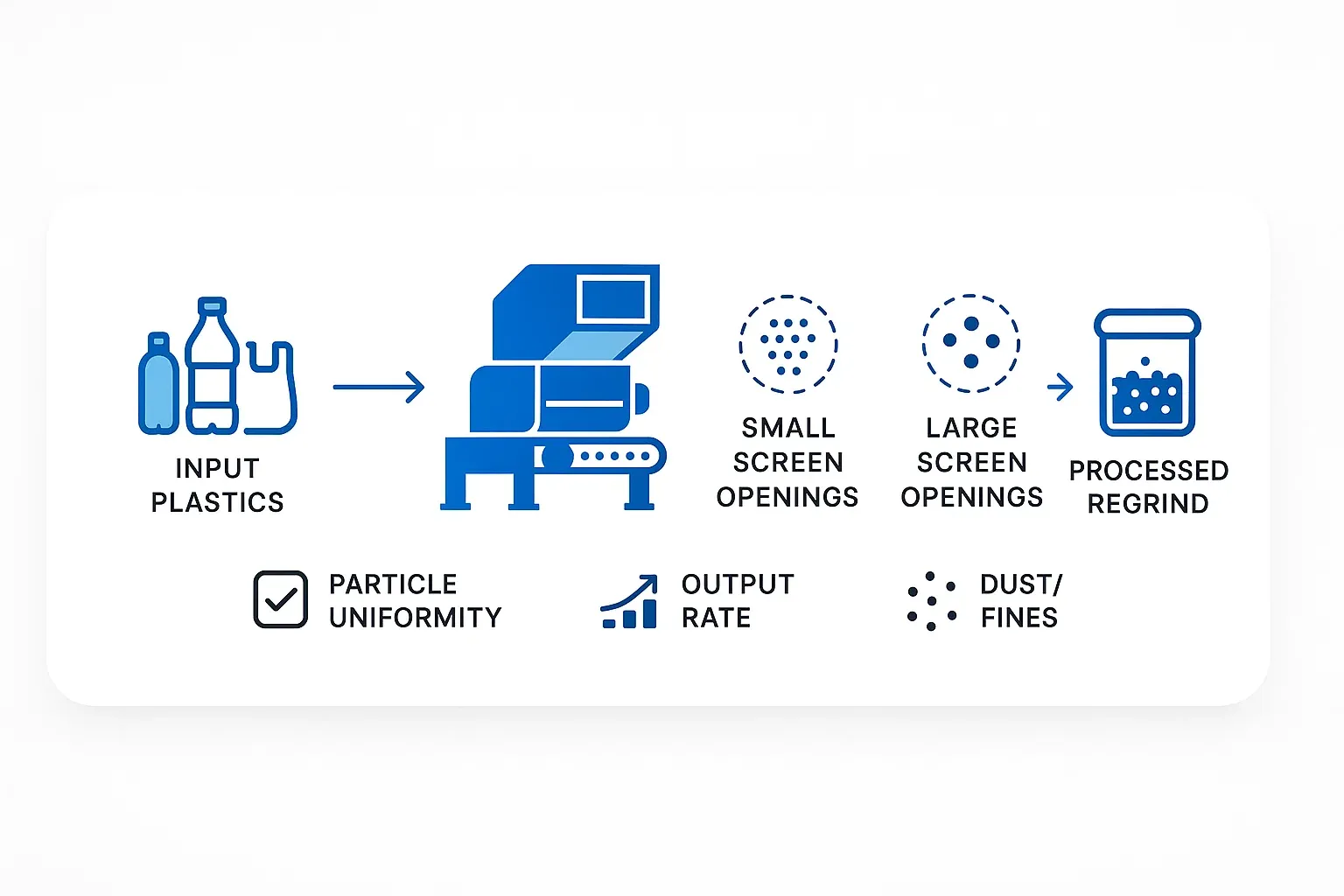
A megfelelő plasztikus granulátor szűrő az, amely elfogadható szemcseméretű eloszlást biztosít a következő folyamatban egy stabil működési terhelés mellett. A lyuk átmérője fontos, de nem az egyetlen specifikáció. A lyuk alakja, az áteresztő terület, a lapvastagság, a anyag, a támogatás és az állapot is befolyásolja, hogy milyen gyorsan hagyja el a visszanyert anyag a vágó kamrát.
Ez az útmutató választási folyamatot kínál a vevők és üzemgazdák számára. A lyukak kisebb vagy nagyobbra változásakor bekövetkező változások mélyebb magyarázatához lásd hogyan befolyásolja a granulátor szűrő mérete az output minőségét.
Kezdje a lefolyási követelményekkel
Ne kezdje azzal, hogy a beszállító “standard” szűrőjéről kérdez. Határozza meg, hogy a visszanyert anyagnak mit kell követnie:
- Mosás: a szemcséknek át kell haladniuk a mosókerekeken, szétválasztó tartályokon és szárítókon kívüli finom szemcsék vagy túlméretes darabok nélkül.
- Kivonás vagy formázás: a visszanyert anyag folyamatosan kellene adagolódnia és keverednie kellene az összes más anyaggal, amelyet a receptben használnak.
- Másodlagos méretcsökkentés: az első gép esetében talán csak egy ellenőrzött köztes darabra van szükség.
- Visszanyert anyag eladása: a vevő meghatározhatja a szűrőeloszlást, a maximális dimenziót, a porhatárértéket és a szennyeződési határértéket.
Adja meg a követelményt mérhető eloszlásként egy névleges méret helyett. A körlyukú szűrő nem hoz létre olyan átmérőjű gömböleket. vékony lapok, darabok és hosszúkás darabok áthaladhatnak az irányuktól függően, így a kimenetet mintavételezni és szűrni vagy más módon mérni kell.
A szűrőválasztást meghatározó bemenetek
Polimer viselkedés
A törékeny műanyagok hajlamosak megszakadni, míg a rugalmas vagy rugalmas anyagok nyújthatók, összenyomhatók vagy elmoshatók. A hőérzékeny anyag megszilárdulhat, ha a tartózkodási idő és a súrlódás növekszik. Betöltött vagy megerősített polimerek több kopást okozhatnak. Ezek a viselkedések befolyásolják a finérceket, a szűrőkopást és a hasznos működési tartományt.
Bejárati forma és maximális méret
A film, palackok, formált alkatrészek, futók, lap, cső és tisztítók a rotort különbözően terhelik. A szűrő nem tudja helyreállítani az alkalmatlan adagolót vagy vágócellát. Nagyon nagy vagy vastag alkatrészek először előszedést igényelhetnek, mielőtt a granulátor biztonságosan és állandóan előállíthatja a végleges újrahasznosított anyagot.
Rotátor, vágóeszközök és szűkület
A rotortengely sebessége, a vágógeometria, a fordulatonkénti vágások száma és a rotortól a távolságot tartó vágó közötti távolság befolyásolja a részecskék alakját, mielőtt elérnék a szűrőt. Egy kopott vagy helytelen beállított vágó még a megfelelő szűrő telepítése esetén is farkokat és meleget hozhat létre. Csak akkor értékelje a szűrőpróbákat, amikor a vágórendszer ismert állapotban van.
Szükséges vonaláramlás
A kisebb nyílás általában hosszabb ideig tartja a anyagot a kamrában, de a kapacitási hatás anyag- és gép-specifikus. A táplálás egyenletesége, a szűrő nyílás területe, a kiürítés és a visszaforgatás a korlátozó tényezők lehetnek. Kérjen tartós nettó kimenetet a tervezett alapanyagból, ne csak általános százalékos növelést vagy csökkentést.
Meghatározandó szűrőméretek
Lyuk mérete és alakja
Kerek lyukak gyakoriak és tiszta nominalis átmérőt biztosítanak. Más alakok használhatók bizonyos részecskék formájához vagy nyílás területi követelményekhez. A szállítónek magyaráznia kell a tervezett kiürítési viselkedést és egy rajzot kell szolgáltatnia, nemcsak szóbeli méreteket.
A szűrőnyílás egy kiindulási változó, nem garantált maximális részecskeméret. Egy kisebb névleges lyuk általában eltolja a eloszlást kisebb irányba, de a végső eredményt az actual resin és a vágó állapota alapján kell méretezni.
Nyílt terület
Az üres terület a lyukterület összesített területe, osztva az aktív szűrőterülettel. Két ugyanolyan lyukátmérőjű szűrő különböző üres területtel rendelkezik a távolság és minta miatt. Több üres terület javíthatja a kiadást, de a szilárdság, a támogatás és a kopás megfelelőnek kell maradnia.
Árnylatok összehasonlítása esetén kérje az aktív méreteket, lyuk mintát, távolságot és kiszámított üres terület arányt. Egy rajz megelőzi a határok, a rögzítési területek és a támogatások által elzárt területek összezavarását.
Lapvastagság és anyag
Lapvastagság, acélmárka, hőkezelés és támogatás határozza meg, hogy a szűrő milyen mértékben ellenáll az ütközéseknek és a kimerülésnek. Egy vastag lap erősebb lehet, de megváltoztatja a átjárati geometriát. A nedves szolgálat, a károsító szennyezés és az abrasív töltőanyagok különböző anyagot vagy kopásvédelmet igényelhetnek. Erősítse meg a meglévő gép és a rögzítési rendszer kompatibilitását.
Egy gyakorlati kiindulási szűrőfolyamat
- Határozd meg a célt. Rögzítsd a szükséges részecskedisperzión, a finomanyag határértéket, a kapacitást és a lefolyási folyamatot.
- Leírd a bevitelt. Tartalmazza a polimert, a termék formáját, méreteit, vastagságát, tömegtömegét, nedvességtartalmát és a szennyeződést.
- Ellenőrizd a gép tokát. Erősítsd meg a gyártó által jóváhagyott szűrőterjedelmet, a lemezbetét építését és a támogatást.
- Válassz két vagy több próbás szűrőt. Kerüld a katalógus ajánlásainak véglegesnek tekintését, inkább kerüld a kívánt eredményt.
- Próbáld ki azonos körülmények között. Tartsd egyenletesen a beviteli előkészítést, a tömegközéppontot, a vágóeszköz állapotát és a mintavételezési módot.
- Válaszd a mért kompromisszumok közül. Válaszd a legnagyobb nyílást, amely megbízhatóan megfelel a lefolyási méretnek és minőségnek, feltéve, hogy a gép terhelése és biztonsága elfogadható.
Az utolsó pont elkerüli az ártalmatlan visszakeresést. Nem szabály az a legnagyobb szűrő használata; az a módszer, amely elkerüli a termékspecifikáció által igényelt finomabb szűrőt.
Miben kell mérni a próbát
| Mérés | Miért fontos ez |
|---|---|
| Nettó elfogadható kimenet | Elválasztja a eladható vagy felhasználható újrahasznosított anyagot a beviteli ütemtervtől és a visszautasított anyagoktól |
| Részecskeméret-disperzió | Mutasd a túlméretezett, célfeloszlást és a finomanyagokat, ne csak az átlagot |
| Normál és csúcs motoráram | Megjeleníti a terhelés stabilitását és az túlterhelési kockázatot |
| Anyag és kamra hőmérséklete | Azonosítja a hő felhalmozódását vagy lágyulást |
| Por és finom részecskék | Hatással van a kezelése, a termelés, a tisztítás és a további olvadék minőségére |
| Leállások és beavatkozások | Fogja meg a híd képződést, a burkolódást és a szűrő elzáródását |
| Szűrő és vágó állapota | Munkavédelmi alapértéket biztosít és expozíciót vagy rendellenes terhelést jelez |
Futtasson elég hosszú ideig a stabil működés elérése érdekében, és mintázzon több alkalommal. Egy rövid bemutatkozás elmulaszthatja a szűrő elzáródását, a hő felhalmozódását vagy az anyagbevitelezés változását.
Anyag specifikus figyelmeztetések
Fólia és rugalmas műanyagok
Kis lyukak nem oldják meg a rotort burkolódását vagy a rossz bevételezést. Növelhetik a maradványidőt és a hőt. Vizsgálja meg az edényt, a rotort végű tervezést, a vágó réseit és az ürítést együtt. A mosott fóliának szükség lehet a nedves granulációra és a későbbi squeezing lépésre.
Palackok és merev tartályok
Ellenőrizze, hogy a darab mérete megfelel-e a mosásnak, a címkétel elválasztásának és a szárításnak. A PET esetében használjon palack méret, címkék és zárási anyagok reprezentatív keverékét. A PET palack granulátor útmutató lefed minden kiválasztási és elfogadási folyamatot.
Thick parts and purgings
Magas ütőterhelések és lassú bevételezés először a szűrő előtt dominálhatja az eredményt. Erősítse meg, hogy a daraboló gép köztes darabot kell-e készíteni. Ne csökkentse a szűrőnyílást annak érdekében, hogy egy a bevételezést nem egységesen bevonó rotorért kárpótoljon.
Csiszoló vagy töltött műanyagok
A üveg, ásvány töltőanyag, szemcsék és metál szennyezés felgyorsíthatja a kopást. Mérje meg a lyuk növekedését, a repedéseket és a vágó állapotát tervezett időközönként. A szűrőanyag és a cserélési gyakoriság a működési költség összehasonlításában kellene lennie.
Common screen-selection mistakes
- Assuming hole diameter equals the maximum length of every output particle
- Lyukméret összehasonlítása anélkül, hogy az nyitott területet és a lap szerkezetét is összehasonlítanánk
- Testing screens with different knife condition or feed preparation
- Reporting hopper feed instead of net acceptable output
- Using a smaller opening to fix poor feeding, wrapping or dull knives
- Ignoring the capacity of washing, conveying or extrusion equipment downstream
- Continuing to run a cracked, deformed or incorrectly seated screen
Maintenance and change control
Inspect screens for cracks, deformation, enlarged holes, blinding and wear around supports. Follow the manufacturer’s isolation, rotor-locking and lifting procedure before opening the chamber. Record the installed screen ID, hours or tonnes processed and the reason for replacement.
Amikor a szűrő megváltozik, kezelje azt folyamatváltozásként. Jegyezze fel az új részecskedisperziónak, a terhelésnek és a hőmérsékletnek az új értékeit, ne feltételezze, hogy az előző beállítások továbbra is érvényesek. Tartsa meg a szűrőrajzokat és az ellenőrzési történeteket a granulator’s operating specification.
Screen-size selection summary
Válassza ki a lefolyási szemcseméret követelményeit, erősítse meg a gép által engedélyezett szerkezetet, és több mint egy nyílással representative táplálékot teszteljen. A szűrőnek a lyukgeometria, az üres terület, a lemez és a tartó alapján kell meghatározni, nemcsak a átmérő alapján. Az végleges döntést a mért kimeneti minőség, a stabil terhelés és elfogadható kopás támogatja.
Browse available műanyag granulátorok csak akkor, ha a táplálék és a kimeneti specifikáció egyértelmű; a gépet és a szűrőt egy vágórendszerként kell értékelni.
Gyakran ismételt kérdések
Milyen képernyő méretet kell használnom egy műanyag granulátornál?
Nincs univerzális méret. Határozza meg a lefelé irányuló részecskedisperziónak a paramétereit, és próbálja ki a jelölt szűrőket az eredeti anyaggal, a vágó állapotával és az adagolási módszerrel.
Nagyobb képernyő mindig növeli a kapacitást?
Nem mindig. Gyakran csökkenti a recirkulációt, de a bejárás, a rotor geometria, az nyitott terület és a kimenet még mindig korlátozhatja a kimenetet. Mérje a kontrollált kísérlet során a fenntartható nettó elfogadható kimenetet.
A szűrőlyuk átmérője a maximális részecskeméret?
No. vékony vagy hosszúkás részecskék haladhatnak át az orientációtól függően. Ellenőrizze a teljes kimeneti eloszlást mintavételezéssel és méréssel.
