

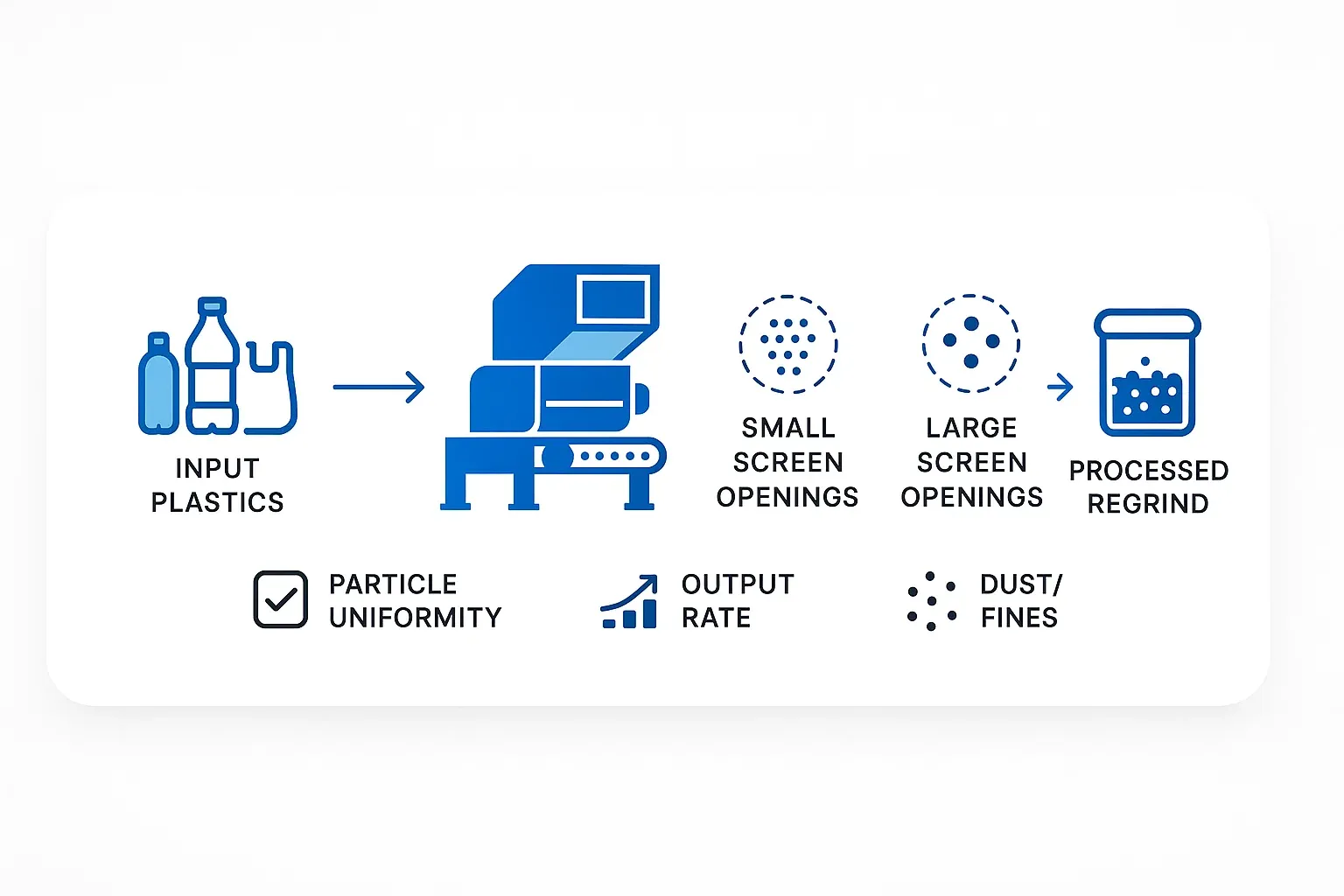
Ecranul corect al granulatorului de plastic este cel care produce o distribuție acceptabilă a dimensiunii particulelor pentru următorul proces la o sarcină operativă stabilă. Diametrul găurilor este important, dar nu este singura specificație. Forma găurilor, suprafața deschisă, grosimea plăcii, materialul, suportul și starea afectează cât de rapid regrindul părăsește camera de tăiere.
Acest ghid oferă un flux de lucru de selecție pentru cumpărători și ingineri de uzină. Pentru o explicație mai profundă a ce se schimbă atunci când deschiderile devin mai mici sau mai mari, vezi cum influențează dimensiunea ecranului granulatorului calitatea ieșirii.
Începe cu cerințele de la partea inferioară
Nu începe prin a cere ecranul “standard” al furnizorului. Definirea ce trebuie să facă următorul regrind:
- Spălat: particulele trebuie să treacă prin perne, vase de separare și uscătoare fără particule prea mici sau prea mari.
- Extrudare sau formare: regrindul trebuie să fie alimentat constant și să se amestece cu orice alt material folosit în rețetă.
- Reducerea dimensiunii secundară: prima mașină ar putea avea nevoie doar de o piesă intermediară controlată.
- Vânzare ca regrind: clientul poate specifica o distribuție de sită, dimensiunea maximă, limita de finuri și limita de contaminare.
Redacta cerința ca o distribuție măsurabilă în loc de un singur dimensiune nominală. Un ecran cu găuri rotunde nu produce particule sferice de acel diametru. Plăci subțiri, fragmente și piese alungite pot trece în funcție de orientarea lor, așa că rezultatul trebuie eșantionat și siftat sau măsurat în alt mod.
Intrările care determină alegerea ecranului
Comportamentul polimerului
Plasticele fragile tind să se fractureze, în timp ce materialele ductile sau flexibile pot se întinde, plia sau murdări. Materialele sensibile la căldură pot deveni moale atunci când timpul de staționare și frecarea cresc. Polimerii umplți sau întăriți pot fi mai abrazivi. Aceste comportamente afectează finetele, uzura ecranului și intervalul de funcționare util.
Forma intrării și dimensiunea maximă
Filmul, sticlele, piesele modelate, găurile de alimentare, foaia, tubul și purjarea încărcă rotorul diferit. Ecranul nu poate corecta un furtun neadecvat sau o cameră de tăiere. Piesele foarte mari sau groase pot avea nevoie de tăiere prealabilă înainte ca un granulator să poată produce regrindul final în siguranță și constant.
Rotor, foile și spațiul între ele
Viteza rotației rotorului, geometria foarfecii, numărul de tăieri pe rotație și spațiul rotor-cușă-foarfecă influențează forma particulelor înainte ca acestea să ajungă la grilă. O foarfecă uzată sau configurată incorect poate crea coadă și căldură chiar și cu grila așteptată instalată. Evaluați probele de grilă doar după ce sistemul de tăiere este într-o stare cunoscută.
Cantitatea de producție necesară
O deschidere mai mică menține de obicei materialul în camera mai mult timp, dar efectul de capacitate este specific materialului și mașinii. Consistența alimentării, suprafața deschisă a grilei, evacuarea și recircularea pot deveni factorii limitativi. Solicitați o producție netă sustinută din materialul de bază ales, nu o creștere sau reducere generală a procentului.
Dimensiunile grilei de specificat
Dimensiunea și forma găurilor
Găurile rotunde sunt comune și oferă un diametru nominal clar. Alte forme pot fi utilizate pentru forme specifice ale particulelor sau pentru cerințele de suprafață deschisă. FURNIZORUL ar trebui să explice comportamentul de evacuare așteptat și să furnizeze un desen, nu doar o dimensiune verbală.
Deschiderea ecranului este o variabilă de start, nu o dimensiune maximă garantată a particulelor. O gaură nominală mai mică de obicei shiftă distribuția mai mică, dar rezultatul final trebuie măsurat cu resinul real și condiția foii.
Zonă deschisă
Suprafața deschisă este totalul suprafeței găurilor împărțită la suprafața ecranului activ. Două ecrane cu același diametru de gaură pot avea suprafețe deschise diferite din cauza pasului și modelului. O suprafață deschisă mai mare poate îmbunătăți evacuarea, dar puterea, suportul și uzura trebuie să rămână adecvate.
Când comparați ofertele, cereți dimensiunile active, modelul găurilor, pasul și procentul calculat al suprafeței deschise. Un desen previne confuzia despre margini, zonele de montare și zonele blocate de suporturi.
grosimea plăcii și materialul
Grosimea plăcii, clasa de oțel, tratamentul termic și suportul determină modul în care ecranul rezistă la impact și uzură. O placă groasă poate fi mai robustă, dar schimbă geometria passagei. Serviciul umed, contaminarea corozivă și umpluturile abrazive pot necesita un material diferit sau protecție împotriva uzurii. Confirmați compatibilitatea cu mașina existentă și sistemul de fixare.
Un proces de pornire practică pe ecranul de start
- Definirea țintei. Înregistrarea distribuției necesare a particulelor, limita de finuri, randamentul și procesul de la sosire.
- Descrierea materiilor prime. Include polymer, forma produsului, dimensiunile, grosimea, densitatea volumică, umiditatea și contaminarea.
- Verificarea carcasei mașinii. Confirmarea gamei de ecrane aprobate de producător, construcția plăcilor și suportul.
- Selectarea a două sau mai multe ecrane de probă. Încadrarea rezultatului așteptat, nu presupunerea unei recomandări de catalog finale.
- Testarea în condiții corespunzătoare. Păstrarea pregătirii materiilor prime, dimensiunii lotului, stării lamelii și metodei de eșantionare constante.
- Alegerea dintre compromisurile măsurate. Selectarea celei mai mari deschideri care îndeplinește în mod fiabil cerințele de dimensiune și calitate de la sosire, cu condiția ca încărcarea mașinii și siguranța să rămână acceptabile.
Ultimul punct evită recircularea nejustificată. Nu este o regulă să se folosească cel mai mare ecran disponibil; este o metodă pentru a evita un ecran mai fin decât specificațiile produsului.
Ce să măsoare în timpul trialului
| Măsurătorile | De ce contează |
|---|---|
| Output acceptabil net | Separă regrindul vândabil sau utilizabil de rata de intrare și de produsele respinse |
| Distribuția dimensiunilor particulelor | Arată particulele prea mari, fracția țintă și finuri, nu doar media în mod exclusiv |
| Curentul motor normal și de vârf | Reveals load stability and overload risk |
| Material and chamber temperature | Identifies heat buildup or softening |
| Dust and fines | Affects handling, yield, cleaning and downstream melt quality |
| Stoppages and interventions | Captures bridging, wrapping and screen blinding |
| Screen and knife condition | Provides a wear baseline and exposes contact or abnormal loading |
Funcționează suficient de mult pentru a atinge operația stabilă și faceți eșantioane la mai multe rânduri. O demonstrație scurtă poate rata blocarea ecranului, acumularea de căldură sau variația materiilor prime.
Material-specific cautions
Film and flexible plastics
Găurile mici nu rezolvă înmânarea rotorului sau alimentarea slabă. Ele pot crește timpul de staționare și căldura. Revizuiți împreună capacul, designul capătului rotorului, spațiul dintre foarfece și evacuare. Filmul spălat poate necesita granulare umedă și o squeezing step.
Bottles and rigid containers
Verificați dacă dimensiunea particulelor se potrivește spălării, separării etichetelor și uscării. Pentru PET, utilizați un amestec reprezentativ de mărimi de sticle, etichete și capete. The Ghidul granulatorului pentru sticle de PET acoperă procesul complet de selecție și acceptare.
Thick parts and purgings
Cărcările de șoc mari și alimentarea lentă pot domina rezultatul înainte ca ecranul să facă acest lucru. Confirmați dacă un măcinător ar trebui să facă o piesă intermediară. Nu reduceți deschiderea ecranului pentru a compensa un rotor care nu se poate implica constant în alimentare.
Materiale plastice abrazive sau umplute
Sticla, umplutură minerală, nisip și contaminarea metalelor pot accelera uzura. Măsoarați creșterea găurilor, fisurile și starea foarfecelor la intervale planificate. Materialul ecranului și frecvența de înlocuire fac parte din comparația costurilor de exploatare.
Erori comune ale selecției ecranelor
- Assuming hole diameter equals the maximum length of every output particle
- Comparând dimensiunea găurilor fără a compara aria deschisă și construcția plăcii
- Testing screens with different knife condition or feed preparation
- Reporting hopper feed instead of net acceptable output
- Using a smaller opening to fix poor feeding, wrapping or dull knives
- Ignoring the capacity of washing, conveying or extrusion equipment downstream
- Continuing to run a cracked, deformed or incorrectly seated screen
Maintenance and change control
Inspect screens for cracks, deformation, enlarged holes, blinding and wear around supports. Follow the manufacturer’s isolation, rotor-locking and lifting procedure before opening the chamber. Record the installed screen ID, hours or tonnes processed and the reason for replacement.
Când se schimbă o grilă, tratează-o ca pe o schimbare de proces. Înregistrează noua distribuție a particulelor, încărcarea și temperatura, în loc să presupunem că se aplică încă setările anterioare. Reține desenele de grilă și istoricul inspecțiilor cu granulator’s operating specification.
Screen-size selection summary
Alege din cerințele particulelor la ieșire, confirmă construcția aprobată de mașină și testează mai mult de o deschidere cu alimentare reprezentativă. O grilă ar trebui specificată prin geometria găurilor, aria deschisă, placa și suportul—nu doar diametrul. Decizia finală ar trebui susținută de calitatea iesirii măsurate, încărcarea stabilă și uzura acceptabilă.
Browse available granulator de plastic doar după ce specificațiile de intrare și ieșire sunt clare; mașina și grila trebuie evaluate ca pe un sistem de tăiere unitar.
Întrebări frecvente
Ce dimensiune de ecran ar trebui să folosesc într-un granulator de plastic?
Nu există o dimensiune universală. Definiți distribuția particulelor la ieșire și testați ecranele candidate cu materialul real, starea lamelor și metoda de alimentare.
Does a larger screen always increase throughput?
Nu întotdeauna. De multe ori reduce recircularea, dar alimentarea, geometria rotorului, deschiderea și evacuarea pot încă limita producția. Măsoară producția netă acceptabilă sustinută în timpul unui test controlat.
Este diametrul găurii de filtrare dimensiunea maximă a particulelor?
Număr. Particule subțiri sau alungite pot trece în funcție de orientare. Verificați distribuția completă a ieșirii prin eșantionare și măsurare.
