


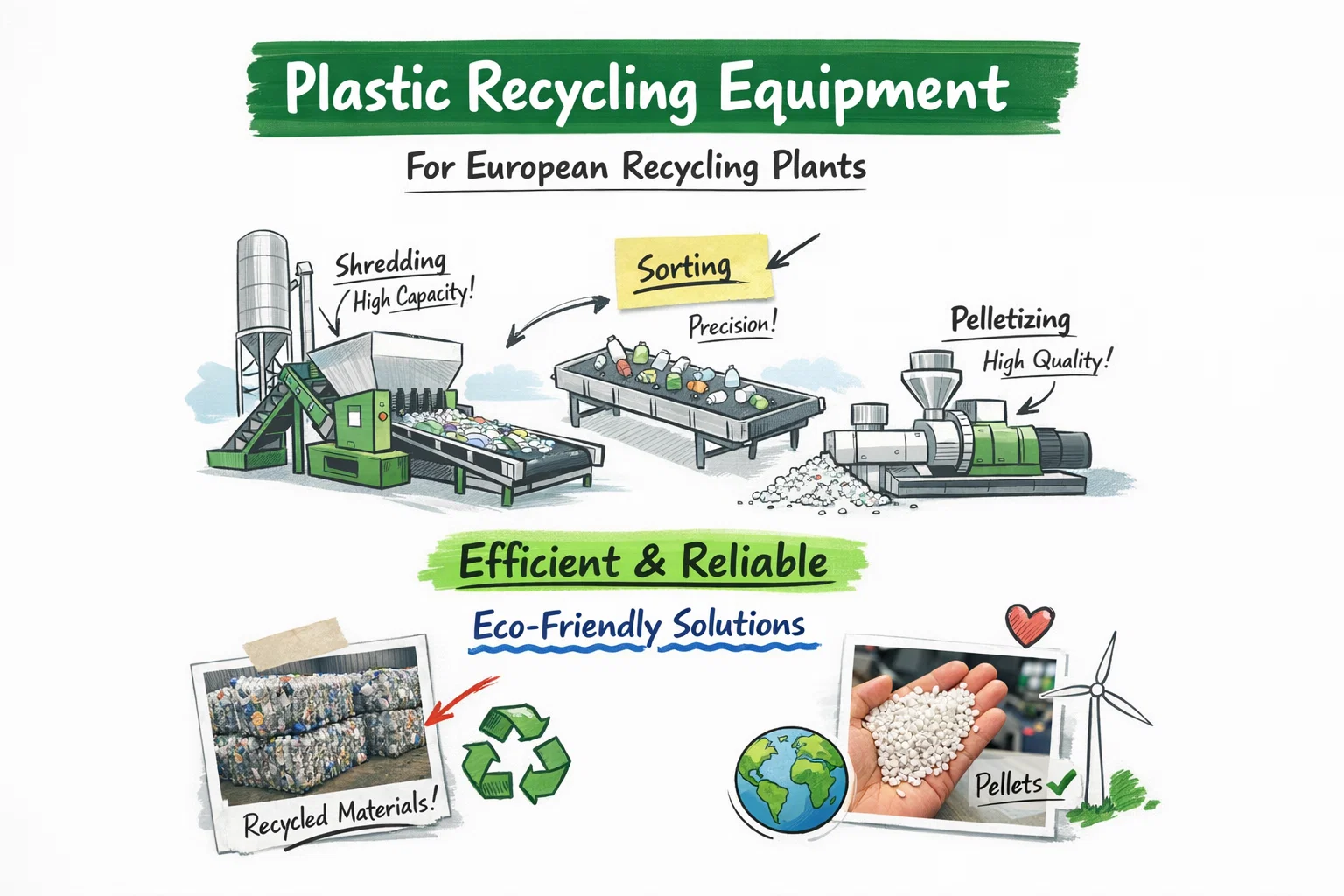
Europe is at the forefront of the global circular economy. With strict environmental regulations, ambitious recycling targets, and rising demand for high-quality recycled plastics, European recycling plants require reliable, compliant, and energy-efficient plastic recycling equipment.
This guide explains what European recyclers look for when investing in plastic recycling machinery—and how to select the right equipment for long-term success.
1. Why European Recycling Plants Have Higher Equipment Requirements
Unlike many other markets, European recycling facilities must operate under tight regulatory, safety, and quality constraints. Equipment decisions are influenced not only by price but also by:
- EU recycling policies and waste management directives
- CE safety and compliance requirements
- Energy efficiency and reduced carbon emissions
- Water consumption and wastewater recovery
- Output quality (especially for food-grade and closed-loop recycling)
As a result, plastic recycling equipment for Europe must be engineered differently, with a stronger focus on automation, process stability, and compliance.
2. Core Plastic Recycling Equipment Used in European Plants
A modern European recycling plant consists of several interconnected systems rather than standalone machines. These systems must work together to ensure consistent quality and high throughput.
2.1 Shredding and Size Reduction
The first step in many recycling operations is shredding and size reduction. European recyclers often process contaminated post-consumer plastics, so equipment must be robust and flexible enough to handle:
- Bottles, jars, containers
- Films and agricultural plastics
- Mixed polymers and labels
- Occasional metal contamination
Low-speed shredders and heavy-duty granulators ensure controlled size reduction with minimal wear.
2.2 Washing Lines – The Heart of the Plant
Efficient washing is the backbone of any plastic recycling plant. European facilities rely on advanced systems like the Sistema de Lavagem de Reciclagem to deliver clean, dry plastic flakes ready for reprocessing.
Key Washing Line Technologies:
- Pre-washing and drum washing
- Hot washing systems (especially for PET)
- Arruelas de fricção
- Tanques de separação de pia-flutuação
- High-speed centrifugal dryers
Efficient washing lines not only improve output quality but also reduce operating costs by saving water and energy.
2.3 PET Bottle Recycling Systems
PET is one of the most recycled materials in Europe, especially in countries with bottle deposit return schemes. For facilities processing PET, the Sistema de Reciclagem de Garrafas PET ensures top-tier cleanliness and consistent throughput.
These systems are engineered for:
- High-efficiency hot wash
- Label and adhesive removal
- Effective contaminant separation
- Consistent flake quality ready for further processing
European PET recyclers targeting food-grade or bottle-to-bottle applications place particular emphasis on hot washing and moisture-controlled outputs.
2.4 Rigid Plastic Washing Lines
Beyond bottles and films, rigid plastics like crates, drums, and industrial containers require specialized systems. The Linha de lavagem de plástico rígido para PP, HDPE, PVC is designed to process these challenging materials with high throughput and thorough cleaning.
These lines typically include:
- Heavy-duty pre-wash
- High-torque friction washers
- Aggressive decontamination systems
- Efficient drying solutions
Rigid plastic washing lines are increasingly in demand in EU markets processing packaging, industrial waste, and consumer goods plastics.
2.5 Drying and Dewatering Systems
After washing, moisture must be removed efficiently to prepare the material for extrusion or pelletizing. European recyclers often require high-performance drying systems such as those outlined on the Sistemas de Secagem página.
Effective drying is crucial for:
- Reducing final moisture below 1–3%
- Preparing flakes for consistent extrusion
- Lowering energy costs in downstream processing
3. Compliance and Certification in Europe
3.1 CE Certification and Safety Standards
All plastic recycling equipment installed in Europe must be CE-compliant, covering:
- Mechanical safety and guarding
- Electrical and control system certification
- Sistemas de parada de emergência
- Operator safety and ergonomic design
European buyers commonly request full CE documentation before progressing in purchase discussions.
3.2 Food-Grade and Bottle-to-Bottle Requirements
For recyclers aiming at bottle-to-bottle or food-grade PET recycling, additional scrutiny is applied to washing and decontamination processes. Washing systems must deliver consistent cleanliness and moisture control to meet stringent downstream requirements.
4. Energy and Water Efficiency – A Key Buying Factor
European recycling facilities are under constant pressure to reduce operating costs and environmental impact.
When selecting plastic recycling equipment, buyers focus on:
- Power consumption per ton of output
- Water circulation, filtration, and recovery systems
- Heat recovery in hot washing stations
- Automation and real-time process control
Equipment with optimized energy and water usage not only reduces OPEX but also enhances a plant’s sustainability profile—an important factor for EU funding, certification, and ESG commitments.
5. Turnkey Plastic Recycling Solutions
Many European buyers opt for comprehensive project solutions rather than isolated machines. The Soluções de Reciclagem page highlights complete plant solutions, from initial layout design to installation and after-sales support.
Turnkey solutions typically include:
- Engineering and process design
- Complete equipment integration
- Installation and on-site commissioning
- Operator training and technical support
Such holistic services help recyclers reduce risk, improve uptime, and accelerate ROI.
6. How to Choose the Right Supplier for European Markets
When evaluating suppliers of plastic recycling equipment, experienced European recyclers look for:
- Proven installations in Europe or similar markets
- CE-ready machinery and documentation
- Engineering-led solutions rather than generic machines
- Transparent technical information and process support
- Long-term spare parts availability and service
Selecting the right partner is as important as selecting the right equipment.
7. Final Thoughts
European recycling plants operate in one of the most demanding regulatory and operational environments in the world. Investing in compliant, efficient, and integrated plastic recycling equipment increases profit margins, enhances product quality, and supports long-term sustainability goals.
With advanced washing systems, high-efficiency drying solutions, and turnkey recycling plant options, equipment suppliers can help European recyclers thrive in a competitive, compliance-driven marketplace.
