

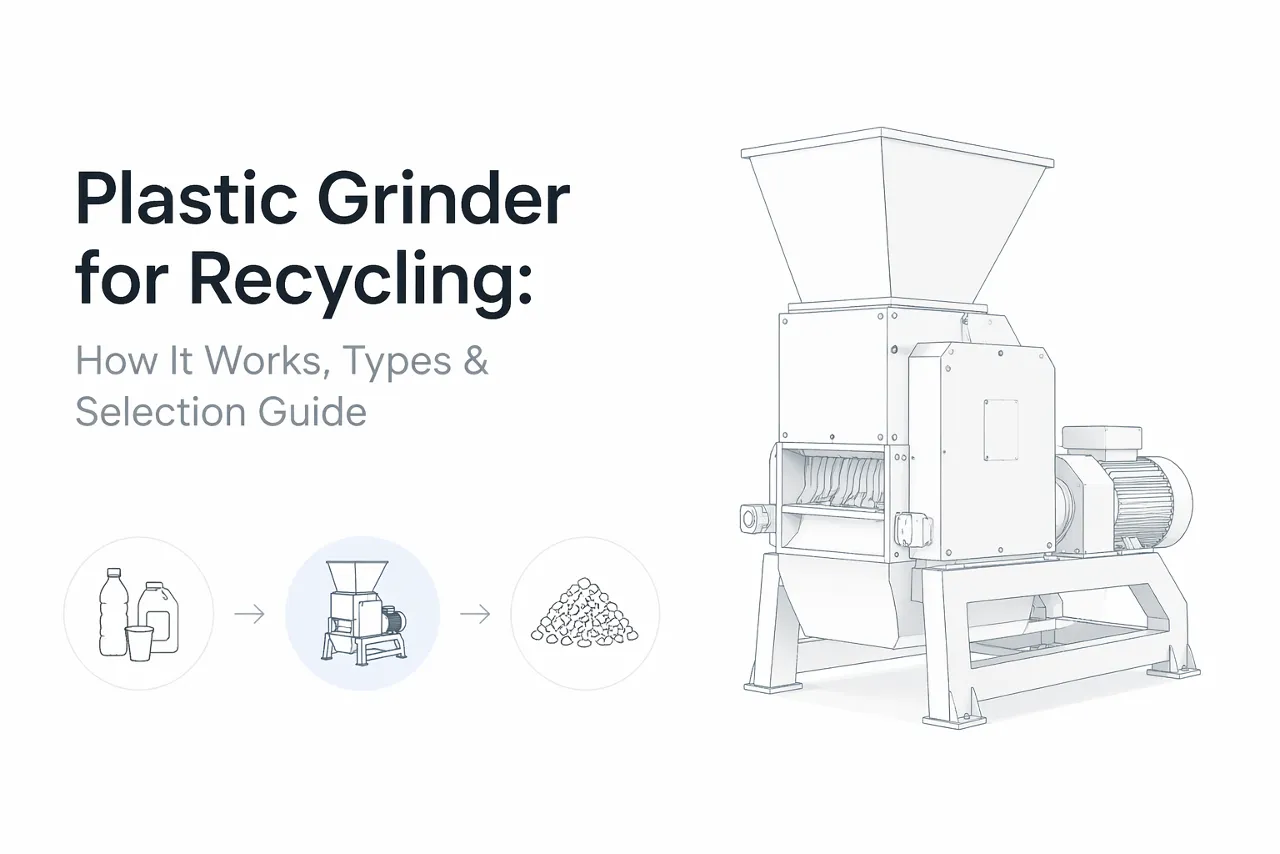
재활용용 플라스틱 그라인더는 병, 파이프, 상자, 필름, 프로파일 등 플라스틱 폐기물을 일관된 규격의 미니언스로 변환하여, 이를 직접 엑스트루더나 펠릿제이저에 공급할 수 있게 합니다. 이 단계가 없다면 대부분의 재활용 라인이 규모에 맞춘 원료 처리를 할 수 없습니다. 이 가이드는 기계가 어떻게 작동하는지, 어떤 유형이 있는지, 실제로 중요한 사양이 무엇인지, 그리고 특정 재료와 처리량 요구 사항에 맞는 적절한 기계를 선택하는 방법에 대해 설명합니다.
What Is a Plastic Grinder for Recycling?
플라스틱 그라인더는 다른 시장에서 플라스틱 그란ولا이저나 플라스틱 크러셔로도 불리며, 대량의 플라스틱 폐기물을 작은, 일관된 파티클로 자르는 규모 감소 기계입니다. 직경이 일반적으로 4–25 mm인 이 출력(재귀인 또는 그란룰레이드로 불립니다)은 깨끗한 경계선을 가지고 있으며, 다음 단계인 씻기, 복합, 또는 새로운 펠릿으로의 직접 재엑스트루전에 준비되어 있습니다.
그라인더, 그란ولا이저, 크러셔라는 용어는 플라스틱 재활용 산업에서 혼용되지만, 기술적인 차이가 있습니다:
- 그래뉼레이터 — 중간 회전 속도(200–600 RPM)에서 정밀하게 자르며, 최소한의 먼지와 일관된 규격의 미니언스를 생산하는 표준 최종 규모 감소 단계
- Grinder — 더 높은 속도와 더 공격적인 규모 감소로 튼튼하거나 두꺼운 원료를 처리
- 파쇄기 — 크란ولا이저 전에 매우 크거나 두꺼운 벽면의 조각(ドラム, 상자, 두꺼운 파이프)에 대한 주요 감소 단계; 우리의 플라스틱 분쇄기 기계 가이드 for a detailed breakdown
실제로는 일반적으로 한 대의 기계가 세 가지 기능을 모두 수행합니다. 기계 이름의 선택은 거의 의미 있는 성능 차이를 반영하지 않습니다. 중요한 것은 루터 디자인, 절단 속도, 그리고 스크린 크기입니다.
How a Plastic Grinder Works
모든 플라스틱 그라인더는 동일한 작동 원리를 가지고 있습니다: 회전 루터에 장착된 절단 날이 고정된 스타터 날에 맞서 들어오는 플라스틱을 점진적으로 작은 조각으로 자릅니다. 이 과정은 다섯 단계로 이루어져 있습니다:
- 밥을 먹이다 — 재료는 항상 랜드로, 수동으로, 콘베이어로, 또는 생산 라인에서 직접 인라인으로 공급되는 힐러를 통해 절단 방공실에 진입합니다.
- Primary cutting — 루터 날 (이동)은 스타터 날 (고정)에 극도로 가까운 공차로 통과하여 플라스틱을 자릅니다. 루터 속도는 기계 유형과 재료에 따라 200–900 RPM 사이입니다.
- Regrinding — 여전히 큰 조각들은 출구로 나가지 못하고 절단 방공실 내에서 재순환되어 다시 자릅니다.
- Screen discharge — 방공실 하단의 구멍이 있는 스크린은 출력 파티클 크기를 제어합니다. 출구로 통과할 수 있는 충분히 작은 파티클만이 기계를 나갑니다. 표준 스크린 구멍 직경: 6, 8, 10, 12, 15, 20, 25 mm.
- 수집 — 출력 granules는 수집 틀에 들어가거나 공기로 전달되어 다음 공정 단계(washer, dryer, extruder)로 이동합니다.
스크린은 주요 크기 제어 기계입니다. 스크린을 교환하면 출력 파티클 크기를 다른 기계 조정 없이 변경할 수 있습니다. 대부분의 상업용 granulators는 5분 안에 도구 없이 스크린을 교환할 수 있습니다.
Types of Plastic Grinders for Recycling
By Rotor Design
로터 기하학은 기계가 가장 효율적으로 처리할 수 있는 재료를 결정합니다. 네 가지 가장 일반적인 설계는 다음과 같습니다:
| 로터 타입 | Best Material | Typical Speed |
|---|---|---|
| Open rotor (spoke or pin) | Thick-walled rigid parts — HDPE pipes, ABS housings, PA components | 200–400 RPM |
| Closed rotor (staggered blades) | Thin-walled parts, purging material, flexible profiles | 300–600 RPM |
| Tangential feed rotor | 인젝션 모olding에서의 연속적인 inline grinding of runners and sprues | 400–900 RPM |
| Double-shaft rotor | Mixed or contaminated baled plastic, bulky hollow containers | 50–150 RPM |
Wet Grinder vs. Dry Grinder
이 구분은 대부분의 구매 가이드에서 소홀히 여겨지지만, 출력 품질과 하위 공정 호환성에 큰 영향을 미칩니다.
Dry grinding 기준 운영 모드입니다. 취급 공간은 물 없이 작동합니다. 즉시 펠릿화나 복합화에 적합한 건조한 균형화물이 출력됩니다. 높은 생산량이나 힘들게 자를 수 있는 재료에서 열 축적은 열 민감한 레스인 (PVC, PET)을 손상할 수 있습니다.
Wet grinding 운영 중에 절취 공간에 제어된 물 흐름을 도입합니다. 이로 인한 이점은 다음과 같습니다:
- Cooling prevents heat degradation of the resin
- Water flushes fine dust out of the chamber continuously
- 라벨, 먼지, 표면 오염이 절취 중에 일부 씻겨납니다
PET 병 재활용 라인에서 습식 절취는 표준입니다. 열 감도성과 라벨 오염이 문제인 경우 - see our wet crushing advantages for PET bottles for a detailed comparison. The trade-off: wet output granulate must pass through a centrifugal dryer or hot-air dryer before downstream processing, adding capital and operating cost.
By Machine Size and Application
- Small / lab-scale grinders (7.5–22 kW): 50–300 kg/h throughput. Used in small recycling workshops, R&D labs, or inline with a single injection molding machine for sprue/runner recycling.
- Mid-range industrial grinders (22–90 kW): 300–1,000 kg/h. The workhorse of most plastic recycling facilities handling one or two consistent material streams.
- Heavy-duty industrial grinders 대규모 공장에서 혼합 소비자 폐기물, 필름 백, 또는 대량 파이프 쇼트 처리용.
Material-Specific Recommendations
모든 플라스틱 그라인더가 모든 레시신 타입에 대해 동일하게 잘 작동하지 않습니다. 재료 성질 - 탄성, 녹는 온도, 형태, 및 오염 수준이 올바른 기계 구성을 결정합니다. 이 표를 시작점으로 사용하세요:
| 재료 | Main Challenge | Recommended Configuration |
|---|---|---|
| PET 병 | Heat-sensitive resin; label contamination; caps | Wet granulator, tangential feed rotor, 8–10 mm screen, metal detector upstream |
| HDPE/PP 경질 (crates, drums, thick pipe) | High impact loads; large input dimensions | -heavy-duty open rotor, 200–350 RPM, 500 mm 이상의 조각에 대해 사전 분쇄가 권장됩니다 |
| PE / PP film (packaging, agricultural) | Material wraps around rotor; feeding inconsistency | Anti-wrap rotor design, force-feed roller system, 10–15 mm screen, slower intake speed |
| PVC profiles and pipe | Chlorine off-gassing; rapid blade wear; fine dust | hardened blades (SKD11 또는 carbide)를 가진 닫힌 랜터, 먼지 추출 시스템, 건조 미립화 전용 - 우리의 PVC grinding vs. crushing guide |
| ABS / PS (electronics, housings) | Brittle fracture; metal contamination risk from e-waste | Metal detector upstream, slow-speed grinder, 6–8 mm screen, sound insulation enclosure |
| Nylon / engineering plastics | Tough and abrasive; heat build-up in chamber | Water cooling or wet grinding, tungsten carbide-tipped blades, 6–10 mm screen |
핵심 요약: 동일한 라인에서 하나 이상의 재료 타입을 처리하는 경우, 가장 어려운 재료에 맞는 랜터와 빠른 교환 스크린을 선택하세요. 그런 다음 가벼운 재료에 대해 스크린 크기와 공급 속도를 조정하세요.
Key Specifications to Evaluate Before You Buy
제조업체 스펙 시트는 종종 최대 용량 수치를 강조합니다. 실제로 이 수치는 무엇을 의미하는지 여기서 설명합니다:
처리량 용량
Rated in kg/h, but always request capacity figures for your specific material and screen size. 600 kg/h로 평가된 기계가 고정된 HDPE 재생재질에 대해 150–200 kg/h를 제공할 수 있습니다. 재료 시험을 요청하거나 구매 계약서에 용량 보증을 포함해 주세요.
Cutting Chamber Width and Rotor Diameter
챔버 너비는 기계가 사전 절단 없이 받을 수 있는 최대 입력 크기를 결정합니다. 루터 직경은 절단 에너지에 영향을 미칩니다: 같은 RPM에서 직경이 큰 루터는 더 높은 날짜 외경 속도와 더 많은 절단력을 제공합니다. 파이프나 프로파일 재활용의 경우, 챔버 너비가 가장 큰 십자망을 덮는지 확인하세요.
Screen Hole Diameter
This is the direct control over output particle size. Standard options: 6, 8, 10, 12, 15, 20, and 25 mm. Most downstream extruders and compounders require 6–12 mm granulate — confirm your pelletizer’s feed specification before specifying the screen. Our plastic pelletizing machine guide covers the full downstream requirements.
모터 출력
소형 모터는 반복적인 열 차단과 모터 수명 단축을 유발합니다. 실질적인 규칙으로: 고정된 플라스틱에 대해 평가 용량당 1 kW를, 유연하거나 저dens성 재료(필름, 폼)에 대해 1 kW를 허용하세요. 항상 최대 용량을 기준으로 크기를 잡아야 합니다. 평균 용량이 아니라.
Blade Material and Replacement Cost
날은 운영 비용에 직접적인 영향을 미치는 소모품입니다. D2 도구 강철 날(HRC 58–62)은 대부분의 표준 애플리케이션을 처리합니다. 글라스 가진 닐론, PVC, 오염된 소비자 후 재활용 재료와 같은 가소성 재료에 대해 SKD11이나 탄화물 날이 서비스 수명을 3–5배로 연장하지만 초기 비용이 더 많습니다. 기계에 대한 결정을 내리기 전에 날 교체 가격과 현지 유비성을 확인하세요. 자세한 내용은 우리의 selecting plastic granulator blades.
Noise Level and Dust Control
Industrial granulators typically generate 85–100 dB(A) without enclosures. EU and US workplace safety regulations require hearing protection above 85 dB(A) and engineering controls above 90 dB(A). Ask for the machine’s measured sound pressure level at 1 m with the standard hopper installed — not the theoretical value. Dust extraction connection (typically 150–250 mm ducting) is essential for PVC, ABS, and any dry grinding of contaminated material.
Plastic Grinder vs. Shredder vs. Crusher: What’s the Difference?
이 세 가지 기계 유형은 크기 감소 체인에서 다른 위치에 있습니다. 잘못된 것을 사용하거나 건너뛰면 혼잡과 재생재질 품질이 저하됩니다.
| Plastic Grinder / Granulator | 플라스틱 파쇄기 | 플라스틱 크러셔 | |
|---|---|---|---|
| 출력 크기 | 4–25 mm (screen-controlled) | 20–150 mm (coarse, irregular) | 10–80 mm (medium) |
| Output uniformity | High — consistent particle shape | Low — strips and chunks | 중간 |
| 처리량 범위 | 50–5,000 kg/h | 200–15,000+ kg/h | 100–3,000 kg/h |
| Primary role | Final size reduction for extrusion-ready regrind | Volume reduction of bulky waste; primary processing of mixed waste | 쇼드러와 그란ولا터 사이의 중간 감소 |
| Typical position in line | Last size-reduction step before washing or extruding | First step — primary reduction | Between shredder and granulator |
대부분의 소비 후 플라스틱 재활용 작업의 경우 최적의 순서는 다음과 같습니다: 분쇄기 → 세척기 → 분쇄기 → 과립기 → 펠렛화기. 스프루, 러너, 파이프 오프컷과 같은 깨끗한 산업용 스크랩의 경우 인라인 과립기 한 대면 충분합니다. 전체 장비 비교는 파쇄기 대 과립기 대 펠릿화기 선택 가이드.
플라스틱 그라인더 유지보수: 모니터링 대상
유지보수는 출력 품질과 기계 수명을 모두 결정합니다. 세 가지 영역에 정기적으로 주의를 기울여야 합니다:
칼날 검사 및 연마
무딘 칼날은 불규칙한 입자 모양, 더 많은 미세입자, 더 높은 에너지 소비 및 열 축적을 유발합니다. 재료 마모도에 따라 200~500시간마다 칼날을 점검하세요 - PVC와 유리로 채워진 수지는 깨끗한 HDPE나 PP보다 칼날이 3~5배 빨리 마모됩니다. 대부분의 과립기 칼날은 교체하기 전에 3~5회 정도 재연마할 수 있습니다. 예비 세트를 보관하여 칼날 서비스 중에 기계가 중단되지 않도록 하세요.
화면 검사
500 작동 시간마다 스크린에 균열, 변형 또는 커진 구멍이 있는지 점검하세요. 스크린이 손상되면 대형 입자가 통과하여 재연마를 직접 오염시키고 다운스트림 압출기에 막힘을 일으킬 수 있습니다. 장비당 최소 두 개의 예비 스크린을 설치하여 하나씩 준비해 두십시오.
베어링 온도 및 윤활
로터 베어링은 지속적으로 높은 부하에서 작동합니다. 작동 중 베어링 온도를 모니터링합니다. 80°C 이상의 수치가 지속되면 윤활이 부족하거나 정렬 불량 또는 과부하를 나타냅니다. 제조업체의 일정에 따라 재급유: 일반적으로 밀폐형 베어링의 경우 500~1,000시간마다, 먼지가 많거나 습도가 높은 환경에서는 더 자주 재급유합니다. 항상 베어링 제조업체에서 지정한 그리스 유형을 사용하세요. 그리스 유형을 혼합하면 마모가 빨라집니다.
자주 묻는 질문
플라스틱 그리nder와 플라스틱 그란уля터의 차이점은 무엇인가요?
플라스틱 재활용 업계에서는 이 두 용어를 같은 의미로 사용합니다. 두 용어 모두 로터와 스테이터 절단 시스템을 사용하여 플라스틱 폐기물을 스크린으로 제어되는 작은 입자로 줄이는 기계를 설명합니다. 기술적으로 구분하자면, 제립기는 중간 속도(200~600RPM)로 미세한 입자를 최소화하면서 매우 균일한 입자를 생산하는 반면, 분쇄기는 부피가 크거나 질긴 재료의 크기를 더 공격적으로 줄이기 위해 더 빠른 속도로 작동할 수 있습니다. 라벨보다 더 중요한 것은 기계 기능입니다.
모든 플라스틱 유형을 처리할 수 있는 하나의 플라스틱 그리nder가 있습니까?
대부분의 상업용 과립 분쇄기는 HDPE, PP, PET, PVC, ABS, PS 등 6가지 일반적인 재활용 플라스틱을 처리하지만, 재료 특성에 따라 다른 구성이 필요합니다. PET는 열 민감도를 관리하기 위해 습식 분쇄가 필요하고, PE 필름은 랩 방지 로터와 강제 공급 시스템이 필요하며, PVC는 강화된 칼날과 먼지 추출이 필요합니다. 스크린을 교체하고 이송 속도를 조정하여 단일 제립기를 여러 재료에 맞게 구성할 수 있지만 모든 재료에 동시에 최적화할 수는 없습니다. 다중 재료 작업은 일반적으로 재료 전용 기계를 실행하거나 스크린 및 블레이드 구성 라이브러리를 유지합니다.
산업용 플라스틱 그라인더의 가격은 얼마인가요?
스프 루 및 러너 재활용을 위한 엔트리 레벨 과립기(7.5-15kW)는 $3,000-$8,000달러부터 시작합니다. 중급 산업용 장치(22-55kW, 300-800kg/h)는 일반적으로 $15,000-$50,000달러입니다. 소비 후 재활용 라인용 고강도 시스템(90kW 이상, 1,000kg/h 이상)은 로터 설계, 자동화 수준, 습식 또는 건식 구성, 제조업체에 따라 $60,000에서 $200,000 이상까지 다양합니다. 재료 유형과 처리량 요건에 맞는 사양으로 정식 견적을 요청하세요. 용량 대비 비용 비율은 구성에 따라 크게 달라집니다.
플라스틱 그라인더가 생성하는 출력 파티클 사이즈는 무엇인가요?
출력 입자 크기는 커팅 챔버에 설치된 스크린에 의해 직접 제어됩니다. 표준 스크린 구멍 직경은 6mm(직접 압출용 미세 과립)에서 25mm(사전 건조 또는 세척용 거친 재연마)까지 다양합니다. 표준 싱글 스크류 또는 트윈 스크류 압출기에 공급하는 경우 6~12mm 과립이 가장 일반적입니다. 대부분의 기계에서 5분 정도의 작업으로 스크린을 변경하면 출력 크기가 변경됩니다. 다른 기계 조정은 필요하지 않습니다.
재활용 라인에 적합한 플라스틱 분쇄기 선택하기
올바른 플라스틱 재활용 분쇄기는 투입 재료, 필요한 처리량, 다운스트림 공정이라는 세 가지 매개변수에 의해 결정됩니다. 이 세 가지 입력값이 잘못되면 아무리 좋은 기계 품질로도 보상할 수 없습니다.
재료의 밀도, 강성, 오염도, 열 민감도에 따라 로터 유형, 칼날 재질, 스크린 크기, 습식 또는 건식 연삭 여부가 결정됩니다. 그런 다음 평균이 아닌 최대 처리량에 맞게 모터와 챔버 폭을 조정합니다. 마지막으로, 다운스트림 펠릿화기 또는 컴파운더에 필요한 출력 입자 크기를 확인하고 그에 따라 스크린을 지정합니다. 자세히 보기 플라스틱 과립기 선택 가이드 이 과정을 단계별로 안내합니다.
Energycle는 깨끗한 사출 성형 스크랩부터 혼합 소비 후 필름 및 경질 폐기물까지 모든 것을 처리하는 재활용 라인용 산업용 플라스틱 과립 분쇄기와 플라스틱 분쇄기를 제조합니다. 재료 유형, 처리량 요구 사항, 원하는 출력 크기를 가진 재료 유형, 입력 치수, 처리량 목표, 필요한 출력 입자 크기 등을 알려주시면 올바른 구성을 추천하고 공식 견적을 제공해 드립니다.
