

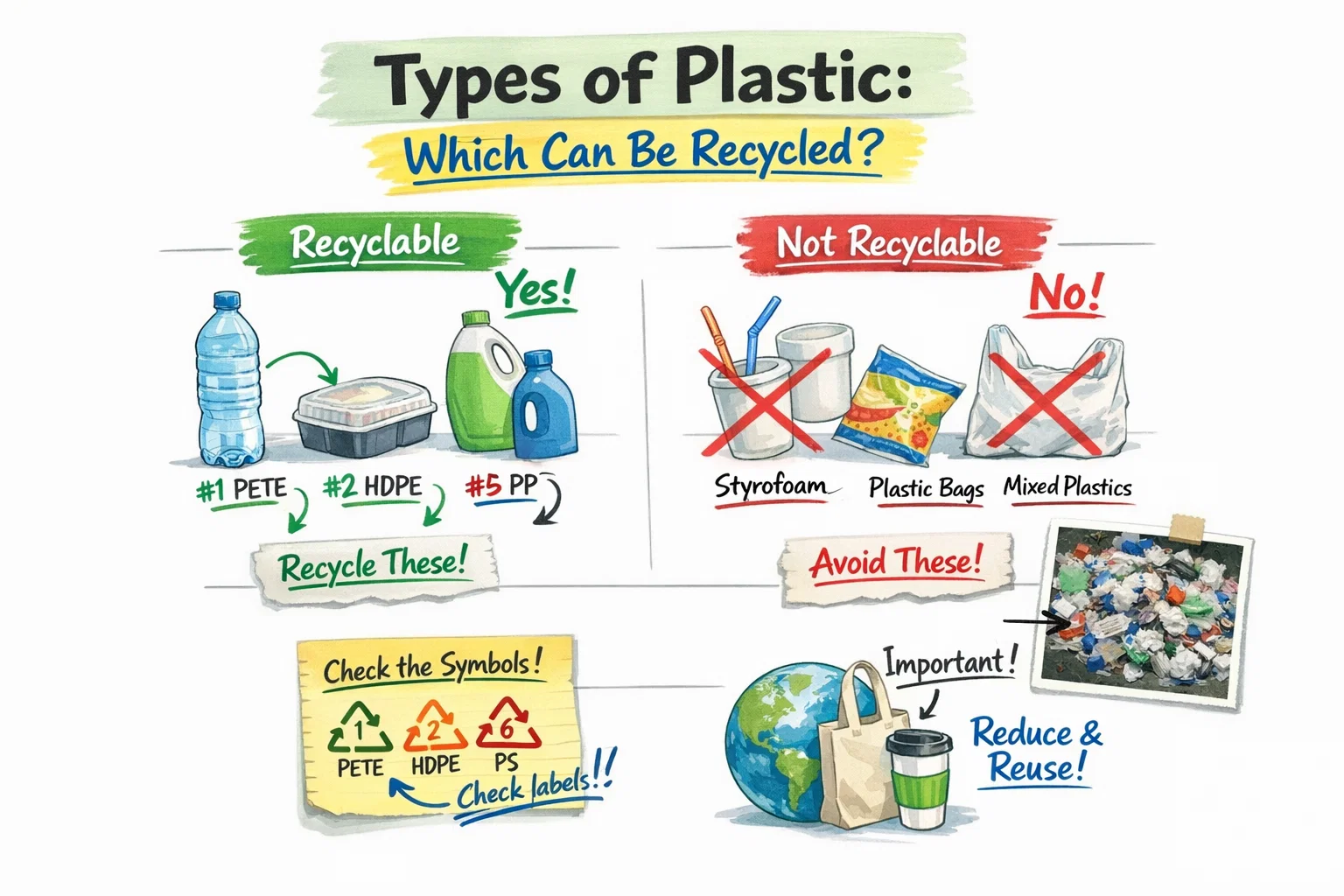
أنواع البلاستيك: أيها يمكن إعادة تدويره وتحت أي ظروف
الرقم 1-7 يحدد فئات بوليمر واسعة؛ إنها ليست التزام بأن العنصر مقبول أو يمكن أن يصبح منتجًا مُعيدًا التدوير مُبياعًا. قابلية التدوير تعتمد على تصميم المنتج، جمعه، تصنيفه، التلوث، معالجته المتاح ووجود السوق المتجهة. قد يكون نفس البوليمر قابلاً للتدوير كنفايات مصنع نظيفة ولكن غير مناسب في منتج استهلاكي صغير، متعدد الطبقات أو ملوث.
Resin code is not a recycling grade
ASTM resin identification codes help identify the plastic resin family. StopWaste’s resin identification code guidance يُشير إلى أن استخدام الرمز لا يعني أن المقال مُعيد التدوير أو أن هناك أنظمة تدوير لذلك.
بالنسبة للإزالة المنزلية، يُنصح وكالة حماية البيئة الأمريكية بفحص ما يقبل البرنامج المحلي لأن البرامج المجتمعية لا تقبل كل نوع من البلاستيك. انظر إلى common recyclables guidance. يحتاج محطات تدوير الصناعية إلى تلبية معايير أكثر دقة للطعام المقدم والشراء.
The seven resin categories
| شفرة | Resin group | Common products | Recycling reality |
|---|---|---|---|
| 1 | حيوان أليف | Beverage bottles, thermoforms, fibre and strapping | توجد تدفقات زجاجية معروفة، ولكن اللون، البولي كلوريد الفينيل، العلامات، الأطباق ومتطلبات الاتصال بالغذاء مهمة. |
| 2 | البولي إيثيلين عالي الكثافة | Bottles, crates, drums, pipe and closures | يمكن أن يكون لدي تدفقات صلبة طبيعية وألوانية منافذ قوية؛ يتطلب البولي بروبيلين، المركبات المضافة ونتائج المنتج التحكم. |
| 3 | بولي فينيل كلوريد | Pipe, profiles, cable, flooring and flexible products | يمكن إعادة تدوير التدفق المخصص؛ يصعب معالجة التدفق المختلط بسبب المضافات والتلوث المتقاطع. |
| 4 | البولي إيثيلين منخفض الكثافة | Film, bags, shrink wrap and agricultural film | يمكن إعادة تدوير الفيلم التجاري النظيف؛ الشكل الرقيق، التربة، الطعام والطبقات متعددة تقييد جمع الغسيل. |
| 5 | ب ب | Closures, tubs, crates, woven bags and automotive parts | البي في سي الصلب والمرن يتطلب إعدادًا مختلفًا؛ الخلط، والمكملات والمواد المرفقة يؤثران على الجودة. |
| 6 | ملاحظة: | Rigid cups, trays and expanded foam | يمكن إعادة تدوير التدفق الصلب أو EPS المحدد حيث تتوفر جمع النفايات والمنافذ؛ EPS الفوضوي يتطلب التكثيف. |
| 7 | آخر | PC, PA, ABS, PLA, multilayers and unlisted resins | هذا ليس مادة واحدة. كل بوليمر أو مركب يحتاج إلى تحديد وعمليات محددة ومجالات سوقية. |
Code 1: PET
تبدأ زجاجات PET المستخدمة بعد الاستهلاك في عملية التفرز، التكسير إلى حبيبات، الغسل، الفصل بناءً على الكثافة والجفاف إلى رقائق. قد يصبح المادة المعدة قابلة للاستخدام كالياف، ورقة، شريط أو زجاجات جديدة. قد تتصرف الأرفف، PET غير شفاف، الطبقات متعددة وغير المنتجات الزجاجية بشكل مختلف عن زجاجات المشروبات الشفافة.
PET وPVC غالبًا ما يغرقان في الماء، لذا لا يمكن للفصل بالكثافة الثابتة أن يفصل بينهما بشكل موثوق. يمكن أن تتحكم أيضًا الألوان، والغراء، والشعارات، والرطوبة والكثافة الداخلية في الخروج. PET flake applications guide links these quality properties to end uses.
Code 2: HDPE
المواد البلاستيكية الطبيعية مثل زجاجات الـ HDPE، الزجاجات الملونة، الصناديق، الأغطية وأنابيب يجب عدم خلطها تلقائيًا. قد يكون لدي المادة البلاستيكية الطبيعية متطلبات مشتري مختلفة عن تدفق حقن اللون المختلط. قد تتطلب بقايا المنتج و الرائحة إضافات في الاستقبال والغسل.
In water, unfilled HDPE and PP commonly float together. A float tank can reject many heavy contaminants but cannot reliably produce an HDPE/PP split. APR’s natural HDPE guidance يوضح كيف تؤثر الألوان، والشعارات، والغلق والمضافات على التدفق.
Code 3: PVC
يمكن معالجة أنابيب PVC الصلبة وملامح النوافذ في تيارات مخصصة، محددة بشكل جيد. قد تحتوي الأسلاك PVC القابلة للطي، الأرضيات والمنتجات الطبية على مركبات مذيبة مختلفة، أو ملئات، أو تعزيزات أو مكونات أخرى. قد تحتاج المنتجات القديمة أيضًا إلى تقييم المواد المحدودة.
حافظ على PVC بعيدًا عن خطوط PET والبولي أوليفين. يجب أن تتطابق القطع، التحكم في الغبار، الغسل والتصفيح مع المنتج PVC المحدد والتطبيق المتدفق؛ لا يوجد جهاز عام “آمن للكلور” يجعل جميع مخلفات PVC متساوية.
Code 4: LDPE and flexible PE
يكون فيلم النقل النظيف وقطع الإنتاج أسهل في إعادة التدوير من فيلم الزراعي الرطب أو التعبئة المضاعفة الاستهلاكية. لدي المادة القابلة للطي كثافة حجمية منخفضة، تلتقط الرطوبة وتستطيع لف المعدات الدوارة.
Typical processing can include shredding, friction washing, rinsing, squeezing or other dewatering, densification and pelletizing. CEFLEX’s flexible packaging recyclability guidance explains why structure, attachments and size influence polyolefin recycling.
Code 5: PP
يظهر البوليبروبيلين (PP) في الأكوام الصلبة، الأغطية، الصناديق، قطع السيارات، الأكياس المنسوجة والألياف غير المنسوجة. تتطلب هذه الأشكال أنواعًا مختلفة من التغذية، تقليل الحجم، والغسل. يمكن أن يكون البوليبروبيلين المملوء بالمعادن أو المضفر بالزجاج له كثافة فعالة ومخرج مختلف عن البوليبروبيلين المملوء.
يجب على المُعيد التدوير تقسيم الأشكال الصلبة والمرنة وتحديد اللون، والمكمل، والرماد، ومعدل تدفق الذوبان والتلوث مع المشتري. يزيل الغسل التلوث السطحي؛ ولكنه لا يعيد ترميم الرسينة المتدهورة أو تقسيم كل مركب من مركبات البولي بروبيلين.
Code 6: PS and EPS
الستايرين الصلب والستايرين الممتد ينتميان إلى نفس عائلة الرسوم في أشكال مختلفة، ولكن التجميع والأجهزة يختلفان. الEPS الفارغ غالبًا ما يكون حجمًا كبيرًا ويحتاج إلى التفرقة في المصدر وتكثيفه لجعل النقل عمليًا.
مضغوطة باردة تقوم بضغط EPS ميكانيكياً، بينما ينتج مكبس الذوبان الساخن قاطعة حرارية. انظر إلى دليل مضغوطة EPS الباردة مقابل الذوبان الساخن. لا تزال الأتربة الغذائية، الأشرطة، الهلام البنائي والهلام المختلط يحتاج إلى تحكم.
كود 7: “أخرى” ليس عملية إعادة التدوير
يمكن أن يغطي كود 7 البوليكربونات، البولياميد، ABS، PLA، الهياكل متعددة الطبقات وأحماض أخرى. دمجها يخلق خليط غير معروف بمواصفات التسخين والخواص الميكانيكية غير المتوقعة.
تحديد البوليمر الفعلي باستخدام سجلات المورد، المعرفة المنتجة والتحليل التحليلي حيثما لزم الأمر. قد يكون لديك خسارة إنتاجية للبلاستيك الهندسي النظيف والمفصول، بينما قد لا يكون المركب المختلط مناسبًا للإعادة التدوير الميكانيكي.
لماذا يهم المنتج بقدر ما يهم البوليمر
الحجم، الشكل، اللون، العلامات، اللاصقات، طلاءات، ملئات والطبقات متعددة تؤثر على جمع وتعامل. يمكن تصنيف زجاجة HDPE الكبيرة بواسطة معدات لا يمكنها تحديد مكون صغير أسود بشكل موثوق به. يمكن أن يحمل الفيلم المادة المونومرية والغلاف المتعدد الطبقات نفس الكود المطبوع لكنهما يتصرفان بشكل مختلف في الغسل والتصفيح.
استخدم توجيه التصميم المحدد للمادة واختبارات المشتري بدلاً من إعلان فئة البوليمر بأكملها قابلة لإعادة التدوير أو غير قابلة لإعادة التدوير.
اختبار قرار إعادة التدوير الميكانيكي
- هل يمكن جمع المادة بكمية كافية؟
- هل يمكن تحديد البوليمر وترتيب المنتج؟
- هل يمكن إزالة العناصر غير المتوافقة أو غير الآمنة؟
- هل يمكن تقليل الحجم، تنظيفها وتجفيفها دون فقد غير مقبول؟
- هل يمكن أن تتوافق الناتجة مع مواصفات المشتري المكتوبة؟
- هل تدعم التحكم في الموقع، البيئة والعملاء عملية؟
- هل يدعم ميزان الكتلة الجافة نموذج الكلفة الكامل؟
لا يعني “لا” في أي مرحلة أن جهازًا مختلفًا يصلح التدفق تلقائيًا.
المعدات النموذجية حسب شكل المادة
| شكل التغذية | الوظائف النموذجية | التحذير الرئيسي |
|---|---|---|
| الزجاجات والصناديق القاسية | الفرز، الطحن، الغسل، الفصل بالكثافة والتجفيف | المحتوى السابق، العلامات، الأغطية والخلط البوليمري |
| الفيلم والحقائب | الطحن، الغسل بالجذب، الغسل، الضغط والتحجيم | الكثافة الحجمية المنخفضة، الرطوبة، التغليف والطبقات متعددة |
| الأنابيب والشقوق | الطحن، الطحن، التحكم في الغبار والتصفيح المحدد للمادة | المعدن، الملء، سماكة الجدار وأضافات تقليدية |
| الإبس (EPS) الهلامي | الفرز، الطحن والكثافة الباردة أو الساخنة | كمية النقل، بقايا الطعام والهلام المختلط |
| نفايات البلاستيك الهندسي | التعرف، تقليل الحجم، تجفيف وتكوين | الدرجة، تعزيز، مطفئات النار وتاريخ الحرارة |
الأسئلة الشائعة
هل يعني الرقم داخل المثلث أن العنصر قابلاً للتصرف؟
لا. إنه يعرف مجموعة الراتنج. يعتمد قابلية التدوير الفعلي على تصميم المنتج، والجمع المحلي، والفرز، والمعالجة، ووجود سوق للنوعية الناتجة من المواد.
أي بلاستيك أسهل للإعادة التدوير؟
ليس هناك إجابة عامة. غالبًا ما تكون أنظمة النظافة والاستمرارية لصناديق PET أو HDPE المعدة قائمة، ولكن قد يكون النفايات الصناعية النظيفة من نوع آخر من البلاستيك أسهل من التعبئة الملوثة.
هل يمكن إعادة تدوير أنواع البلاستيك المختلفة معًا؟
فقط عندما تقبل التركيبة معيار التدفق السفلي وتؤكد التجارب عملية الخصائص. عادةً يقلل خلط البوليمر غير المسيطر عليه من الجودة.
تعرف على السائل قبل اختيار المعدات
أرسل Energycle أنواع المنتج الفعلية، الدليل على الرسول، التلوث، الإمدادات الشهرية وطلب المشتري. استخدم دليل معدات إعادة تدوير البلاستيك للتنسيق بين كل سائل مادة تم التحقق منه إلى الوظائف الفنية المطلوبة.
