

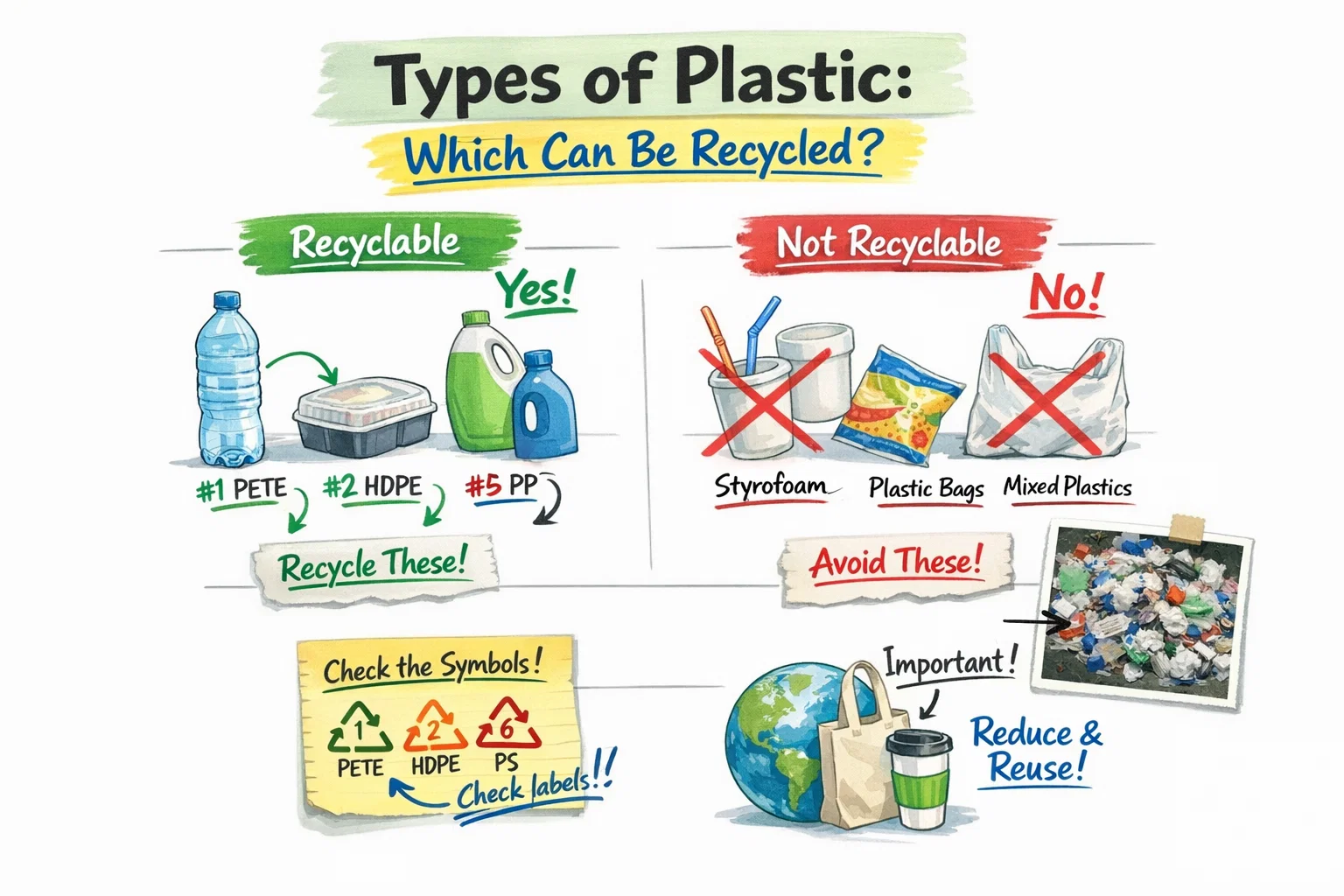
플라스틱 유형: 재활용 가능한 것과 그 조건은 무엇인가요?
1부터 7까지의 숫자는 광물 그룹을 나타냅니다; 이는 제품이 수용되거나 판매 가능한 재활용 제품이 될 것을 보장하는 것은 아닙니다. 재활용 가능성은 제품 설계, 수집, 정리, 오염, 처리 가능성 및 하류 시장에 따릅니다. 같은 폴리머는 깨끗한 공장 스캇 스트림으로 재활용 가능하지만, 작은 다층 또는 오염된 소비자 제품에서는 적합하지 않을 수 있습니다.
재질 코드는 재활용 등급이 아닙니다
ASTM 재질 식별 코드는 플라스틱 재질 가족을 식별하는 데 도움을 줍니다. StopWaste의 재질 식별 코드 가이드라인 은 코드의 사용이 제품이 재활용되거나 그에 대한 재활용 시스템이 존재한다는 것을 의미하지 않음을 지적합니다.
가정에서의 폐기물 처리는 미국 EPA가 지역 프로그램이 무엇을 수용하는지 확인하도록 권장합니다. 그 이유는 지역 프로그램이 모든 플라스틱 유형을 수용하지 않기 때문입니다. 그의 일반 재활용 가이드. 을 참조하세요. 산업 재활용자는 더 구체적인 원료와 구매자 요구 사항이 필요합니다.
칠 가지 재질 카테고리
| 암호 | 재질 그룹 | 일반 제품 | 재활용 현실 |
|---|---|---|---|
| 1 | 애완 동물 | 음료 병, 테르모폼, 섬유 및 strap | 정착된 병 스트림이 존재하지만, 색상, PVC, 라벨, 트레이 및 식품 접촉 요구 사항이 중요합니다. |
| 2 | 고밀도 폴리에틸렌(HDPE) | 병, 크래트, 드럼, 파이프 및 캡슐 | 자연색과 색상된 고정형 스트림은 강력한 출구를 가질 수 있지만, PP, 채우제 및 제품 잔여물은 통제가 필요합니다. |
| 3 | PVC | 파이프, 프로파일, 케이블, 바닥재 및 유연한 제품 | 전용 스트림은 재활용될 수 있지만, 추가제와 혼합 오염이 혼합 처리를 어렵게 합니다. |
| 4 | 저밀도 폴리에틸렌(LDPE) | 필름, 백, 수축 래핑 및 농업 필름 | 깨끗한 상업 필름은 재활용될 수 있지만, 얇은 형식, 토양, 식품 및 다층이 수집과 씻기에 제약을 주습니다. |
| 5 | 피피 | 캡슐, 튜브, 크래트, 휘어진 백 및 자동차 부품 | 고정형과 유연한 PP는 다른 준비가 필요하며, 혼합, 채우제 및 부착된 재료는 품질에 영향을 미칩니다. |
| 6 | 추신 | 고정형 컵, 트레이 및 확장 포밍 | 정의된 고정형 또는 EPS 스트림은 수집과 출구가 존재하는 경우 재활용될 수 있지만, 흩어진 EPS는 밀도 증가가 필요합니다. |
| 7 | 다른 | PC, PA, ABS, PLA, 다층 및 등록되지 않은 재질 | 이는 하나의 재료가 아닙니다. 각 폴리머나 복합 재질은 식별되고 특정 과정 및 시장이 필요합니다. |
코드 1: PET
소비자 후 PET 병은 일반적으로 정리되고, 균열되고, 씻고, 밀도로 분리되고, 건조하여 플라스틱으로 변환됩니다. 인정된 재료는 섬유, 시트, strap 또는 새로운 병으로 사용될 수 있습니다. 트레이, 불투명한 PET, 다층 및 병이 아닌 제품은 투명한 음료 병과 다르게 행동할 수 있습니다.
피트와 피브시는 물에 뜬다하여 밀도 분리는 신뢰할 수 없게 분리되지 않습니다. 색상, 접착제, 라벨, 습기 및 내재적 유체도도 출구를 제어할 수 있습니다. PET flake applications guide links these quality properties to end uses.
Code 2: HDPE
Natural HDPE bottles, coloured bottles, crates, caps and pipe should not automatically be mixed. Natural bottle resin may have different buyer requirements from a mixed-colour injection stream. Product residue and odour can require additional intake and washing controls.
In water, unfilled HDPE and PP commonly float together. A float tank can reject many heavy contaminants but cannot reliably produce an HDPE/PP split. APR’s natural HDPE guidance 색상, 라벨, 마개, 그리고 첨가제가 흐름에 믜치는 영향을 보여줍니다.
Code 3: PVC
Rigid PVC pipe and window profiles can be processed in dedicated, well-characterised streams. Flexible PVC cable, flooring and medical products may contain different plasticisers, fillers, reinforcements or other components. Legacy products can also require restricted-substance assessment.
Keep PVC separate from PET and polyolefin lines. Cutting, dust control, washing and extrusion must match the specific PVC product and downstream application; there is no generic “chlorine-safe” machine that makes all PVC waste equivalent.
Code 4: LDPE and flexible PE
제시해주신 내용과 관련하여 답볺드리겴입니다. 제공해주신 정보에 따.
Typical processing can include shredding, friction washing, rinsing, squeezing or other dewatering, densification and pelletizing. CEFLEX’s flexible packaging recyclability guidance explains why structure, attachments and size influence polyolefin recycling.
Code 5: PP
PP appears in rigid tubs, caps, crates, automotive parts, woven sacks and nonwovens. These formats require different feeding, size reduction and washing. Mineral-filled or glass-reinforced PP can have a different effective density and outlet from unfilled packaging PP.
A recycler should separate rigid and flexible formats and define colour, filler, ash, melt flow and contamination with the buyer. Washing removes surface contamination; it does not restore degraded resin or separate every PP compound.
Code 6: PS and EPS
Rigid polystyrene and expanded polystyrene are the same resin family in different physical forms, but collection and equipment differ. Loose EPS is mostly volume and needs source segregation and densification to make transport practical.
제품 카탈로그를 참조하십시오. 참고로, EPS cold press versus hot melt guide. Food residue, tape, construction foam and mixed foams still need control.
Code 7: “Other” is not a recycling process
Code 7 can cover polycarbonate, polyamide, ABS, PLA, multilayer structures and other resins. Combining them creates an unidentified mixture with unpredictable melting and mechanical properties.
단순히 원료의 종류만으로는 특정 폴리머를 식별하는 데 충분하지 않을 수 있습니다. 공급업체의 자료, 제품에 대한 전문 지식, 필요한 경우 분석 검사를 토대로 정확한 식별이 이루어져야 한지 확인하십시오.
Why the product matters as much as the resin
Size, shape, colour, labels, adhesives, coatings, fillers and multilayers affect collection and processing. A large HDPE bottle can be sorted by equipment that cannot reliably identify a small black component. A mono-material film and a laminated pouch can carry the same printed code but behave differently in washing and extrusion.
Use material-specific design guidance and buyer trials rather than declaring an entire resin category recyclable or unrecyclable.
Mechanical recycling decision test
- Yes, 충분한 양의 원료를 확보할 수 있습니다.
- Yes, 고객님. 해당 플라스틱의 종류와 제품 형태에 대한 정보를 알려주시면 정활한 견적을 작성해 드릴 수 있습니다.
- Can incompatible or unsafe items be removed?
- 본 제품은 고출력 및 안정적인 가동 성능을 자랑합니다.
- Can the output meet a buyer’s written specification?
- 네, 당사의 모든 재활용 설비는 환경 규제 및 산업 안전 기준을 충존합니다. 당사의 제품은 고효율 에너지 절약형 설계를 채
- 네, 당사의 드라이 마스 세일런스 분석 도구와 전체 비용 모델은 설비 가동을 위한 효과적인 지원을 제공합니다.
단계별로 문제를 점검하며 원인을 규명한 후에야 적절한 대응 방안을 마렄할 수 있습니다.
Typical equipment by material form
| Feed form | типичные функции | Основные меры предосторожности |
|---|---|---|
| Rigid bottles and containers | Сортировка, измельчение, мытье, разделение по плотности и сушка | Предыдущие содержимое, этикетки, крышки и смешивание полимеров |
| Фильм и мешки | Измельчение, абразивная мойка, промывка, сжатие и гранулирование | 저체적감도, 습기, 포장 및 다층 |
| Трубы и профили | Измельчение, измельчение, контроль пыли и специфическая экструзия материалов | Металл, наполнители, толщина стенки и устаревшие добавки |
| EPS 포맨 | Сортировка, дробление и холодная или тепловая денсификация | Объем транспортировки, пищевые отходы и смешанные пены |
| Отходы инженерных plastics | Идентификация, уменьшение размера, сушка и компаундирование | Класс, армирование, огнестойкие материалы и тепловая история |
Frequently asked questions
삼각형 안에 숫자가 있으면 제품이 재활용 가능한 걸까요?
번호로, 레시신 그룹을 식별합니다. 실제 재활용 가능성은 제품 설계, 현지 수집, 정리, 처리 및 결과 재료의 시장에 따릅니다.
쓰레기 재활용하기 쉬운 플라스틱은 무엇인가요?
일반적인 답은 없습니다. 깨끗하고 일관된 PET나 HDPE 병 흐름은 이미 정립된 시스템이 있지만, 다른 레시신의 깨끗한 공장 스캇은 오염된 패키징보다 쉬울 수 있습니다.
다양한 플라스틱 유형이 함께 재활용될 수 있나요?
하위 규격이 혼합물을 받아들이고 시험에서 처리 및 성질이 확인되면만 합니다. 무제한적인 폴리머 혼합은 일반적으로 품질을 저하시킵니다.
Определите поток перед выбором оборудования
Отправьте Energycle фактические типы продуктов, доказательства резины, загрязнение, месячное предложение и спецификация покупателя. Используйте 플라스틱 재활용 장비 가이드 для привязки каждого проверенного потока материалов к необходимым функциям процесса.
