

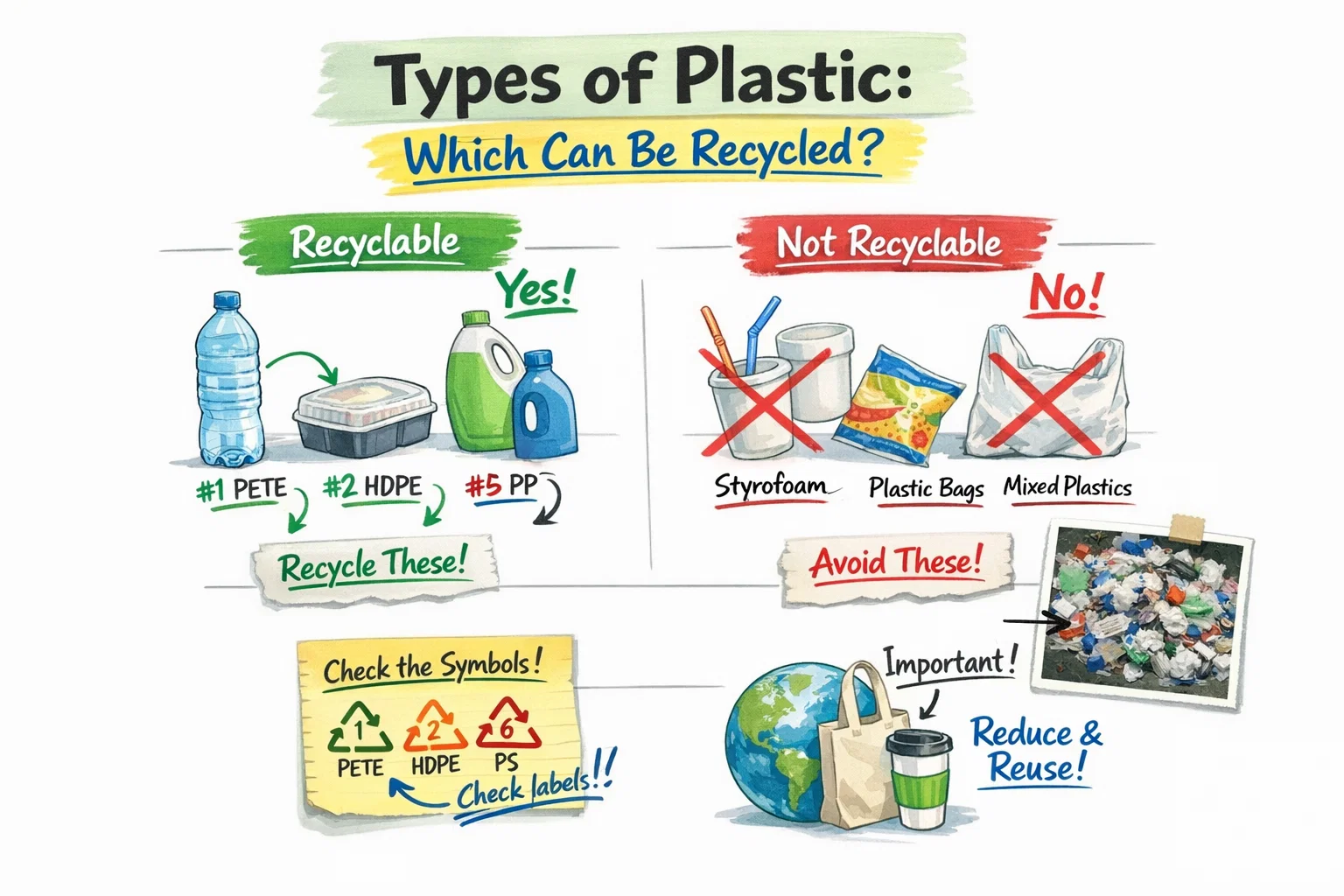
Vrste Plástika: Koje mogu biti reciklirane i pod kojim uvjetima?
Brojevi 1–7 identificiraju široke grupe rezina; oni nisu obećanje da će stavka biti prihvaćena ili moći postati prodajni reciklirani proizvod. Recikliranje ovisi o dizajnu proizvoda, prikupljanju, sortiranju, kontaminaciji, dostupnosti procesiranja i tržištu za sljedeću fazu. Ista polimera može biti reciklirana kao čista tvornička otpadna struja ali nepristojna u malom, višeslojnom ili kontaminiranom potrošačkom proizvodu.
Kod rezine nije reciklirana klasa
ASTM kodovi identifikacije rezine pomažu identificirati porodicu plastične rezine. Uputstvo StopWasteove kod identifikacije rezine navodi da uporaba koda ne implikira da će stavka biti reciklirana ili da postoje reciklacijski sustavi za nju.
Za kućansko brcanje, U.S. EPA savjetuje provjeriti što prihvaća lokalni program jer lokalni programi ne prihvaćaju svaki tip plástika. Pogledajte njegovu smjernicu o uobičajenim recikliranim stavkama. Průmysloví reciklacijski poduzetnici trebaju još specifičniji ulazni i kupci specifikacije.
Sedam kategorija rezina
| Kodirati | Grupa rezine | Uobičajeni proizvodi | Realnost recikliranja |
|---|---|---|---|
| 1 | LJUBIMAC | Beveridžne butele, termooblikovane, vlakna i vezice | Postoje ustaljeni pravci za butele, ali boja, PVC, etikete, pladne i zahtjevi za stvaranjem kontakta s hranom su važni. |
| 2 | HDPE | Butele, kutije, cjevove, zatvarači | Prirodne i bojene tvrde struje mogu imati snažne izlaze; PP, punjači i ostatci proizvoda zahtijevaju kontrolu. |
| 3 | PVC | Cjevove, profili, kabeli, podovi i fleksibilni proizvodi | Posvećene struje mogu biti reciklirane; dodaci i mešana kontaminacija čine složeno procesiranje teškim. |
| 4 | LDPE | Film, torbe, umanjeni omotač i poljoprivredni film | Čist komercijalni film može biti recikliran; tanki format, zemlja, hranu i višeslojne struje ograničavaju prikupljanje i pranje. |
| 5 | PP | Zatvarači, lonice, kutije, vezane torbe i automobilski dijelovi | Tvrde i fleksibilne PP zahtijevaju različitu pripremu; mješanje, punjači i priloženi materijali utječu na kvalitetu. |
| 6 | P.S | Tvrde šalice, lonice i proširenog plasta | Definirane tvrde ili EPS struje mogu biti reciklirane gdje postoje prikupljanje i izlazi; slobodni EPS zahtijeva zagusinjenje. |
| 7 | ostalo | PC, PA, ABS, PLA, višeslojne i neoznačene rezine | To nije jedan materijal. Svaka polimera ili kompozit zahtijeva identifikaciju i specifičan proces te tržište. |
Kod 1: PET
Post-konzumerske PET butele se često sortiraju, granuliraju, prane, razlikuju po gustini i sušene u čipove. Kvalificirani materijal može postati vlakno, ploča, vezica ili nove butele. Traye, nepriručni PET, višeslojne i nebuteljske proizvode mogu se ponašati drugačije od prozirnih pićnih butela.
PET i PVC često plave u vodi, tako da razlikovanje po gustini ne može pouzdanom razdvojiti. Boja, lepljivo, etikete, vlažnost i intrinsična viskoznost mogu također kontrolirati izlaz. The PET flake applications guide links these quality properties to end uses.
Code 2: HDPE
Prirodni HDPE boćice, bojene boćice, kutije, kape i cijevi ne bi trebale automatski mješati. Prirodni rezin za boćice može imati različite zahtjeve kupca od mješanog bojnog strujanja. Ostanak proizvoda i miris mogu zahtjevati dodatne kontrolne postupke uvoza i pranja.
In water, unfilled HDPE and PP commonly float together. A float tank can reject many heavy contaminants but cannot reliably produce an HDPE/PP split. APR’s natural HDPE guidance pokazuje kako utječu boja, etikete, zatvarači i aditivi na struju.
Code 3: PVC
Rigidi PVC cijevi i profilovi prozora mogu se procesirati u posebnim, dobro karakteriziranim strujama. Guduruti PVC kabeli, podovi i medicinski proizvodi mogu sadržavati različite plastičnike, punivače, pojačivače ili drugi komponenti. I stariji proizvodi mogu zahtjevati procjenu ograničenih tvari.
Držite PVC odvojenim od PET i poliolefin linija. Reza, kontrola prašine, pranje i ekstrudacija moraju odgovarati specifičnom PVC proizvodu i primjeni; ne postoji generički “klor-besigurni” stroj koji pretvara svi otpadni PVC u jednaki.
Code 4: LDPE and flexible PE
Čiste transportne filmove i proizvodne rezanice su lakše za recikliranje nego vlažni poljoprivredni filmovi ili višeslojne konzumentski pakovanja. Guduruti materijali imaju nisku gustoću, zadržavaju vlagu i mogu omotavati rotirajuće opreme.
Typical processing can include shredding, friction washing, rinsing, squeezing or other dewatering, densification and pelletizing. CEFLEX’s flexible packaging recyclability guidance explains why structure, attachments and size influence polyolefin recycling.
Code 5: PP
PP se pojavljuje u rigidnim kandžama, kapama, kutijama, automobilskim dijelovima, tkanim vrećama i netkanimom. Ovi formati zahtjevaju različite ulazne postupke, smanjenje veličine i pranje. Mineralno punjeni ili stakleno pojačani PP mogu imati drugačiju efektivnu gustoću i izlaz od nepunjenog pakovanja PP.
Reciklirac should razlikovati tvrde i fleksibilne formate te definirati boju, punjač, pepeo, toplinski protok i kontaminaciju s kupcem. Čišćenje uklanja površinsku kontaminaciju; ne vratit će degradiranih polimera ili razlikovati svaki spoj PP.
Code 6: PS and EPS
Tvrdi polistiren i proširen polistiren su isti polimerni rodovi u različitim fizičkim oblicima, ali kolekcija i oprema se razlikuju. Slobodni EPS je uglavnom prostornina i treba izvor razlikovanja te zagusinjenje kako bi transport bio praktičan.
Hladni pritisak mehanički zagušava EPS, dok toplinski zagusinjeni aparat proizvodi termički zagušeni valjak. Pogledajte EPS cold press versus hot melt guide. Food residue, tape, construction foam and mixed foams still need control.
Code 7: “Other” is not a recycling process
Kod 7 može obuhvatiti polikarbonat, poliamid, ABS, PLA, višeslojne strukture i druge polimere. njihovo kombiniranje stvara nedefiniranu mješavinu s nepredvidivim toplinskim i mehaničkim osobinama.
Identificirajte stvarni polimer koristeći zapisivao dobavljača, znanost o proizvodu i analitičke ispitivanja gdje je to potrebno. Čist, razdvojeni otpad iz proizvodnje inženjerskih plimera može imati ispravan izlaz, dok mješoviti kompozit može biti nesuglasan za mehanički recikling.
Why the product matters as much as the resin
Veličina, oblik, boja, etikete, lepljive paste, površinske zaštitne slojeve, punila i višeslojne konstrukcije utječu na skupljanje i obradu. Velika butelja od HDPE može biti razvrstana s opremom koja ne može pouzdanom načinom identificirati malen crni komponent. Film iz jednog materijala i laminirana torba mogu nositi isti istani kod, ali se razlikuju u pranju i extrudiranju.
Koristite specifične upute za dizajn materijala i isprobavanje kupaca umjesto da deklarirate cijeli kategoriju smola kao reciklabilnu ili nerikciklabilnu.
Mechanical recycling decision test
- Može li se materijal sakupiti u dovoljnoj količini?
- Može li se identifikovati polimer i oblik proizvoda?
- Can incompatible or unsafe items be removed?
- Može li se smanjiti veličina, očistiti i sušiti bez neprimašljivih gubitaka?
- Can the output meet a buyer’s written specification?
- Podržavaju li lokacija, okoliš i kontrola radnika proces?
- Podržava li model sušene mase i cijeli model troškova operaciju?
Nedostatak u jednom stadiju identificira barijeru koju treba riješiti. To ne znači da će automatski druga mašina popraviti tok.
Typical equipment by material form
| Oblik ulaza | Typical functions | Main caution |
|---|---|---|
| Rigidi butele i kontejneri | Sorting, granulation, washing, density separation and drying | Previous contents, labels, closures and polymer mixing |
| Film and bags | Shredding, friction washing, rinsing, squeezing and pelletizing | Low bulk density, moisture, wrapping and multilayers |
| Pipe and profiles | Shredding, granulation, dust control and material-specific extrusion | Metal, fillers, wall thickness and legacy additives |
| EPS gomila | Sorting, crushing and cold or hot densification | Količina prijevoza, preostali hranični otpad i mješovite valovine |
| Otpad iz inženjerskih plastičnih materijala | Identifikacija, smanjenje veličine, sušenje i komponovanje | Kvalitet, pojačavanje, založivački sredstva i termička povijest |
Često postavljana pitanja
Broj unutar trokuta znači da li je proizvod reciklabilan?
Ne. Identifikuje grupu smole. Stvarna reciklabilnost ovisi o dizajnu proizvoda, lokalnoj sakupljanju, sortiranju, procesiranju i tržištu za nastali materijal.
Koji plastični materijal je najlakši za reciklirati?
Nema univerzalnog odgovora. Čiste, konzistentne PET ili HDPE boce često imaju uspostavljene sustave, ali čista tvornička otpadna surovinu drugog polimera može biti lakša nego kontaminirana pakovanja.
Mogu li različite vrste plástika biti reciklirane zajedno?
Samo kada specifikacija nizvodne strane prihvati mješavinu i isprobani ispostave potvrde procesiranje i osobine. Nekontrolirano mješanje polimera često smanjuje kvalitetu.
Identificiraj tok prije izbora opreme
Pošalji Energycle stvarne vrste proizvoda, dokazi iz smola, kontaminacija, mjesečna dostava i specifikacija kupca. Koristi Vodič za opremu za recikliranje plastike da bi je svaki potvrđeni materijalni tok mapirao na zahtjevane procesne funkcije.
