

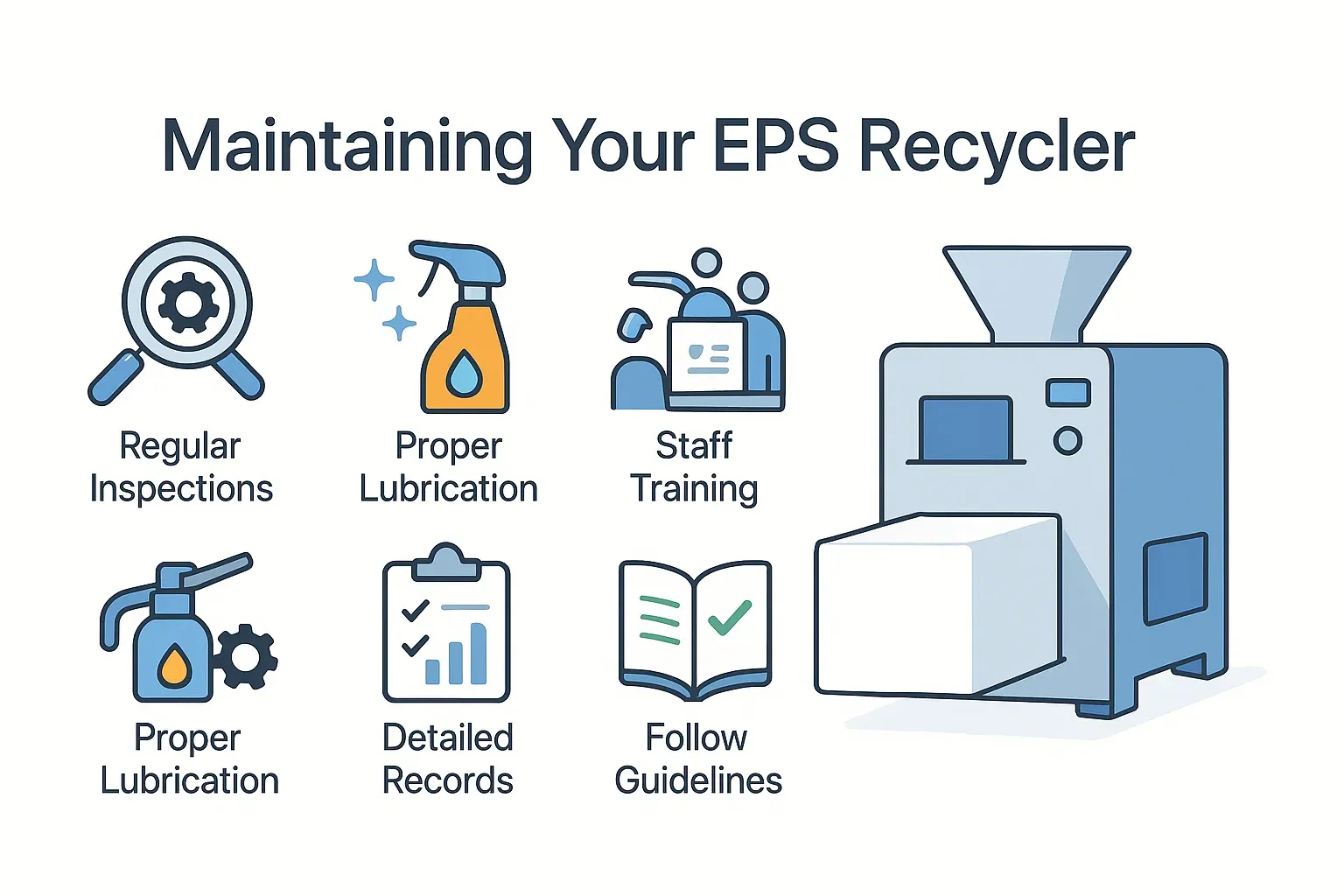
Effective waste management is a cornerstone of thriving communities and a healthy environment. At the heart of this crucial process lies specialized recycling equipment, working tirelessly to handle and process waste materials efficiently, including specific machinery designed for materials like EPS (Expanded Polystyrene) such as an EPS foam compactor machine. But like any hard-working machinery, longevity and peak performance depend on one key factor: meticulous maintenance.
Neglecting your EPS recycling equipment doesn’t just lead to costly repairs and unexpected downtime; it can also impact your operational efficiency and safety standards. This guide provides valuable, actionable tips to help you establish a robust maintenance routine for your waste management equipment, ensuring it runs smoothly for years to come.
1. Proactive Care: The Power of Regular Inspections
Think of regular inspections as your first line of defense against major equipment failures. A consistent inspection schedule allows you to catch minor issues before they escalate into significant problems, especially critical for machinery processing specific materials like EPS.
- What to Look For: Conduct thorough visual checks for any signs of wear and tear, damage, loose connections, or potential malfunctions. Pay close attention to critical components such as:
- Conveyor belts (tears, tracking issues, tension, EPS residue buildup)
- Blades, cutters, or press plates (sharpness, chips, integrity, resin buildup)
- Hydraulic systems (leaks, hose condition, fluid levels – vital for compactors)
- Motors and gearboxes (unusual noises, overheating)
- Safety guards and emergency stops
- Develop a System: Create a comprehensive inspection checklist tailored to each piece of EPS recycling equipment. This ensures consistency and thoroughness, regardless of who performs the inspection.
- Skilled Eyes Needed: Ensure you have technicians, whether in-house or contracted, who are skilled in diagnosing potential issues accurately. They should be equipped with the appropriate tools and genuine parts for any necessary repairs. Early and accurate diagnosis is key to preventing extended downtime.
2. A Clean Machine is a Happy Machine: The Importance of Daily Cleaning
EPS recycling equipment, like compactors or densifiers, is constantly exposed to polystyrene particles, dust, and sometimes adhesives or contaminants from the collected EPS. This daily onslaught can lead to:
- Clogging: EPS dust and small fragments can accumulate and block moving parts, sensors, or melt chambers.
- Residue Buildup: Melted EPS can leave residues on heating elements or press components if not properly managed.
- Increased Wear: Abrasive contaminants mixed with EPS can accelerate the wear of surfaces.
Implement a Daily Cleaning Regimen:
- Remove loose EPS debris, dust, and caked-on materials from all accessible parts.
- Focus on areas prone to buildup, like around bearings, in screw feeders, within compaction chambers, and under guards.
- Always use cleaning agents and tools recommended by the equipment manufacturer to avoid damaging sensitive components or voiding warranties. Regular cleaning not only extends the lifespan of your EPS machinery but also plays a vital role in maintaining its operational efficiency, output quality, and safety.
3. Smooth Operations: Mastering Proper Lubrication
Lubrication is the lifeblood of any machinery with moving parts. In the demanding environment of EPS recycling, proper lubrication is absolutely critical for components like bearings, gears, and hydraulic systems.
- Why it Matters: Adequate lubrication reduces friction between moving components, prevents overheating, and minimizes premature wear. Without it, parts can seize, leading to catastrophic failure.
- Follow the Guide: Adhere strictly to the manufacturer’s specifications regarding lubrication types, application points, and intervals for your specific EPS equipment.
- Check and Re-Check: Regularly monitor lubricant levels and top up or replace as needed.
- The Goldilocks Zone: Be mindful that over-lubrication can be just as detrimental as under-lubrication. Excess lubricant can attract EPS dust and contaminants or damage seals. Strive for the right balance to keep your equipment running efficiently.
4. Empower Your Team: The Value of Comprehensive Training
Your staff are on the front lines of equipment operation and, often, initial maintenance. Proper training is an investment that pays significant dividends, especially with specialized machinery like EPS recyclers.
- Equipment-Specific Knowledge: Ensure every operator and maintenance team member is thoroughly trained on the specific operational procedures (including material feeding nuances for EPS) and maintenance requirements for each piece of EPS recycling equipment they handle.
- Reduce Human Error: Well-informed staff are less likely to misuse equipment or perform incorrect maintenance tasks that could lead to damage, poor densification/compaction, or safety hazards.
- Stay Current: The EPS recycling industry and equipment technology are constantly evolving. Provide ongoing training and refreshers to keep your team updated on best practices, new safety protocols, and advancements in maintenance techniques.
5. Track Your Success: The Significance of Detailed Maintenance Logs
Maintaining meticulous records of all maintenance activities is more than just good housekeeping; it’s a strategic asset for your EPS recycling operations.
- Build a History: Document every inspection, cleaning, lubrication, repair, and part replacement for each EPS machine. Include dates, a description of the work done, who performed it, and any parts used.
- Identify Patterns: These records can help you identify recurring issues (e.g., frequent blockages due to contaminated EPS), predict potential future problems, and understand wear cycles for specific components.
- Informed Decision-Making: This historical data is invaluable for troubleshooting, planning preventative maintenance schedules, and making informed decisions about equipment upgrades or replacements.
- Warranty Compliance: Detailed logs are often essential for validating warranty claims with equipment manufacturers.
6. The Manufacturer Knows Best: Adhering to Official Guidelines
Your EPS equipment manufacturer provides detailed manuals and guidelines for a reason – they are designed to maximize the performance, lifespan, and safety of their machines.
- Your Go-To Resource: Always prioritize the manufacturer’s recommendations for operation, cleaning, lubrication, and routine maintenance specific to your EPS compactor, densifier, or shredder.
- Warranty Protection: Deviating from these guidelines can often void your warranty, leaving you liable for potentially expensive repairs.
- Optimize Performance: Following official advice ensures your equipment processes EPS as efficiently and effectively as intended.
- Safety First: Manufacturer guidelines almost always include critical safety information and procedures. Ignoring these can lead to dangerous operating conditions. Ensure that all manufacturer documentation is readily accessible to your operations and maintenance teams.
Maintenance Checks by EPS Processing Method
A general inspection checklist is useful, but the highest-risk components differ between cold compaction, hot-melt densification and pelletizing. These checks supplement—not replace—the maintenance schedule, lockout procedure and service instructions supplied with the installed machine.
Cold Compactors
- Inspect the feed crusher, cutting elements and screw for trapped metal, excessive wear and hardened material buildup.
- Check the compaction chamber, discharge restriction and block-forming area for abnormal resistance or unstable output.
- Monitor gearbox sound, bearing temperature, motor current and coupling condition against the established operating baseline.
- For hydraulic configurations, inspect hoses, fittings, seals and fluid condition. Investigate leaks or pressure instability before returning the machine to service.
- Verify that guards, access switches and emergency stops function correctly after cleaning or maintenance.
See the EPS foam compactor machine for the cold-press equipment route.
Hot-Melt Densifiers
- Inspect heater zones, temperature sensors and control alarms for stable readings. Do not bypass an alarm to maintain production.
- Clean residues only with the machine isolated and using the temperature and method specified by the manufacturer.
- Check the screw, barrel, discharge opening and drive system for abnormal deposits, wear or fluctuating load.
- Keep ventilation paths and extraction equipment unobstructed, and inspect them according to the site’s safety procedure.
- Confirm that the feed is within the approved moisture and contamination limits before restart.
For thermal densification, refer to the EPS foam melting machine.
Extrusion and Pelletizing Lines
- Inspect screens, filters and pressure indications according to the approved change interval; rising pressure can indicate restricted melt flow.
- Check feeding stability, screw and barrel condition, vacuum or degassing components and pellet-cutting parts.
- Monitor pellet shape and consistency. Changes can indicate unstable feeding, moisture, contamination or cutting wear.
- Record zone temperatures, motor load, filter changes and output observations so gradual deterioration can be identified early.
- Use only approved materials and procedures when cleaning the melt path or changing polymer grades.
For projects requiring recycled pellets, see the EPS foam pelletizing line.
Maintenance intervals must be adapted to operating hours, feed cleanliness, ambient conditions and the installed configuration. If readings or output behavior move outside the normal baseline, stop and diagnose the cause rather than compensating with higher pressure, temperature or feed rate.
Invest in Maintenance, Reap the Rewards
Proper, consistent maintenance of your EPS recycling equipment isn’t an expense; it’s an investment. By diligently implementing regular inspections, daily cleaning protocols, appropriate lubrication, continuous staff training, detailed record-keeping, and adherence to manufacturer guidelines, you can significantly:
- Extend the lifespan of your valuable machinery.
- Minimize costly downtime and production losses.
- Enhance operational efficiency and the quality of recycled EPS.
- Improve safety for your operators.
- Save money in the long run by avoiding major breakdowns.
Ultimately, a well-maintained fleet of EPS recycling equipment contributes to a more sustainable, efficient, and profitable waste management process.
Ready to Optimize Your EPS Equipment’s Performance?
At Energycle, we understand the critical role that well-maintained machinery, like your EPS recycling systems, plays in your success. Our global network of engineers brings decades of specialized experience in waste management and recycling equipment. We can help you develop and implement effective maintenance strategies to keep your operations running smoothly, safely, and efficiently.
Contact Energycle today to discover how our expertise can safeguard your investment and enhance your EPS recycling capabilities!
