

Density-Based Plastic Separation
Sink-Float Separation Tank
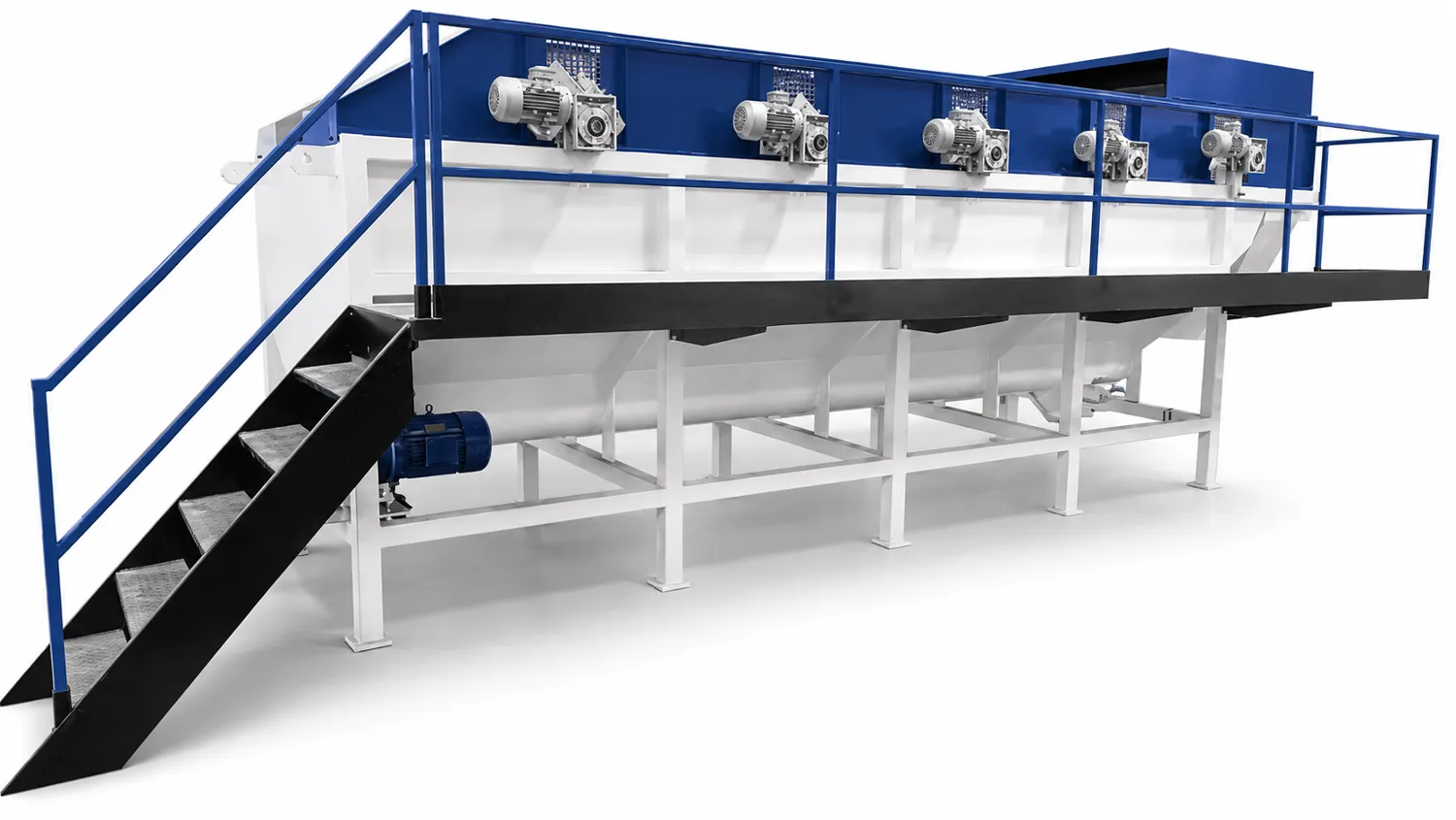
Energycle sink-float separation tanks separate sinking and floating fractions according to material density relative to water. PET and PVC typically sink, while PP and PE typically float. The tanks are used in PET bottle recycling lines and mixed rigid plastic recovery to separate these two fractions before drying, further sorting, or pelletizing.
Key Advantages
Why Recyclers Choose This Sink-Float Tank
Built for industrial-scale density separation with minimal downtime and maximum material purity.
High-Purity Separation
Natural density differences let PET, PVC, and other heavy plastics sink while PP and PE float, helping produce clean output streams without chemical additives.
Multi-Polymer Versatility
The tank separates sinking and floating fractions in PET bottle recycling and mixed rigid plastic recovery, including floating PP/PE and heavier fractions containing PET or PVC.
Automated Continuous Workflow
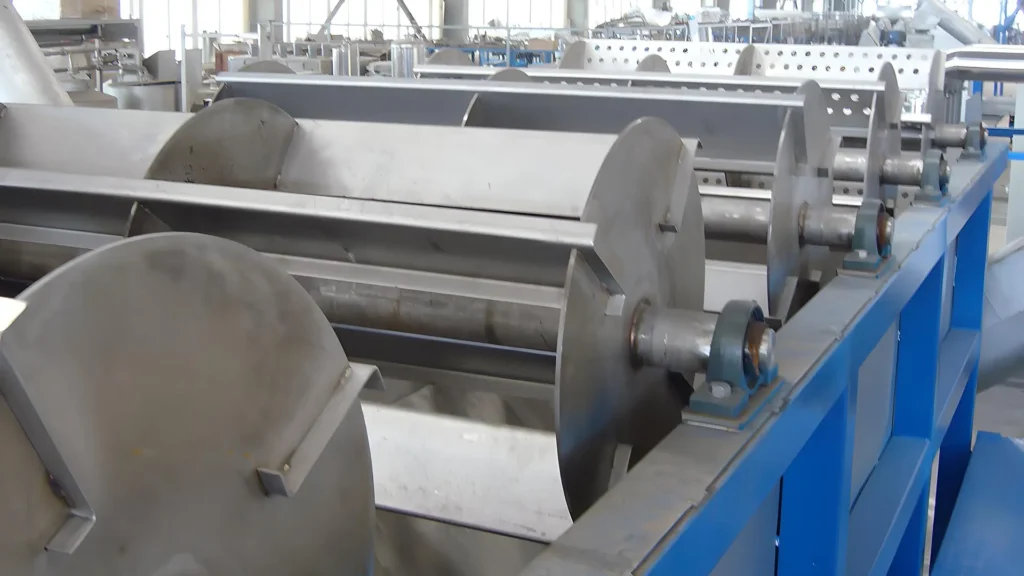
Screw conveyors, paddles, and rotating drum screens feed, separate, and discharge material continuously, reducing manual handling and line interruptions.
Water-Efficient Design
When included in the selected configuration, closed-loop recirculation with settling and screening can reduce freshwater consumption by up to 80 percent compared with once-through systems.
Durable SS304 Construction
All wetted surfaces use stainless steel for long service life in aggressive wash-water environments, while the frame keeps the machine stable under continuous load.
Easy Maintenance Access
Removable screens, accessible conveyors, and replaceable wear parts make service faster and reduce the downtime usually associated with dense-fraction separation equipment.
How It Works
How Sink-Float Separation Works
Materials denser than water sink while lighter materials float. Once pre-washed flakes enter the tank, this density difference separates the feed into a sinking fraction and a floating fraction.
Material Infeed
Pre-washed and crushed flakes enter the separation tank through a stable conveyor or feeder.
Density Separation
PET, PVC, and other heavy fractions sink while PP and PE remain near the water surface.
Collection and Discharge
Floating material is skimmed from the top while sinking material is collected through bottom conveyors or scrapers.
Water Recirculation
Where a recirculation loop is specified, settling and screening remove solids before water returns to the tank. Treatment equipment may be supplied separately or provided by an existing site system.
Material Infeed
Pre-washed and crushed flakes enter the separation tank through a stable conveyor or feeder.
Density Separation
PET, PVC, and other heavy fractions sink while PP and PE remain near the water surface.
Collection and Discharge
Floating material is skimmed from the top while sinking material is collected through bottom conveyors or scrapers.
Water Recirculation
Where a recirculation loop is specified, settling and screening remove solids before water returns to the tank. Treatment equipment may be supplied separately or provided by an existing site system.
Applications
Applications by Material Type
These tanks are configured for the main polymer recovery scenarios found in modern plastic recycling plants.
PET Bottle Recycling
PET typically sinks while PP and PE caps, labels, and film fragments float. This tank provides a washing and separation stage within a PET recycling line. Food-grade rPET suitability depends on feedstock control, the complete recycling and decontamination process, and verification for the intended food-contact use; the tank alone does not establish it.
PET linesPP and PE Recovery
Polyolefins float in water, making the tank a practical way to recover PP and PE from heavier contaminants in mixed plastic waste streams.
PolyolefinsPVC, PC, and PS in the Sinking Fraction
Dense fractions such as PVC, PC, and some PS grades can be separated from lighter contamination before finer downstream sorting stages.
Heavy fractionMixed Rigid Plastics and E-Waste
Post-consumer rigid plastics, automotive scrap, and WEEE housings often use sink-float separation as a purification step before extrusion or pelletizing.
Mixed rigidEngineering
Engineering and Design Features
The features below describe reference arrangements and configuration options. Tank geometry, discharge equipment, screening, polishing zones and water-system scope are confirmed in the project specification and quotation.
W-Shaped Sedimentation Bottom
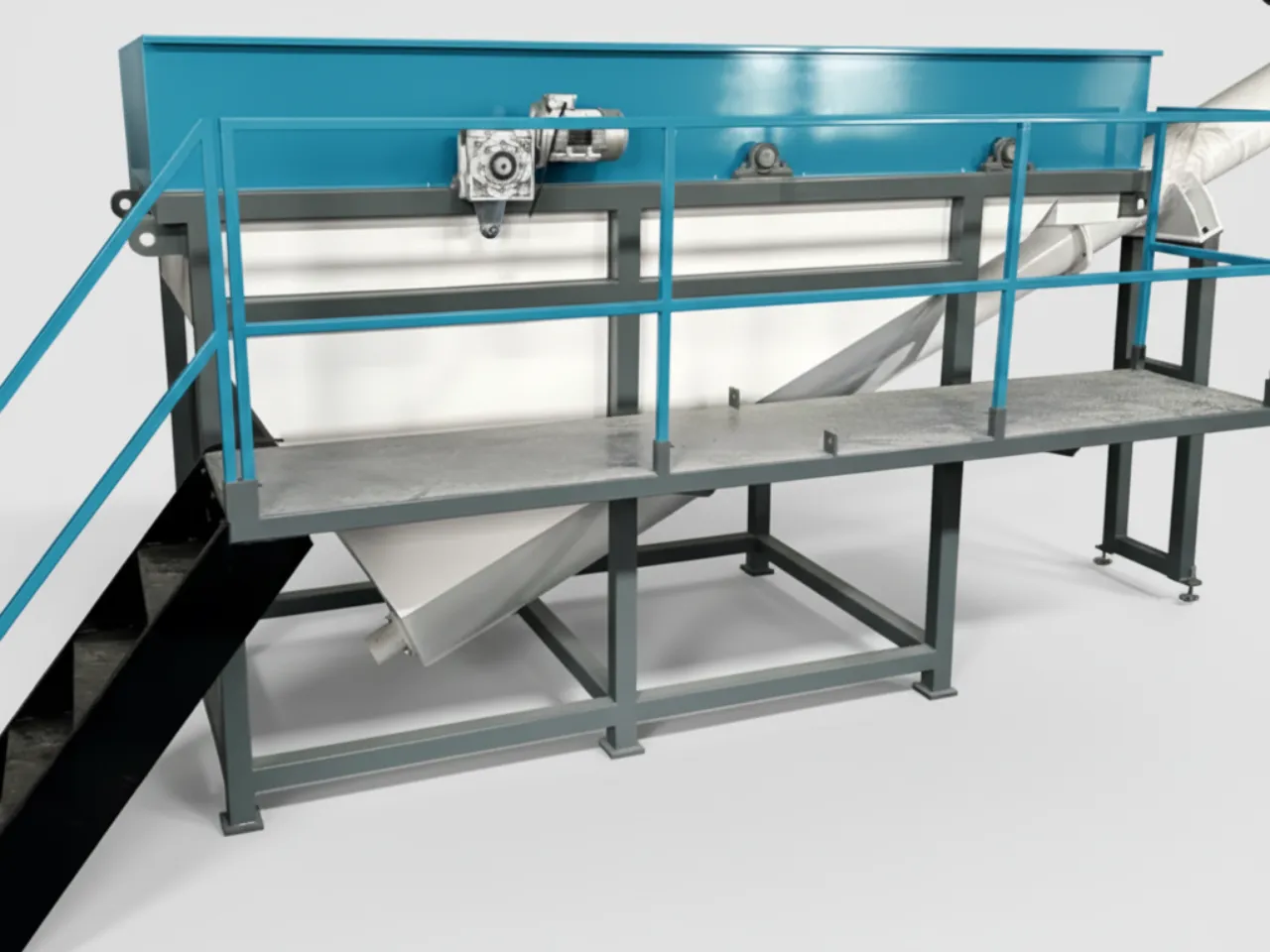
In a W-shaped reference arrangement, the tank bottom directs sinking material toward the discharge conveyors. Bottom geometry and conveyor layout are confirmed for the selected configuration.
Optional Polishing Zone
A second polishing zone can be specified where feedstock and separation targets call for an additional separation stage. A two-zone layout is an option to confirm during selection, rather than a feature included with every tank.
High-Throughput Triple-Row Option
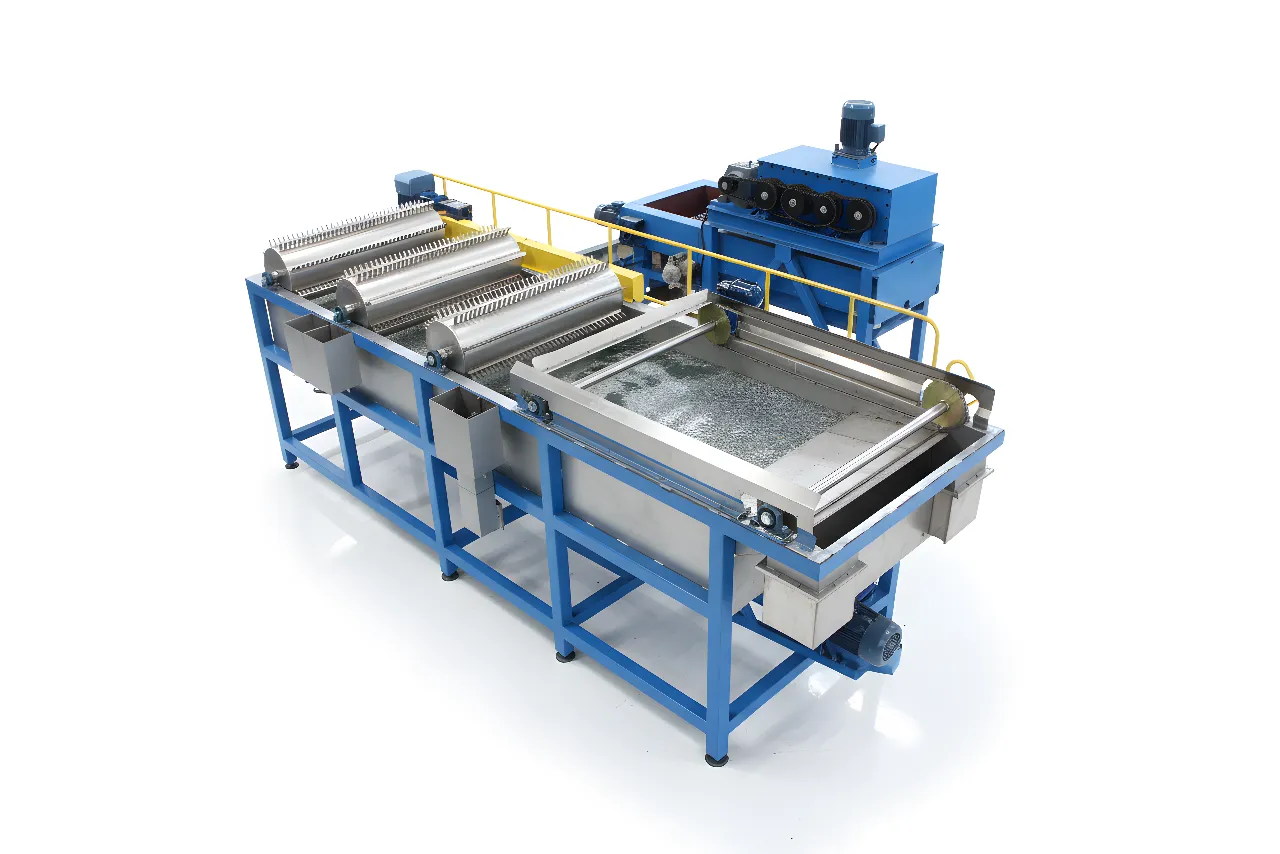
Designed for high-throughput recycling lines, the triple-row configuration routes material through three consecutive separation rows in one unit. Repeated separation along the extended material path helps reduce carryover between sinking and floating fractions. Capacity is matched to the feedstock, tank dimensions and discharge system.
Screening Configuration
Discharge screens can retain fines and small contaminants. Screen location, aperture and cleaning access depend on the selected discharge arrangement and feedstock, and are confirmed in the equipment specification.
Modular Scalability
Tank width, length, discharge systems, and downstream connections can be tailored to material type, line speed, and expansion plans.
Optional Water Recirculation System
An optional recirculation system can include settling, screening and return-water equipment, or connect to a suitable existing water-treatment system. The quotation identifies which tanks, filters, pumps and connections are included. Treatment and make-up water requirements depend on the contamination load.
Technical Data
Technical Specifications
The dimensions, motor ratings and construction details below are reference specifications. Final equipment selection is confirmed for your material, throughput and layout. Additional polishing zones and water-recirculation or treatment equipment are optional and included only when specified in the quotation.
| Parameter | Specification |
|---|---|
| Interior Width | 1000 to 2000 mm |
| Total Length | 4 to 7 m, customizable |
| Interior Material | SS304 stainless steel |
| Exterior Frame | Carbon steel, painted or galvanized |
| Screw Conveyor Motors | 5.5 kW + 3.7 kW |
| Drum Screen Motors | 2.2 kW + 0.37 kW |
| Paddle Motors | 1.5 kW x 2 |
| Control System | PLC with HMI touchscreen or independent control panel |
| Certification | CE |
| Warranty | 1 year, parts and labor |
Swipe horizontally to view the full table on mobile.
Selection Guide
How to Choose the Right Sink-Float Tank
Three factors usually determine the right configuration for your recycling line.
Material and Contamination Profile
The main polymer, contamination level, and whether multiple dense fractions are present all affect whether you need a standard tank, a polishing zone, or a multi-stage setup.
Capacity and Throughput
Size the tank and discharge equipment for the target throughput and required separation time. For high-throughput lines, a triple-row layout combines three sequential separation stages in one unit. Final capacity depends on feedstock characteristics and the selected configuration.
Water and Discharge Layout
Your available floor space, water-treatment setup, and discharge preference determine whether screws, paddles, scrapers, and extra filtration stages should be added.
Video
Sink-Float Separation Tank in Operation
Watch the sink-float separation tank process plastic materials in a real recycling application.
Gallery
Sink-Float Separation Tank Gallery
Reference images from Energycle sink-float tank installations and test layouts.
Why Energycle
How Energycle Compares with Conventional Alternatives
The features shown depend on the selected configuration. Polishing zones and water-recirculation equipment are optional; confirm their inclusion and scope in the project quotation.
| Feature | Energycle | Conventional |
|---|---|---|
| Separation Stability | Optional two-zone design with polishing stage and 99 percent plus purity potential | Single-zone layout with lower average purity stability |
| Maintenance Access | Removable screens and serviceable wear parts | More difficult screen access and longer service shutdowns |
| Water Efficiency | Optional closed-loop recirculation with lower freshwater demand | Once-through or partial recirculation is more common |
| Expandability | Modular design with polishing and triple-row upgrade options | Fixed configuration is more common |
| Global Support | Worldwide installation support and faster wear-part response | Support often depends on local reseller availability |
Warranty and Support
Support That Continues After Installation
Sink-float tanks are usually part of a larger washing line, so support quality matters as much as the machine itself.
1-Year Limited Warranty
Structural components, motors, conveyors, and controls are covered under a standard limited warranty. Wear parts are handled separately based on normal operating conditions.
Commissioning Guidance
Remote support is available for installation and setup, and on-site commissioning can be arranged for projects that need process tuning, operator training, and startup assistance.
FAQ
Frequently Asked Questions
Common questions from buyers comparing sink-float separation tanks for PET and mixed rigid plastic recycling.
Request a Sink-Float Tank Recommendation
Tell us about your material, target throughput, and contamination level. Our team will recommend the right tank size, discharge configuration, and water-loop setup for your recycling line.
Comments are closed.