

EPS Foam Waste Solutions
EPS Recycling Equipment: Compactors, Densifiers & Pelletizing Lines
Compare proven EPS recycling equipment solutions: Hot Melt Densifiers for high-density ingots, Cold Compactors for low-energy block extrusion, and Pelletizing Lines for direct resin compounding. Review engineering configurations, utility requirements, and output options for your foam waste stream.
Three EPS Recycling Routes: Technology Comparison
EPS foam processing depends on your downstream output goals, site utility availability, and logistics strategy. These three routes operate independently—select the specific equipment route tailored to your waste stream rather than assuming sequential processing.
Cold Compaction
Continuous mechanical screw extrusion with hydraulic back-pressure door. Pre-crushes and compresses bulky EPS into dense stackable blocks (30:1–50:1 reduction) with low power draw and zero thermal odor.
Hot Melt Densification
Thermal melting into dense solid ingots with up to 90:1 volume reduction (~300–400 kg/m³). Maximizes container payload and export shipping efficiency for operations focused on ingot trading.
EPS Pelletizing Line
Two-stage extrusion compounding with melt filtration and strand pelletizing. Converts clean loose foam or pre-densified scrap directly into uniform GPPS resin pellets for manufacturing.
| Primary Objective | Equipment Route | Output Form | Volume Reduction & Density | Key Sizing & Selection Factors | Specification Details |
|---|---|---|---|---|---|
| Reduce storage footprint and dumpster hauling fees without thermal odors | Cold Compactor | Stackable compressed blocks | 30:1–50:1 reduction 250–350 kg/m³ |
Feedstock bulk density, daily throughput, buyer block acceptance criteria, mechanical screw design | EPS Foam Compactor Machine |
| Produce high-density commodity ingots for long-distance freight and resin trading | Hot Melt Densifier | Solid densified PS ingots | 50:1–90:1 reduction 300–400 kg/m³ |
Polymer purity, heating power (4–14 kW), workshop ventilation, buyer ingot specifications | EPS Foam Melting Machine |
| Convert clean EPS scrap into standardized recycled resin pellets for manufacturing | EPS Pelletizing Line | GPPS resin pellets | Direct resin melt Approx. 1,050 kg/m³ resin |
Feedstock cleanliness, melt filtration, vacuum degassing, target melt flow index (MFI), compound buyer requirements | EPS Foam Pelletizing Line |
Swipe horizontally to view the full table.
Note: These three recycling methods are independent operational alternatives chosen based on your commercial objectives—operations do not need to purchase or chain all three routes in sequence.
EPS Foam Hot Melt Densifier
Transform bulky EPS foam waste into a valuable, compact commodity. Our hot melt densifier reduces foam volume by up to 90:1, drastically cutting your storage and transportation costs while creating a new revenue stream.
Unlock the Value in Your Foam Waste
Turn EPS disposal costs into profit with the industry’s most efficient hot melt solution.
Slash Waste Volume by 90:1
Dramatically reduce the storage space required for foam scrap and cut waste transportation costs significantly.
Create a New Revenue Stream
Convert worthless foam waste into dense, sellable EPS ingots — a valuable raw material for manufacturers.
Achieve Sustainability Goals
Divert thousands of cubic feet of foam from landfills, reduce your carbon footprint, and boost your green credentials.
How It Works
The 4-Step Transformation Process
From bulky foam waste to dense, sellable ingots in four simple steps.
Feeding
Loose EPS foam waste is fed into the machine’s hopper, where a crusher breaks it into smaller, manageable pieces.
Melting
The crushed pieces are heated and melted at a controlled temperature, releasing the air and densifying the material.
Extruding
The molten polystyrene is extruded through a die, forming a continuous, dense, and easy-to-handle ingot.
Cooling & Stacking
The hot ingots cool and solidify into hard blocks, which can be easily cut to length, stacked on pallets, and sold.
Disposal Costs vs. Profit Generation
See how the hot melt densifier transforms EPS waste from a costly problem into a profitable solution.
| Factor | Traditional Disposal | EPS Hot Melt Densifier |
|---|---|---|
| Storage Space | Extremely high — foam fills dumpsters quickly | Minimal (90:1 volume reduction) |
| Transport Costs | Very high — paying to haul air | Very low — dense ingots, full truckloads |
| Revenue | Negative — paying for disposal | Positive — selling ingots as commodity |
| Environmental Impact | Landfill waste, non-biodegradable | Circular economy, reusable material |
| Floor Space | Consumed by piles of lightweight scrap | Reclaimed — neat pallets of ingots |
Swipe horizontally to view the full table.
Hot Melt Densifier Specifications
Standard engineering configurations for the GL-HM hot melt densifier series. Review detailed cutsheets on our EPS Foam Melting Machine page.
| Parameter | GL-HM100 | GL-HM200 | GL-HM400 |
|---|---|---|---|
| Output Capacity | 40–50 kg/h | 80–120 kg/h | 180–200 kg/h |
| Volume Reduction | Up to 90:1 | Up to 90:1 | Up to 90:1 |
| Main Motor Power | 5.5 kW | 15 kW | 22 kW |
| Heating Power | 4 kW | 10 kW | 14 kW |
| Crushing Power | 1.5 kW | 4.4 kW (2×2.2) | 8.8 kW (4×2.2) |
| Dimensions (L×W×H) | 1,410 × 1,085 × 1,600 mm | 2,030 × 1,400 × 2,050 mm | 3,400 × 1,880 × 2,550 mm |
| Machine Weight | Approx. 1,000 kg | Approx. 1,800 kg | Approx. 2,500 kg |
Swipe horizontally to view the full table.
EPS Foam Cold Compactor
A continuous cold compaction solution for EPS packaging foam. Pre-crushes and compresses bulky foam into dense, stackable blocks with continuous screw extrusion and hydraulic resistance — low energy consumption, zero thermal odor, and straightforward operation.
Why Choose Cold Compaction
Low energy, no fumes, simple operation — ideal for facilities that need clean cold compaction.
Up to 50:1 Reduction
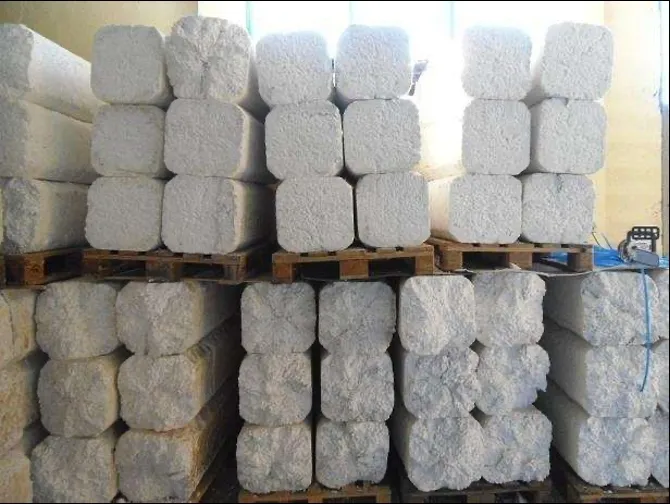
Compress bulky EPS into uniform, high-density blocks that are easy to stack, store, and ship.
Lower Energy, No Melting
Cold compaction avoids melting, fumes, and thermal management — simplifying daily operation.
Robust & Easy to Maintain
Continuous screw drive and hydraulic pressure gate deliver stable compaction density with low maintenance requirements.
How It Works
Simple 4-Step Cold Compaction
From loose foam to dense, stackable blocks without any heat.
Feeding
Loose EPS is fed into the hopper for pre-crushing.
Pre-Crushing
Foam is shredded to consistent chip size for stable compaction.
Screw Compaction
Continuous heavy-duty screw drives foam against a hydraulic resistance door to form dense, uniform blocks.
Strapping & Stacking
Blocks are strapped or wrapped, then stacked on pallets for sale or shipment.
Disposal Costs vs. Cold Compaction
See how cold compaction eliminates EPS handling pain points.
| Factor | Traditional Disposal | EPS Cold Compactor |
|---|---|---|
| Storage Space | Extremely high | Low (up to 50:1 reduction) |
| Transport Costs | Very high | Low — dense blocks, efficient shipping |
| Revenue | Negative — paying for disposal | Positive — sell compacted blocks |
| Operating Complexity | Manual, inefficient handling | Simple cold compaction, no fumes |
| Energy Use | N/A — no processing done | Low — no heating required |
Swipe horizontally to view the full table.
Cold Compactor Specifications
Standard configurations for continuous screw pre-crushing and cold compaction with hydraulic back-pressure door. View full cutsheets on our EPS Foam Compactor Machine page.
| Specification | ERM-FC-150 | ERM-FC-250 | ERM-FC-380 |
|---|---|---|---|
| Typical Throughput | 40–50 kg/h | 80–100 kg/h | 150–200 kg/h |
| Compression Mechanism | Screw compaction | Screw compaction + hydraulic door | Screw compaction + hydraulic door |
| Main Motor Power | 4 kW | 7.5 kW | 15 kW |
| Feed Opening | 612 × 500 mm | 1,000 × 600 mm | 1,000 × 600 mm |
| Screw Diameter | Φ189 mm | Φ290 mm | Φ350 mm |
| Block Cross-Section | 150 × 150 mm | 250 × 250 mm | 380 × 380 mm |
| Volume Reduction | 30:1–50:1 | 30:1–50:1 | 30:1–50:1 |
| Compacted Block Density | 250–350 kg/m³ | 250–350 kg/m³ | 250–350 kg/m³ |
Swipe horizontally to view the full table.
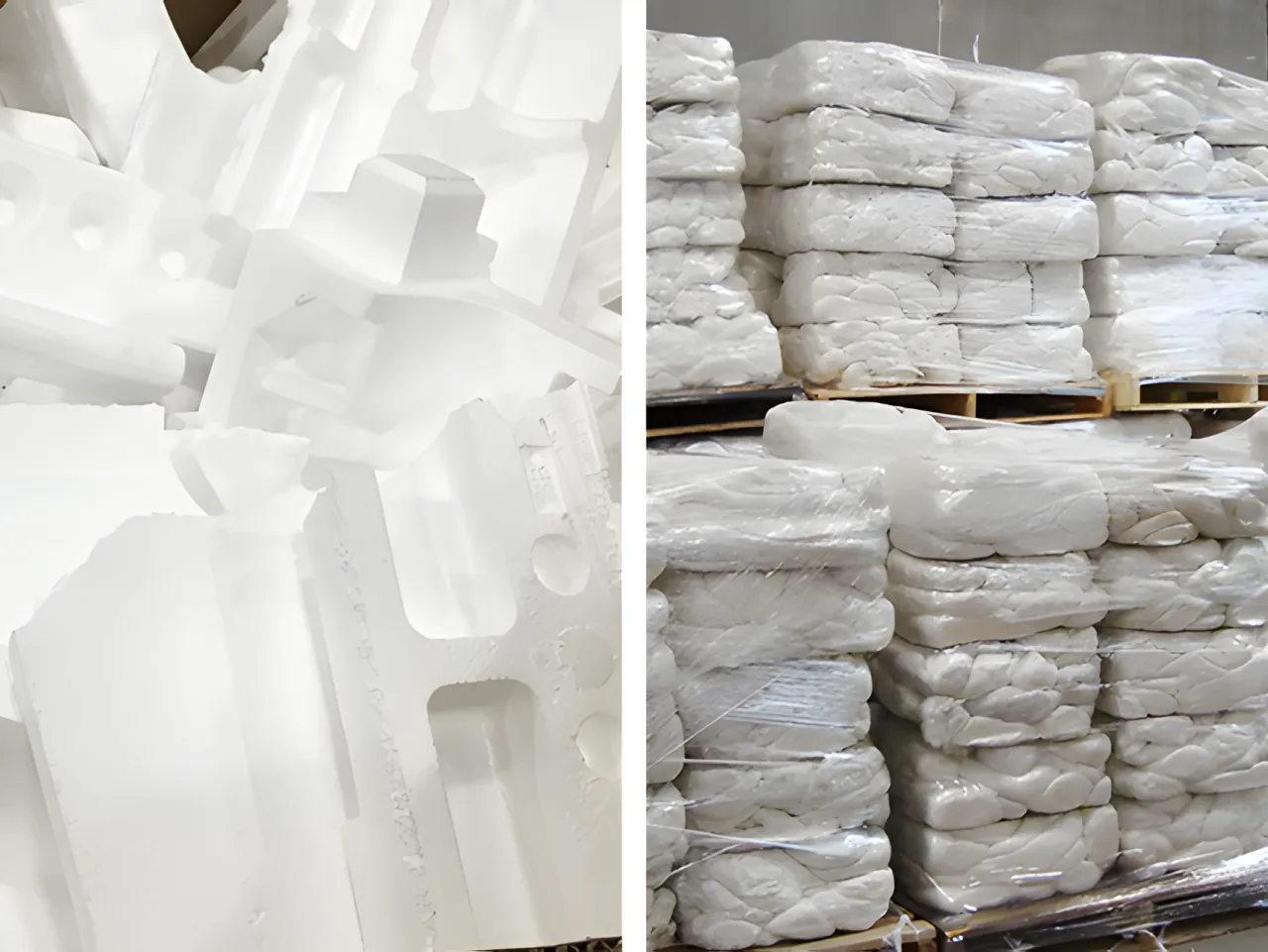
Equipment Gallery
Explore our EPS recycling machines and their output — from dense ingots to compacted blocks.
Related EPS Processing Equipment
Explore our complete range of EPS recycling solutions.

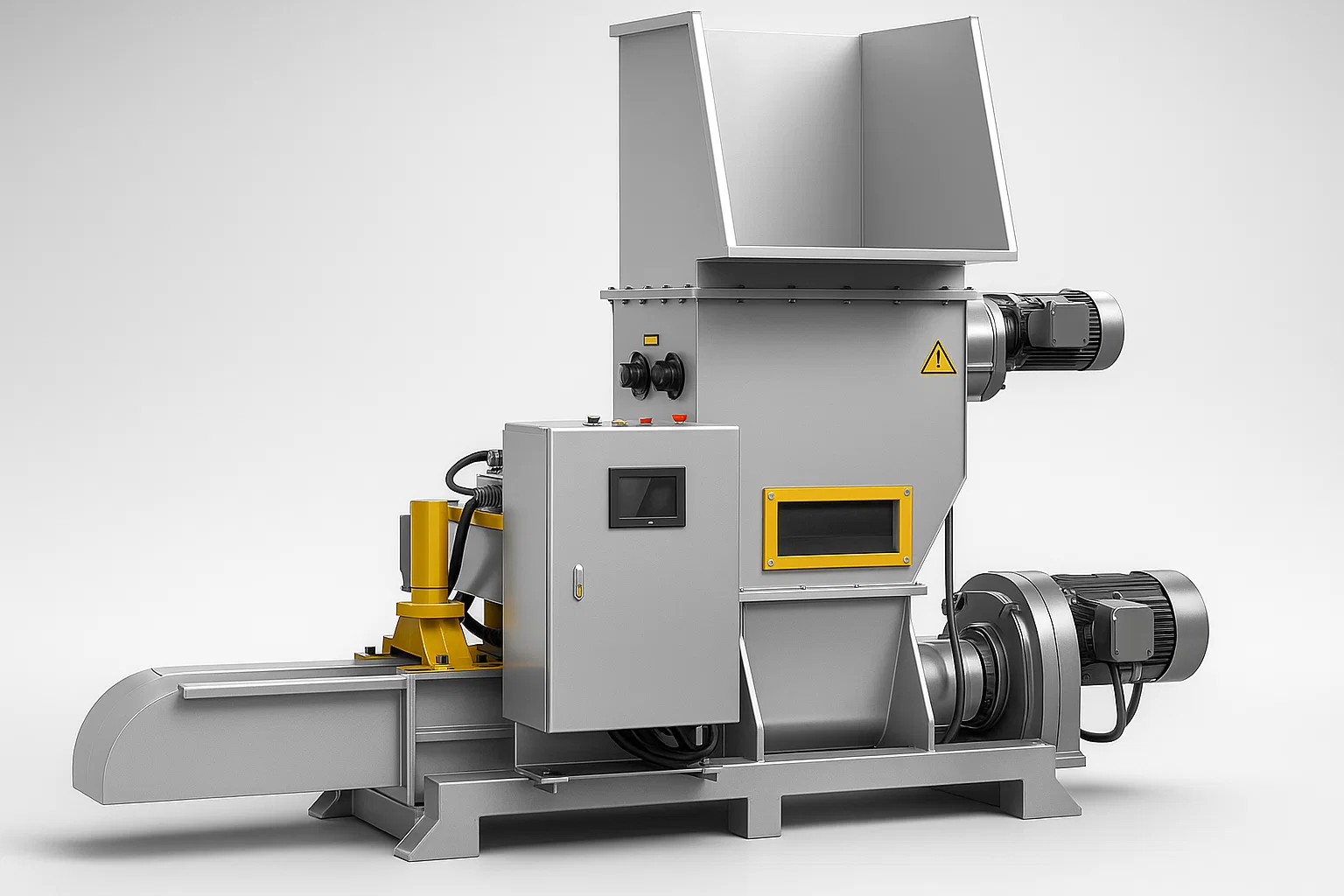
EPS Foam Melting Machine
Melts and compresses EPS foam into high-density ingots with an industry-leading 90:1 volume reduction.
EPS Foam Compactor Machine
Continuous screw pre-crushing and cold compaction with hydraulic back-pressure door into dense blocks (30:1–50:1 reduction) with low power consumption.
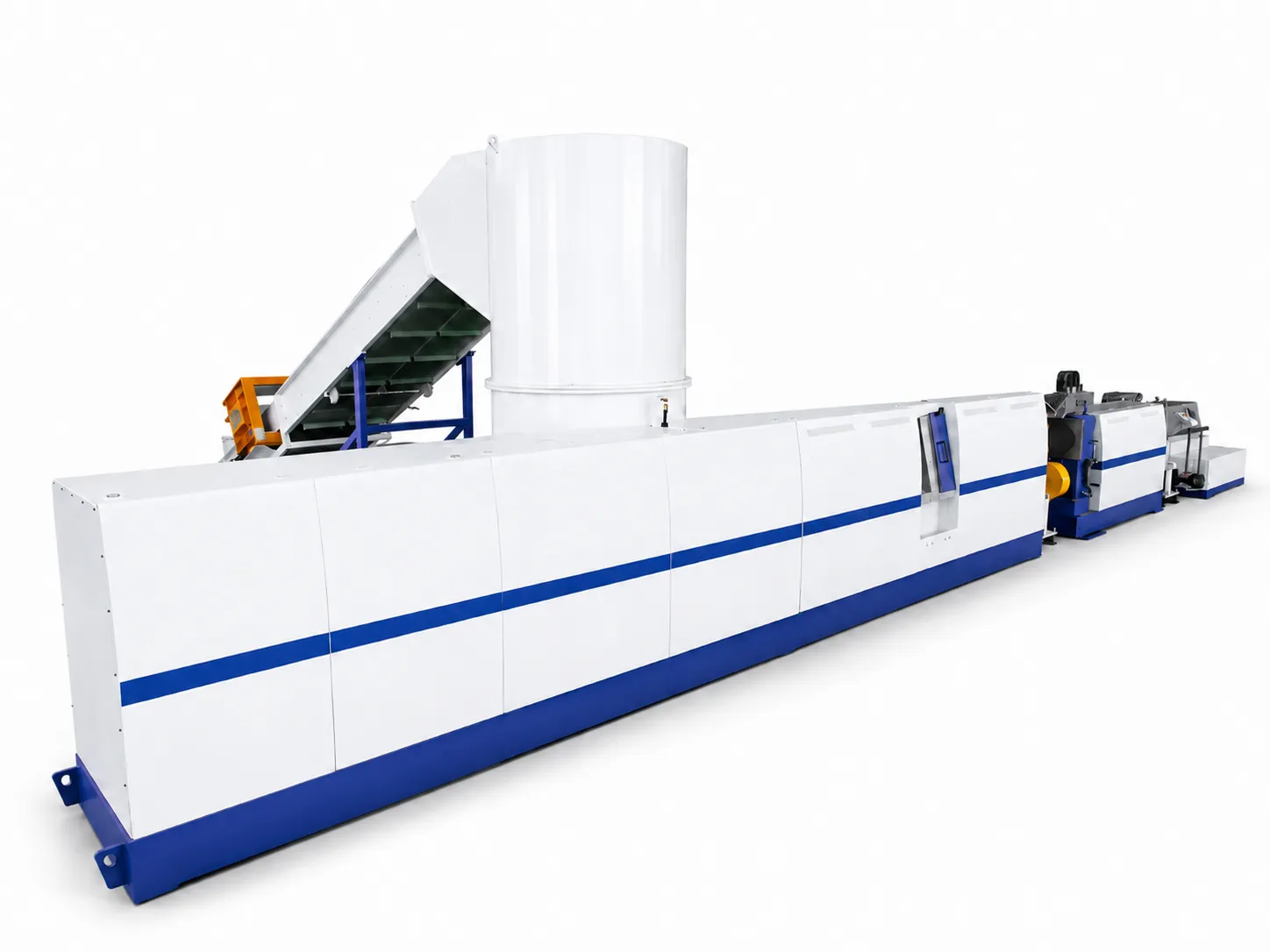
EPS Foam Granulating Line
A complete system that crushes, melts, and pelletizes EPS waste into uniform, reusable plastic pellets.
Frequently Asked Questions
Return on investment depends on project-specific variables: monthly EPS scrap volume, loose bulk density, local dumpster hauling tariffs and tipping fees, power rates, and local off-take market pricing for melted ingots. Contact our engineering team with your foam volume for a tailored payback assessment.
Both machines are primarily engineered for expanded polystyrene (EPS), including white packaging blocks, insulation sheets, and clean molded shapes. Highly elastic foams such as EPE (polyethylene) and EPP (polypropylene) require specialized knife configurations, adjusted heating zones, or material trials to confirm feeding and compaction performance.
Yes. We provide comprehensive operational manuals, video commissioning guidance, and optional on-site installation and technician training to ensure safe and reliable operation.
Hot melt densifiers heat EPS into solid ingots with 50:1–90:1 volume reduction (~300–400 kg/m³), maximizing export shipping density for operations focused on ingot trading. Cold compactors use mechanical screw pre-crushing and extrusion (30:1–50:1 reduction, ~250–350 kg/m³) with zero thermal odors and lower power use, making them ideal for logistics hubs, distribution centers, and retailers seeking clean in-house waste volume reduction.
Standard production configurations are typically manufactured within 3–4 weeks. Custom electrical voltages or specialized infeed conveyor configurations require 4–6 weeks. Contact us for real-time workshop availability.
Equipment investment depends on operating route (cold compaction vs. hot melting), hourly throughput (40 to 200+ kg/h), and peripheral automation like feeding conveyors. Hot melt densifiers include integrated heating and control zones. Contact our sales engineers with your estimated foam volume and material type for an itemized quotation.
Hot melt densifiers heat shredded EPS to approximately 180–210°C, extruding dense, solid ingots with up to 90:1 volume reduction to optimize long-distance container freight. Cold compactors pre-crush foam and extrude it under continuous screw pressure against a hydraulic resistance gate (30:1–50:1 reduction) into solid blocks without heat, saving power and eliminating heating fumes.
EPS is the standard baseline material. EPE (polyethylene) and EPP (polypropylene) possess high elasticity and different melting characteristics. In hot melting, EPE/EPP requires dedicated screw profiles and temperature control. In cold compaction, high-rebound materials require customized heavy-duty blades and trial testing. Contact us to arrange material testing for non-EPS foam streams.
Compacted blocks and densified ingots are typically sold to plastics recyclers and manufacturers for extrusion into XPS insulation boards, photo frames, architectural moldings, and construction profiles. Densified material can also be pelletized into GPPS pellets for injection molding and compounding applications.
Turn Foam Waste Into Profit
Contact our specialists today for a free consultation and a detailed quote based on your specific volume and needs.
Related Guide: EPS Recycling Machine: Types, Costs & ROI Guide