


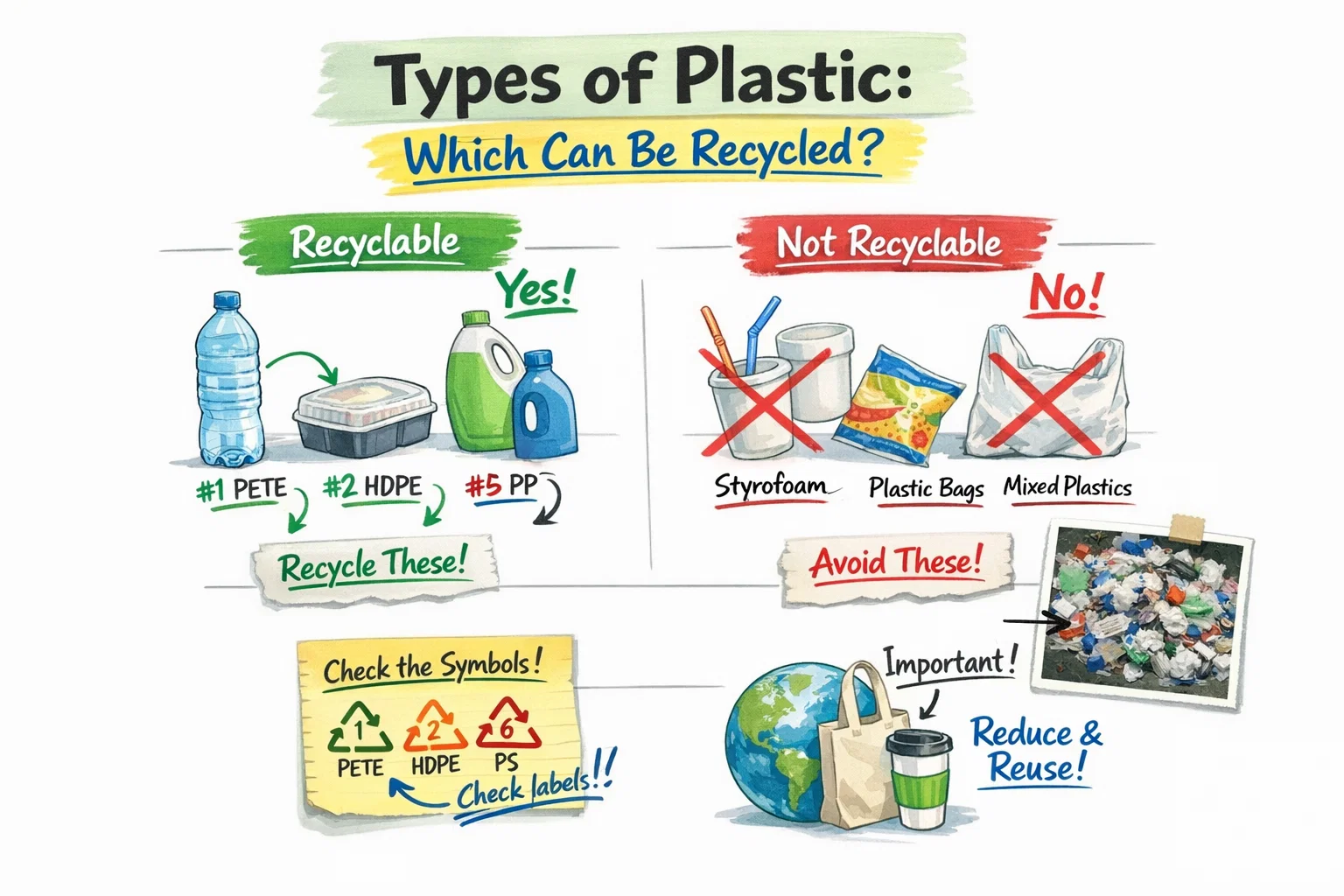
Tipuri de plastic: Care pot fi reciclate și care nu?
Plastics differ significantly in structure, performance, and recyclability. Understanding these differences is essential for building efficient, realistic recycling systems.
1. Main Plastic Types and Recycling Reality
| Code | Tip de plastic | Common Products | Recycling Reality |
|---|---|---|---|
| #1 PET | Tereftalat de polietilenă | Beverage bottles, food trays, thermoformed packaging, polyester fibers | Widely recycled |
| #2 HDPE | Polietilenă de înaltă densitate | Detergent bottles, drums, pipes, crates, industrial containers | Widely recycled |
| #3 PVC | Clorură de polivinil | Pipes, window profiles, cables, flooring, medical tubing | Limited & risky |
| #4 LDPE | Polietilenă de densitate mică | Plastic films, shopping bags, shrink wrap, agricultural films | Partially recycled |
| #5 PP | Polipropilenă | Caps, food containers, automotive parts, household products | Recycling growing |
| #6 PS | Polistiren | Foam packaging, disposable trays, insulation boards | Rarely recycled |
| #7 Other | Multi-layer / Composite | Food pouches, laminated packaging, mixed-material products | Mostly unrecyclable |
What Can Recycled Plastics Be Used For?
Different plastics require different recycling processes and result in very different end products. Below is a practical, material-by-material overview of what recycled plastics are commonly used for and the typical equipment required to process them.
#1 PET (Polyethylene Terephthalate)
Typical recycled applications:
- Polyester fibers for textiles, carpets, and nonwovens
- Thermoformed sheets for food and non-food packaging
- PET strapping and industrial packaging
- Food-grade bottles (with approved decontamination processes)
Typical recycling equipment required: bottle sorting systems, crushers or granulators, hot washing units, sink-float separation tanks, and high-efficiency drying systems.
#2 HDPE (High-Density Polyethylene)
Typical recycled applications:
- Pipes, drainage products, and cable conduits
- Industrial containers, crates, and pallets
- Blow-molded bottles for detergents and chemicals
- Outdoor products such as bins and decking components
Typical recycling equipment required: shredders or crushers, cold or hot washing lines, sink-float separation systems, and centrifugal or thermal dryers.
#3 PVC (Polyvinyl Chloride)
Typical recycled applications:
- Window profiles and construction profiles
- Pipes, fittings, and technical extruded products
- Cable insulation and flooring materials
Typical recycling equipment required: dedicated shredding and grinding equipment, strict material separation systems, controlled washing processes, and chlorine-safe handling solutions.
#4 LDPE (Low-Density Polyethylene)
Typical recycled applications:
- Garbage bags and carrier bags
- Agricultural films and mulch films
- Construction and protective films
- Flexible packaging applications (non-food)
Typical recycling equipment required: film shredders or cutters, friction washing systems, dewatering machines, and squeeze or thermal drying units.
#5 PP (Polypropylene)
Typical recycled applications:
- Injection-molded household products
- Automotive interior and technical components
- Reusable packaging and transport boxes
- Non-food consumer products
Typical recycling equipment required: shredders or granulators, washing and separation systems, followed by extrusion and pelletizing lines.
#6 PS (Polystyrene)
Typical recycled applications:
- Insulation materials and lightweight construction fillers
- Low-grade molded products
- Specialty applications with limited volume
Typical recycling equipment required: densifiers or compactors for volume reduction, combined with shredding and washing equipment where economically viable.
#7 Other / Mixed Plastics
Typical recycled applications:
- Downcycled construction products
- Low-performance molded items
- Alternative recovery or energy recovery routes
Typical recycling equipment required: advanced sorting technologies, size reduction equipment, and systems designed for downcycling or alternative recovery processes.
3. Key Takeaway
Plastics are recyclable only when material type, processing technology, and end-market demand align. Understanding real downstream applications is essential for building profitable recycling operations.
