

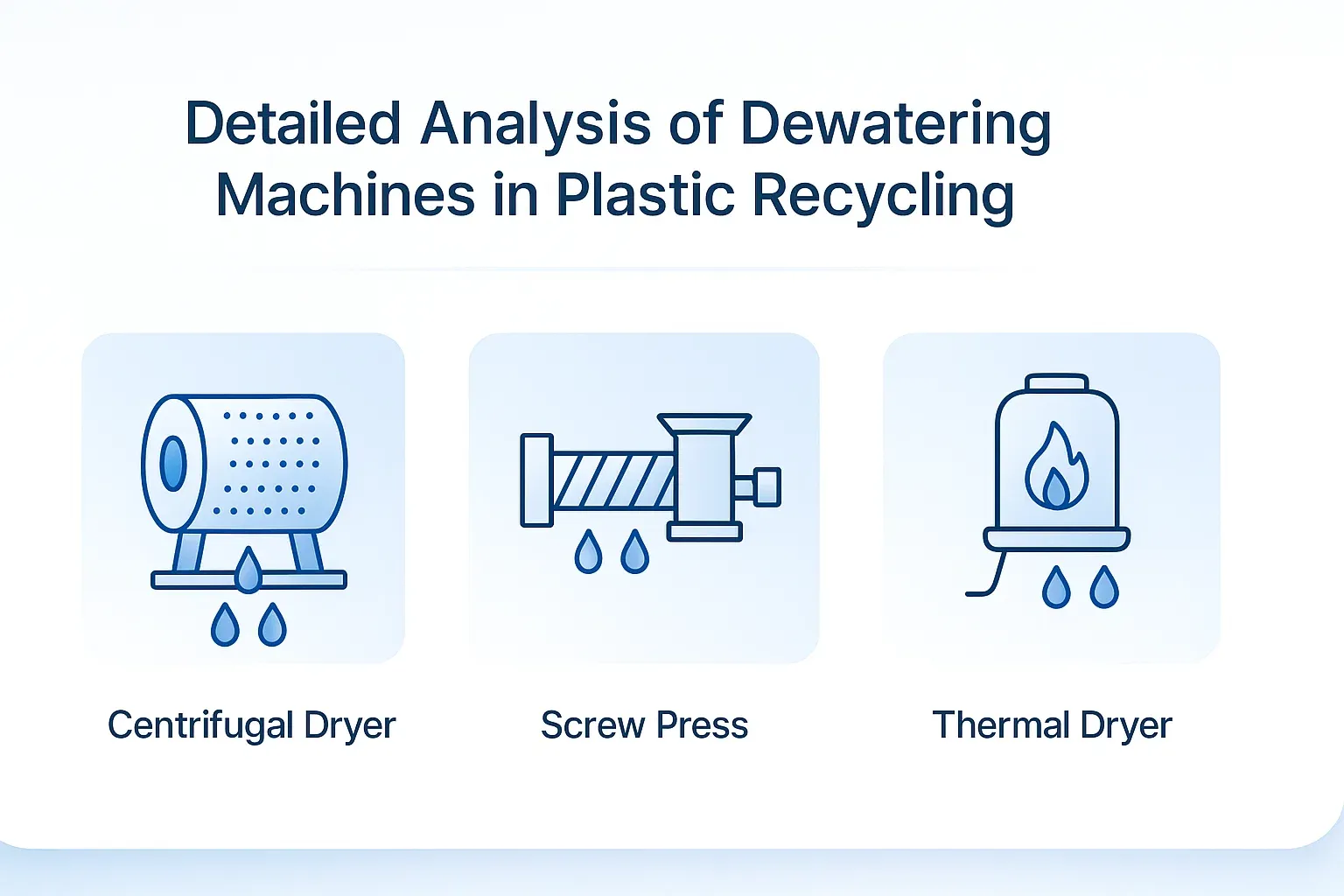
أ آلة تجفيف البلاستيك mechanically removes water from washed plastic flakes, film, or regrind before they enter thermal drying, pelletizing, or extrusion. Without it, your recycling line either spends 4–6× more on energy (trying to evaporate water thermally) or produces off-spec output. This guide covers the three main types of plastic dewatering machines, their target materials, specifications, and a 5-step selection framework for sizing the right unit for your recycling line.
For the broader drying process — including thermal drying, crystallization, and full system design — see our plastic drying system pillar guide. For PET-specific moisture targets, see the PET flake dryer guide.
What Is a Plastic Dewatering Machine?
A plastic dewatering machine is a mechanical water-removal device that takes washed plastic at 30–70% moisture and discharges it at 2–15% moisture, depending on machine type and material. It is the bridge between the washing line and the thermal drying or extrusion stages of any plastic recycling operation.
The reason every production-grade recycling line uses a plastic dewatering machine comes down to energy economics. Removing 1 kg of water mechanically (centrifugal or screw press) takes 30–60 kWh per ton of plastic processed. Evaporating the same water thermally takes 250+ kWh per ton. Skipping mechanical dewatering and trying to dry flakes thermally directly from the washer is the single most common cause of overspending on energy in plastic recycling — see our centrifugal vs. thermal drying energy comparison للحسابات.
A typical recycling process places the plastic dewatering machine in stage 3:
1. Collection & Sorting — Plastic waste is gathered and separated by polymer type (PET, HDPE, LDPE, PP, PVC).
2. الغسيل — Sorted plastics are washed to remove dirt, food residue, labels, and adhesives.
3. Mechanical Dewatering — A plastic dewatering machine removes free water from the washed material at low energy cost.
4. Thermal Drying — A hot air dryer evaporates residual surface moisture if the application requires it.
5. Pelletizing or Extrusion — Dry plastic is melted and converted to pellets or directly extruded into new products.
Inlet moisture varies dramatically by material: rigid plastic flakes (PET, HDPE, PP) leave the friction washer at 30–40% moisture; plastic films at 50–70%. The plastic dewatering machine reduces this to 2–5% for rigid flakes (centrifugal) or 8–15% for film (screw press), preparing the material for the next stage.
3 Types of Plastic Dewatering Machines
The plastic recycling industry uses three distinct dewatering technologies, each engineered for specific material characteristics and throughput requirements.
1. Centrifugal Plastic Dewatering Machine
A centrifugal plastic dewatering machine spins washed flakes at 800–1,500 RPM inside a perforated screen drum. Centrifugal force throws water radially through the screen while plastic flakes discharge dewatered. Two configurations exist: vertical (compact, sub-1 ton/h) and horizontal (higher capacity, more uniform output). For the orientation comparison, see our horizontal vs. vertical centrifugal dewatering machine guide.
• Best Material: Rigid plastic flakes — PET bottle flakes, HDPE crate regrind, PP injection scrap, ABS housings
• Outlet Moisture: 2–5% (depending on material and rotor speed)
• الإنتاجية: 200-3,500 كجم/ساعة
• قوة المحرك: 22–90 kW
• Capital Cost: $8,000–$45,000 USD
The centrifugal plastic dewatering machine is the default choice for any rigid plastic recycling line. It cannot handle film effectively because long flexible material wraps around the rotor paddles and stalls the machine.
2. Film Squeezer / Screw Press Plastic Dewatering Machine
For PE and PP film, a screw press or film squeezer plastic dewatering machine compresses water out by mechanical pressure. A rotating screw conveys wet film through a tapered chamber, building pressure against a perforated screen and forcing water to exit through the perforations. The film is simultaneously densified into a continuous strand or briquette ready for the downstream agglomerator or extruder.
• Best Material: PE/PP film, LDPE agricultural film, PP woven bags, raffia, soft plastics
• Outlet Moisture: 8–15% (combined with thermal stage typically required)
• الإنتاجية: 300–2,500 kg/h
• قوة المحرك: 30–110 كيلوواط
• Capital Cost: $15,000–$80,000 USD
For high-volume film operations above 1.5 ton/h, a آلة تجفيف الطرد المركزي للأغشية البلاستيكية عالية السرعة with anti-wrap rotor design is the alternative — combines centrifugal speed with film-compatible rotor geometry.
3. Heavy-Duty Screw Press Plastic Dewatering System
For mixed waste, contaminated streams, or pre-dewatering of bulky materials, a heavy-duty screw press plastic dewatering machine handles inputs that would jam a centrifugal unit. The slower compression action (30–80 RPM screw rotation) tolerates rocks, metal fragments, and irregular pieces that occasionally pass through pre-screening.
• Best Material: Mixed contaminated waste, pre-dewatering of bulky baled materials, paper-plastic composites
• Outlet Moisture: 10–25% (always followed by additional dewatering or drying)
• الإنتاجية: 500–3,000 kg/h
• قوة المحرك: 22–90 kW
• Capital Cost: $20,000–$100,000 USD
Each plastic dewatering machine type addresses a different material challenge. Choosing the right one depends on input material form (rigid vs. film), throughput, target outlet moisture, and contamination level.
Plastic Dewatering Machine Comparison Table
| يكتب | الآلية | Outlet Moisture | معدل الإنتاج | الأفضل لـ |
|---|---|---|---|---|
| الطرد المركزي | High-speed rotor (800–1,500 RPM) inside perforated screen | 2–5% | 200-3,500 كجم/ساعة | PET, HDPE, PP rigid flakes |
| آلة ضغط الأفلام | Tapered screw compression against screen | 8–15% | 300–2,500 kg/h | PE/PP film, LDPE agricultural film, raffia |
| مكبس لولبي | Slow compression for contaminated/mixed streams | 10–25% | 500–3,000 kg/h | Mixed waste, pre-dewatering, paper-plastic |
Why Every Recycling Line Needs a Plastic Dewatering Machine
1. Cuts Energy Cost by 4–6×
تستخدم الإزالة الميكانيكية للمياه 30-60 كيلووات ساعة لكل طن من البلاستيك. ويستخدم التبخير الحراري لنفس كتلة المياه أكثر من 250 كيلووات ساعة لكل طن. بالنسبة لخط 1 طن/ساعة يعمل 4,000 ساعة في السنة بسعر $0.10/كيلو وات في الساعة، فإن تركيب آلة نزح المياه البلاستيكية يوفر $80,000-1T8T100,000 سنويًا مقارنة بالتجفيف الحراري فقط.
2. يقلل من وزن المادة 50-60% قبل النقل
Example: 1 طن من البلاستيك الجاف عند رطوبة مدخل 70% = 3,330 كجم تقريبًا من المواد الرطبة. بعد نزع الماء إلى رطوبة 20%، ينخفض الوزن الإجمالي إلى 1,250 كجم - أي تخفيض 62%. وهذا يترجم مباشرةً إلى انخفاض تكلفة الوقود ومركبات النقل الأصغر حجمًا وتقليل عمالة المناولة.
3. يمنع تلف الطارد وعيوب الجودة
تتسبب الرقائق الرطبة التي تدخل الطارد في حدوث مشاكل في رطوبة التنفيس، وعدم استقرار الذوبان، وانفجارات بخار في البرميل اللولبي، وعيوب مرئية في المخرجات (خطوط الفضة، والفراغات، والهشاشة). بالنسبة إلى PET على وجه التحديد، تتسبب الرطوبة المتبقية التي تزيد عن 50 جزء في المليون في حلق تغذية الطارد في حدوث تدهور مائي IV - يصبح البوليمر أضعف وأكثر ضبابية في كل تمريرة.
4. يزيل الملوثات الخفيفة مع الماء
تطرد آلات نزح المياه من البلاستيك بالطرد المركزي أيضًا شظايا الملصقات والجزيئات الدقيقة وجزيئات الأوساخ من خلال الغربال المثقوب مع الماء. وهذا يصقل تيار الرقائق ويقلل من حمل التلوث على المعدات النهائية.
5. تمكين تصميم الخط المعياري
تخلق ماكينة نزح المياه البلاستيكية نقطة عازلة في الخط - يمكن تخزين الرقائق لفترة وجيزة بين نزح المياه والتجفيف الحراري دون تدهور الجودة، مما يتيح تشغيل الدُفعات وفجوات التنظيف المكاني CIP دون تعطيل الخط بأكمله.
إطار اختيار آلة نزح المياه من البلاستيك في 5 خطوات
الخطوة 1 - تحديد شكل المادة. رقائق صلبة (PET، HDPE، PP، ABS) → ماكينة نزح المياه من البلاستيك بالطرد المركزي. غشاء (PE، PP، PP، LDPE) → عصارة غشاء أو جهاز طرد مركزي مضاد للالتفاف. مختلطة/ملوثة → مكبس حلزوني للخدمة الشاقة لنزح المياه الأولي.
الخطوة 2 - حساب ذروة الإنتاجية. تعمل خطوط إعادة التدوير على دفعات مع وجود فجوات في التنظيف. يبلغ معدل ذروة التغذية عادةً 1.5 إلى 2 × المتوسط اليومي. فخط معالجة 10 أطنان على مدار 8 ساعات تكون ذروة التغذية فيه تتراوح بين 1,500 و1800 كجم/ساعة. قم بتحديد حجم ماكينة نزح المياه حسب الذروة، وليس المتوسط.
الخطوة 3 - تحديد رطوبة المخرج المستهدف. بالنسبة للبثق المباشر لـ HDPE/PP، يكون 3-5% مقبولًا. بالنسبة لتكوير PET أو أي رطوبة مستهدفة دون 1%، يجب أن يكون مخرج ماكينة نزح المياه ≤4% للحفاظ على حجم المرحلة الحرارية يمكن التحكم فيه. تضيف كل نقطة مئوية إضافية من رطوبة مخرج آلة نزح المياه 60-80 كيلو وات/طن من الحمل الحراري.
الخطوة 4 - طابق مواد البناء مع البوليمر. SS304 الفولاذ المقاوم للصدأ SS304 للبولي إيثيلين تيريفثاليت (الملامس للأغذية)، والفولاذ الكربوني مقبول للبولي إيثيلين عالي الكثافة/البولي بروبيلين عالي الكثافة، والسبائك المقاومة للأحماض للبلاستيك PVC (الكلور المنبعث منه غازات الكلور). يتسبب البناء غير المطابق في حدوث تآكل سابق لأوانه ويلوث تيار الإخراج.
الخطوة 5 - التحقق من وصول الصيانة. ماكينات نزح المياه البلاستيكية بالطرد المركزي العمودية لها مدخل علوي (تغيير الغربال لمدة 30 دقيقة). تتطلب الوحدات الأفقية إزالة الغطاء النهائي (من ساعة إلى ساعتين واثنين من الفنيين). تحتاج المكابس اللولبية إلى الوصول إلى الحجرة اللولبية لإزالة الانسداد. طابق تعقيد الصيانة مع قدراتك الداخلية.
المشاكل الشائعة والحلول
رطوبة المخرج فوق المواصفات. السبب: مصفاة باهتة أو بالية، أو محرك صغير الحجم، أو تجاوز ذروة الإنتاجية. الحل: افحص المصفاة المثقوبة واستبدلها، وتحقق من سحب أمبير المحرك عند ذروة التحميل، وتأكد من أن الماكينة مصنفة لذروة الإنتاجية (وليس المتوسط).
تكسر الرقائق أثناء نزح المياه. السبب: سرعة الدوار عالية جدًا بالنسبة للمواد (خاصةً مادة PET، الهشة). الحل: تقليل سرعة الدوار إلى 1,000-1,200 دورة في الدقيقة للPET، والتحول إلى التكوين الأفقي لنزع الماء بسرعة أقل، والتحقق من أن حجم ثقب الغربال يطابق أبعاد القشور.
فيلم يلتف حول الدوار. السبب: آلة نزح المياه من البلاستيك بالطرد المركزي القياسية المستخدمة على مواد الأغشية. الحل: التحول إلى عصارة الأغشية أو جهاز طرد مركزي مضاد للالتفاف مصمم للمواد المرنة.
تكلفة الطاقة الزائدة. السبب: آلة نزح المياه صغيرة الحجم مما يجبر المرحلة الحرارية على تبخير المياه السائبة. الحل: قم بالترقية إلى ماكينة نزح بلاستيك ذات سعة أعلى، أو قم بتشغيل وحدتين في سلسلة قبل المرحلة الحرارية. يجب أن تكون رطوبة مرحلة الطرد المركزي 2-5%، وليس 8-10%.
الاسئلة الشائعة
ما هو جهاز إزالة الماء من البلاستيك؟
آلة نزح المياه من البلاستيك عبارة عن جهاز ميكانيكي لإزالة المياه يستخدم في خطوط إعادة تدوير البلاستيك لتقليل الرطوبة في الرقائق المغسولة أو الأغشية من 30-70% (بعد الغسيل) إلى 2-15% (حسب نوع الماكينة والمواد) قبل التجفيف الحراري أو البثق المباشر. والأنواع الثلاثة الرئيسية هي آلات نزح المياه بالطرد المركزي للرقائق الصلبة، وأجهزة عصر الأغشية للأغشية المرنة، والمكابس اللولبية شديدة التحمل للتيارات الملوثة المختلطة.
كيف يمكن للآلة الطاحنة للإزالة المائية لتوفير الطاقة؟
Mechanical water removal uses 30–60 kWh per ton of plastic. Thermal evaporation of the same water mass uses 250+ kWh per ton — roughly 4–6× more. Installing a plastic dewatering machine before a thermal dryer typically saves $80,000–$100,000 per year for a 1 ton/h line running 4,000 hours annually. The capital cost of a centrifugal dewatering unit pays back in 6–18 months for most production lines.
ما هو مستوى الرطوبة الذي يمكن أن يحققه جهاز إزالة الماء للبلاستيك؟
Centrifugal plastic dewatering machines achieve 2–5% outlet moisture on rigid flakes (PET, HDPE, PP) in a single pass. Film squeezers reach 8–15% on flexible films. Heavy-duty screw presses for mixed waste typically discharge at 10–25%. For lower moisture targets (sub-1%), mechanical dewatering is followed by a thermal drying stage — see our نظام تجفيف البلاستيك الإرشادي.
كم يكلف جهاز إزالة الماء للبلاستيك؟
Vertical centrifugal plastic dewatering machines cost $8,000–$18,000 USD for 200–1,000 kg/h capacities. Horizontal centrifugal units cost $15,000–$45,000 for 800–3,500 kg/h. Film squeezers cost $15,000–$80,000. Heavy-duty screw press dewatering systems cost $20,000–$100,000. Final price depends on motor power, rotor diameter, construction material, and automation level.
Centrifugal dewatering vs. screw press: which is better?
It depends entirely on material form. Centrifugal plastic dewatering machines achieve lower outlet moisture (2–5% vs. 10–25%) and use less energy per ton, but cannot handle film. Screw presses handle film, mixed waste, and contaminated streams that would jam a centrifugal unit, but discharge at higher moisture and need a downstream stage. For rigid flakes, choose centrifugal. For film and mixed waste, choose screw press or film squeezer.
هل أحتاج إلى مجفف حراري بعد آلة تجفيف المياه الخاصة بي؟
For HDPE/PP destined for low-spec extrusion (pipe, pallet), no — centrifugal dewatering at 3–5% moisture is sufficient for most HDPE/PP extruders. For PET (any grade), film with extrusion-grade output, or any application requiring sub-1% moisture, a thermal dryer is required after the plastic dewatering machine. See our PET flake dryer guide for PET-specific moisture targets by end application.
خاتمة
A plastic dewatering machine is the cheapest water-removal step in any plastic recycling line — typically 4–6× lower energy cost per kg of water removed compared to thermal drying. Specify it based on input material form (rigid flake vs. film vs. mixed), peak throughput, target outlet moisture, and downstream process requirement. For rigid flakes, choose a centrifugal unit; for film, a squeezer or anti-wrap centrifuge; for contaminated mixed streams, a heavy-duty screw press.
Energycle manufactures the full range of plastic dewatering machines for recycling lines from 200 kg/h to 3,500 kg/h: centrifugal plastic dewatering machines, film squeezers, high-speed film centrifugal units، و screw press dewatering systems. Contact our engineering team with your material type, throughput target, and downstream process — we will recommend the right plastic dewatering machine and integrate it with your existing or planned حبل الغسيل أو نظام التجفيف.
Related Plastic Dewatering & Drying Equipment
- آلة تجفيف بالطرد المركزي لرقائق البلاستيك
- معدات تنقية المياه بسرعة عالية لفيلم البلاستيك بالتسريح الدوراني
- Plastic Film Squeezer / Densifier
- نظام تجفيف الضغط اللولبي
- مجفف حراري لإعادة تدوير البلاستيك
- Plastic Drying System: Complete Pillar Guide
- آلة التفريغ المركزي الأفقية مقابل العمودية
- PET Flake Dryer: Complete Guide
- Centrifugal vs. Air Drying Energy Comparison
