


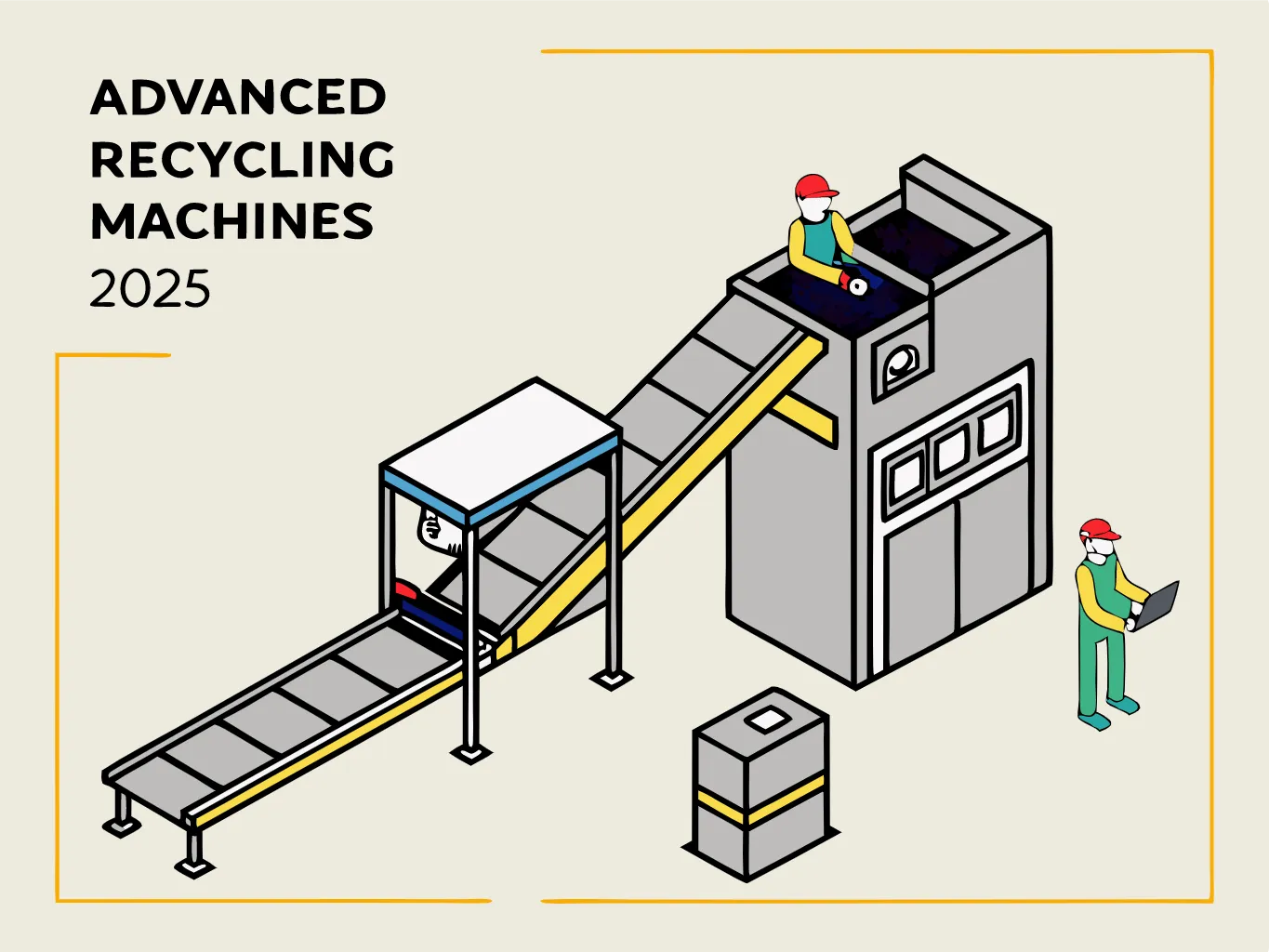
PET recycling equipment keeps moving toward tighter quality control. The driver is simple: more brands and regulators want higher recycled content in packaging, and that pushes recyclers toward cleaner flakes, more consistent pellets, and better contamination control.
This article is written as a selection guide for the most common project scope: hot-washed PET flakes 그리고 standard PET pelletizing (for fiber, strapping, and sheet markets). It also highlights the “2025 trends” that directly change equipment choices.
Quick Takeaways
- Start with your output target: sell hot-washed flakes, or pelletize for a specific market.
- Sorting and PVC risk management increasingly decide product value and buyer acceptance.
- Washing performance is now judged by label/adhesive removal 그리고 stable water quality control.
- Drying and moisture management become critical the moment you pelletize.
1) The “2025 Trend” That Matters Most: Higher Purity Requirements
In the EU, the Single-Use Plastics Directive sets recycled content targets for beverage bottles, including a PET target by 2025. Even outside Europe, similar brand commitments push demand for higher-quality rPET.
For equipment selection, the practical implications are:
– stronger PVC management (sorting and QC)
– more stable hot washing and rinsing
– better moisture control before any melt processing
2) Module Checklist: Hot-Washed PET Flake Line (Typical)
If your main product is hot-washed flakes, your line usually needs these modules (the exact order varies by site layout and contamination profile):
- Receiving + bale opening + pre-sort (remove non-target items early)
- Metal removal (protect cutting equipment and pumps)
- 크기 감소 (bottle crushing/granulation into consistent flakes)
- Pre-wash / rinsing (remove loose dirt and reduce organics load)
- Hot wash (label/adhesive and oil removal where required)
- Friction washing + separation (improve cleanliness and remove light contaminants)
- 헹굼 (reduce carryover of chemicals and fines)
- Mechanical dewatering (reduce free water before thermal drying)
- Thermal drying + storage (produce stable, shippable flakes)
Energycle’s PET washing line reference: PET 병 세척 라인
Related modules often used in PET projects:
– Sorting systems (front-end): MSW sorting machines
– Washing systems (general module reference): 재활용 세척 시스템
– Centrifugal dewatering: 원심 건조기 탈수기
3) When “Hot-Washed Flakes” Are Not Enough (Pelletizing Add-On)
If you plan to sell pellets, the project scope expands. You typically add:
- Stable feeding for flakes (to avoid bridging and surging)
- Melt filtration strategy matched to your contamination window
- Degassing capability appropriate to your moisture/volatile load
- Pelletizing method matched to your market and operating preference
Energycle pelletizing systems reference: 플라스틱 펠렛화기
If your buyer accepts standard rPET pellets for fiber/sheet applications, a well-configured “wash + dry + pelletize” line is often the most direct path. If your target is packaging-grade or bottle-to-bottle, requirements can change substantially (decontamination validation, traceability, and stricter QC).
4) Decision Matrix (Typical Configurations)
Use this matrix to map your target product to the modules you should budget for.
| Target Product | Sorting Intensity | Washing Intensity | Drying Requirement | Extrusion / Pelletizing | Who This Fits |
|---|---|---|---|---|---|
| Hot-washed PET flakes (general grade) | Basic to moderate (depends on bale quality) | Hot wash + friction + rinse tuned to labels/adhesives | Stable flake moisture for storage/shipping | Not required | Flake sellers supplying compounders or pelletizers |
| Higher-quality flakes (stricter buyers) | Higher (PVC focus, better contaminant removal) | More consistent hot wash control and rinse strategy | Tighter moisture control and cleanliness stability | Optional | Plants aiming for more demanding buyers without pelletizing |
| Standard rPET pellets (fiber/sheet/strapping) | Moderate to high (protect the melt) | Hot wash quality must be repeatable | Low, consistent moisture before extrusion | Required (filtration + degassing + pelletizing) | Plants selling pellets with defined melt/contamination specs |
5) Selection Questions (RFQ Checklist)
Before you request quotes, answer these questions. They prevent under-sizing and “surprise” upgrades after commissioning.
Feedstock and contamination
- What is your bale specification and how often does it vary?
- What is the expected PVC risk profile (sleeves/labels/mixed bottles)?
- How much paper/label content do you expect, and what label types dominate?
- What non-plastics show up routinely (glass, stones, metals)?
Output and quality
- Are you selling flakes or pellets? Who is the buyer and what do they reject?
- What QC checks will you run (PVC checks, moisture checks, contamination count)?
- Do you need color sorting (clear vs light blue vs mixed color)?
Utilities and site constraints
- What water strategy do you have (closed-loop, partial reuse, discharge limits)?
- What space and elevation constraints exist for tanks, conveyors, and dryers?
- What maintenance model do you want (fast screen changes, spare modules, service access)?
If you want Energycle to recommend a line scope based on your feedstock and output spec, share your material photos and targets here: 문의하기
6) FAQ
Do I always need hot washing for PET?
Not always, but many bottle streams require hot washing to remove label glue and oils. The decision should be driven by buyer quality requirements and your label/adhesive profile.
What is the biggest quality risk in PET recycling equipment selection?
PVC contamination management is a common top risk. Your sorting and QC plan should match your bale reality, not your “average case.”
Can I start with flakes and add pelletizing later?
Sometimes, but pelletizing often requires tighter drying and filtration control than a flake-only project. Plan your layout and utilities so an upgrade is realistic.
Why do some plants struggle with “gray flakes” or inconsistent cleanliness?
A common cause is unstable water quality and fines carryover. Washing performance depends on rinse strategy, filtration, and sludge management—not only the hot washer itself.
What should I link internally from a PET guide like this?
Link to the specific modules buyers evaluate:
– PET washing line: PET 병 세척 라인
– Sorting systems: MSW sorting machines
– Pelletizers: 플라스틱 펠렛화기
– Centrifugal dryer: 원심 건조기 탈수기
