

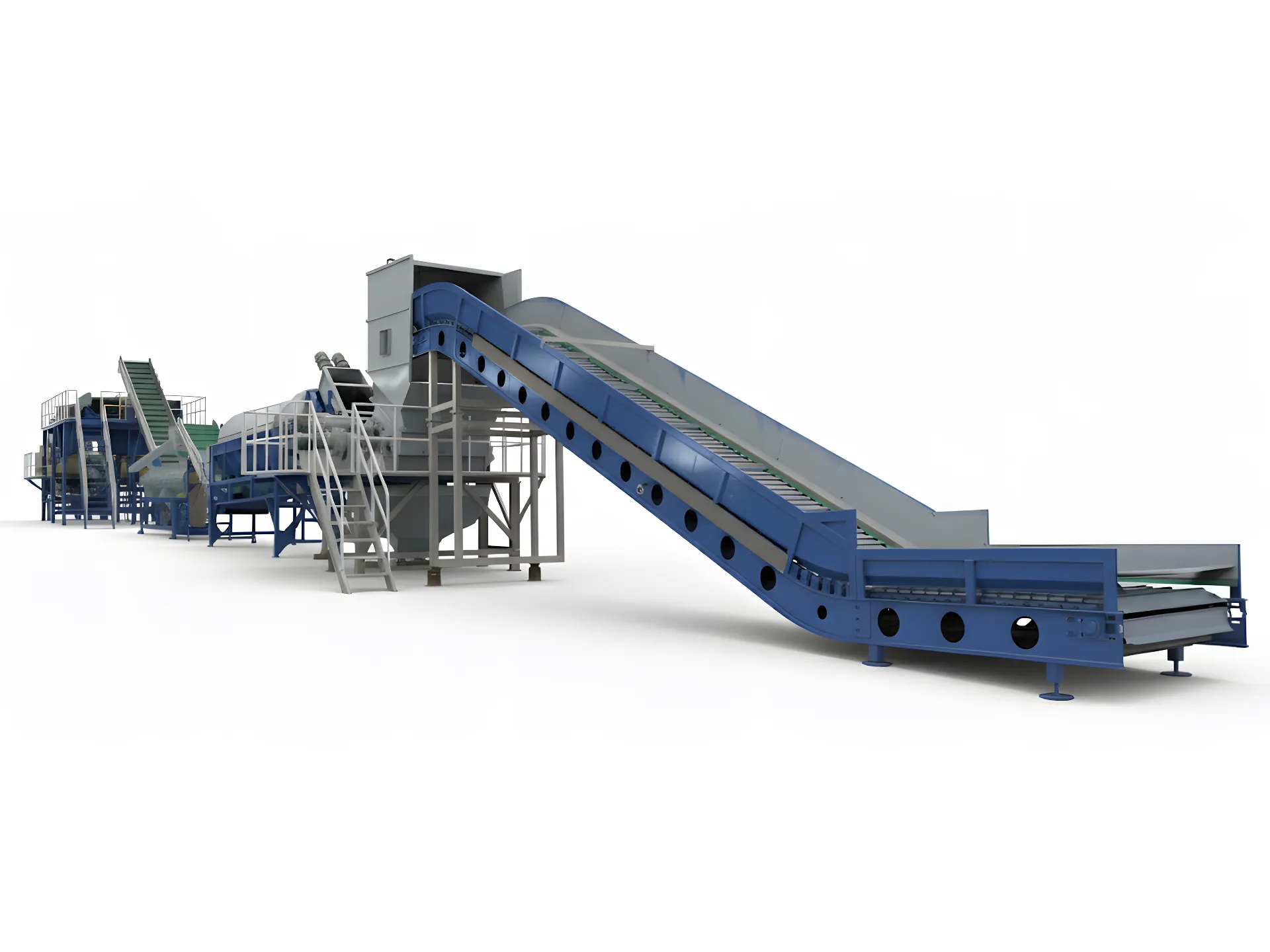
HDPE Bottle Washing and Flake Recovery System
HDPE 병 재활용 라인
Convert post-consumer HDPE bottles such as milk jugs, detergent bottles, shampoo bottles, and household chemical containers into clean, low-moisture flakes. This modular line combines bale opening, pre-washing, wet granulation, hot washing, friction cleaning, sink-float separation, and drying for stable downstream extrusion or pelletizing.

Why Choose This HDPE Bottle Recycling Line
Built for high-purity bottle flake production with stable throughput, lower contamination carryover, and modular upgrades for different bottle mixes and wash targets.
고순도 HDPE 플레이크
Hot washing, friction cleaning, and density separation reduce paper, glue, labels, oils, and heavy-polymer contamination before drying.
안정적인 처리량
From bale opening to flake discharge, each stage is designed to stabilize feed flow and reduce downtime caused by labels, caps, fines, and inconsistent bottle input.
Water and Utility Control
Closed-loop water options, staged rinsing, and optional DAF support help reduce fresh water use and simplify discharge compliance.
Low Moisture Discharge
Centrifugal dewatering and hot air drying typically bring final flake moisture down to a level suitable for storage, extrusion, or pelletizing.
Modular for Bottle Type, Label Load, and Purity Target
The line can be configured around bale condition, cap content, label glue load, heavy contamination, and optional flake sorting so the final system matches your downstream product target rather than a fixed bottle-wash layout.
동영상 시연
Watch the HDPE bottle recycling line in operation from bale opening through washing, separation, and dried flake discharge.
모듈형 우수성
라인 핵심 구성 요소
Each module is selected to improve bottle opening, contamination removal, density separation, and final moisture control.
Debaler and Pre-Sorting
A debaler opens compact bottle bales and creates a stable infeed for manual picks, magnets, and early contaminant removal.
View debalerPre-Wash and Fines Removal
Trommel or pre-wash stages remove sand, stones, fines, and loose label material before size reduction.
습식 과립기
Bottle size reduction with water flushing prepares consistent flakes for washing and lowers heat in the crushing stage.
Hot Washing and Friction Cleaning
Hot washing softens glue and residues while friction cleaning strips labels, dirt, and stubborn surface contamination.
View hot washer싱크-플로트 분리
Density-based separation helps remove PET, PVC, metal, and heavy contamination while keeping the HDPE-rich stream moving forward.
Dewatering, Drying, and Optional Flake Sorting
Final rinsing, dewatering, drying, and optional flake sorting improve moisture, color consistency, and downstream pelletizing stability.
작동 순서
공정 흐름
A staged route designed to turn dirty mixed HDPE bottle input into cleaner, drier flakes for reuse or pelletizing.
Debaling and Pre-Sorting
Bottle bales are opened and obvious metals, stones, and non-plastic contaminants are removed before wet processing starts.
Pre-Wash and Fines Removal
Sand, dirt, fines, and loose label fragments are reduced early to improve downstream washing efficiency.
습식 과립화
Bottles are cut into uniform flakes with water-assisted crushing to stabilize flake size and start pre-cleaning.
Hot Wash and Friction
Glue, oils, and label residue are stripped from the flake stream through heated washing and high-speed friction cleaning.
싱크-플로트 분리
Heavy polymers and dense contaminants are separated from the HDPE-rich stream to improve flake purity.
Rinse, Dewater, and Dry
Final rinsing, centrifugal dewatering, and thermal drying reduce moisture before bagging, extrusion, pelletizing, or flake sorting.
Debaling and Pre-Sorting
Bottle bales are opened and gross contamination is removed.
Pre-Wash and Fines Removal
Sand and loose paper are reduced early in the line.
습식 과립화
Bottles are reduced into uniform wash-ready flakes.
Hot Wash and Friction
Residues, glue, and label contamination are stripped away.
싱크-플로트 분리
Heavy polymers and dense contamination are removed.
Rinse, Dewater, and Dry
Final moisture is lowered before storage or pelletizing.
기술 사양
Typical project planning range for HDPE bottle washing lines. Final utility load and staffing depend on bottle condition, label content, contamination, and target output quality.
| 용량(kg/h) | 설치 전력(kW) | 필요 면적 (m2) | 필요한 직원 | 필요 증기량(kg/h) | 필요한 압축 공기(MPa) | 필요수량(m³/h) |
|---|---|---|---|---|---|---|
| 500 | 220 | 400 | 8 | 350 | 0.6 to 0.8 | 1 |
| 1000 | 500 | 750 | 10 | 500 | 0.6 to 0.8 | 3 |
| 2000 | 700 | 1000 | 12 | 800 | 0.6 to 0.8 | 5 |
| 3000 | 900 | 1500 | 12 | 1000 | 0.6 to 0.8 | 6 |
| 4500 | 1000 | 2200 | 16 | 1300 | 0.6 to 0.8 | 8 |
| 6000 | 1200 | 2500 | 16 | 1800 | 0.6 to 0.8 | 10 |
모바일에서 전체 표를 보려면 가로로 밀어 보세요.
Machine Layout and Output Reference
A typical modular flow from bottle bale opening to clean HDPE flakes, with optional sorting and water treatment support.
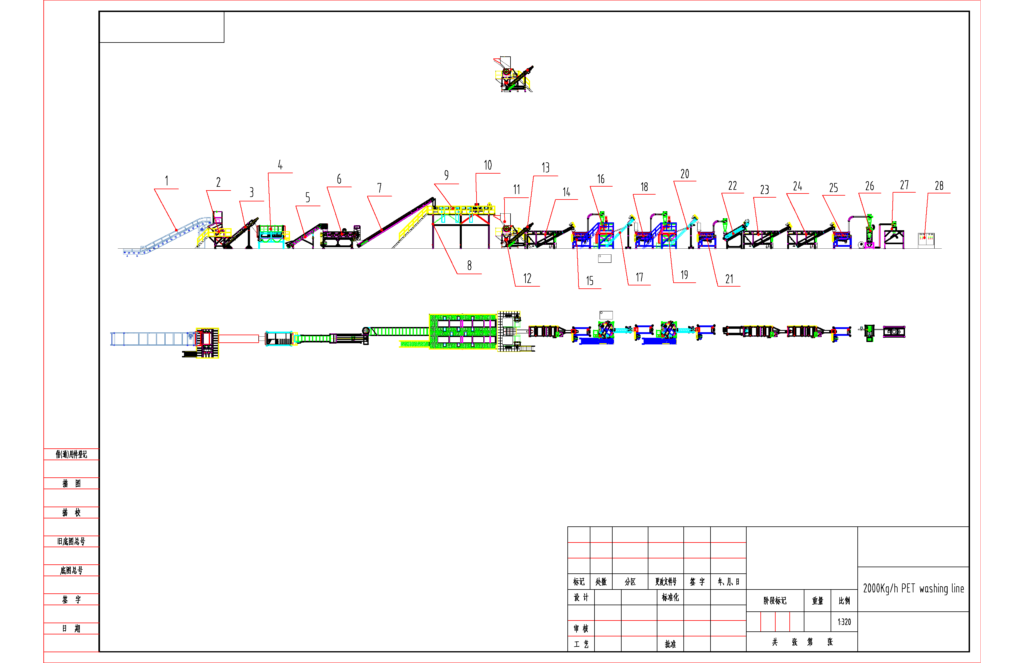 Example layout for an HDPE bottle washing and recycling line
적용 분야
This washing line is designed for rigid HDPE bottle recovery projects that need clean flakes with stable moisture and lower carryover contamination.
Post-Consumer HDPE Bottles
Milk jugs, detergent bottles, shampoo containers, and household chemical packaging from municipal or commercial collection streams.
Household bottle recoveryHigh Label and Glue Loads
Suitable for bottle streams that need stronger label removal and residue control before flake sale or pelletizing.
Baled Bottle Input
A good fit for compacted post-consumer bottle bales that need debaling, metered feeding, and early contaminant removal.
Regrind and Flake Preparation
Produces washed HDPE flakes for pipe, sheet, blow molding, extrusion, and recycled pellet production workflows.
Optional Flake Sorting
Can be paired with optical sorting where color consistency and resin purity targets are stricter than basic wash-flake production.
Integrated Bottle-to-Flake Recycling Projects
A strong option for plants that want one coordinated route from dirty HDPE bottle input to dried flake output with expansion paths for sorting, water treatment, and pelletizing.
자주 묻는 질문
Quick answers for buyers comparing HDPE bottle washing configurations, contamination removal steps, and output quality targets.
핫 워싱, 마찰 청소, 심지수분리, 최종 건조를 통해 HDPE 플라크는 낮은 수분을 가지며 종이, 접착제, 중고분자 오염을 줄일 수 있습니다. 최종 pureness는 병 혼합 및 정리 수준에 따라 달라집니다.
일반적으로 우유병, 세제병, 샴푸병, 가정용 화학제품 용기 등이 원료로 사용됩니다. 심하게 오염된 병에 대해서는 강력한 사전 씻기와 뜨거운 씻기 기능을 추가할 수 있습니다.
предварительная промывка и очистка от трения удаляют ослабленные фрагменты этикеток, а разделение по плотности удаляет более тяжелые полимеры и загрязнения. Крышки из PP имеют плотность, близкую к HDPE, поэтому при более строгих требованиях к чистоте может быть добавлен опциональный оптический сортировщик.
일반 프로젝트는 전기, 물 순환, 압축공기, 그리고 열 씻기 단계가 포함된 경우 증기가 필요합니다. 실제로는 용량, 오염 정도, 그리고 시스템이 닫힌 루프 물 처리를 사용하는지에 따라 전력 소비가 달라집니다.
네. 이 라인은 EU 400V 50Hz와 US 460V 60Hz와 같은 표준에 맞게 구성될 수 있으며, 목적지와 현지 요구 사항에 따라 프로젝트별 준수 지원이 제공됩니다.
견적 요청
Tell us your input condition, label and glue load, target capacity, and whether you need sorted color flakes or pelletizer-ready material. We will recommend a suitable HDPE bottle washing configuration.
