

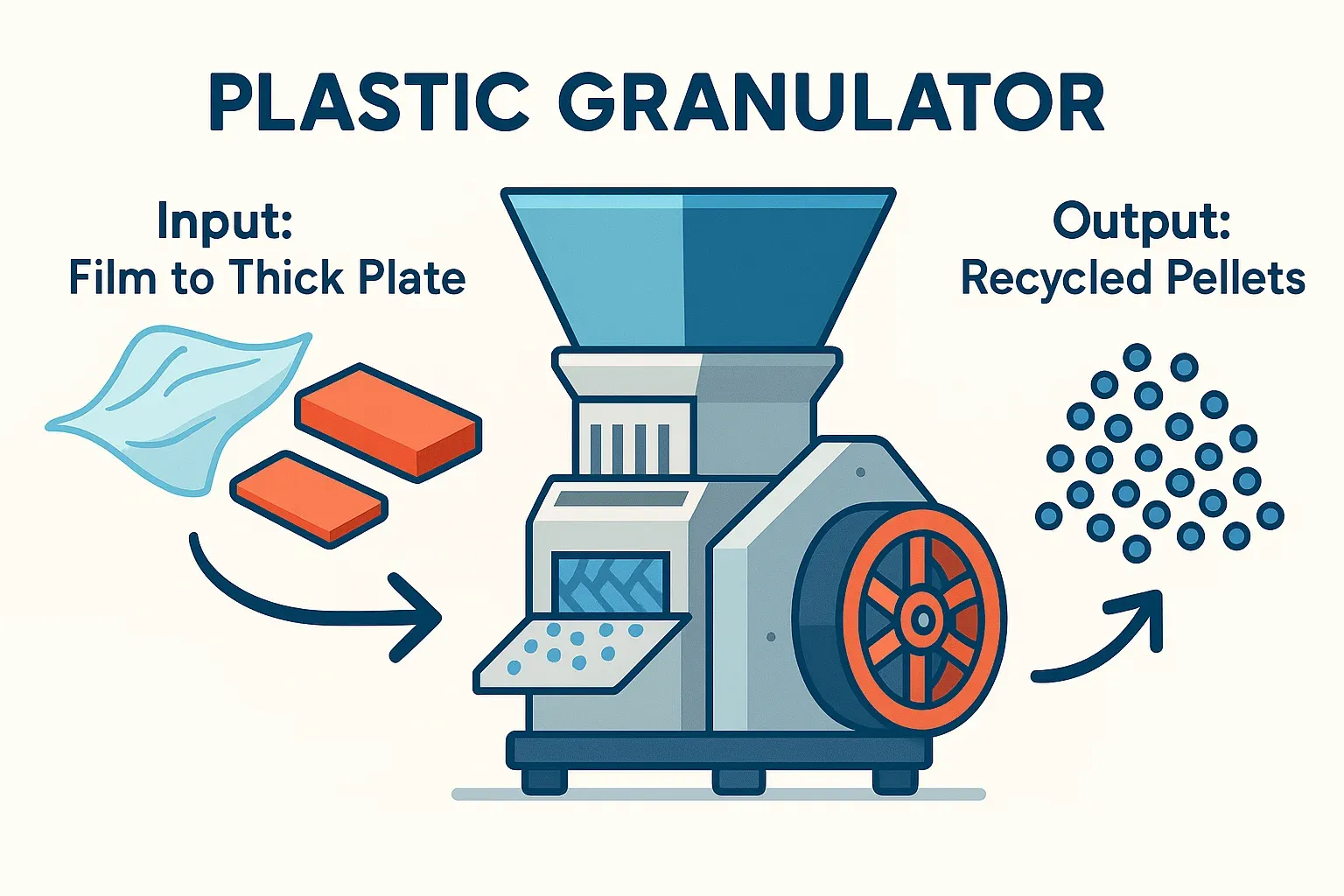
يمكن لمطحنة البلاستيك معالجة الفيلم، القوارير، الأجزاء المعدة، اللوحات السميكة وبعض الأجزاء السميكة، ولكن تصميم المحور والخزان لن يؤدي بنفس الكفاءة على كل شكل. هندسة المواد تحدد كيفية دخولها إلى غرفة القطع، وكيف يتفاعل معها السكاكين، وما إذا كانت الآلة تنتج إعادة التدوير المتحكم فيها أو التحميل غير المستقر. يوضح هذا الدليل الأشكال الشائعة من البلاستيك إلى الميزات المهمة في الطاحونة.
What a plastic granulator does
يستخدم الطحن الميكانيكي الكسارات الدوارة ضد الكسارات الثابتة على السرير لقطع البلاستيك إلى جزيئات. يترك الشاشة المواد الكبيرة حتى تصبح صغيرة بما يكفي للخروج من المعدة. عادة ما يُسمى الناتج إعادة الطحن أو القشرة؛ إنه ليس كرة نهاية إلا إذا تلاها عملية الطباعة والكرة.
قد تكون عملية التقطيع هي الخطوة الرئيسية لتقليل حجم القوارير، الأجزاء المعدة، والنفايات الإنتاجية. قد تحتاج الأنابيب الكبيرة، التخلصات الكبيرة، الفيلم المجمع أو الأنماط السميكة أولاً إلى آلة تقطيع البلاستيك لإنشاء إمداد متحكم فيه للمطحنة. اختيار بين معالجة التقطيع المرحلة الواحدة ومعالجة الطاحونة بالإضافة إلى الطاحونة قد يكون أكثر أهمية من إضافة قوة المحرك إلى الآلة غير المناسبة.
Application map: film to thick plate
| شكل التغذية | Main handling problem | Features to evaluate | Possible upstream step |
|---|---|---|---|
| Loose film and bags | Low bulk density, wrapping and feed surges | Controlled feed, scissor-cut geometry, anti-wrap details, effective evacuation | Bale opening, sorting or pre-cutting |
| الزجاجات والصناديق القاسية | Hollow parts bounce and collapse unpredictably | Hopper geometry, tangential chamber, wet or dry configuration, metal protection | Debaling, label removal and sorting |
| Molded parts, runners and crates | Variable wall thickness and impact load | Feed opening, rotor inertia, knife mounting and screen access | Robotic or conveyor feeding |
| Sheet and edge trim | Continuous strips can whip or bridge | Roll feeder or nip feed, guarded inlet and synchronized controls | Length cutting where required |
| Thick plate, profile and purgings | High bite load, shock and stalling risk | Pre-shredding decision, chamber opening, torque, bearing and rotor construction | Single- or double-shaft shredding |
Thin film and flexible packaging
الفيلم صعب لأنه خفيف ولديه مساحة سطحية كبيرة. قد يطفو في الخزان، يلتصق حول أطراف المحور أو يصل في كتل مفاجئة. تقول كمية الإنتاج المذكورة في الكتالوج القائم على إعادة التدوير المتحكم فيها القليل عن الأداء على الفيلم الفسيح.
تقييم ترتيب التغذية الكامل: مفتاح الحزم، الناقل، المضغ أو المضارب، زاوية الخزان، والمنطق الذي يوقف التغذية أثناء التحميل الزائد. يجب أن تكون هندسة السكاكين تخلق عمل قطع متحكم فيه، بينما يجب أن تقييد وصلات نهاية المحور وفراغات التلفيق اللف حولها. يجب أن يزيل نظام الإطلاق أو النفخ الهوائي إعادة التدوير الخفيفة دون السماح لها بالتدوير غير الضروري.
يؤدي الفيلم المبلل إلى وجود الماء والملوثات. يمكن أن يساعد الطاحونة الرطبة في التحكم في الحرارة والتراب المتساقط، ولكن يجب تصميمها للإفراج عن الماء ومقاومة التآكل. إذا كان الهدف هو التغذية المستقرة للextrusion بعد الغسل، فإن مضخم أفلام البلاستيك مع مجفف مرحلة التكثيف قد تكون ضرورية بعد الطحن.
الزجاجات والصناديق الهوائية الصلبة
تضغط زجاجات PET وHDPE عندما يلامسها المحور. يجب أن تمنع شكل الخزان والغرفة الارتداد المتكرر وتقدم مضغ متساوي. غالبًا ما يتم النظر في تصميمات التغذية المائلة للقطع الكبيرة، ولكن الأداء يعتمد على حجم الزجاجة، تحضير الحزم، فتحات الشاشة، وتحكم التغذية.
يمكن استخدام الماء في الغرفة لمعالجة زجاجات PET كجزء من خط الغسل. يمكن طحن صناديق HDPE جافًا أو رطبًا بناءً على التلوث والعمليات المتتابعة. في أي حالة، إزالة المعادن والتصنيف في الهواء الطلق تحمي السكاكين وتقلل من الرزين غير المستهدف في الخروج. انظر إلى دليل اختيار granulator زجاجات PET للمزيد من المعلومات عن معايير التجربة والقبول.
Molded parts, runners and crates
يمكن أن تتراوح قطع الأشكال المدمجة من الأجزاء الصغيرة للأنابيب إلى الأجزاء الكبيرة للعازلات والقطع البدائية السميكة. قم بقياس أكبر جزء بثلاثة أبعاد وتحديد المكونات الداخلية، الأجهزة المثبتة أو تعزيز الزجاج. يجب أن يتسع فتح الباب لتلقي الجزء الفعلي دون ضغط يدوي غير آمن أو رد فعل غير محكوم.
بالنسبة للعمل بجانب الماكينة، قد تكون الأهمية منخفضة الصوت، التحكم في الغبار، سهولة تغيير اللون والتنظيف، و الحجم الصغير من أولويات. تؤكد الأنظمة المركزية للإعادة التدوير على الإنتاج المستمر، نقل المواد، والوصول السريع للشاشات والسكاكين. يمكن أن تغير مواد الحشو المزالة نوع السكين، حماية التآكل وتكرار التلميع.
الورقة، قطع الحواف والشرائط المستمرة
تتطلب قطع الأوراق المستمرة والجوانب الحدية معدل إدخال محكم. يمكن استخدام نظام التغذية على شكل رول أو نظام الضغط لتزامن دخول المواد مع معالج الأقراص، مما يقلل من الارتجاف ويمنع من وصول حلقة كبيرة إلى المعدة مرة واحدة. يجب حماية المدخل عند التثبيت النهائي ولا يجب أن يسمح للعامل بالوصول إلى منطقة القطع.
لا يحدد سمك الورقة وحده حجم المحرك. العرض، قوة الصلابة للبوليمر، سرعة التغذية، عدد الطبقات، درجة الحرارة و حجم الجسيمات المطلوب جميعها يؤثر على الحمل. يجب أن يعيد اختبار الإنتاج إعادة إنتاج الأوسع عرضًا والسرعة العادية الأسرع.
اللوح السميك، الأنماط والتفريغات
المسامير الكبيرة تتطلب قضمًا موثوقًا وقد تسبب في تحميلات صدمية عالية. لا تقم باختيار الآلة بناءً على سمك الجدار الأقصى فقط. سجل أبعاد الجزء، الوزن، البوليمر، درجة الحرارة، المركبات والمكونات الصلبة أو الخالية. قد يتجاوز التخلص الكبير حجم الإدخال الآمن حتى لو كان المواد قابلة للقطع تقنيًا.
يعد التقطيع المسبق الطريق العملي عندما تكون الأجزاء كبيرة جدًا أو غير منتظمة أو ثقيلة جدًا للإدخال في المزيلات بطرق محكمة. يقلل الكسارة من حجمها بسرعة منخفضة، ويقوم المزيل بعد ذلك بإنتاج حجم الجسيمات النهائية. قد يوفر هذا الترتيب المرحلي تحميلًا مستقرًا وسهولة في التشغيل الآلي أكثر من محاولة إجبار كل قطعة مباشرة في غرفة القطع عالية السرعة.
حيث يكون التمزج المباشر مناسبًا، قم بتقييم بناء المحور، الحفاظ على السكاكين، المرفقات، حماية المحرك، دعم الشاشة ووصول لرفع المكونات الثقيلة. يجب extra-large rigid plastic granulator تقييمه بناءً على القطعة الأكبر الفعلية، وليس عينة عرض أصغر.
حجم الشاشة و جودة الإنتاج
تحدد الشاشة مسار الإطلاق الأقصى، ولكنها لا تخلق جسيمات متساوية تمامًا. يحدد حدة السكاكين، الفجوة، سرعة المحور، سلوك البوليمر والتحويل أيضًا التوزيع. يمكن أن تزيد الفتحات الصغيرة من وقت البقاء، الطلب على الطاقة، الحرارة والنفايات؛ يمكن أن تطلق الفتحات الكبيرة قطعًا كبيرة جدًا للغسل أو الطباعة.
حدد توزيع حجم الجسيمات المقبول والنسبة المئوية للغبار، ثم قم بقياسه خلال التجربة. ال دليل حجم الشاشة للمجلفن يشرح كيفية الانتقال من متطلبات السلسلة السفلية إلى خيار الشاشة القابل للاختبار.
اختيار الطاقة والمotor
لا يمكن تحويل قوة المotor المدرجة على اللوحة إلى عدد عام لـ kg/h. الإنتاجية القابلة للتطبيق تعتمد على هندسة التغذية، كثافة الحجم، الشاشة، حالة السكين، وكمية التدوير الزائد. اطلب نتائج مستمرة من اختبار ممثل، بما في ذلك التيار العادي والأقصى، التوقفات والمساحة الكلية للمنتج المقبول—not only material fed into the hopper.
حجز الآلة بناءً على الخط السابق والخط التالي. المجلفن الذي يملأ بشكل متكرر غسالة أو نظام نقل هوائي فوق معدله المستقر يخلق عائقًا جديدًا. قد يوفر خزان استيعابي وإمداد متحكم فيه نتائج خط أفضل من حجرة قطع أكبر.
فحوصات السلامة والصيانة
- الأبواب والمحاميل المتكاملة المناسبة لطريقة التغذية
- حماية ضد إعادة تشغيل غير متوقع وخطوات إجراء إزالة الطاقة المسجلة
- طريقة قفل محور آمنة للسكين والشاشة
- نقاط رفع آمنة وفضاء لإزالة الحاوية، الشاشة والسكين
- حماية معدنية مناسبة لخطر المواد الخام
- تحكم في الغبار والضوضاء وعمليات الرطوبة المناسبة للتركيب
- أجزاء استهلاكية متاحة، تعليمات للتعديل والدعم الفني
طريقة أفضل للتعرف على الكسارات
قدم لكل مورد نفس وصف المواد، الحجم الأقصى للأجزاء، الإنتاج المطلوب، الموارد والخط المخطط. جرب مجموعة نموذجية، ثم قارن الإنتاج المقبول، توزيع الجسيمات، القشور، الطاقة لكل طن، وقت التنظيف والاستهلاك الملاحظ. يشتمل ذلك plastic granulator selection guide على أسئلة لتقييم التجاري والتكنولوجي.
الكسارة المناسبة ليست الآلة التي تدعي معالجة أوسع قائمة من البلاستيك. إنها التكوين الذي يغذي بشكل آمن، ينتج الطحن المطلوب ويدمج مع الخط التالي تحت ظروف المواد الحقيقية للمنشأة.
الأسئلة الشائعة
هل يمكن للخلاط معالجة الفيلم واللوحة الكثيفة؟
بعض الآلات يمكنها معالجة أكثر من شكل واحد، ولكن قد تحتاج إلى تغيير نظام التغذية، والعتلة، والمقص، والشاشة. تأكد من صحة المواد في تجارب منفردة وتقارن جودة الخروج، وليس فقط ما إذا كانت الآلة يمكنها قطعها.
متى يجب تثبيت الكشط قبل الكسارة؟
اعتمد عملية التقطيع المسبق عند تكون النفايات كبيرة أو غير منتظمة أو ثقيلة أو صعبة القياس بشكل آمن في الكسارة. يخلق الكسارة تغذية محكمة؛ ثم يحدد الكسر حجم الطحن النهائي.
هل يزيد محرك ذو قوة أعلى دائمًا من قدرة الكسارة؟
رقم التغذية، شكل المحور، مساحة الشاشة، حالة السكين، والإزاحة السفلية يمكن أن تقلل من الإنتاجية. يجب قياس الطاقة باستخدام المادة الممثلية والشاشة المطلوبة.
