

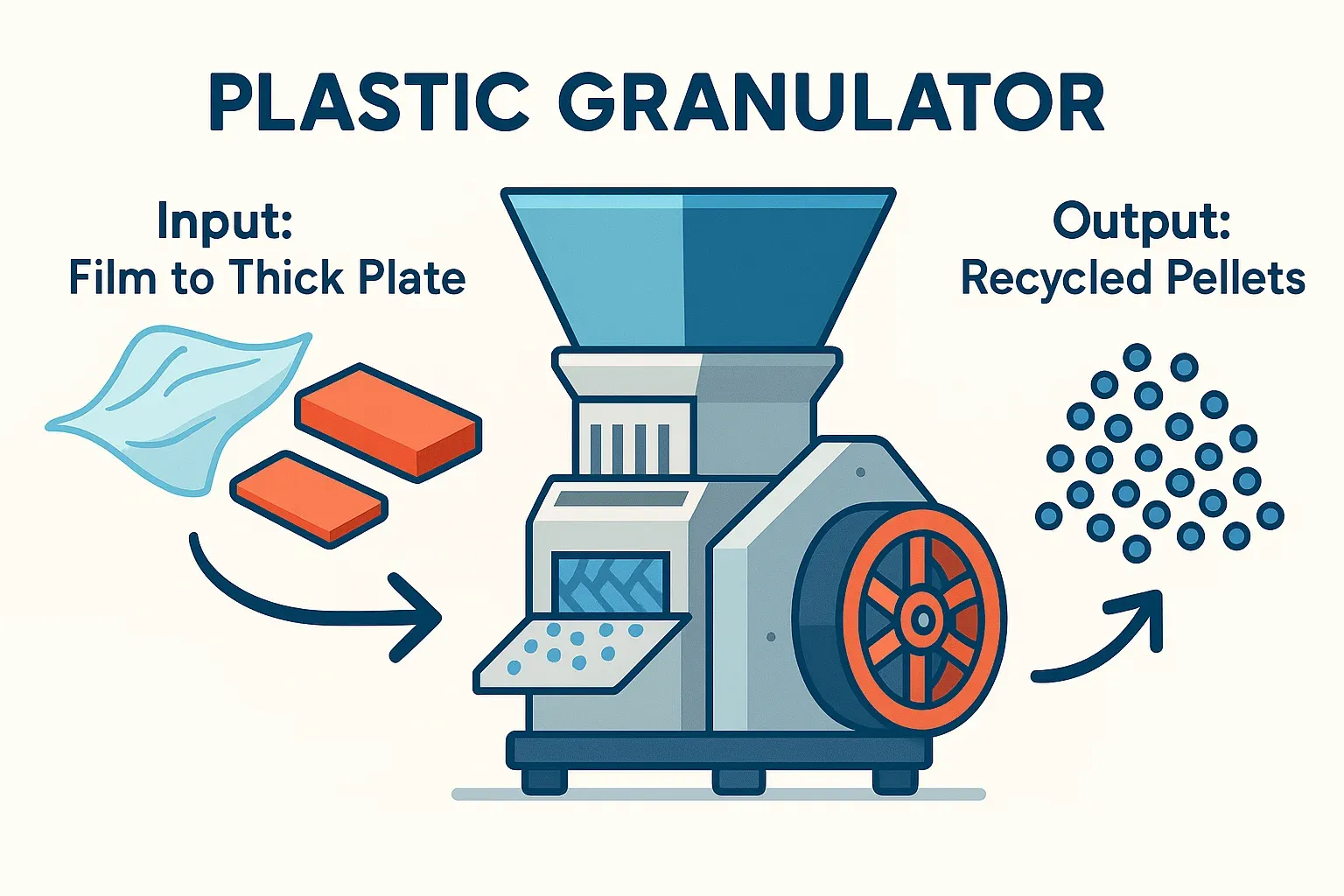
Plastický granulátor může zpracovávat film, láhve, tvarované díly, desky a některé silné odpadní kusy, ale jeden rotor a návrh nádrže nebude stejně dobře fungovat na každý tvar. Geometrie materiálu určuje, jak vstupuje do řezací komory, jak se nože zapojí do něj a zda stroj produkuje kontrolovaný regrád nebo nestabilní zatížení. Tento průvodce mapuje běžné tvary plastů na vlastnosti granulátoru, které jsou důležité.
Co dělá plastický granulátor
Granulátor používá rotující nože proti pevným lůžkovým nožům k rozřezání plastu na částice. Síť drží nadměrný materiál, dokud není dostatečně malý, aby mohl opustit komoru. Výsledkem je obvykle nazýván regrád nebo šupina; není to dokončená granule, pokud následuje samostatný proces extrudování a granulace.
Granulace může být hlavním krokem pro snížení velikosti láhví, tvarovaných dílů a výrobního odpadu. Obrovské trubky, velké vyplachování, balený film nebo silné profily mohou nejprve potřebovat plastový drcovač k vytvoření kontrolovaného příjmu pro granulátor. Volba mezi jednostupňovou granulací a zpracováním kombinací šrotovacího a granulačního stroje je často důležitější než přidání motorové síly do nevhodného stroje.
Mapa aplikací: film až na silnou desku
| Forma vstupu | Hlavní problém s manipulací | Vlastnosti k hodnocení | Možný předchozí krok |
|---|---|---|---|
| Volné filmy a tašky | Nízká objemová hustota, balení a výkyvy příjmu | Kontrolovaný příjem, geometrie pilového řezu, antivrstvení detaily, efektivní odvádění | Otevírání balíků, třídění nebo předřezávání |
| Tuhé láhve a kontejnery | Prázdné díly skákají a nečekaně se zhroutí | Geometrie nádrže, tangenciální komora, mokrý nebo suchý konfigurace, ochrana proti kovům | Odvážení, odstranění etiket a třídění |
| Tvarované díly, vývody a krabice | Proměnlivá tloušťka stěny a nárazové zatížení | Otvor pro příjem, rotorní inercie, montáž nože a přístup k síti | Robotic nebo dopravníkový příjem |
| Desky a okraje | Neustálé proužky mohou šlapat nebo mostit | Roll feeder nebo stlačovací příjem, chráněný vstup a synchronizované ovládání | Řezání na délku podle potřeby |
| Silná deska, profil a vyplachování | Vysoké riziko nájezdu, šoku a zastavení | Rozhodnutí o předšrotování, otevření komory, moment, ložiska a konstrukce rotoru | Jedno- nebo dvojřadý šrotovací stroj |
Tenký film a flexibilní balení
Film je obtížný, protože je lehký a má velkou povrchovou plochu. Může se v nádrži zvednout, obtočit se kolem konců rotoru nebo přibýt náhle v hromadách. Vysoký katalogový průtok na základě pevného regrádu říká málo o výkonu na volné filmy.
Oceněte kompletní uspořádání dodávky: otevírání balíků, dopravní pás, nippel nebo válcový dodavatel, úhel nádrže a logiku, která zastaví dodávku při přetížení. Geometrie nože by měla vytvářet kontrolovaný řezací efekt, zatímco ucpávací těsnění na konci rotoru a meze by měly omezit zanoření. Systém vyhození nebo pneumatická evakuace musí odstranit lehké znovu zpracované granuláty, aniž by je neoprávněně znovu obcházela.
Omytý film přináší vodu a kontaminaci. Mokrý granulátor může pomoci kontrolovat teplo a volné nečistoty, ale musí být navržen pro odtok a odolnost proti korozi. Pokud je cílem stabilní dodávka extrudace po omytí, může být potřeba fóliový lis sušička nebo krok zahuštění po granulaci.
Bottles and hollow rigid containers
PET a HDPE láhve se komprimují, když se rotor s nimi setká. Geometrie nádrže a komory by měla zabránit opakovanému odrazu a poskytnout konzistentní kousnutí. Tangenciální dodací designy jsou často zvažovány pro objemné duté části, ale výkon stále závisí na velikosti láhve, přípravě balíku, otvorech sít a ovládání dodávky.
Zpracování PET lahví může používat vodu v komoře jako součást čisticí linky. HDPE kontejnery mohou být granulovány suché nebo mokré v závislosti na kontaminaci a následném procesu. V obou případech chrání odstranění kovů a třídění nože a snižuje neúčelový polymer v výstupu. Viz návod na výběr granulátoru pro PET láhev pro zkušební a akceptační kritéria.
Tvarované díly, vývody a krabice
Odpad z lisování může sahovat od malých vedlejších kanálků po velké kryty a silné počáteční díly. Změřte největší část ve třech rozměrech a identifikujte vložky, šrouby nebo skelnou výztuž. Vstupní otvor musí přijímat skutečný díl bez nebezpečného ručního tlačení nebo nekontrolovaného odrazu.
Pro práce vedle lisu mohou být prioritami nízký hluk, kontrola prachu, snadná úklid pro změnu barvy a malý otisk. Centrální systémy recyklace klade větší důraz na trvalý průtok, přepravu materiálu a rychlý přístup pro sítě a nože. Abrazivní plniva mohou změnit materiál nože, ochranu před opotřebením a interval broušení.
Deska, okrajový materiál a nepřetržitá pásek
Nepřetržitá deska a okrajový materiál vyžadují kontrolovanou rychlost dodávky. Role feeder nebo systém stisku může synchronizovat vstup materiálu s granulátorem, snížit vlnění a zabránit tomu, aby komora jednorázově přijala velký obvod. Vstup musí být chráněn pro konečnou instalaci a neměl by umožňovat operátorovi dosáhnout na oblast řezání.
Samotná tloušťka desky neurčuje velikost motoru. Šířka, tuhost polymeru, rychlost dodávky, počet vrstev, teplota a požadovaná velikost částic ovlivňují zatížení. Výrobní zkouška by měla reprodukovat maximální šířku a nejrychlejší normální rychlost linky.
Silné desky, profily a vyplňovací materiály
Silné díly vyžadují spolehlivý nůžkový efekt a mohou vytvářet vysoké nárazy. Nevybírejte stroj pouze na základě maximální tloušťky stěny. Zaznamenejte rozměry dílu, hmotnost, polymer, teplotu, plniva a zda je díl pevný nebo dutý. Velký vyplňovací materiál může přesáhnout bezpečnou velikost vstupu, i když je materiál technicky řezatelný.
Předřezávání je často praktickou cestou, když jsou díly příliš velké, nepravidelné nebo těžké pro řízený vstup do granulátoru. Rušička je je snižuje při nižší rychlosti a granulátor pak vytváří konečnou velikost částice. Toto fáze může poskytnout stabilnější zatížení a snadnější automatizaci než pokus o násilné vnutí každého dílu přímo do vysokorychlostního řezacího komor.
Pokud je vhodná přímo granulace, posuďte konstrukci rotoru, uchycení nožů, ložiska, ochranu pohonu, podporu mřížky a přístup k zvedání těžkých komponent. An extra velký tuhý plastový granulátor by měl být hodnocen skutečně největším dílem, ne menším ukázkovým vzorkem.
Velikost mřížky a kvalita výstupu
Síť nastavuje maximální cestu pro vyhazování, ale nevytváří dokonale rovnoměrné částice. Ostrost nože, rozestup, rychlost rotoru, chování polymeru a recirkulace také tvarují distribuci. Menší otvory mohou zvýšit dobu pobytu, požadavky na energii, teplo a jemný prach; větší otvory mohou uvolnit kousky, které jsou příliš hrubé pro mytí nebo extruzi.
Definujte přijatelnou distribuci velikosti částic a frakci jemného prachu, poté je měřte během zkušebního provozu. The návod na velikost síťoviny granulátoru vysvětluje, jak se přejít od požadavků na spodní proud k testovatelné volbě sítě.
Výkon a výběr motoru
Nominaální výkon motoru nelze převést na univerzální hodnotu kg/h. Užitelný průtok závisí na geometrii vstupního materiálu, hmotnostní hustotě, síti, stavu nože a množství recirkulace nadměrných kousků. Požádejte o udržitelné výsledky z reprezentativního testu, včetně normálního a maximálního proudu, zastavení a hmotnosti přijatelného výstupního materiálu—nejen materiálu vloženého do nádrže.
Navrhněte stroj v souladu s vstupní a výstupní linií. Granulátor, který opakovaně přetíží myčku nebo pneumatický dopravní systém nad jeho stabilní rychlost, vytváří nový úzký průřez. Buffer a řízený příjem mohou zajistit lepší výsledky linky než větší řezací komora.
Bezpečnostní a údržbové kontroly
- Zajištěné vstupní dveře a ochranné kryty vhodné pro metodu dodávky
- Ochrana proti nečekanému restartu a dokumentovaný postup izolace energie
- Bezpečný způsob zajištění rotoru pro práci s noži a sítím
- Bezpečné zvedací body a prostor pro odstranění nádrže, sítě a nožů
- Kovová ochrana vhodná pro riziko suroviny
- Kontrola prachu, hluku a mokrého procesu vhodná pro instalaci
- Available wear parts, sharpening instructions and service support
A better way to compare granulators
Poskytněte každému dodavateli stejný popis materiálu, maximální velikost dílů, požadovaný výkon, energie a uspořádání linky. Otestujte reprezentativní šarži a poté porovnejte přijatelnou průchodnost, distribuci velikosti částic, podíl prachových částic, spotřebu energie na tunu, dobu čištění a pozorované opotřebení. Širší návod na výběr plastového granulátoru zahrnuje otázky pro komerční a technickou evaluaci.
A correctly matched granulator is not the machine that claims to process the widest list of plastics. It is the configuration that feeds safely, produces the required regrind and integrates with the next operation under the plant’s real material conditions.
Často kladené otázky
Může jeden granulátor zpracovávat jak film, tak silnou desku?
Některé stroje mohou zpracovávat více než jeden typ, ale může se vyžadovat změna dodávacího systému, rotoru, nožů a sítí. Ověřte oba materiály v samostatných zkouškách a porovnejte kvalitu výstupu, nejen to, zda stroj dokáže materiály řezat.
Kdy by měl být šrotovací stroj instalován před granulátorem?
Zvažte předrozdrcení, pokud je odpad příliš objemný, nepravidelný, těžký nebo obtížně bezpečně metricky do granulátoru vložit. Rozdrcovač vytváří kontrolovaný příjem; granulátor poté nastaví konečnou velikost regrád.
Zvýší vždy vyšší výkon motoru kapacitu granulátoru?
Číslo příjmu, geometrie rotoru, oblast mřížky, stav nože a odvádění směrem dolů mohou omezit výstup. Kapacita by měla být měřena reprezentativním materiálem a požadovanou mřížkou.
