

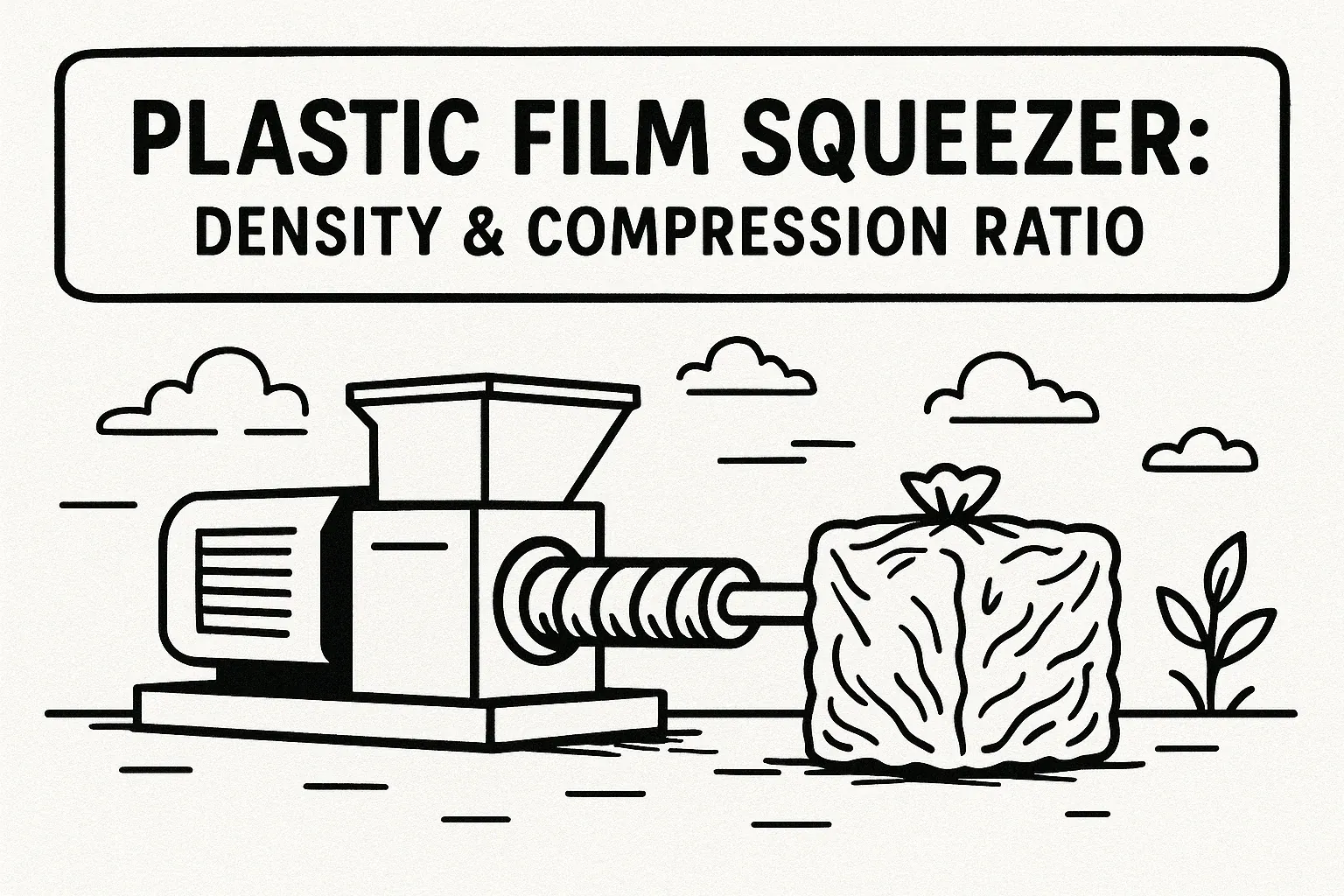
تعمل مكابس تجفيف وضغط أفلام البلاستيك (Squeezers) على إزالة المياه الحرة وضغط رقائق الفيلم المغسولة في هيئة يسهل نقلها وتغذيتها بانتظام إلى ماكينة البثق. غالباً ما يُستخدم رقمان لوصف النتيجة: الكثافة الظاهرية الناتجة ونسبة الانضغاط. ولا تكون هذه الأرقام مفيدة إلا بتحديد نوع الخامة وأساس قياس الرطوبة ومنهجية الفحص. القيمة المنقولة من الكتالوج لا يمكنها التنبؤ بالأداء الفعلي على كافة خامات LDPE أو LLDPE أو HDPE أو PP.
الفرق بين الكثافة الحقيقية للمادة والكثافة الظاهرية
كثافة المادة هي كتلة البوليمر مقسومة على الحجم الذي يشغله البوليمر الصلب نفسه فقط. الكثافة الظاهرية هي كتلة الرقائق السائبة أو القطع المضغوطة مقسومة على الحجم الإجمالي للحاوية، بما في ذلك الفراغات الهوائية بين القطع. يغير المكبس شكل الجسيمات ودرجة تراصها ورطوبتها، لكنه لا يغير الكثافة الأساسية للبوليمر.
تغطي المواصفة ISO 1183-1 طرق تحديد كثافة اللدائن غير الخلوية، بينما تتناول المواصفة ASTM D1895 الكثافة الظاهرية وعامل الحجم وقابلية الانسكاب للمواد البلاستيكية. تجيب هذه الخصائص عن متطلبات هندسية مختلفة؛ فلأجل تحديد حجم القادوس وتغذية الطارد، يحتاج المصنع إلى قياس دقيق ومنتظم لـ كثافة الحجم ليست قيمة دليلية لكثافة البوليمر الخام.
كيفية قياس كثافة الفيلم الحجمية
استخدم نفس الحاوية، إجراء التعبئة والقواعد الخاصة بتحضير المادة للكل مقارنة. طريقة بسيطة في المصنع هي:
- اختر حاوية تحتوي على حجم داخلي معروف.
- وزن الصندوق الفارغ الجاف.
- املأه باستخدام إجراء محدد دون تعبئة الورق بيديك إلا إذا كان الطريقة تتطلب تحميص.
- سواء السطح بشكل متساوٍ وزن الصندوق المملوء.
- أنقض وزن الصندوق واقسم وزن المادة على حجم الصندوق.
كثافة الحجم = وزن المادة ÷ حجم الصندوق المملوء. أحيل النتيجة إلى كجم/م³ وحدد ما إذا كانت مبردة، مكسرة أو مبردة بطريقة أخرى. كما يُجب تسجيل خليط البلاستيك، شكل الجسيمات، درجة الحرارة والرطوبة. يمكن أن يبدو الفيلم المدخل الرطب أثقل من الخروج الجاف لأن كتلة المدخل تشمل الماء، لذا يمكن أن يُمثل المقارنة غير المحددة على أساس الرطوبة النسبية تحريف النتيجة.
كيفية حساب نسبة التكثيف القابلة الدفاع عنها
إذا تم قياس المدخل والخروج على أساس كتلة مقارنة، يمكن تقدير معامل التكثيف الحجمي كما يلي:
معامل التكثيف = كثافة الحجمية للخروج ÷ كثافة الحجمية للمدخل.
على سبيل المثال، إذا ارتفع عينة ممثلة على أساس الرطوبة الجافة من 30 كجم/م³ قبل الضغط إلى 240 كجم/م³ بعد الضغط، فإن المعامل القياس للعينة والطريقة هو 8:1. هذا هو عرض، وليس تقييماً عاماً للآلة. يمكن أن ينتج مستوى مختلف من سمك الفيلم، مستوى التلوث، إعدادات المقطع أو طريقة التعبئة نتيجة مختلفة.
عندما تزيل الآلة الماء، فإن النسبة المباشرة بناءً على كتلة الإدخال الرطبة وكتلة الإخراج الجافة ليست مقارنة حقيقية للانخفاض الحجمي. إما تحديد الكتلة الجافة للعينتين أو تقديم الرطوبة والكثافة الحجمية كقياسين منفصلين. يجب أن يوضح تقرير الاختبار الأساس حتى يتمكن المورد المشتري من إعادة إنتاجه.
لماذا تختلف النسب المنشورة بشكل كبير
شكل الفيلم الأولي
الفيلم المفتوح للشواغر، الفيلم الزراعي المقطوع والفيلم الممزق المسحوب يبدأان بكVolumes فراغية مختلفة جدًا. يمكن أن يظهر التغذية الشديدة الرفاهية عامل تجميع واضح كبير حتى لو كانت كثافة الناتج النهائية عادية. لذلك، النسبة بدون كثافة الحجمية الأولية غير كاملة.
بناء الراتنج والفيلم
تختلف خامات LDPE وLLDPE وHDPE وPP في الصلابة والاستجابة الحرارية. كما أن الأفلام المصفحة والملصقات والورق والألمنيوم والشوائب الطينية تغير من سلوك خروج الماء وتراص المادة. يجب تصنيف تيارات البلاستيك المختلطة حسب تركيبتها الدقيقة بدلاً من الاكتفاء بوصفها كـ “فيلم”.
حجم الرقائق وحالة الغسيل
يؤثر حجم الجسيمات على تصريف المياه وتراص الحبيبات؛ حيث يمكن للماء المحبوس في الثنيات أو المواد الدقيقة جداً أن يظل موجوداً بعد العصر الميكانيكي. كما يمكن لدرجة حرارة مياه الغسيل والمواد الخافضة للتوتر السطحي ووقت أخذ العينات أن تؤثر على نتيجة الرطوبة.
إعدادات تشغيل الماكينة
تؤثر سرعة اللولب والضغط العكسي وخنق فتحة الخروج وحالة السكاكين والتسخين مجتمعة على شكل المنتج النهائي. قد يؤدي زيادة الضغط وخنق الخروج إلى رفع الكثافة، لكنه قد يزيد أيضاً من استهلاك التيار وارتفاع الحرارة وخطر الانسداد. الضبط الأمثل هو الذي يحقق متطلبات التغذية والرطوبة دون اضطراب في التشغيل.
Measure moisture separately
غالباً ما تكون الرطوبة المتبقية أكثر أهمية لاستقرار عملية التحبيب من تحقيق أعلى نسبة ضغط ممكنة. اتفق على طريقة أخذ العينات والتجفيف، ثم سجل الرطوبة كنسبة مئوية على أساس رطب أو جاف محدد. يجب أخذ عينات من المخرج على فترات زمنية متتابعة لتفادي تجاهل التغيرات الناتجة عن انقطاع التغذية أو انتقال مياه الغسيل.
قد يعرض المورد نتيجة رطوبة منخفضة باستخدام فيلم نظيف ورقيق في ظروف مخبرية محكومة. لا ينبغي التعامل مع هذه النتيجة كضمان للأفلام المطبوعة بكثافة أو متعددة الطبقات أو الملوثة بالتربة. اطلب تشغيلاً تجريبياً بمواد مطابقة للواقع وسجل الإنتاجية واستهلاك الطاقة وكمية المياه المفصولة وحرارة التفريغ.
How density affects downstream pelletizing
تساعد الكثافة الظاهرية المنتظمة مغذي ماكينة البثق على توفير تدفق كتلي مستقر، وتقلل من تشكل الجسور والتذبذبات الكبيرة المرتبطة بالأفلام الفضفاضة. يدعم ذلك استقرار حمل اللولب وضغط المصهور، مع اعتماد النتيجة أيضاً على تصميم المغذي ونظام سحب الغازات ونظافة الخامة والتحكم الحراري.
القطع شديدة الكثافة أو المنصهرة جزئياً ليست دائماً الخيار الأفضل؛ فالكتل الكبيرة غير المنتظمة قد تعلق في القادوس أو تغذي الطارد بشكل غير متساوٍ. يجب أن تتضمن مواصفات الاستلام شكل الجسيمات وتوزيع أحجامها بالإضافة إلى متوسط الكثافة الظاهرية.
What to put in a squeezer acceptance test
- Feed resin, source, film thickness range and contamination description
- قياس رطوبة المدخلات والمخرجات باستخدام نفس الطريقة المعتمدة
- استخدام نفس القالب والطريقة لملء نفس الكمية من الكتلة الحجمية للدخول والخروج
- Dry-solids throughput over a stated test duration
- Average and peak motor current, discharge temperature and stoppages
- تقديم نطاق حجم الجسيمات و نسبة الحبيبات الصغيرة أو الكبيرة
- الوقت المطلوب لفتح الآلة بشكل آمن، تنظيفها و فحص التلف الطبيعي
يمكن استخدام النتيجة لتحديد حجم التخزين، الناقلات و نظام تغذية المضخة. كما أنها توفر نقطة مرجعية واقعية للفحوصات الصيانة اللاحقة.
Choosing the right film dewatering route
أ مضخم أفلام البلاستيك مع مجفف is one option after a خط غسل أفلام البلاستيك. اعتمادًا على التغذية والمنتج النهائي، قد يقارن المصنع بين الكولاجينات، الكومبريسور أو الكسارة الدوارة. التفاصيل plastic film squeezer guide يغطي العملية الأوسع نطاقًا، بينما تقوم مقارنة تقنية التثخين بفصل المبادئ التشغيل الرئيسية.
للتحويل إلى كريات، استعرض الشكل المطلوب للدخل مع مورد المعدات، وكلما كان ذلك ممكنًا، قم باختبار آلة تحويل أفلام البوليبروبيلين/البوليإيثيلين إلى كريستال كمعالجة متصلة بدلاً من كمواد بندية منفصلة.
الأسئلة الشائعة
هل كثافة البوليمر متطابقة مع كثافة مخرجات الضاغط؟
رقم. كثافة البوليمر أو المادة تُحسب بدون فجوات بين الجسيمات. عادةً يتم تقييم مخرجات الضاغط بالكثافة الكلية، التي تشمل هذه الفجوات وتعتمد على شكل الجسيمات وطرق القياس.
ما هو نسبة الضغط الجيدة للفيلم البلاستيكي؟
لا يوجد هدف عام. النتيجة المفيدة تتوافق مع معايير التغذية السفلية، الرطوبة و شكل الجسيمات. قدم كلاً من كثافة الحجم للمدخل والخروج و الأساس في الاختبار بدلاً من الاعتماد على النسبة وحدها.
هل يمكن مقارنة الكثافة الحجمية عند وجود الفيلم المدخل رطب؟
فقط مع الحذر. الماء يغير الكتلة المقياس. اكتشف الكتلة الجافة أو قدم الماء بشكل منفصل واستخدم نفس القمامة والطريقة المملئة للعينات المدخلة والخارجة.
