

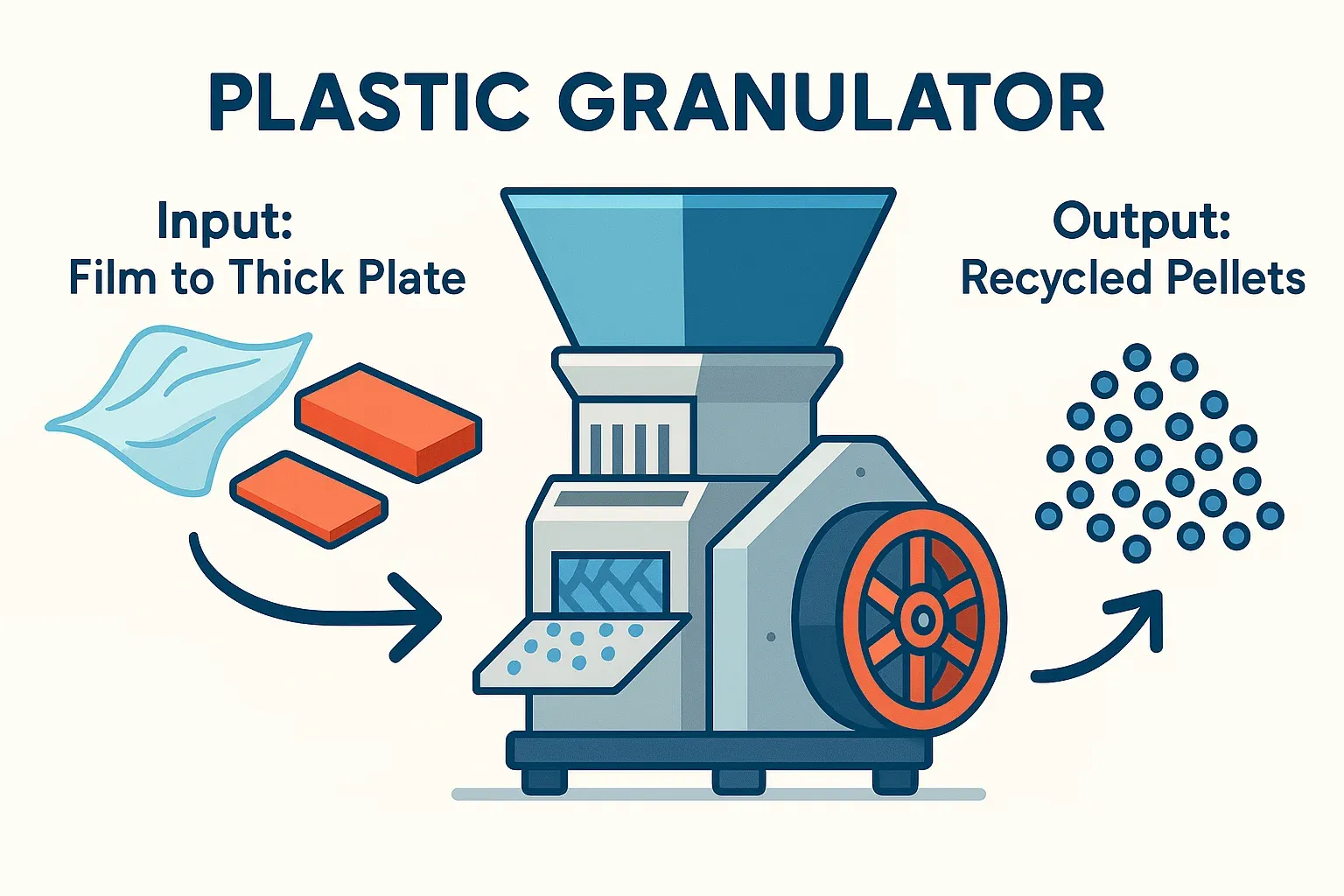
Un granulator de plastic poate procesa film, sticle, piese modelate, placă și anumite deșeuri groase, dar un design de rotor și capac de alimentare nu se va comporta la fel de bine pe toate formele. Geometria materialului determină modul în care intră în camera de tăiere, modul în care mașina îl taie și dacă mașina produce un regrind controlat sau încărcături instabile. Acest ghid mapre formele comune de plastic către caracteristicile granulatorului care contează.
What a plastic granulator does
Un granulator folosește cuțite rotative împotriva cuțitelor de bază fixe pentru a tăia plasticul în particule. Un ecran reține materialul de dimensiuni mari până când acesta este suficient de mic pentru a părăsi camera. Rezultatul este de obicei numit regrind sau floc; nu este un granulat finit decât dacă urmează un proces separat de extrudare și granulare.
Granularea poate fi pasul principal de reducere a dimensiunilor pentru sticle, piese modelate și deșeuri de producție. Tuburi voluminoase, purjări mari, film colectat sau profile groase pot avea nevoie mai întâi de o tocător de plastic pentru a crea o alimentare controlată pentru granulator. Alegerea între granulare în etapă unică și procesarea cu tăietor plus granulator este adesea mai importantă decât adăugarea de putere motorie unei mașini inadecvate.
Application map: film to thick plate
| Feed form | Main handling problem | Features to evaluate | Possible upstream step |
|---|---|---|---|
| Loose film and bags | Low bulk density, wrapping and feed surges | Controlled feed, scissor-cut geometry, anti-wrap details, effective evacuation | Bale opening, sorting or pre-cutting |
| Rigid bottles and containers | Hollow parts bounce and collapse unpredictably | Hopper geometry, tangential chamber, wet or dry configuration, metal protection | Debaling, label removal and sorting |
| Molded parts, runners and crates | Variable wall thickness and impact load | Feed opening, rotor inertia, knife mounting and screen access | Robotic or conveyor feeding |
| Sheet and edge trim | Continuous strips can whip or bridge | Roll feeder or nip feed, guarded inlet and synchronized controls | Length cutting where required |
| Thick plate, profile and purgings | High bite load, shock and stalling risk | Pre-shredding decision, chamber opening, torque, bearing and rotor construction | Single- or double-shaft shredding |
Film subțire și ambalaje flexibile
Filmul este dificil deoarece este ușor și are o suprafață mare. Poate pluti într-un capac de alimentare, se poate înfășura la capetele rotatorului sau poate ajunge în grumuri brusc apărute. Un randament catalogat ridicat bazat pe regrind rigid spune puțin despre performanță pe film liber.
Evaluează aranjamentul complet de alimentare: deschizător de bale, transportor, alimentator cu presiune sau roată, unghiul hoperului și logica care oprește alimentarea în caz de suprasolicitare. Geometria lamelii ar trebui să creeze o acțiune de tăiere controlată, în timp ce sigilele de la capătul rotorului și spațiile ar trebui să limiteze înfășurarea. Sistemul de evacuare sau evacuarea pneumatică trebuie să elimine regrindul ușor fără a permite recircularea nejustificată.
Filmul spălat introduce apă și contaminare. Un granulator umed poate ajuta la controlul căldurii și al prafului liber, dar trebuie să fie proiectat pentru drenaj și rezistență la coroziune. Dacă obiectivul este alimentarea stabilă cu extrudare după spălare, este necesară presă de stoarcere folie / squeezer, uscător sau o etapă de densificare după granulare.
Bote și containere rigide goale
Botele PET și HDPE se comprimă când rotorul le atinge. Geometria hoperului și camerei ar trebui să prevină salturile repetate și să asigure o mușcătură constantă. Designurile de alimentare tangențială sunt adesea considerate pentru părți goale voluminoase, dar performanța depinde încă de dimensiunea botei, pregătirea balei, deschiderea ecranelor și controlul alimentării.
Procesarea botelelor PET poate folosi apă în camera ca parte a unei linii de spălare. Containerele HDPE pot fi granulate uscate sau umede în funcție de contaminare și de procesul de la scară inferioară. În ambele cazuri, eliminarea metalelor și sortarea la scară inferioară protejează lamelile și reduce rezina țintă nedorită în rezultat. Vizitează secțiunea dedicată PET bottle granulator selection guide pentru teste și criterii de acceptare.
Molded parts, runners and crates
Deșeurile de formare prin injectare pot varia de la mici găuri de scurgere până la carcase mari și piese de start groase. Măsoară cea mai mare parte în trei dimensiuni și identifică insertele, elementele de fixare sau reînforțarea din sticlă. Deschiderea de alimentare trebuie să accepte partea reală fără push manual necontrolat sau răspuns necontrolat.
Pentru lucrările de lângă presă, reducerea zgomotului, controlul prafului, curățarea ușoară a culorii și un picior mic pot fi priorități. Sistemele centrale de reciclare pun mai mult accent pe randamentul sustinut, transportul materialului și accesul rapid pentru ecrane și cuțite. Umplutura abrazivă poate schimba materialul cuțitului, protecția împotriva uzurii și intervalul de afilare necesar.
Folie, margine de tăiere și bandă continuă
Folia continuă și marginea de tăiere necesită o rată de alimentare controlată. Un alimentator de role sau sistem de prindere poate sincroniza intrarea materialului cu granulatorul, reduce balansarea și preveni ca camera să primească o buclă mare deodată. Intrarea trebuie să fie protejată pentru instalarea finală și nu ar trebui să permită operatorului să ajungă în zona de tăiere.
grosimea foii nu determină singur dimensiunea motorului. Lățimea, rigiditatea polimerului, viteza de alimentare, numărul de straturi, temperatura și dimensiunea particulelor necesară toate afectează sarcina. Un test de producție ar trebui să reproducă lățimea maximă și viteza normală maximă a liniei.
Plăci groase, profile și purjuri
Plăcile groase necesită o mușcătură fiabilă și pot crea sarcini de șoc mari. Nu selectați o mașină doar pe baza grosimii maxime a peretelui. Înregistrați dimensiunile piesei, masa, polimerul, temperatura, umplutoarele și dacă piesa este solidă sau goală. O purjare mare poate depăși dimensiunea sigură de intrare chiar dacă materialul este tehnologic tăiat.
Tăierea prealabilă este adesea calea practică atunci când piesele sunt prea mari, neregulate sau grele pentru alimentarea controlată a granulatorului. Un tăietor le reduce la o viteză mai mică, iar granulatorul produce apoi dimensiunea finală a particulelor. Această aranjare etapizată poate oferi încărcări mai stabile și automatizare mai ușoară decât încercarea de a forța fiecare piesă direct într-o cameră de tăiere la viteză mare.
unde granularea directă este adecvată, evaluați construcția roților, reținerea cuțitelor, bazele, protecția motorului, suportul pentru ecrane și accesul la ridicarea componentelor grele. Un extra-large rigid plastic granulator trebuie evaluat cu piesa cea mai mare reală, nu cu un eșantion de demonstrație mai mic.
Dimensiunea ecranului și calitatea producției
Seturile de grilaje determină calea maximă de deversare, dar nu creează o particulă perfect uniformă. Ascuțimea lamelor, distanța între ele, viteza rotorului, comportamentul polimerului și recircularea influențează și ele distribuția. Deschiderile mai mici pot crește timpul de staționare, cererea de putere, căldura și finurile; deschiderile mai mari pot elibera bucăți prea mari pentru spălare sau extrudare.
Definiți distribuția acceptabilă a dimensiunilor particulelor și fracția de finuri, apoi măsurați-le în timpul testului. The ghidul dimensiunilor grilajului granulatorului explică cum să treceți de la o cerință de la punctul de utilizare la o alegere de grilaj testabil.
Capacitatea și alegerea motorului
Puterea motorului indicată pe placa de identificare nu poate fi convertită într-o cifră universală kg/h. Volumul de procesare utilizabil depinde de geometria alimentării, densitatea specifică, grilajul, starea lamei și cantitatea de recirculare a pieselor prea mari. Solicitați rezultate sustenabile dintr-un test reprezentativ, inclusiv curentul normal și maxim, opririle și masa output-ului acceptabil—nu doar materialul alimentat în capac.
Dimensiona mașina cu linia de upstream și downstream. Un granulator care umple repetat un curățător sau un sistem de transport pneumatic peste rata sa stabilă creează un nou blocaj. Un buffer și un alimentare controlată pot oferi un rezultat mai bun al liniei decât un compartiment de tăiere mai mare.
Verificări de siguranță și întreținere
- Uși de acces intercalate și garduri adecvate metodei de alimentare
- Protecție împotriva repornirii neașteptate și o procedură documentată de izolare energetică
- O metodă sigură de blocare a roților pentru lucrul cu cuțite și ecrane
- Puncte de ridicare sigure și spații pentru a elimina fosele, ecranele și cuțitele
- Protecție metalică potrivită pentru riscul materiilor prime
- Controlele prafului, zgomotului și procesului umed adecvate instalației
- Părți de uzură disponibile, instrucțiuni de afilare și suport de serviciu
O modalitate mai bună de a compara granulatoare
Furnizați fiecărui furnizor aceeași descriere a materialului, dimensiunea maximă a piesei, producția necesară, utilitățile și layout-ul liniei. Testați un lot reprezentativ, apoi comparați randamentul acceptabil, distribuția particulelor, pulberile, energia pe tonă, timpul de curățare și uzura observată. Mai larg plastic granulator selection guide include întrebări pentru evaluarea comercială și tehnică.
Un granulator corect potrivit nu este mașina care pretinde că procesează cea mai largă listă de plastici. Este configurația care alimentează în siguranță, produce regriindul necesar și se integrează cu următoarea operațiune sub condițiile reale de material ale fabricii.
Întrebări frecvente
Se poate procesa atât filmul, cât și placa groasă cu un granulator?
Unele mașini pot procesa mai mult de o formă, dar sistemul de alimentare, rotorul, foile și ecranul pot necesita schimbare. Validați ambele materiale în încercări separate și comparați calitatea iesirii, nu doar dacă mașina poate tăia aceste materiale.
Când ar trebui instalat un granulator înainte de un shredder?
Considerați pre-tăierea atunci când deșeurile sunt prea voluminoase, neuniforme, grele sau dificil de măsurat în siguranță în granulator. Tăietorul creează un aport controlat; apoi, granulatorul stabilește dimensiunea finală a regrindului.
Motorul cu putere mai mare crește întotdeauna capacitatea granulatorului?
Numărul de alimentare, geometria rotorului, suprafața ecranelor, starea lamelor și evacuarea în aval pot limita producția. Capacitatea trebuie măsurată cu material reprezentativ și cu ecranul necesar.
