

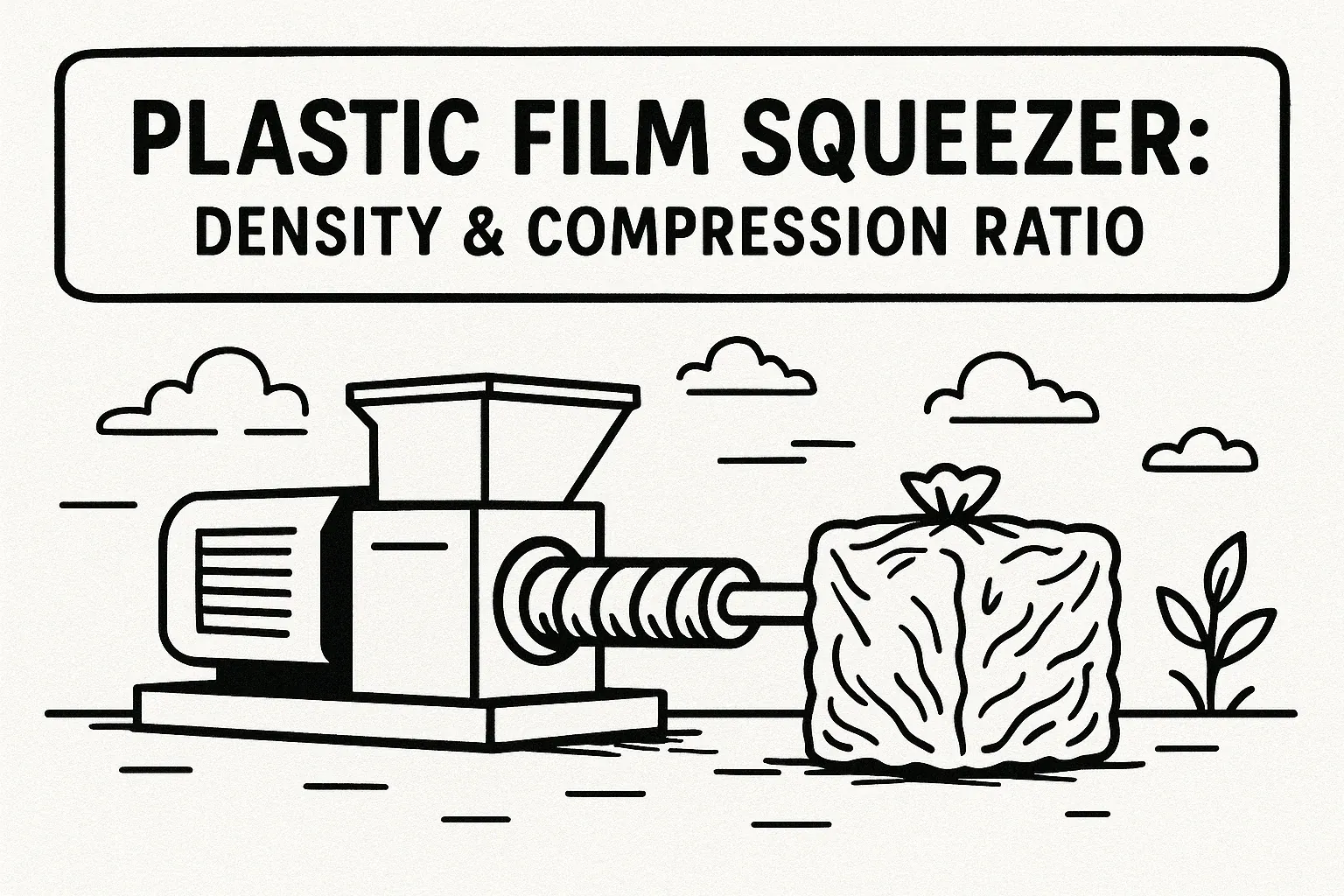
플라스틱 필름 스퀴저는 자유수를 제거하고, 씻은 필름을 전달하고 엑스트루더에 측정하기 쉬운 형태로 압축합니다. 두 가지 수치가 결과를 설명하는 데 사용됩니다: 출력 밀도와 압축비. 이들은 재료, 수분 기준 및 측정 방법이 명시된 경우에만 유용합니다. 브로셔에서 복사한 값은 LDPE, LLDPE, HDPE 또는 PP의 모든 흐름에서의 성능을 예측할 수 없습니다.
재료 밀도와 볼륨 밀도는 다릅니다
재료 밀도 고분자의 질량이 고분자 본체가 차지하는 부피로 나누어진 값입니다. 부피 밀도 자유 flakes 또는 압축된 조각의 질량이 조각 간 공간을 포함한 총 컨테이너 부피로 나누어진 값입니다. 스퀴저는 입자 형태, 패킹 및 수분을 변경하지만, 일반적으로 기본 고분자 밀도를 변경하지 않습니다.
ISO 1183-1은 비 세포성 플라스틱의 밀도를 결정하는 방법을 다룹니다. 반면에 ASTM D1895는 플라스틱 재료의 표면 밀도, 볼륨 계수 및 흐름성을 다룹니다. 이 성질들은 다른 질문에 답합니다. 항아리 크기와 엑스트루더 공급을 위해, 공장은 일관되게 측정된 bulk density, not a handbook value for virgin polymer density.
How to measure film bulk density
Use the same container, filling procedure and material-conditioning rule for every comparison. A simple plant method is:
- Select a container with a known internal volume.
- 빈, 건조한 컨테이너의 무게를 측정하세요.
- 필름을 손으로 패킹하지 않고 정의된 절차에 따라 채우세요. 특정 방법이 압축을 요구하는 경우를 제외합니다.
- 표면을 일관되게 수준으로 맞추고 채운 컨테이너의 무게를 측정하세요.
- 컨테이너의 무게를 뺀 후, 재료의 무게를 컨테이너의 부피로 나눕니다.
체적 밀도 = 재료의 무게 ÷ 채운 부피. 보고서를 kg/m³로 표시하고, 흩어진 것, 튕겨진 것 또는 다른 방식으로 압축된 것을 식별하세요. 또한, 레지나 혼합물, 입자 형태, 온도 및 습도를 기록하세요. 습식 입력 필름은 물이 포함되어 있기 때문에 건식 출력보다 무겁게 보일 수 있습니다. 따라서 불명확한 습식 기준 비교는 결과를 왜곡할 수 있습니다.
보호할 수 있는 압축비 계산 방법
입력과 출력이 비교 가능한 질량 기준으로 측정되면, 부피 압축 계수는 다음과 같이 추정할 수 있습니다:
압축 계수 = 출력 밀도 ÷ 입력 밀도.
예를 들어, 압축 전에 30 kg/m³에서 압축 후 240 kg/m³로 증가한 대표적인 건식 기준 샘플의 측정 계수는 8:1입니다. 이는 일반적인 기계 평가가 아니라, 다른 필름 두께, 오염 수준, 컷터 설정 또는 채우기 방법으로 다른 결과를 얻을 수 있습니다.
장비가 수분을 제거할 때, 습도 입력 질량과 건조 출력 질량에 기반한 직접 비율은 실제 부피 감소 비교가 아닙니다. 두 샘플 모두 건조 고체를 결정하거나 수분과 부피 밀도를 별도로 보고해야 합니다. 테스트 보고서는 공급자와 구매자가 재현할 수 있도록 기반을 설명해야 합니다.
출판된 비율이 왜 이렇게 넓게 달라지는지
초기 필름 형태
부드러운 쇼핑백 필름, 쪼개진 농업 필름, 씻은 필름 파편은 매우 다른 공간 부피로 시작합니다. 매우 거친 원료는 최종 출력 밀도가 일반적이더라도 큰 명시적인 압축 비율을 보일 수 있습니다. 따라서 초기 부피 밀도 없는 비율은 불완전합니다.
레진과 필름 구조
LDPE, LLDPE, HDPE 및 PP는 탄성과 열 반응에서 차이가 나며, 레이어드 필름, 레이블, 종이, 알루미늄 및 잔류 토양은 재료의 탈수와 패킹 방식을 달리게 합니다. 혼합 흐름은 구성에 따라 식별되어야 하며, 단순히 '필름'으로만 설명되지 않아야 합니다.
flake size and washing condition
파티클 크기는 배수와 패킹에 모두 영향을 미칩니다. 접시에 갇힌 물이나 미세 재료는 기계적 압착 후에도 남을 수 있습니다. 씻는 물의 온도, 표면활성제, 씻기와 샘플링 사이의 시간도 습도 결과를 달리게 할 수 있습니다.
machine settings
스크루 속도, 반대압력, 디어나 배출 제한, 컷터 상태 및 가열 모두 출력 형태에 영향을 미칩니다. 제한을 증가시키면 밀도를 높일 수 있지만 전류, 열 또는 막힘의 위험도 증가할 수 있습니다. 유용한 설정은 하류 피드와 습도 요구 사항을 충족하면서 불안정한 운영 없이 정해진 것입니다.
습도를 별도로 측정하세요
잔여 습도는 가장 큰 압축 비율보다 펠릿화 안정성에 더 중요합니다. 샘플링과 건조 방법에 동의한 후, 정의된 습도 또는 건조 기준으로 퍼센트로 습도를 보고하세요. 배출은 시간에 따라 샘플을 취해야 합니다. 단 하나의 손ful은 피드 중단이나 씻기 라인의 유출로 인한 변화를 놓칠 수 있습니다.
공급업체는 제어된 조건에서 깨끗한 얇은 필름으로 낮은 습도 결과를 보여줄 수 있습니다. 이 결과는 무지 많이 인쇄된, 다층 또는 토양 오염된 피드에 대한 보장으로는 볼 수 없습니다. 대표적인 재료로의 시험을 요청하고, 처리량, 전력, 제거된 물, 배출 온도 및 습도 분포를 기록하세요.
밀도가 하류 펠릿화에 미치는 영향
일관된 볼륨 밀도는 엑스트루저 피드가 일관된 질량 흐름을 제공하는 데 도움이 됩니다. 이는 막힘을 줄이고, 느슨한 필름과 관련된 큰 피드 변동을 줄일 수 있습니다. 이는 더 안정적인 스크루 로딩과 용융압력을 지지할 수 있지만, 결과는 피드 설계, 엑스트루저 배기, 오염 및 온도 조절에도 따라 다릅니다.
매우 밀도가 높거나 부분적으로 결합된 조각은 자동적으로 더 나은 것은 아닙니다. 과대한 불규칙한 조각은 항아리에 막히거나 불균일하게 공급될 수 있습니다. 수용 규격은 평균 볼륨 밀도뿐만 아니라 입자 형태와 크기 분포를 포함해야 합니다.
스크리저 수용성 시험에 넣어야 할 것
- 피드 레시놀, 원천, 필름 두께 범위 및 오염 설명
- 입력 및 출력 습도는 같은 선언 방법을 사용합니다
- 입력 및 출력 볼륨 밀도는 같은 컨테이너 및 채우기 방법을 사용합니다
- 정의된 시험 기간 동안 건조 고체 처리량
- 평균 및 최대 모터 전류, 배출 온도 및 중지
- 출력 입자 크기 범위 및 미세 입자나 과대 입자의 비율
- 안전한 개방, 청소 및 일반적인 손상 검사에 필요한 시간
이 결과는 저장 공간, 콘베이어 및 엑스트루저 피드의 크기를 정할 수 있습니다. 또한, 나중의 유지보수 검사에 대한 현실적인 기준선을 제공합니다.
적절한 필름 수분 제거 경로를 선택하는 것은
에이 필름 스퀴저 드라이어 이후의 PP/PE 필름 씻기 라인. 에 따라 플라스틱 필름 스크리저 가이드 covers the broader process, while the densification technology comparison separates the main operating principles.
pelletizing을 위해, 장비 공급업체와 필요한 원료 형태를 검토하고, 가능한 한 스퀴저를 테스트하세요. PP/PE 필름 펠릿화 기계 as a connected process rather than as separate catalogue items.
Frequently asked questions
폴리머 밀도가 스퀴저 출력 밀도와 같은가요?
No. 고분자나 재료의 밀도는 입자 사이의 공간을 배제합니다. 압축기 출력은 일반적으로 부피 밀도로 평가되며, 이는 입자 형태와 측정 방법에 따라 공간이 포함됩니다.
플라스틱 필름의 좋은 압축 비율은 무엇인가요?
대칭적인 목표가 없습니다. 유용한 결과는 하류 공급, 습도 및 입자 형태 기준을 만족해야 합니다. 비율만을 의존하는 대신 입력 및 출력 체적 밀도와 시험 기준을 모두 보고해야 합니다.
입력 필름이 습하면 볼륨 밀도를 비교할 수 있습니까?
주의가 필요합니다. 물은 측정된 질량을 변화시킵니다. 건조고체를 결정하거나 수분을 별도로 보고서를 작성하고, 입력 및 출력 샘플에 대해 동일한 컨테이너와 채우기 절차를 사용하십시오.
