

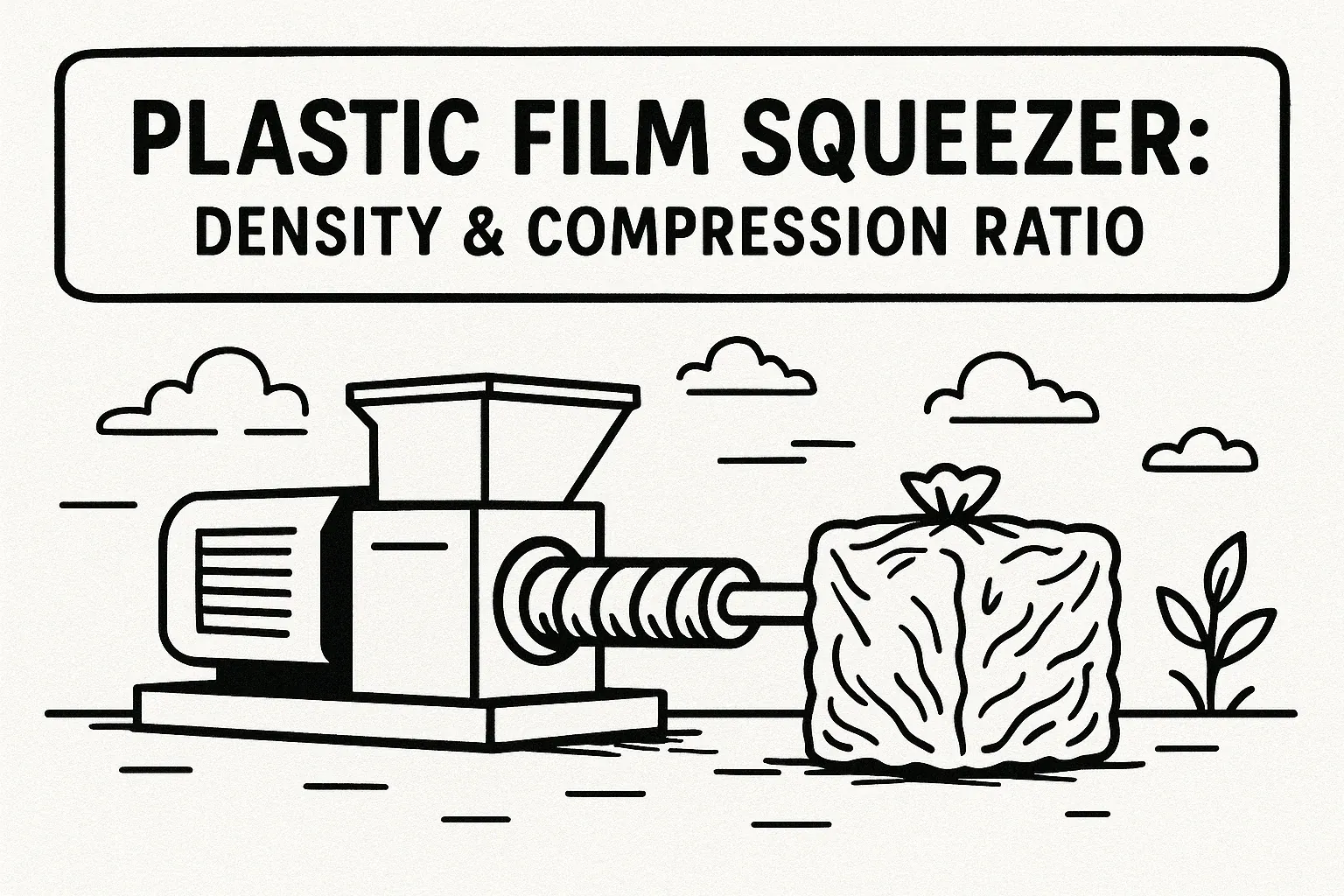
Plastic film squeezeri uklanjaju slobodnu vodu i stiskuju očišćenu foliju u oblik koji je lakši za prijenos i merenje u ekstruder. Često se koriste dvije veličine za opisivanje rezultata: izlazna gustina nasipa i omjer zbijanja. One su korisne samo kada se navodi materijal, osnova vlažnosti i metoda mjerenja. Vrijednost kopirana iz brošure ne može predvidjeti performanse na svakom toku LDPE, LLDPE, HDPE ili PP.
Gustina materijala i gustina nasipa su različite
Gustoća materijala je masa polimera podijeljena sa volumenom zauzetim samim čvrstim polimerom. Gustoća nasipnog materijala je masa slobodnih oštrica ili stisnutih komada podijeljena sa ukupnim volumenom kontejnera, uključujući prostor između komada. Squeezer mijenja oblik čestica, popunjavanje i vlagu; obično ne mijenja osnovnu gustinu polimera.
ISO 1183-1 pokriva metode za određivanje gustine nećeličastih plastičnih materijala, dok ASTM D1895 obrađuje vidljivu gustinu, faktor nasipa i ljepljivost plastičnih materijala. Ove osobine odgovaraju na različite pitanja. Za veličinu sila i napajanje ekstrudera, tvornica obično treba konzistentno izmjerene bulk gustoća, ne predstavlja vrijednost rukopisa za gustoću prave polimera.
Kako izmjeriti gustoću folije
Koristite isti kontejner, postupak napune i pravila kondicioniranja materijala za svaku poručnicu. Jednostavan postupak u tvornici je:
- Odaberite kontejner s poznatim unutarnjim volumonom.
- Mjerite prazan, suhi kontejner.
- Ispuni ga putem definirane procedure bez ručnog pakiranja folije, osim ako metoda posebno zahtijeva stiskanje.
- Ravnanje površine na isti način i mjerite ispunjeni kontejner.
- Oduzmite masu kontejnera i podijelite masu materijala sa volumenom kontejnera.
Gustoća nasipa = masa materijala ÷ ispunjeni volumen. Prijavite rezultat u kg/m³ i identificirajte je li to slabo, udarano ili drugačije komprimirano. Također zabilježite mješavinu smole, oblik čestica, temperaturu i vlažnost. Vlažna ulazna folija može izgledati teža od suhe izlazne, jer ulazna masa uključuje vodu, tako da nedefinirana poravnanja na vlažnoj osnovi mogu iskriviti rezultat.
Kako izračunati zaštitljiv omjer zbijanja
Ako se ulaz i izlaz mjere na usporedbenoj osnovi mase, omjer volumetrijskog zbijanja može se procijeniti kao:
Omjer zbijanja = izlazna nasipna gustoća ÷ ulazna nasipna gustoća.
Na primjer, ako predstavni suh-slučajni uzorci raste od 30 kg/m³ prije cijeđenja do 240 kg/m³ nakon cijeđenja, izračunati omjer za taj uzorak i metodu je 8:1. Ovo je prikaz, ne opisuje univerzalnu ocjenu stroja. Druga debljina filma, razine kontaminacije, postavke rezaca ili način napune mogu proizvesti drugi rezultat.
Kada stroj uklanja vodu, direktni omjer temeljen na suhom ulaznom težini i suhom izlaznom težinom nije prava poravnava volumenskog smanjenja. Ili odredite suhu tvar za oba uzorka, ili prijavite vlagu i gustinu nasipa kao posebne mjere. Izvješće o isprobavanju treba objasniti osnovu tako da dobavljač i kupac mogu to ponoviti.
Zašto objavljeni omjeri razlikuju se tako mnogo
Početna forma filma
Loše kuponi za kućne potrošnje, napukli poljoprivredni film i očišćeni filmčići počinju s veoma različitim prazninama. Ekstremno svilav ulaz može pokazati veliki vidljivi omjer zbijanja čak i kada je konačna gustina obična. Također, omjer bez početne gustine nasipa nije potpun.
Konstrukcija smole i filma
LDPE, LLDPE, HDPE i PP razlikuju se po tvrdoći i termičkoj odzivnosti. Laminirana folija, etikete, papir, aluminij i ostatci zemlje mijenjaju način na koji materijal cijedi i pakira. Mješovite tokove treba identificirati po sastavu umjesto da se opisuju samo kao “folija.”
Veličina čestica i usitnjavački uvjeti
Veličina čestica utječe na oboje, odvodnjavanje i pakiranje. Voda zarobljena u krugovima ili finim materijalima može ostati nakon mehaničkog cijeđenja. Temperatura otopine, tensid, izmještanje i vrijeme između izmještanja i uzorkovanja također mogu promijeniti rezultat vlažnosti.
Postavke stroja
Brzina valjka, protunska pritisak, ograđivanje die ili izlaznog ograđivanja, stanje reznika i zagrijavanje svi utječu na oblik izlaznog proizvoda. Povećanje ograđivanja može povisiti gustinu, ali može također povećati struju, toplinu ili rizik za blokiranje. Korisna postavka je ona koja ispunjava zahtjeve za sljedećim ulazom i vlažnošću bez nestabilne rada.
Mjerite vlagu odvojeno
Preostala vlaga često je važnija za stabilnost peletiranja od maksimalnog omjera zbijanja. Dogovorite metodu uzorkovanja i sušenja te navedite vlagu kao postotak na definiranoj mokroj ili suhoj osnovi. Uzorkovanje na ispustu treba provoditi tijekom vremena jer pojedinačni uzorak može propustiti promjene uzrokovane prekidima u doziranju ili prenošenjem vode iz linije za pranje.
Dobavljač može demonstrirati nizak udio vlage s čistom, tankom folijom u kontroliranim uvjetima. Taj se rezultat ne smije smatrati jamstvom za jako tiskanu, višeslojnu ili zemljom onečišćenu sirovinu. Zatražite probni rad s reprezentativnim materijalom i zabilježite kapacitet, snagu, količinu uklonjene vode, izlaznu temperaturu i raspodjelu vlage.
Kako nasipna gustoća utječe na proces peletiranja u nastavku linije
Ujednačena nasipna gustoća pomaže dozatoru ekstrudera u osiguravanju stabilnijeg masenog protoka. Smanjuje stvaranje mostova i velika kolebanja u punjenju povezana s rastresitom folijom. To osigurava stabilnije opterećenje vijka i tlak taline, iako konačni rezultat ovisi i o izvedbi dozatora, odplinjavanju ekstrudera, nečistoćama i regulaciji temperature.
Vrlo guste ili djelomično fuzirane komade nisu automatski bolje. Prevelike, nepravilne komadići mogu premostiti u taljeru ili neravnomno doći. Specifikacija za prihvaćanje bi trebala uključivati oblik čestica i raspodjelu veličine usto od prosječne gustine nasipa.
Što staviti u test prihvaćanja preša za cijeđenje folije
- Ulazni polimer, izvor, raspon debljine filma i opis kontaminacije
- Ulazna i izlazna vlažnost koristeći isti deklarirani metod
- Ulazna i izlazna gustina nasipa koristeći isti kontejner i način napunjenja
- Proizvodnja suših čvrstih tvari tijekom navedenog testnog trajanja
- Prosječan i maksimalni strujni tok motora, izlazna temperatura i zaustavljanja
- Raspon izlazne veličine čestica i udio sitnih ili prevelikih komada
- Vrijeme potrebno za sigurno otvaranje, čišćenje i normalnu inspekciju oporavka
Rezultat može zatim biti korišten za izračun veličine skladišta, transportera i napajača ekstrudera. Također pruža realističku osnovu za kasneje održavne inspekcije.
Izbor pravilne rute cijeđenja folije
A sušilica za prešu folije je jedna mogućnost nakon linija za pranje folije PP/PE. Ovisno o ulazu i konačnom proizvodu, tvornica može također usporediti aglomerator, stisičar ili valčani stisičar za zaglađivanje. Detaljna priručnica za prešu za cijeđenje folije pokriva širiji proces, dok tehnologija denzifikacije razlikuje glavne načine rada.
Za proizvodnju granula, pregledajte zahtjevnu formu ulaza s dobavljačem opreme i, gdje je moguće, testirajte prešu za cijeđenje folije. stroj za granulizaciju folije PP/PE kao spojena procesa umjesto kao posebne stavke kataloga.
Često postavljana pitanja
Je gustozastojna gustoća polimera ista kao izlazna gustoća stješnjala?
Broj polimera ili gustina materijala isključuje praznine između čestica. Izlaz preša za cijeđenje folije se obično procjenjuje po nasipnoj gustini, koja uključuje te praznine i ovisi o obliku čestica i metodi mjerenja.
Koji je dobri omjer zbijanja za foliju?
Nema univerzalnog cilja. Korisni rezultat ispunjava specifikacije za sljedeću dalmu, vlagu i oblik čestica. Izvještaj o gustini nasipu ulaza i izlaza te osnovi mjerenja umjesto da se oslanja samo na omjer.
Može se gustina nasipna uspoređivati kada je ulazna folija vlažna?
Samo s pažnjom. Voda mijenja mjereni masu. Odredi suhi tvar ili izvještaj o vlagi posebno i koristi isti kontejner te istu postupak napune za uzorke ulaza i izlaza.
