

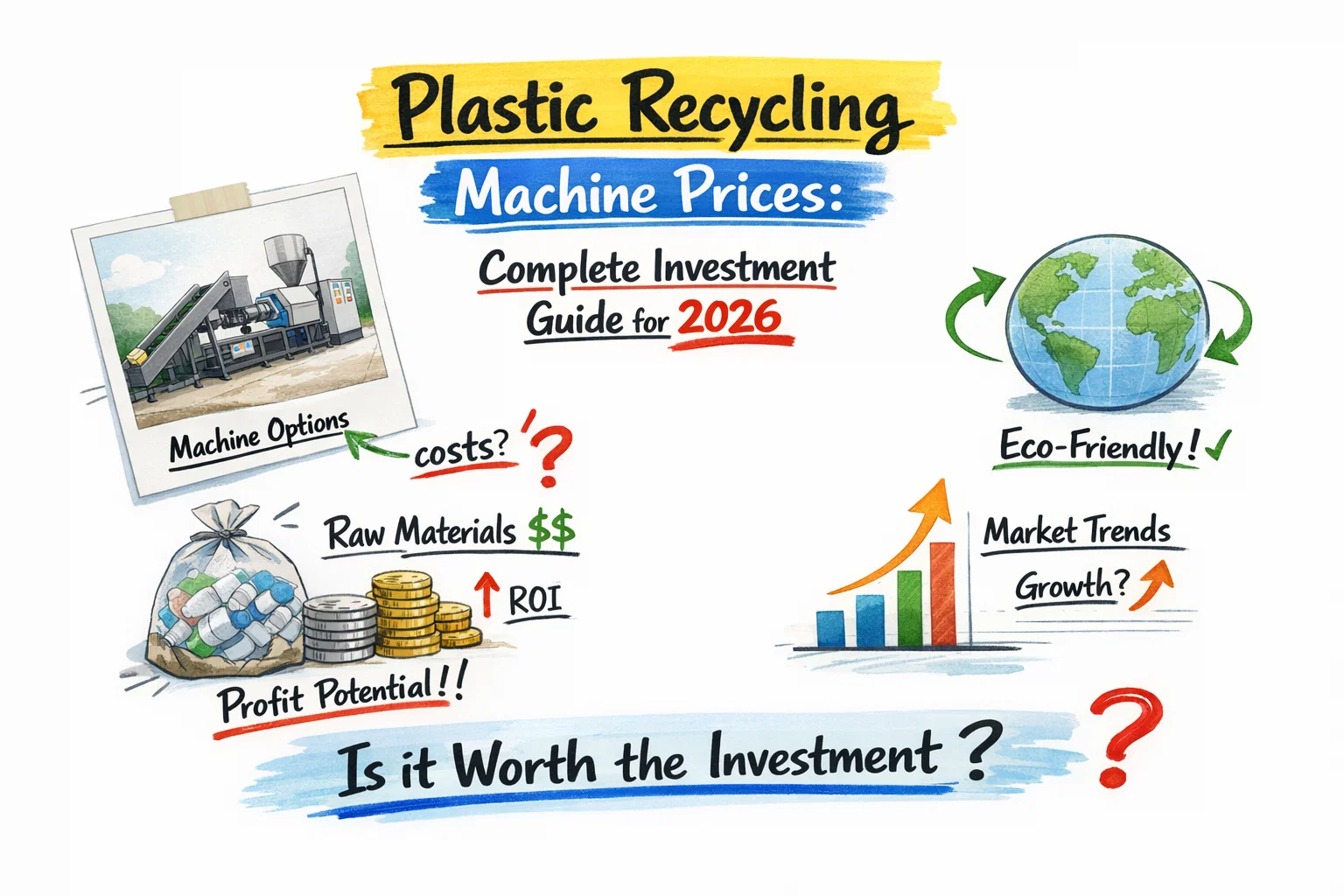
Műanyag újrahasznosító gépek árai: Teljes befektetési útmutató 2026-ra
2026-os kiadás: Ezzel az útmutatóval becsülheti meg a költségvetési tartományokat, hasonlíthatja össze a konfigurációkat, majd a részletes specifikációkért kattintson a megfelelő berendezésoldalakra.
Műanyag újrahasznosító gépek árának pillanatképe (2026)
Kezdő beállítás
Tipikus: $15k–$60k
Legjobb: alap méretcsökkentés + helyi begyűjtés
Aprító/zúzó + alapvető szállítás (mosás/pelletizálás nélkül)
Mosókötél
Tipikus: $80k–$250k
Legjobb: PET / PP / HDPE szennyezettséggel
A szakaszok a címkék, ragasztó, olaj/homok és forró mosás igényeitől függenek.
Teljes sor (pelletig)
Tipikus: $150k–$300k
Legjobb: stabil minőségű pelletek értékesítése
A szűrési szint + gáztalanítás + az automatizálási hajtás költsége a legdrágább
Kulcsfontosságú befektetési megfigyelések
A műanyag-újrahasznosító gépek árainak megértése kulcsfontosságú az újrahasznosítási iparágba belépő vállalkozások számára. A “címárak” összehasonlítása helyett összpontosítson az (1) anyagállapotra, a (2) kapacitásra és a (3) szükséges kimeneti minőségre. Ez a három tényező határozza meg a szükséges folyamatlépéseket – és a tényleges költségvetést.
A plasztik újrahasznosító gépek piacának megértése
Az újrahasznosító berendezések iránti kereslet folyamatosan növekszik, ahogy a szabályozások szigorodnak, és a márkák növelik az újrahasznosított tartalomra vonatkozó célkitűzéseiket. A vásárlók számára ez több lehetőséget jelent – ráadásul nagyobb árkülönbséget, amelyet az automatizálási szint, a szeparációs követelmények és az eladni kívánt minőségi osztály határoz meg.
Megfelelő berendezésválasztással és stabil alapanyag-ellátással számos újrahasznosítási művelet nyereséges lehet. A legkövetkezetesebben azok teljesítenek, amelyek a folyamatot a szennyezettségi szinthez igazítják, és kézben tartják az üzemeltetési költségeket (energia, víz, kopó alkatrészek és állásidő).
Plasztik újrahasznosító gépek típusai és árkategóriái
Szakaszoló berendezések
Egytengelyes fólia- és zsákaprító (specifikációk és opciók)
Árkategória: $3,000 – $15,000
Kapacitás: 50-500 kg/ora
Legjobb: Lágy műanyagok, mint például filcek és táskák
Az egytengelyes aprítók gyakori belépési pontjai a rugalmas anyagoknak. A végső teljesítmény a rotor kialakításától, a szita méretétől és a tekercselésgátló intézkedésektől függ – tehát a konfiguráció fontosabb, mint az “alapár”.”
Kéttengelyes ipari aprító merev műanyagokhoz és nagyméretű hulladékhoz
Árkategória: $20,000 – $100,000
Kapacitás: 500-5,000 kg/ora
Legjobb: Rigida műanyagok és vegyes hulladékáramok
A kéttengelyes rendszerek nagy nyomatékot biztosítanak vastag falú alkatrészek és vegyes áramlatok esetén. Az árat a marószerszám mérete, a sebességváltó, a váz szilárdsága és az automatizálási/biztonsági csomag határozza meg.
Mosó- és szeparálórendszerek
| Rendszer típusa | Árkategória (USD) | Feldolgozási kapacitás | Főbb jellemzők |
|---|---|---|---|
| Kompakt mosóegységek | $15,000 – $50,000 | 200-1,000 kg/ora | Alapvető tisztítás, kézi szedés |
| Automatizált mosóvonatok | $50 000 – $200 000 | 1,000-3,000 kg/ora | Többfázisú tisztítás, tömegelválasztás |
| Ipari mosórendszerek | $200.000 – $1.000.000 | 3,000-15,000 kg/ora | Fejlett elválasztás, vízújrahasznosítás |
Ajánlott következő lépés: Hasonlítsa össze a teljes körű újrahasznosítási megoldásokat anyag szerint .
Gyógyszerészeti és extrudálási berendezések
Egycsigás pelletizáló gép standard pelyhekhez
Árkategória: $10,000 – $80,000
Legjobb: Viszonylag tiszta, stabil alapanyag
Az egycsigás rendszereket széles körben alkalmazzák a költséghatékony pelletgyártáshoz. A költségvetés a csiga átmérőjétől, a pelletálási térfogat arányától (L/D), a fűtőzónáktól, a szűréstől és a pelletizálási módszertől függ.
Kétcsigás extruder szennyezett vagy kevert anyagokhoz
Árkategória: $80,000 – $250,000
Legjobb: Nagyobb keverési/gáztalanítási igények
A kétcsigás extruderek nehezebb anyagokat is képesek kezelni, jobb keveréssel és illékony anyagok eltávolításával. A szűrési/gáztalanítási cél a teljes gyártósori költség legnagyobb mozgatórugója.
Anyagköltség: Szükséges lépések és mi befolyásolja az árat
| Anyag | Tipikus munkafolyamat | Kötelező modulok | Fő költségtényezők | Legjobb “Következő kattintás” |
|---|---|---|---|---|
| PET-palackok | Rendezés → Címke eltávolítása → (Forró) mosás → Öblítés → Szárítás | Címkeeltávolító, forró mosás, sűrűség szerinti elválasztás, szárítógép | Ragasztó/címkék, forró mosás szükségessége, víz újrahasznosítása, végső nedvességtartalom | PET mosási és újrahasznosítási megoldások |
| HDPE / PP merev | Zúzás → Mosás → Lebegés → Szárítás → (Opcionális pelletizálás) | Zúzó, dörzsmosó, úszótartály, szárító | Szennyezettségi szint, elválasztási igények, automatizálási szint | Merev műanyag újrahasznosító sor |
| LDPE fólia | Aprítás → Előmosás → Préselés/Víztelenítés → Szárítás → (Opcionális pelletizálás) | Egytengelyes aprító, fóliaprés, szárítórendszer | Nedvességtartalom célértéke, homok/talaj, préselés vs. termikus szárítás, tekercselésgátlás | Filmaprító konfigurációk |
| PP szőtt zsákok | Aprítás → Mosás → Szárítás → Pelletizálás | Aprító, mosási szakaszok, pelletizálás szűréssel | Tinta/szennyeződés, olvadékszűrési szint, kimeneti minőségi követelmények | Pelletizáló gép opciók |
Gyakorlati tipp: A beruházási költségek (CAPEX) kézben tartásának leggyorsabb módja, ha a munkafolyamatot a tényleges szennyezettségi szinthez és a termelési igényhez igazítjuk – így elkerülhetjük, hogy olyan szakaszokért fizessünk, amelyekre nincs szükségünk.
Mit tartalmaznak (és mit nem tartalmaznak) ezek az árak általában?
Tartalmazza (tipikus)
- Főgép + standard motor és sebességváltó
- Alap elektromos szekrény / standard vezérlők
- Standard kopóalkatrészek (modellenként eltérő)
Gyakran kizárva (idézettel megerősítve)
- Szállítórendszer / silók / platformok és acélszerkezet
- Helyszíni telepítés és üzembe helyezés / kezelői képzés
- Víz újrahasznosítása, szennyvízkezelés, porgyűjtés
- Egyedi feszültség/szabványok, tanúsítványok, alkatrészcsomagok
- Szállítás, helyi adók, import vámkezelés
Az árképzés csak a szállítási terjedelem (EXW/FOB/CIF), az automatizálási szint és a szükséges kimeneti minőség megerősítése után válik “alma az almához” típusúvá.
Teljes újrahasznosító üzem befektetési elemzése
Kis léptékű műveletek (500-2,000 tonna/év)
Befektetési részletek
- Eszköz költség: $50 000 – $200 000
- Létesítmény igények: 500 – 2,000 négyzetméter
- Éves bevételi potenciál: a helyi alapanyagtól és termékminőségtől függ
- Tipikus megtérülési időablak: gyakran 18-36 hónapos korban modellezik (eseti alapon)
A kisüzemi üzemek praktikus belépési pontot jelentenek, ha stabil helyi ellátással és egyértelmű vevővel rendelkezik a pelyhek/pelletek esetében. A legjobb beállítások egyszerűvé teszik a folyamatot, és a rendelkezésre állásra, valamint az állandó termelésre összpontosítanak.
Közepes léptékű műveletek (5,000-15,000 tonna/év)
Előnyök
- Nagyobb feldolgozó hatékonyság
- Jobb méretekben való gazdaságosság
- További automatizálási lehetőségek
- Több termékáram
- Erősebb költségkontroll tonnánként
Megfontolások
- Nagyobb tőkeigény ($300,000-$800,000)
- Nagyobb létesítmény igények (5,000-20,000 négyzetméter)
- Komplexebb műveletek
- Nagyobb szabályozási megfelelés
- Nagyobb piaci kockázat
Ipari léptékű műveletek (20,000+ tonna/év)
A nagyméretű újrahasznosító létesítmények $1-10 millió eurós beruházást igényelhetnek az anyag összetettségétől és az automatizálástól függően. Ezek a műveletek magukban foglalhatják:
- Speciális rendezés az elválasztás és a tisztaság javítása érdekében
- Integrált minőségellenőrzés a prémium vásárlói követelmények teljesítése érdekében
- Víz/energia optimalizálás az üzemeltetési költségek csökkentése érdekében
- Skálázható moduláris szakaszok kapacitásbővítéshez
Gépi árakat befolyásoló kritikus tényezők
Kapacitás és áramlási igények
A feldolgozási kapacitás szorosan összefügg a berendezések költségével, mivel a nagyobb áteresztőképesség erősebb rotorokat, nagyobb teljesítményű meghajtókat, nehezebb kereteket és robusztusabb biztonsági/vezérlőrendszereket igényel.
Automatizációs szint és technológiai integráció
Az alábbi automatizálási funkciók javíthatják a hatékonyságot és csökkenthetik a munkaerőköltségeket:
- Optikai/fejlett rendezés: többletköltség, nagyobb tisztaságú kibocsátás
- PLC vezérlőrendszerek: magasabb kezdeti költség, könnyebb üzemeltetés és stabilitás
- Monitoring és karbantartási tervezés: csökkenti az állásidőt az ütemezett szervizelés révén
Márka hírneve és gyártási hely
| Gépi eredet | Tipikus árpozíció | Főbb előnyök | Legjobb illeszkedés |
|---|---|---|---|
| Európai gyártók | Prémium | Fejlett technológia, erős építészet | Magas szintű automatizálás és szigorú kimeneti követelmények |
| Kínai gyártók | Érték | Költséghatékonyság, gyors testreszabhatóság | Legjobb megtérülés, ha a specifikációk jól definiáltak |
| Észak-amerikai gyártók | Prémium érték | Helyi támogatás, megfelelőségi ismeretek | Helyi szolgáltatási lábnyomot igénylő projektek |
Pénzügyi teljesítmény: TCO és ROI (ami a valós működésben számít)
Teljes tulajdonlási költség (TCO) ellenőrzőlista
- Kopó alkatrészek: pengék, szűrők, csavarok, fűtőtestek, csapágyak
- Energia tonnánként: a motor teljesítményétől, a szárítási módszertől és az elválasztási szakaszoktól függ
- Vízgazdálkodás: fogyasztás, szűrés, újrahasznosítás, szennyvízkezelés
- Állásidő: karbantartási intervallumok és alkatrész-elérhetőség
- Munkaerő: válogatási intenzitás + automatizálási szint
Bevételi generálási modellek
Az újrahasznosítási műveletek jellemzően egy vagy több forráson keresztül generálnak bevételt:
- Pehely/pellet értékesítés: Az ár nagyban függ a tisztaságtól és az állagtól
- Hulladékfeldolgozási díjak: a helyi begyűjtési gazdaságosságtól függ
- Melléktermék-folyamok: értékes frakciók szétválasztása, amikor csak lehetséges
Investment Recovery Timeline
A befektetés megtérülése (ROI) nagymértékben változik az alapanyagköltség, a szennyezettségi szint, a helyi energiaár, a hozam és a termékminőség függvényében. A legtöbb projekt konzervatív feltételezésekkel modellezi a megtérülést, és a csúcsteljesítmény helyett a stabil üzemidőt helyezi előtérbe.
Gépi kiválasztási döntési keret
Lépésről lépésre kiválasztási folyamat
- Feldolgozási igények meghatározása: műanyagtípusok, mennyiség, szennyeződés, kimeneti cél
- A munkafolyamat megerősítése: csak olyan szakaszokat adj hozzá, amelyek valódi problémákat oldanak meg
- Modell teljes tulajdonlási költsége: energia + kopóalkatrészek + víz + állásidő
- A beszállító képességeinek értékelése: támogatás, képzés, alkatrészek, átfutási idő
- Skálázhatóság tervezése: moduláris bővítési és frissítési útvonal
Minőség ellenőrzése és költségek
A kezdeti ár számít, de a teljes birtoklási költség (TCO) határozza meg a jövedelmezőséget. A jobban illeszkedő berendezések gyakran a következőket nyújtják:
- Alacsonyabb állásidő: stabil teljesítmény és kiszámítható karbantartás
- Magasabb kiállítási minőség: jobb vevői elfogadottság és árazás
- Alacsonyabb egységköltség: tonnánkénti energia/víz optimalizálás
Pontos árajánlat kérése (gyorsan)
5 bemenet küldése – Pontos konfiguráció és árajánlat kérése
- Anyagfotók + szennyeződés (címkék, homok, olaj)
- Célzott kapacitás (kg/h)
- Kimeneti forma (pehely vagy pellet) + célspecifikációk (nedvesség/MFI)
- Tápellátás (feszültség/Hz)
- Szállítási terjedelem (csak berendezés / kulcsrakész / telepítés)
Válaszunkban egy ajánlott folyamatot és tételes árajánlatot küldünk.
Következtetés
A műanyag-újrahasznosító berendezések ára 2026-ban inkább “konfigurációalapú” árazásként értelmezhető, nem pedig egyetlen szám alapján. A nyerő megközelítés az, ha a munkafolyamatot az anyag- és kimeneti követelményekhez igazítjuk, ellenőrizzük, hogy mi tartozik bele, és értékeljük a teljes tulajdonlási költséget (TCO) (kopó alkatrészek, energia, víz, állásidő), mielőtt végleges befektetési döntést hoznánk.
Ha megosztja velünk az anyagfotókat, a kapacitást és a kívánt kimeneti minőséget, akkor ajánlani tudjuk a megfelelő folyamatot, és pontos, teljes konfigurációt tudunk árajánlatot adni.
