플라스틱 필름 재활용 기계: 효율적인 장비를 선택하여 사업에 적용하는 방법 카테고리 구매 가이드 게시됨 2026년 3월 2일2026년 3월 2일 작가 energycle 플라스틱 필름 재활용 기계는 산업 폐기물 및 소비자 폐기물인 PE 및 PP 필름을 깨끗하고 재사용 가능한 펠릿으로 변환하여 생산 공정에 바로 투입할 수 있도록 합니다.
PVC 분쇄 vs 파쇄: 공정 차이 및 장비 선택 카테고리 구매 가이드, 재활용 뉴스 게시됨 2026년 2월 26일2026년 3월 2일 작가 energycle PVC 분쇄와 파쇄는 플라스틱 재활용 및 혼합 라인의 효율성과 생산 품질을 결정하는 중요한 요소입니다. 작업자들은 이러한 용어들을 혼용하여 사용하는 경우가 많지만,.
플라스틱 필름 탈수 장비: 원심분리기 vs. 압착기 카테고리 구매 가이드, 재활용 뉴스 게시됨 2026년 2월 26일2026년 3월 2일 작가 energycle 플라스틱 필름 탈수 장비는 하류 압출 라인의 열 부하 및 체적 효율을 결정합니다. 습식 폴리에틸렌(PE) 및 폴리프로필렌(...).
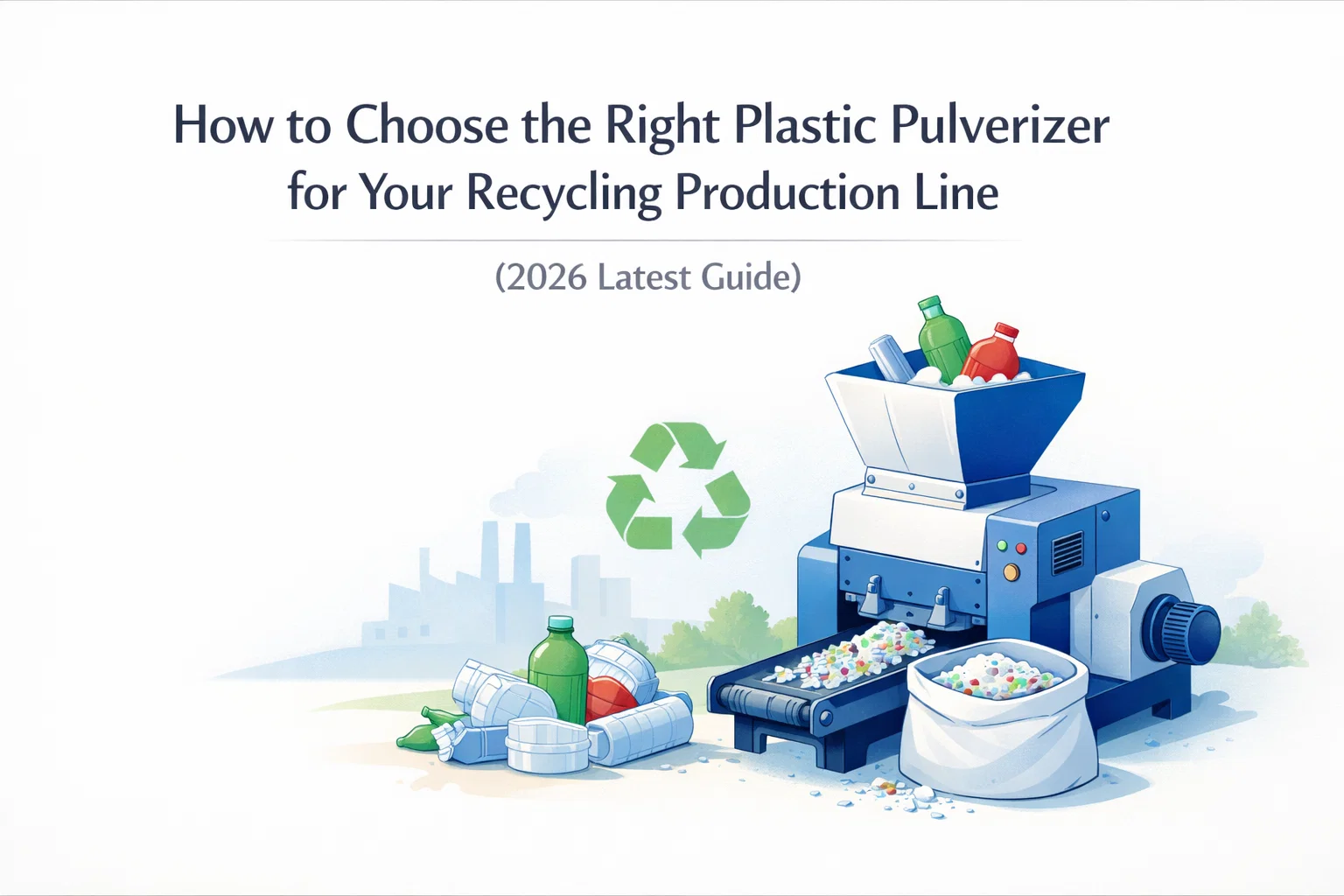
재활용 생산 라인에 적합한 플라스틱 분쇄기 선택 방법 (2026년 최신 가이드) 카테고리 구매 가이드, 재활용 뉴스 게시됨 2026년 2월 24일2026년 3월 2일 작가 energycle 에너지 비용 상승과 2026년에 더욱 엄격해질 것으로 예상되는 재활용 원료 함량 의무화 규정으로 인해, 구식 분쇄 기술에 의존하는 것은 더 이상 지속 가능하지 않습니다. 올바른 기술을 선택하는 것이 중요합니다...
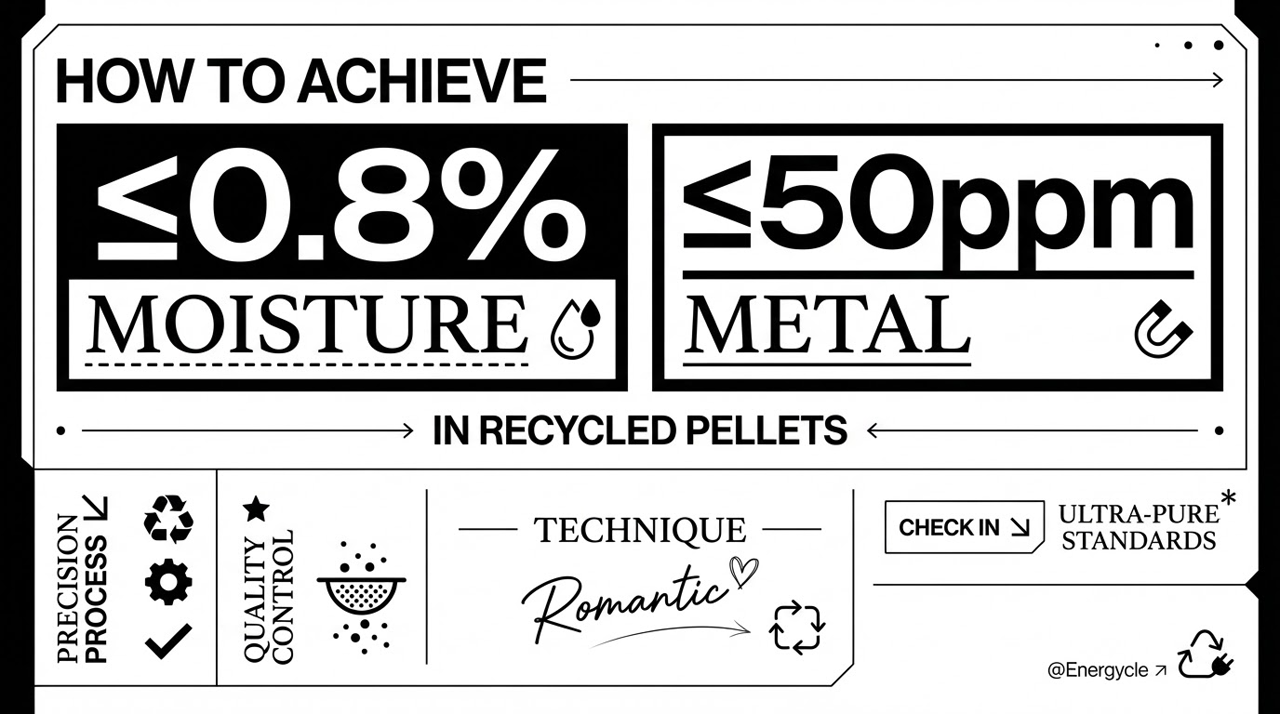
재활용 펠릿의 수분 함량 0.8% 이하 및 금속 함량 50ppm 이하를 달성하는 방법 카테고리 구매 가이드, 재활용 뉴스 게시됨 2026년 2월 20일2026년 3월 2일 작가 energycle 당신은 재활용 공장을 운영합니다. 필름이나 플레이크를 세척하고, 최종 펠릿이 두 가지 엄격한 기준을 충족해야 합니다. 바로 수분 함량 0.8% 이하, 금속 오염 물질 함량 0.8% 이하입니다.
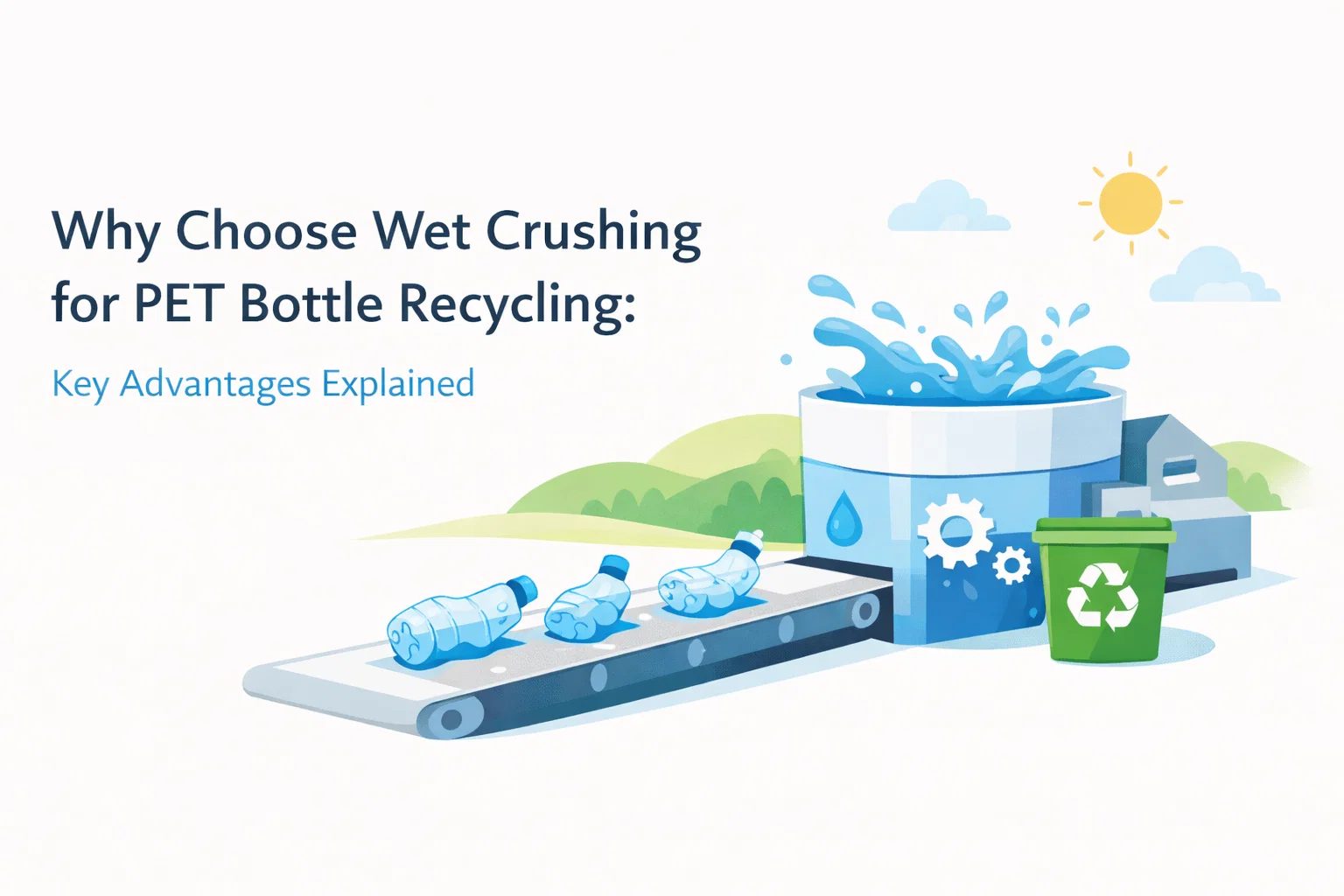
PET 병 재활용에 습식 파쇄 방식을 선택해야 하는 이유: 주요 장점 설명 카테고리 구매 가이드, 재활용 뉴스 게시됨 2026년 2월 14일2026년 3월 2일 작가 energycle Energycle에서는 매년 수천 톤의 PET 병을 처리합니다. 실제 시설에서 습식 및 건식 파쇄 방법을 모두 테스트해 본 결과, 습식 파쇄가 더 우수하다는 것을 여러 차례 확인했습니다.
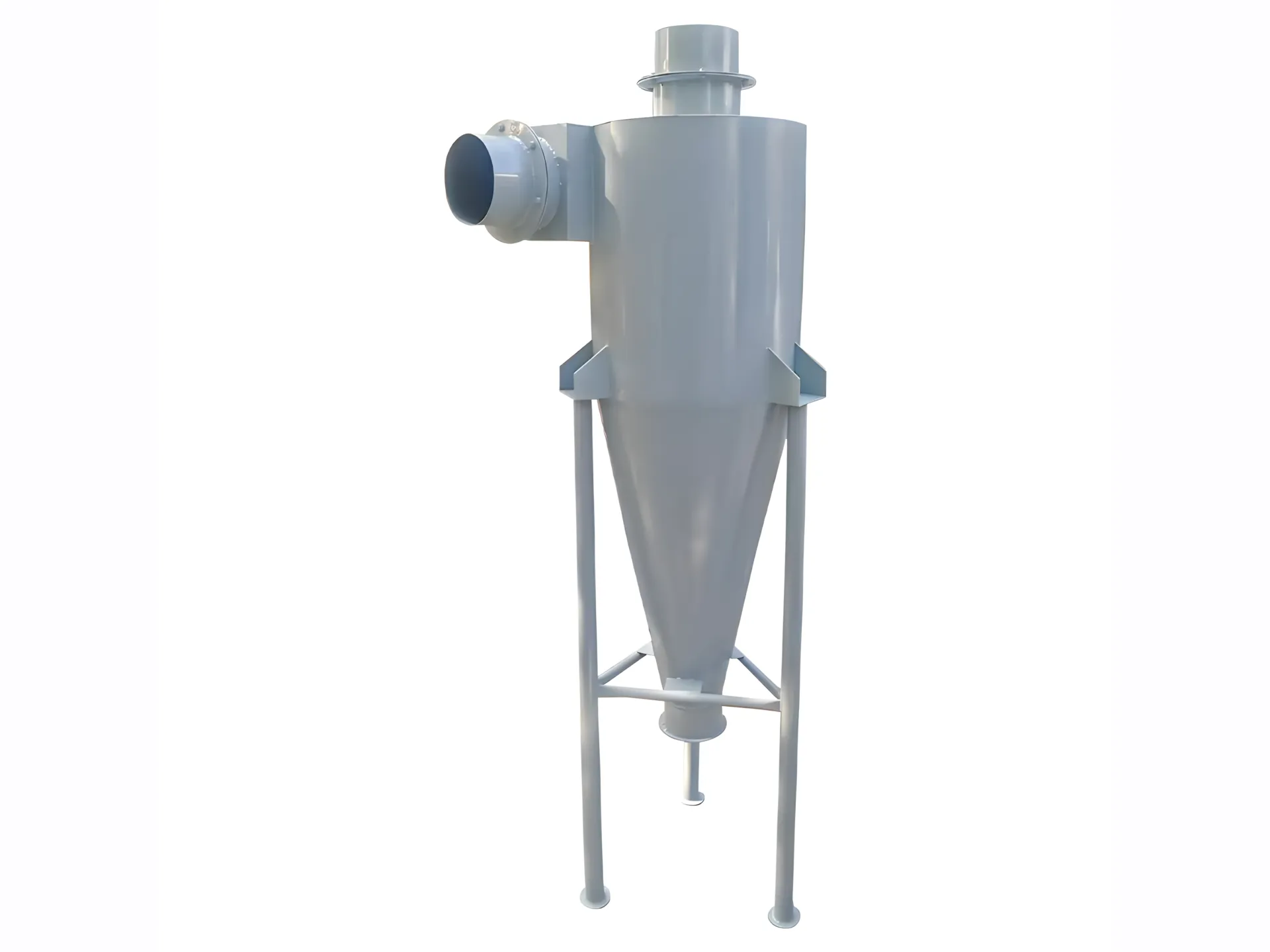
플라스틱 재활용에 사용되는 사이클론 분리기의 작동 원리 및 주요 이점 카테고리 구매 가이드 게시됨 2026년 2월 13일2026년 2월 13일 작가 energycle 플라스틱 재활용 과정에서 사이클론 분리기는 파쇄 또는 과립화된 재료에서 먼지, 미세 입자, 라벨 및 가벼운 오염 물질을 제거하는 데 도움을 줍니다. 이러한 시스템은...
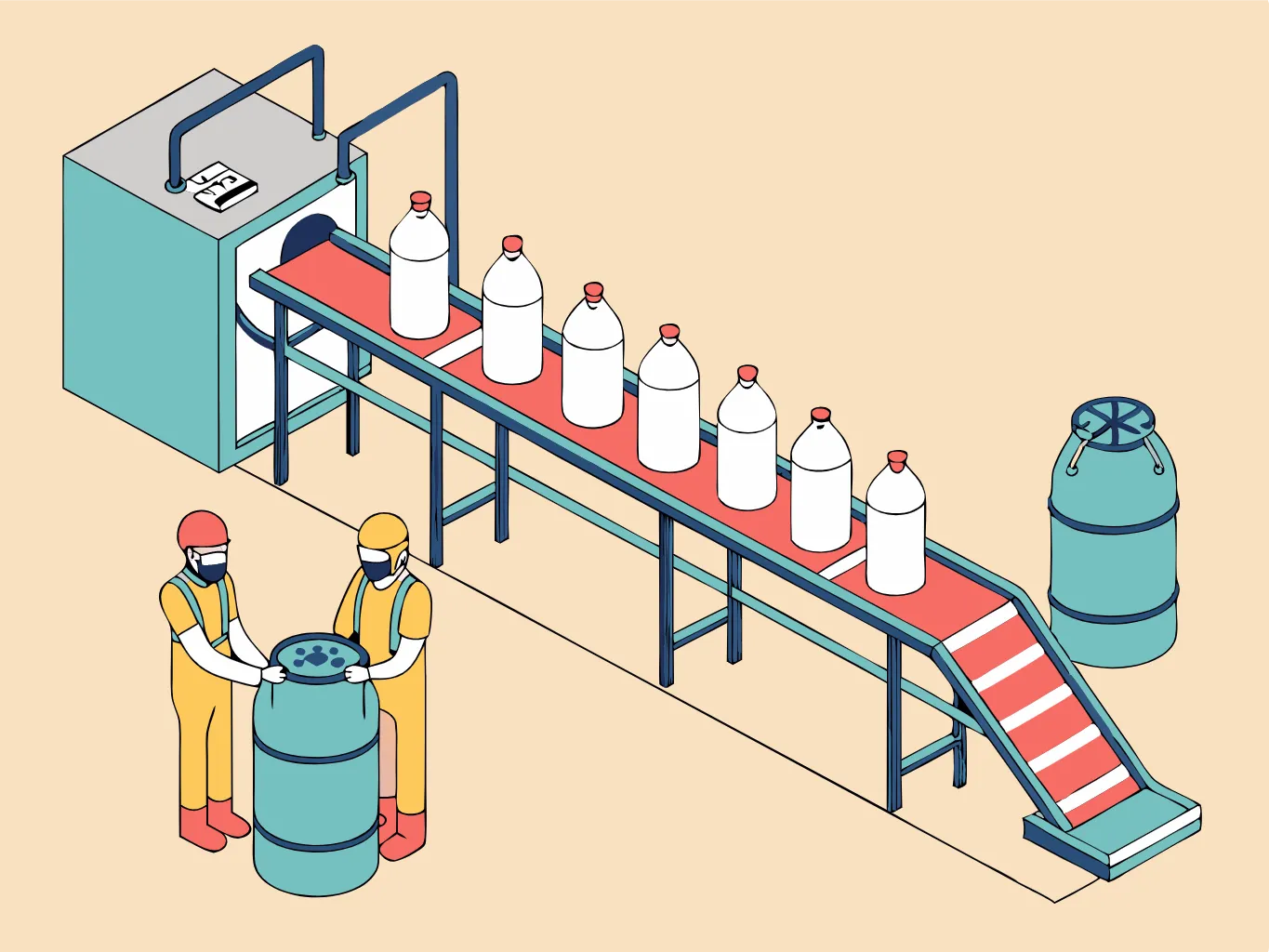
PET 병 세척 라인: 깨끗한 PET 플레이크를 위한 필수 재활용 공정 카테고리 구매 가이드 게시됨 2026년 2월 13일2026년 2월 13일 작가 energycle PET 병 세척 라인은 현대 플라스틱 재활용에서 핵심적인 역할을 합니다. 재활용 PET(rPET)에 대한 수요가 증가함에 따라 이러한 시스템은 수거된 PET 병을 재활용하는 데 도움을 줍니다.
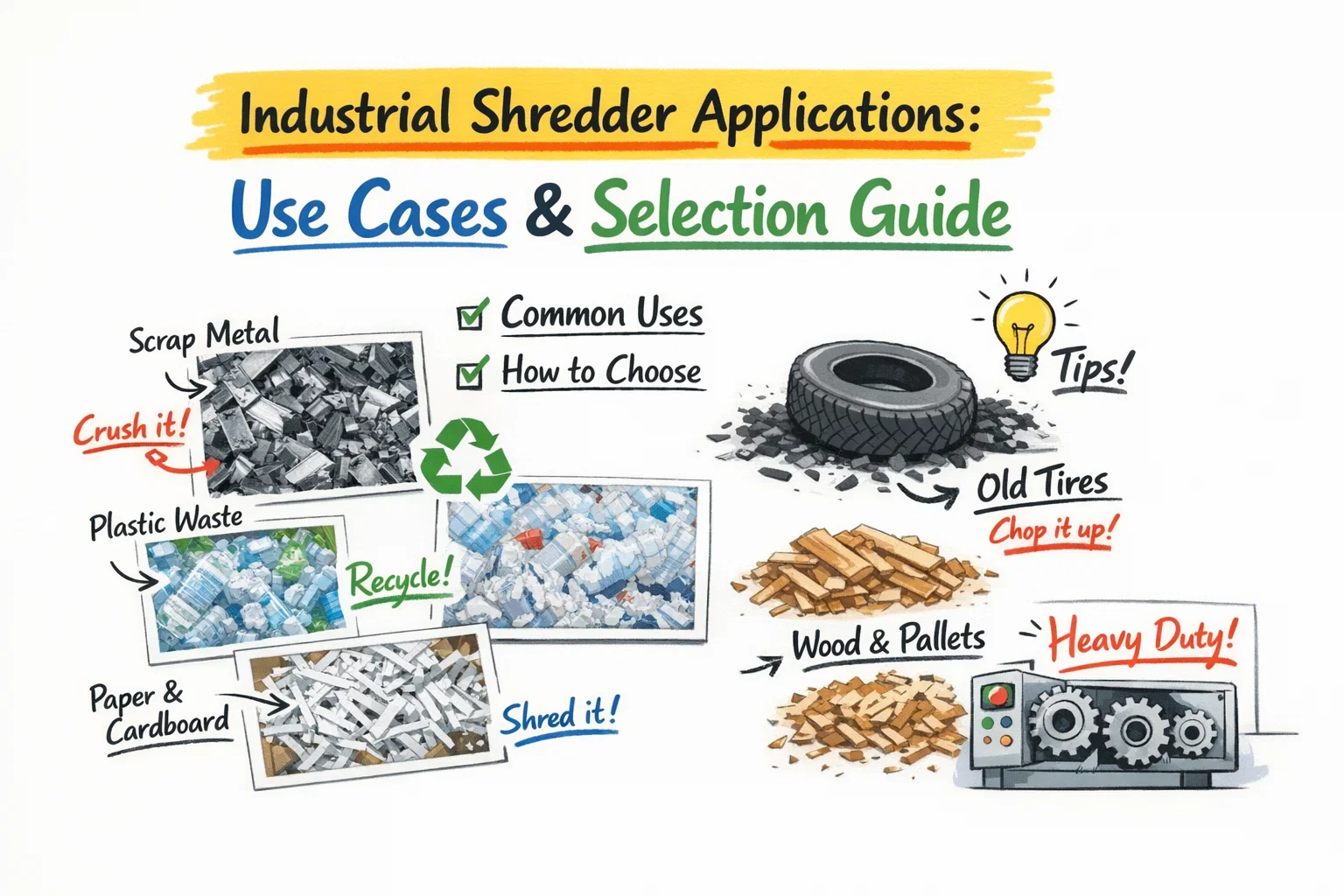
산업용 파쇄기 활용 사례 및 선택 가이드 카테고리 구매 가이드 게시됨 2026년 2월 11일2026년 2월 13일 작가 energycle 개요 산업용 파쇄기 및 분쇄기는 단순한 "폐기물 감축" 이상의 용도로 사용됩니다. 실제로 이러한 장비는 자재 처리 과정의 첫 번째 단계인 경우가 많습니다...
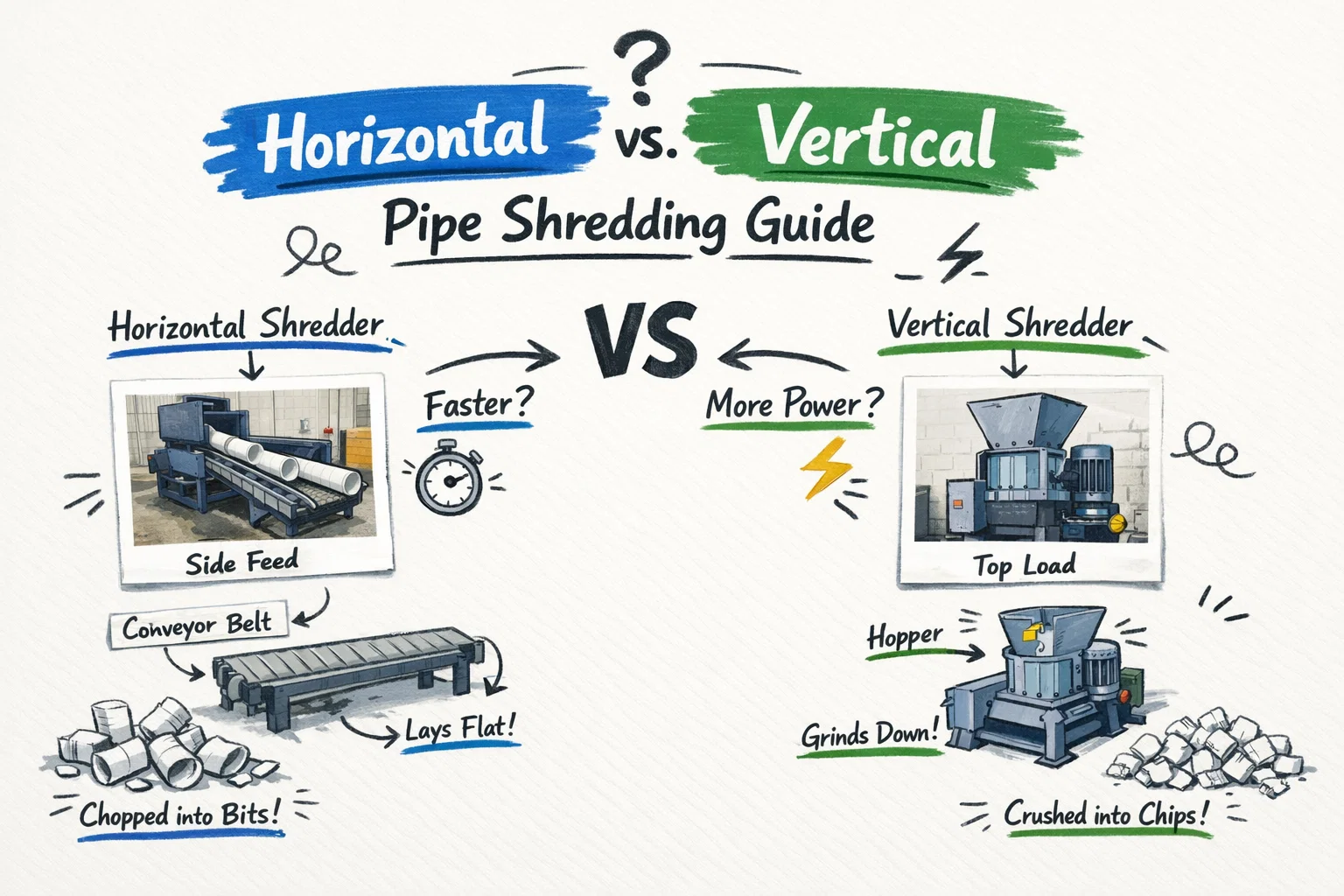
수평형 vs 수직형 파이프 파쇄 가이드: 어떤 투입 방식이 재료에 적합할까요? 카테고리 구매 가이드 게시됨 2026년 2월 10일2026년 2월 13일 작가 energycle 수평형 파이프 파쇄기와 수직형 파이프 분쇄기 중에서 고민하고 있다면, 진정한 질문은 "어느 기계가 더 나은가?"가 아닙니다. 진정한 질문은...