

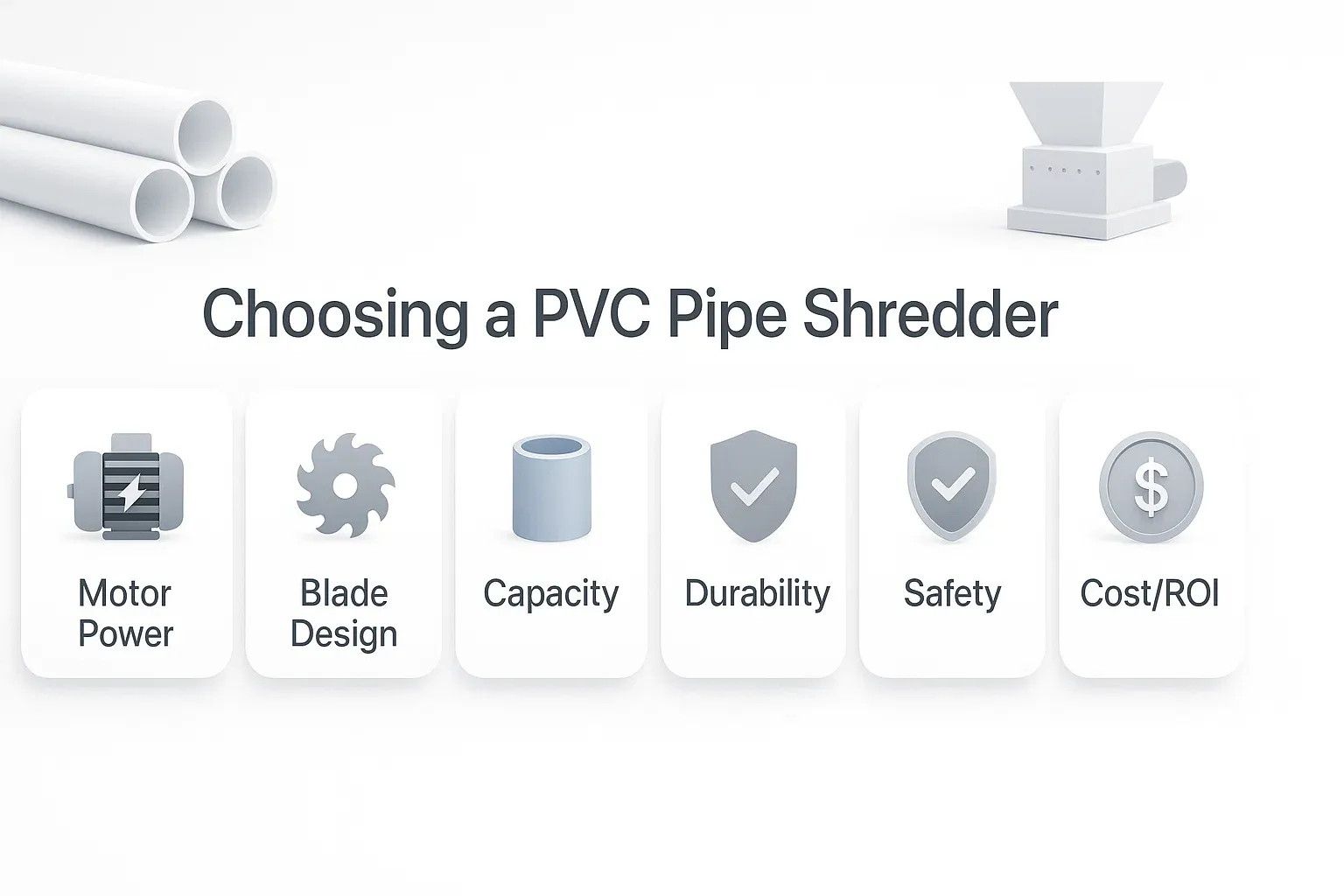
Recycling Polyvinyl Chloride (PVC) pipes presents three distinct engineering challenges: the brittleness of the material, the length of the feedstock (often 6m+), and the health risks associated with PVC dust. Selecting a PVC csőaprító is not just about throughput; it’s about managing chlorine-based polymers safely and efficiently. This guide outlines the specifications required for industrial PVC processing.
Kapcsolódó felszerelés: merev műanyag aprító, egytengelyes aprító.
The PVC Challenge: Impact & Dust
Unlike polyolefins (PE/PP), PVC is shear-sensitive and brittle at room temperature.
* Shattering Risk: When a high-speed rotor hits a thick-walled PVC pipe, it can shatter rather than cut, sending dangerous projectiles back up the hopper.
* Dust Generation: Crushing brittle PVC generates fine white powder. Without proper containment, this creates a respiratory hazard for operators.
* Thermal Sensitivity: If the cutting chamber gets too hot (>60°C), PVC degrades and releases corrosive hydrochloric acid (HCl) gas, which destroys standard steel blades.
Key Shredder Specifications for Pipes
To handle these properties, specific machine configurations are required.
1. Horizontal Feed vs. Top Feed
For pipes longer than 2 meters, Horizontal Shredders are superior to standard top-fed Hoppers.
* Mechanizmus: A 6-meter vibrating trough or hydraulic channel pushes the pipe horizontally into the rotor.
* Biztonság: Eliminates the need for “precipice feeding” (dropping long pipes into a high hopper), which is a major safety risk.
* Energiahatékonyság: The rotor bites the pipe end gradually, maintaining stable amperage (load) rather than spiking.
2. Rotor Type: V-Cut vs. Flat
A “V-Rotor” or Concave rotor is essential for cylindrical pipes.
* Centering: The V-shape naturally centers the pipe in the cutting chamber, preventing it from dancing or rolling against the side walls.
* Vágási művelet: Provides a scissor-like shear rather than a blunt impact, reducing noise and dust by up to 30%.
3. Dust Extraction Integration
A PVC shredder is typically operated under negative pressure to capture dust at the source; the final requirement depends on your dust hazard assessment and local rules.
* Air Filtration: An integrated cyclone system pulls airborne dust directly from the cutting chamber and discharge chute.
* Sealed Bearings: Dust is abrasive. Outboard bearings (mounted outside the cutting chamber) prevent fine powder from destroying the grease seal.
Sizing Your Machine: Diameter & Wall Thickness
The machine size is dictated by the pipe diameter (OD) and wall thickness (SDR).
| Pipe Diameter (OD) | Recommended Machine Type | Motorteljesítmény | Rotor átmérője |
|---|---|---|---|
| Small (< 250mm) | Standard Single Shaft | 37 kW (50 HP) | 400 mm |
| Medium (250-630mm) | Vízszintes csőaprító | 55-75 kW (75-100 HP) | 600-800mm |
| Large (> 800mm) | Heavy Duty Horizontal | 110 kW+ (150 HP+) | 1000mm+ |
Maintenance for PVC Applications
PVC processing requires specific maintenance protocols to prevent corrosion and wear.
* Anti-Corrosive Coating: The interior of the cutting chamber should be plated (e.g., Hard Chrome) to resist HCl corrosion if the material overheats.
* Penge anyaga: Use D2 vagy SKD11 steel. Avoid standard mild steel, which wears too quickly against the rigid PVC formulation (often filled with calcium carbonate).
* Hőmérséklet-monitorozás: Install temperature sensors in the bearing housing to detect friction heat early, preventing PVC degradation.
GYIK
Can I shred PVC and PE in the same machine?
Yes, mechanically speaking. However, cross-contamination is a disaster for recycling. Even 0.1% PVC in a PE melt stream will burn and degrade the entire batch. Thorough cleaning (vacuuming + purging) is typically required when switching materials.
Why is my PVC turning yellow/brown during shredding?
This indicates thermal degradation (“burning”). It means your blades are dull (creating friction heat instead of cutting) or your screen size is too small, causing material to dwell too long in the chamber. Sharpen blades and check the discharge rate.
Do I need a granulator after the shredder?
Often yes. A shredder commonly produces 40-50mm chips; to reuse material in extrusion, many lines add a downstream granulátor to reach a smaller regrind size (e.g., 6-10mm), depending on your product and feeding system.
Referenciák
[1] “Handling and Processing of PVC,” VinylPlus. Handling and Processing of PVC
[2] ISO 15270:2008 Plastics — Guidelines for the recovery and recycling of plastics waste. ISO 15270:2008 Műanyagok – Útmutató a műanyaghulladékok visszanyeréséhez és újrahasznosításához
