

Single-Stage Pelletizing for PP PE Film and Raffia
Water Ring Pelletizer for PP/PE Film & Woven Bags
A water ring pelletizing system that combines compaction, extrusion, melt filtration, die-face cutting, water-ring cooling, and pellet drying in one continuous workflow. It is designed for PP woven bags, PE film, raffia, non-woven scrap, and similar flexible polyolefin materials that need stable pellet output with efficient downstream handling.
Why Choose a Water Ring Pelletizing System
Water-ring die-face cutting is a practical choice when you want continuous pellet production from PP or PE flexible scrap without building a more complex multi-stage strand line.
The water ring pelletizer is part of our full range of plastic pelletizing systems, built for different polymer types and output forms.
Compaction and Pelletizing in One Continuous Flow
The cutter-compactor prepares low-density flexible material for extrusion, reducing feeding instability and helping the line maintain continuous pellet production.
Uniform Die-Face Pellet Output
Water-ring cutting forms uniform pellets with good handling performance for storage, bagging, and downstream reuse.
Compact Single-Stage Layout
The integrated structure helps reduce transfer points, footprint, and operating complexity compared with more segmented pelletizing arrangements.
Melt Filtration Protects Pellet Quality
Screen changing removes remaining contamination before the melt reaches the die face, helping improve pellet cleanliness and process consistency.
Efficient Use of Flexible Polyolefin Scrap
By converting film, woven bags, and raffia waste into reusable pellets, the system helps processors lower disposal cost and build a more circular material workflow.
Durable Production Duty
The line is engineered for repeatable operation on flexible polyolefin recycling projects where uptime and pellet consistency both matter.
Ideal Materials and Use Cases
This system is best suited to relatively clean or lightly printed flexible PP and PE streams that need densification and direct die-face pelletizing.
PP Woven Bags and Raffia
Processes woven sacks, raffia trimmings, jumbo bag cuttings, and similar PP packaging materials.
PE Agricultural and Industrial Film
Suitable for PE film streams such as agricultural film, packaging film, and industrial flexible scrap after proper cleaning.
Film Rolls and Edge Trims
Works for production trim and roll waste that benefits from compaction before steady extrusion and pelletizing.
Non-Woven Scrap
Handles non-woven PP residues and similar lightweight soft material when direct pellet recovery is the target.
Clean Post-Industrial Flexible Scrap
Best suited for cleaner in-house production scrap where feeding, pellet uniformity, and low operating complexity are priorities.
Flexible Polyolefin Pellet Production
Fits recycling plants that want a direct route from flexible scrap to reusable pellets for resale or internal reuse.
How the Single-Stage Water Ring Process Works
The line is built to densify flexible scrap first, then melt, filter, cut, cool, and dry the pellets in one continuous sequence.
Feed and Compact the Material
The cutter-compactor cuts, mixes, and densifies the incoming film or woven material so the extruder receives a more stable feed.
Extrude and Degas
The pre-compacted material is melted and homogenized in the extruder while volatiles are removed from the melt.
Filter the Melt
The molten polymer passes through a screen changer to remove remaining impurities before pellet cutting.
Water-Ring Pelletizing
The clean melt exits through the die face and is cut into pellets that are immediately quenched inside the water ring.
Dry and Discharge Pellets
Pellets are separated from water, dried, and discharged as a clean and reusable pellet stream ready for storage or feeding.
Water Ring Pelletizer vs Film Pelletizing Alternatives
This configuration is a strong fit when direct die-face cutting is preferred, but it is not always the only answer for flexible PP and PE recycling.
| Decision Factor | Water Ring Pelletizer | Cutter Compactor Line | Film Agglomerator |
|---|---|---|---|
| Best Output Goal | Uniform die-face pellets with compact line structure | Integrated compaction plus broader pelletizing flexibility | Densified agglomerate rather than full pellet output |
| Best Material Fit | Clean or lightly printed PP/PE film and woven bags | Fluffier low-density film needing stronger front-end compaction | Upstream densification of soft film waste |
| Pelletizing Method | Water-ring die-face cutting | Can be configured with different pelletizing arrangements | No full pelletizing stage |
| System Complexity | Efficient single-stage integrated layout | More integrated but generally more complex | Simplest route when pellet output is not required |
| Best Fit in the Line | Final pellet production from flexible PP/PE scrap | Alternative pelletizing solution for harder feeding conditions | Upstream preparation before later extrusion or reuse |
Swipe horizontally to view the full table.
See It in Action
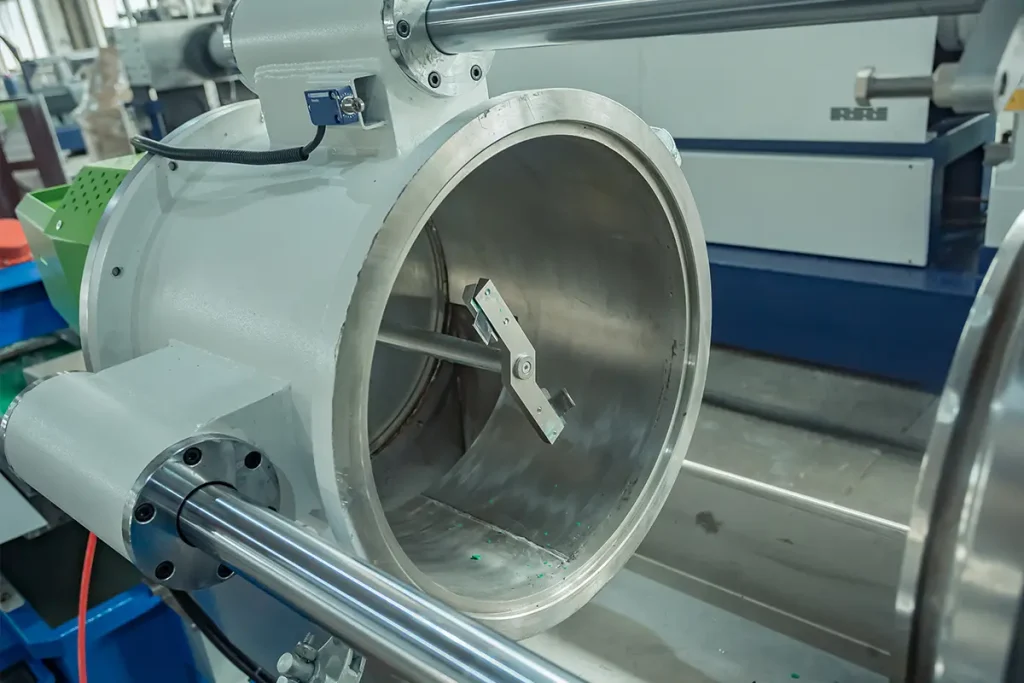
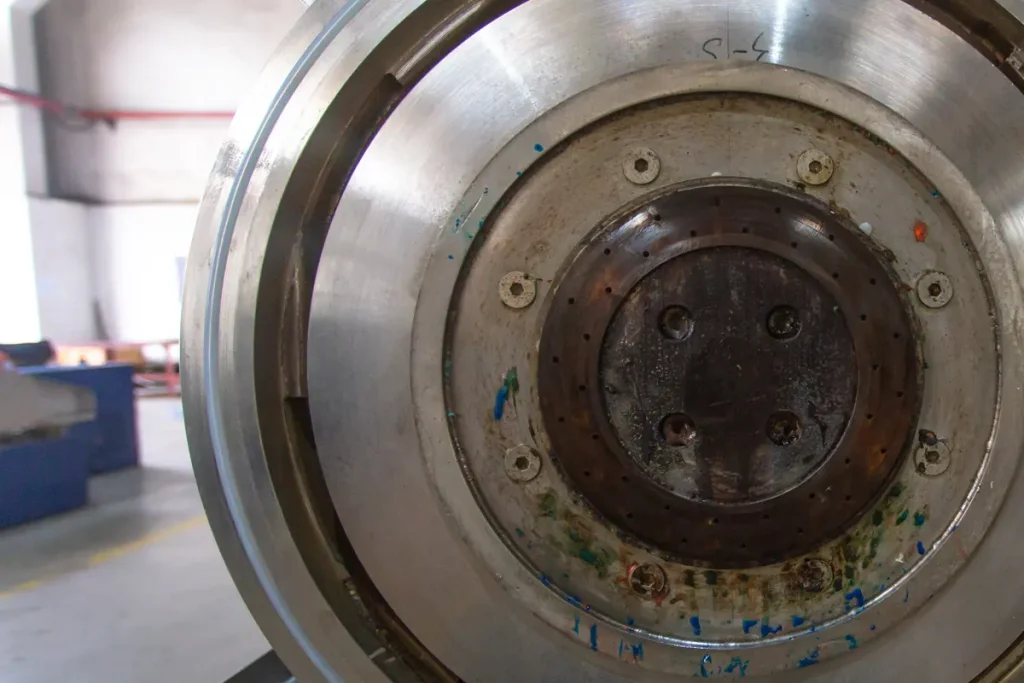
Reference views of the machine layout and the water-ring pelletizing section used for PP and PE flexible scrap.
Watch the Water Ring Pelletizer in Operation
See how flexible PP and PE scrap moves through compaction, extrusion, die-face cutting, and final pellet drying.
Frequently Asked Questions
The main questions buyers ask when comparing water-ring pelletizing for woven bags and flexible film scrap.
The main advantage is that it can produce uniform die-face pellets in a compact continuous system, making it efficient for PP and PE flexible scrap that benefits from immediate quenching and drying.
This configuration is best for clean or lightly printed flexible scrap. Heavily contaminated post-consumer film still benefits from proper washing and cleaning before pelletizing.
Because the system is highly integrated, many projects can operate with about one to two operators depending on feeding style, material preparation, and packaging arrangement.
It is mainly aimed at PP woven bags, raffia, non-woven scrap, PE agricultural or industrial film, film rolls, and other flexible PP/PE material that can be prepared into a stable pelletizing feed.
If your material is very fluffy, highly contaminated, or needs a different pelletizing method, a cutter compactor line or a broader film pelletizing system may be the better fit.
Upgrade Your Flexible PP PE Recycling Process
Tell us your material type, print level, contamination condition, and required output. We will help confirm whether this water-ring line or another pelletizing route is the better fit.