

PP PE Film Washing and Pelletizing System
PP/PE Film Washing & Recycling Line
Convert contaminated PP and PE film scrap into clean, low-moisture regrind or stable pellet feed. This modular line combines shredding, washing, density separation, drying, and optional pelletizing for post-consumer film, agricultural film, woven bags, and rigid PP PE regrind.
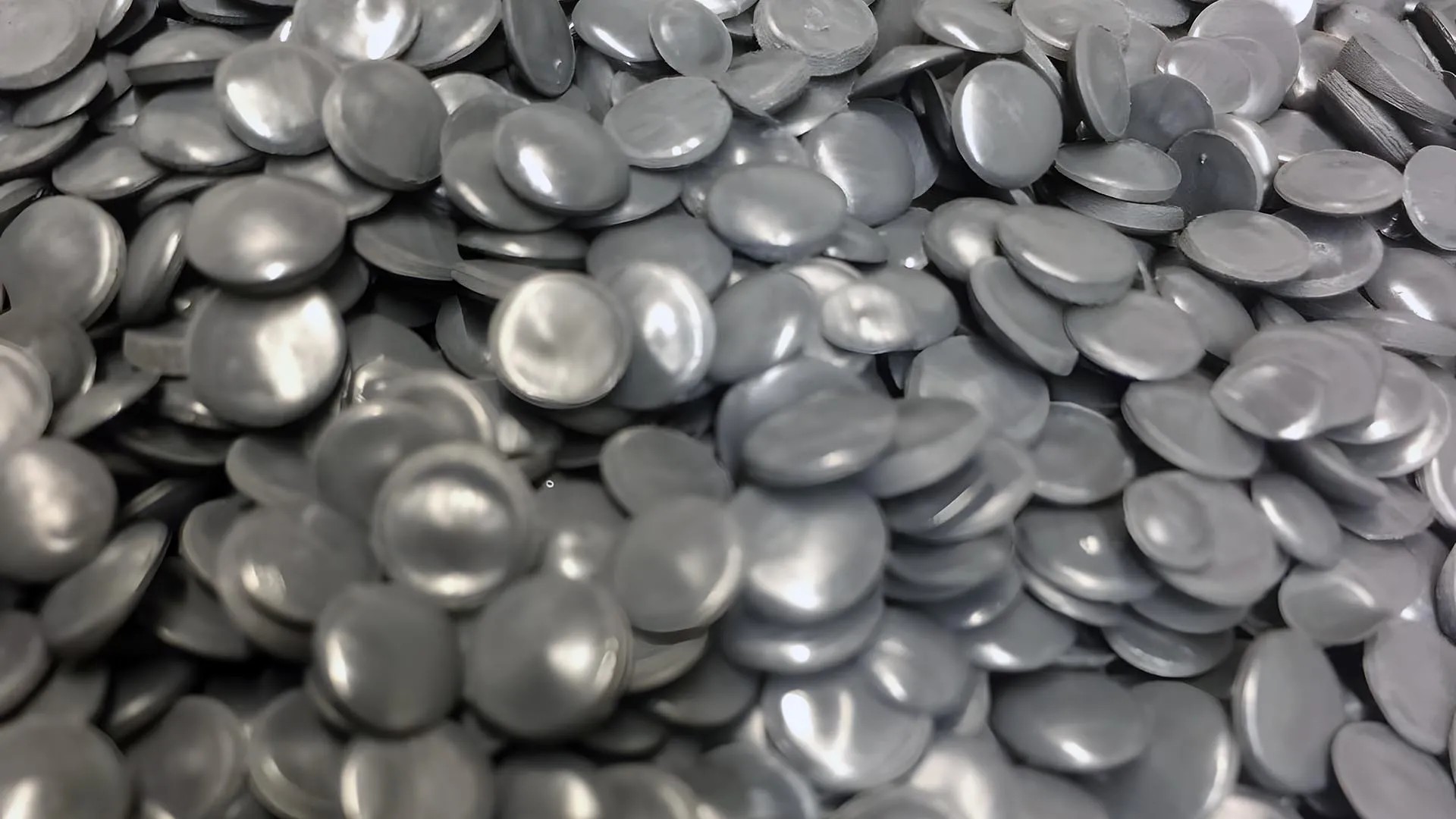
Why Choose This Film Washing Line
The line is designed for dirty flexible plastic streams where yield, water control, and downstream pellet quality matter more than simple rinsing.
This PP/PE film washing and recycling line is one of several turnkey systems in our complete recycling solutions portfolio, covering film, bottle, rigid, and specialty waste streams.
High Purity Output
Intensive scrubbing and density separation remove soil, labels, paper, and loose contamination before drying and pelletizing.
Energy Efficient Layout
Mechanical dewatering reduces thermal load so the line can control moisture without unnecessary power consumption.
Modular and Scalable
The process can be configured for 300 to 2,000+ kg/h depending on contamination level and final quality target.
Low Moisture Discharge
Centrifugal or squeeze drying combined with hot air piping helps achieve low final moisture for extrusion stability.
Adapted to Film, Raffia, and Regrind Feedstock
Whether the material is stretch film, agricultural film, woven bags, or rigid PP PE regrind, the washing route can be adjusted around contamination type, sand load, and target pellet quality.
Video Demonstration
Watch the PP PE film washing and recycling line in operation.
Key Line Components
Each module is engineered for stable size reduction, intensive contaminant removal, low residual moisture, and direct pelletizing preparation.
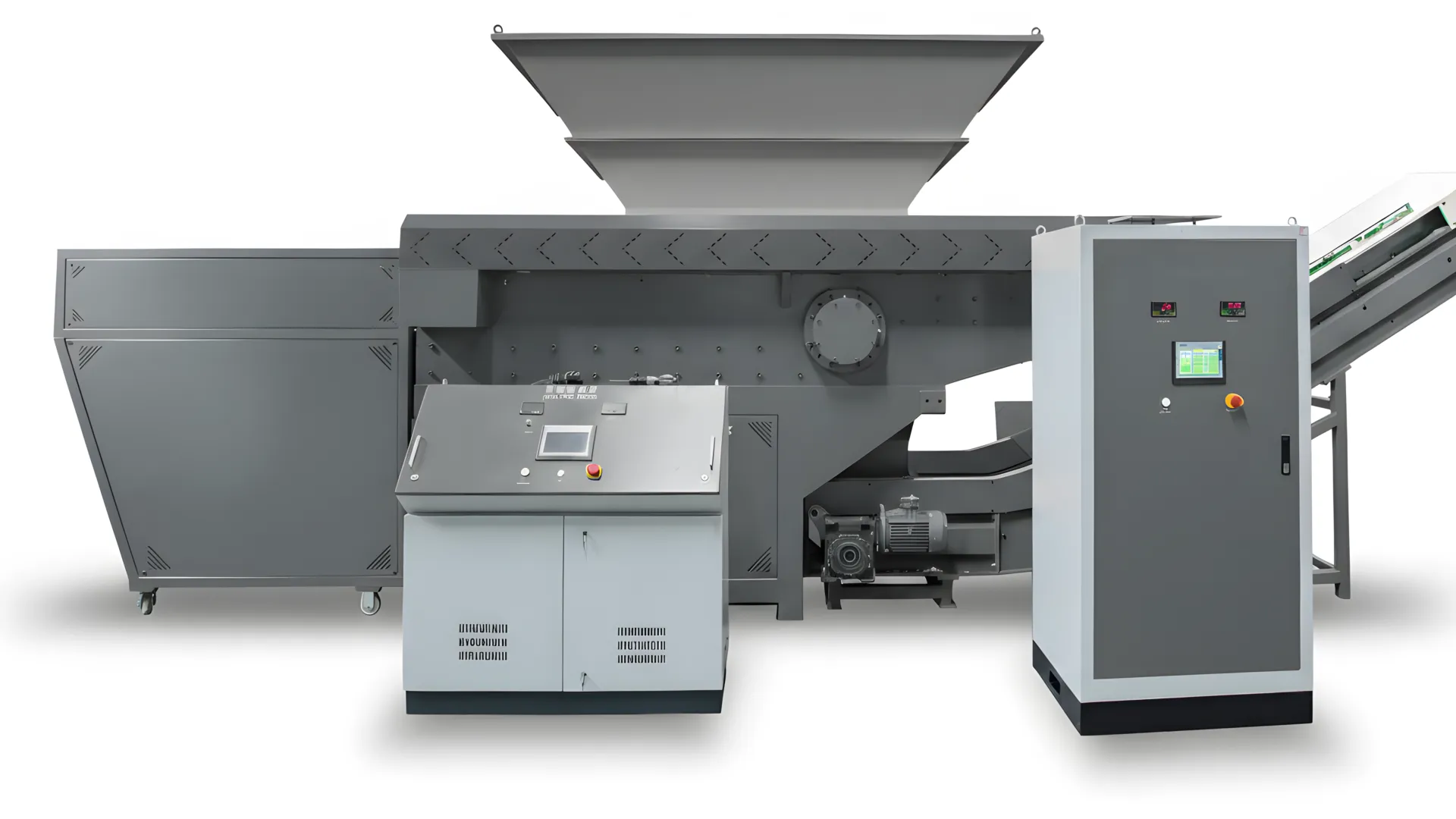
1. Single-Shaft Film Shredder
Function: Primary size reduction for dense film bales, rolls, and loose flexible plastic scrap. Low-speed, high-torque rotor design shreds tough films smoothly without tangling or heat buildup.
Key Engineering Features:
- Anti-wrapping rotor geometry prevents plastic film entanglement around the shaft
- Hydraulic horizontal ram ensures continuous, positive feeding against the cutting rotor
- Wear-resistant concave cutter knives with indexable edges for extended service intervals
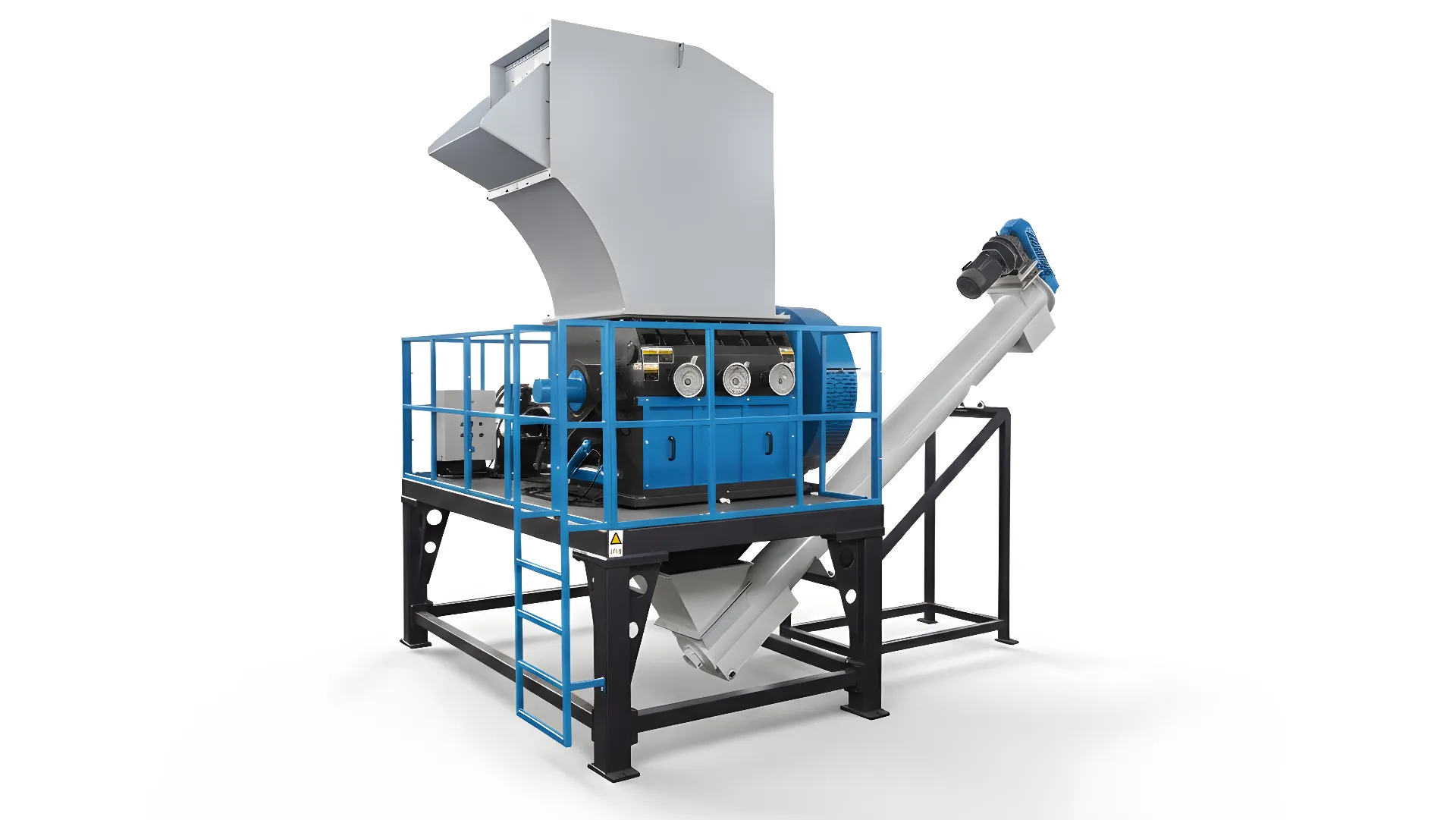
2. Wet Plastic Granulator
Function: Secondary precision cutting reduces shredded film strips into uniform 12–20 mm flakes while water injection continuously cools blades and flushes off surface dirt.
Key Engineering Features:
- Continuous water flushing cools blade edges and immediately begins contamination removal
- Double scissor-cut V-rotor profile delivers high throughput with minimal dust and fines
- Replaceable wear-resistant chamber liners withstand highly abrasive sand and grit
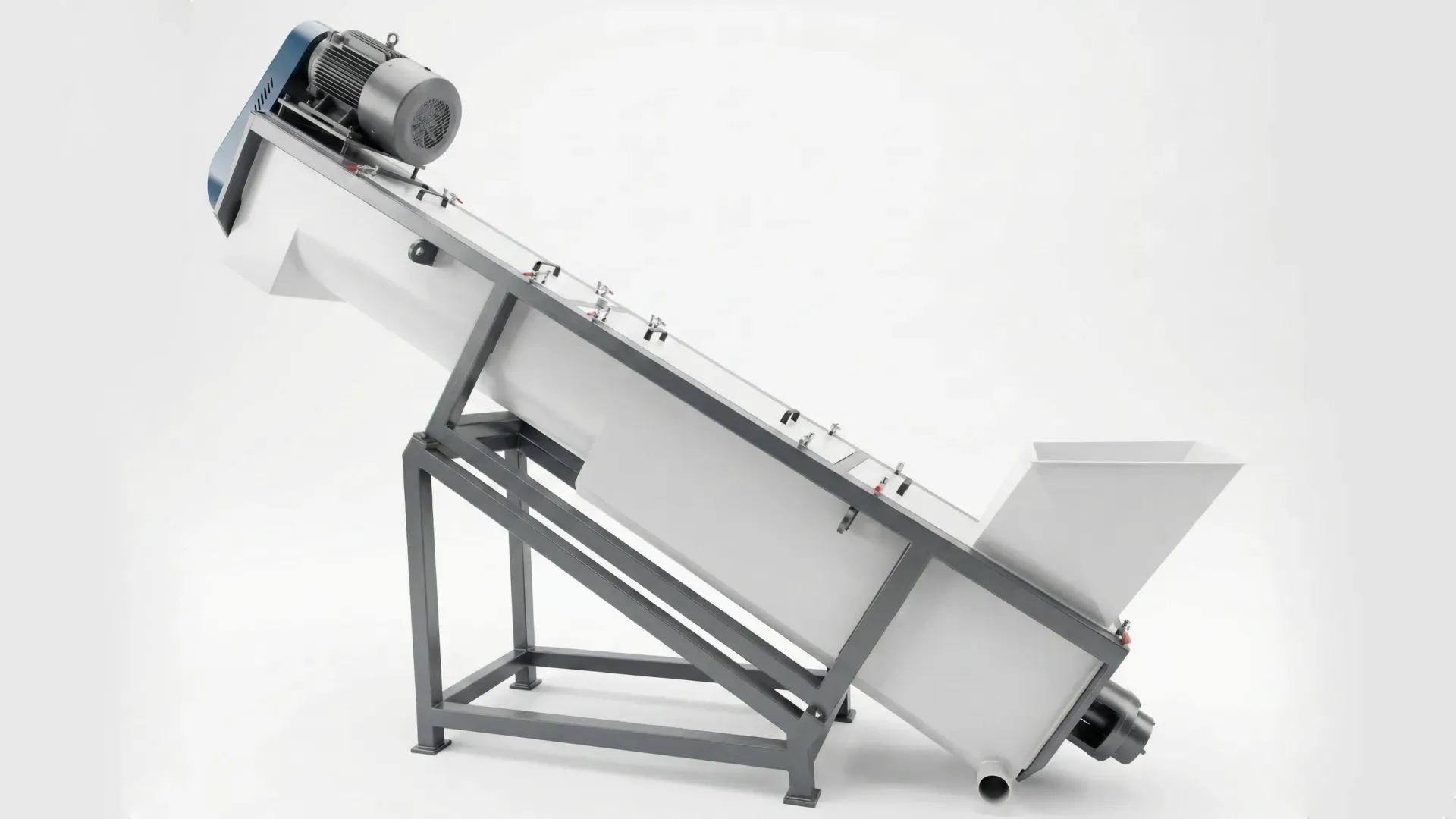
3. High-Speed Friction Washer
Function: Intensive mechanical scrubbing strips paper labels, soil, adhesives, and organic residues from flexible film flake surfaces at elevated rotor velocities.
Key Engineering Features:
- Dynamically balanced multi-paddle rotor delivers intensive flake-to-flake friction
- Stainless steel screen basket continuously separates wastewater, sand, and fine debris
- Integrated high-pressure spray nozzles prevent screen mesh fouling and clogging
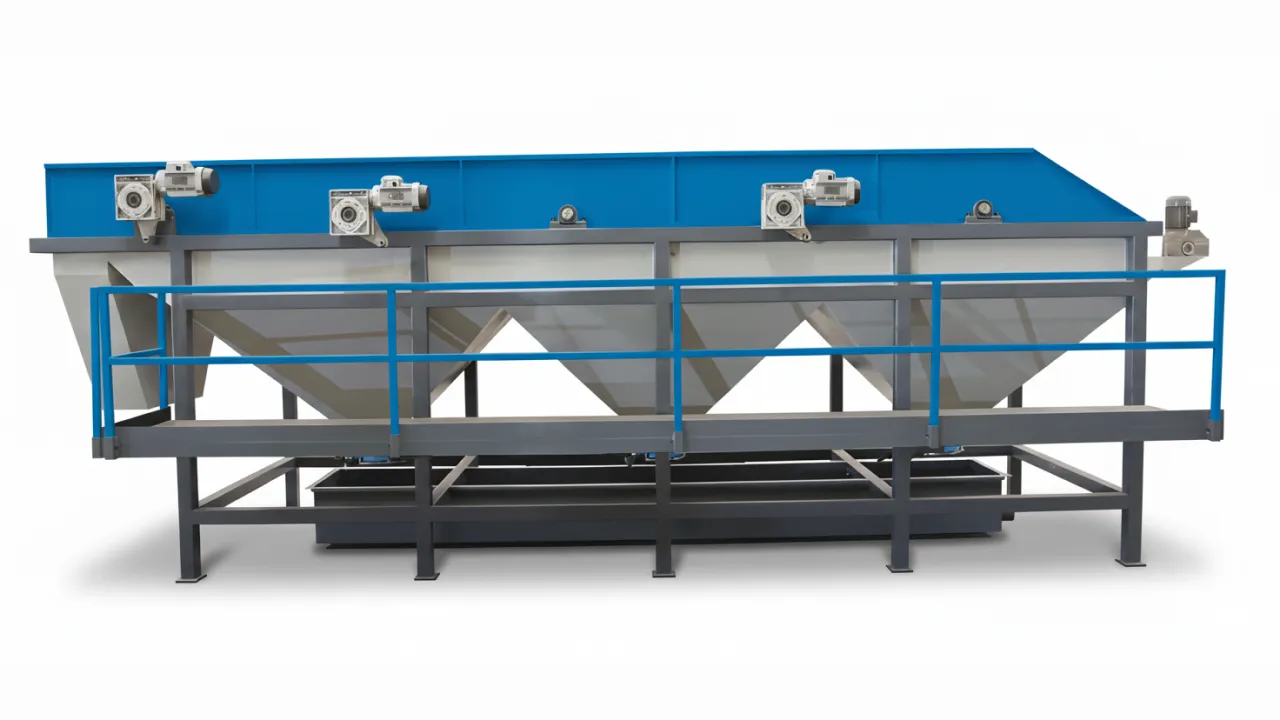
4. Sink-Float Separation Tank
Function: Density separation exploiting specific gravity differences in water to float light polyolefin film (PP/PE, ρ < 1.0 g/cm³) while sinking heavy rigid plastics, sand, glass, and metals.
Key Engineering Features:
- Multiple motorized paddle drums steadily convey floating film flakes to discharge
- Heavy-duty bottom screw auger continuously removes accumulated sinking sludge
- Full SUS304 stainless steel construction with internal water recirculation piping
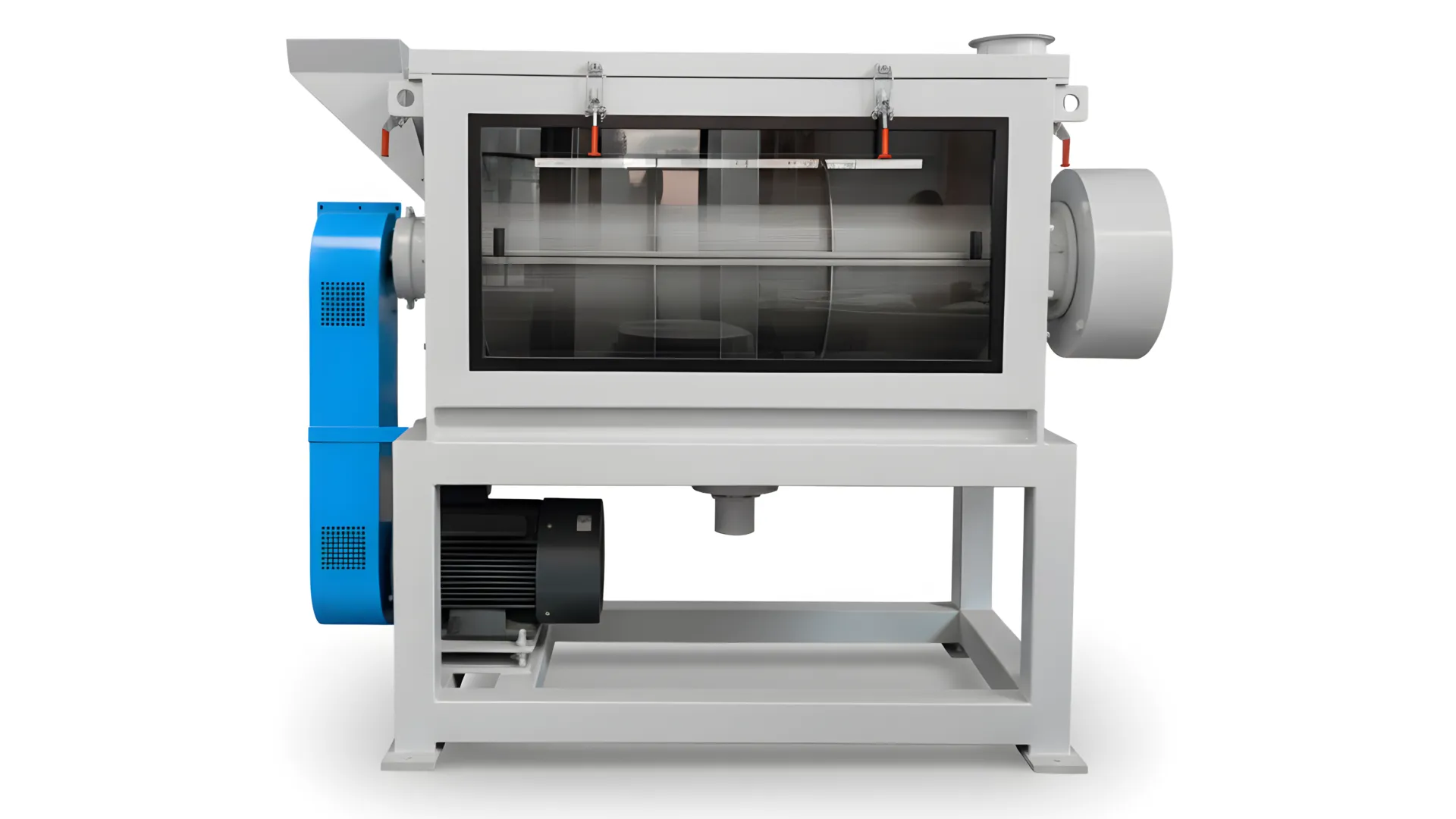
5. Dewatering & Thermal Drying System
Function: Two-stage moisture reduction pairing a high-G centrifugal dewatering machine with a hot-air thermal dryer to achieve < 3% residual moisture suitable for extrusion.
Key Engineering Features:
- High-speed centrifugal rotor spins off over 90% of surface water with low power consumption
- Stainless steel thermal piping with automated PID heating regulation and flash drying
- High-efficiency cyclone collector ensures clean solid-gas separation with minimal fines loss
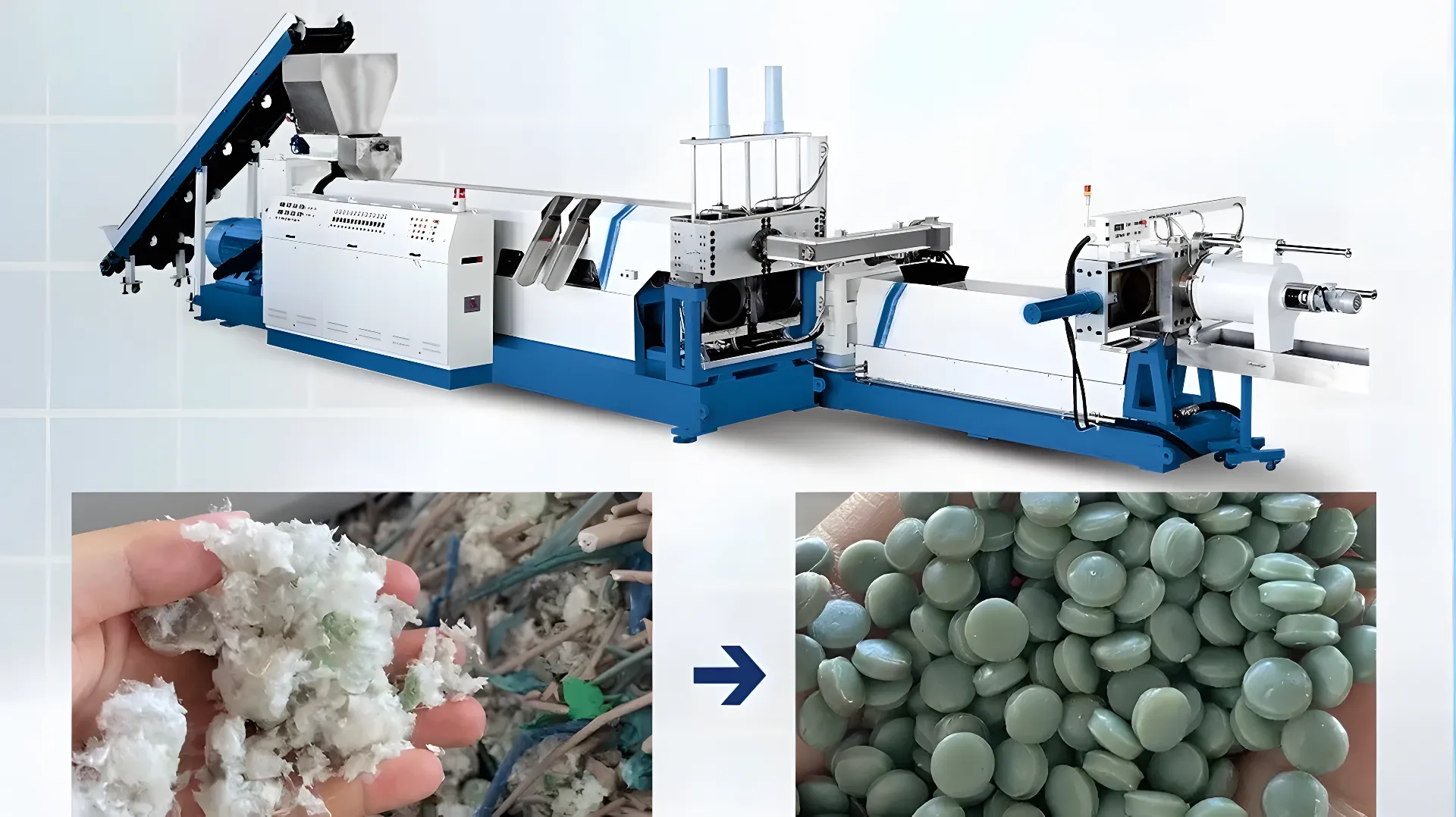
6. Plastic Pelletizing Line
Function: Compounding and granulating system that densifies, melts, degasses, filters, and cuts washed film flakes into uniform, high-density recycled polyolefin pellets.
Key Engineering Features:
- Integrated cutter compactor pre-heats, cuts, and densifies fluffy film flakes before extrusion
- Dual-zone vacuum degassing system strips volatile gases, printing odors, and residual moisture
- Hydraulic screen changer paired with die-face water ring cutting ensures uniform pellet geometry
From Waste to Worth
Process Flow
A multi-stage washing route designed to transform contaminated PP PE waste into clean regrind and pellet-ready material.
Input and Size Reduction
Film and regrind are shredded or ground into a stable size that can move through washing equipment without tangling.
Intensive Washing
Friction and hot wash stages remove labels, paper, oil, and surface contamination from the plastic stream.
Sink-Float Separation
Density separation removes heavy impurities such as stones, metal, and grit while retaining target film material.
Mechanical and Thermal Drying
Centrifugal or squeeze dewatering combined with hot air piping lowers final moisture to a pelletizing-friendly level.
Pelletizing
Optional pelletizing melts, filters, and cuts the washed plastic into stable pellets for reuse and storage.
Technical Specifications
Typical project planning range for PP PE film and regrind recycling lines. Final sizing depends on contamination level, moisture target, and downstream pellet requirements.
| Specification Item | Typical Range |
|---|---|
| Line Capacity | 300 to 2,000+ kg/h |
| Applicable Materials | PP PE film, raffia, woven bags, jumbo bags, rigid PP PE regrind |
| Contamination Type | Soil, sand, labels, paper, oil, light organics |
| Drying Route | Centrifugal dewatering, squeeze drying, hot air thermal drying |
| Final Moisture | Typically 3 to 5 percent before pelletizing |
| Water System | Open or closed-loop with filtration and optional DAF support |
| Optional Downstream | Water ring pelletizing, storage silo, conveying integration |
| Power and Voltage | Customized for regional standards such as 400V 50Hz or 460V 60Hz |
Swipe horizontally to view the full table on mobile.
Machine Layout and System View
A typical modular arrangement suitable for 300 to 2000 kg per hour lines with future upgrade paths.
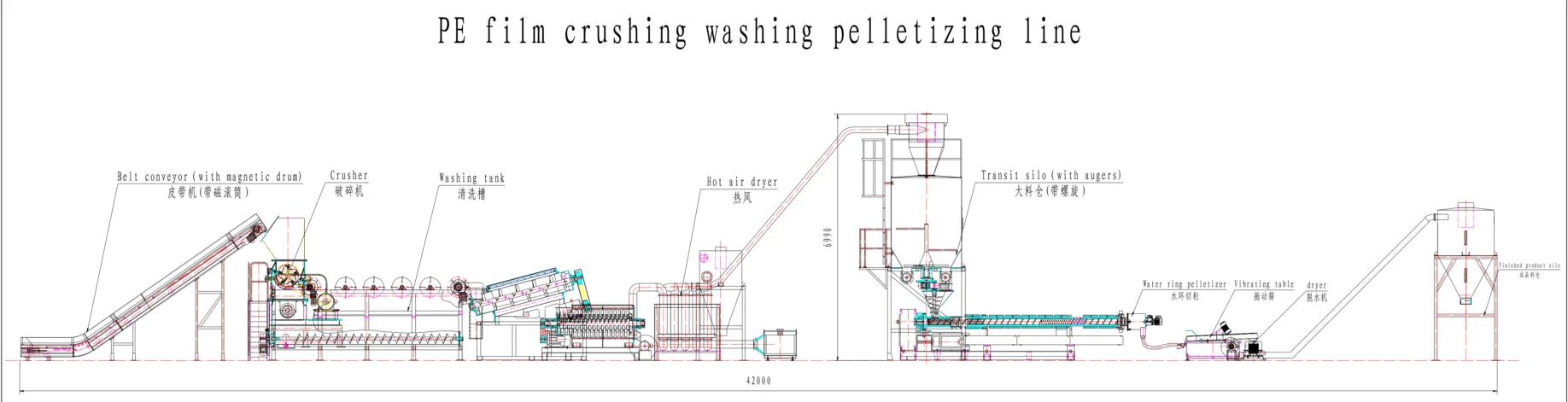
Example layout for a 500 kg per hour PE film recycling line (Overall Length: ~42 m | Height: ~7 m)
Applications
This washing route fits both contaminated flexible plastics and cleaner industrial regrind streams.
Flexible Packaging Film
Post-consumer LDPE and LLDPE stretch film, shrink wrap, and commercial packaging waste.
Agricultural Film
Heavily soiled mulch film, greenhouse film, and irrigation tubing with higher sand and soil load. See our agricultural film recycling guide for full process parameters.
Woven Bags and Jumbo Bags
PP raffia and FIBC materials that need stable size reduction and strong washing performance.
Rigid PP PE Regrind
Crushed flakes from bottles, crates, molded parts, and pipe scraps that need cleaning before reuse.
Post-Industrial Scrap
Cleaner film edge trim, defective rolls, and factory offcuts where the target is stable pellet feed.
Integrated Washing and Pelletizing Projects
A strong fit for plants that want one coordinated route from dirty film input to washed flakes or finished pellets.
Frequently Asked Questions
Quick answers to common technical, utility, and delivery questions for PP PE film washing lines.
What is included in a PP PE film washing and recycling line?
A complete line may include shredding, pre-washing, friction washing, sink-float separation, dewatering, thermal drying, storage buffering, and optional pelletizing depending on feedstock condition and final quality target.
What capacity does a film washing line offer?
Typical projects range from around 300 kg per hour for smaller installations up to 2000 kg per hour or more for industrial recycling plants. Real output depends on contamination load and drying requirements.
Can the line handle dirty agricultural film?
Yes, but agricultural film usually requires stronger pre-washing, more settling capacity, and tighter water management because sand, soil, and organics are much heavier than in cleaner industrial scrap. Our agricultural film recycling guide walks through the full process for mulch and greenhouse film.
What power and compliance standards are available?
Configurations can be adapted to regional power standards such as 400V 50Hz for Europe or 460V 60Hz for North America. CE-oriented configurations and English HMI support are available.
Do you support installation, commissioning, and training?
Yes. We support layout planning, remote or onsite commissioning, and operator training according to project scope and delivery arrangement.
How is water usage managed in the washing line?
Water systems can be configured as open or closed-loop circuits with filtration and sludge handling support, helping reduce consumption and simplify environmental compliance.
Request a Quotation
Share your material type, contamination level, target throughput, and whether you need washed flakes or finished pellets. We will propose a tailored configuration and layout.