

Plastic Pelletizing Machines for Recycling
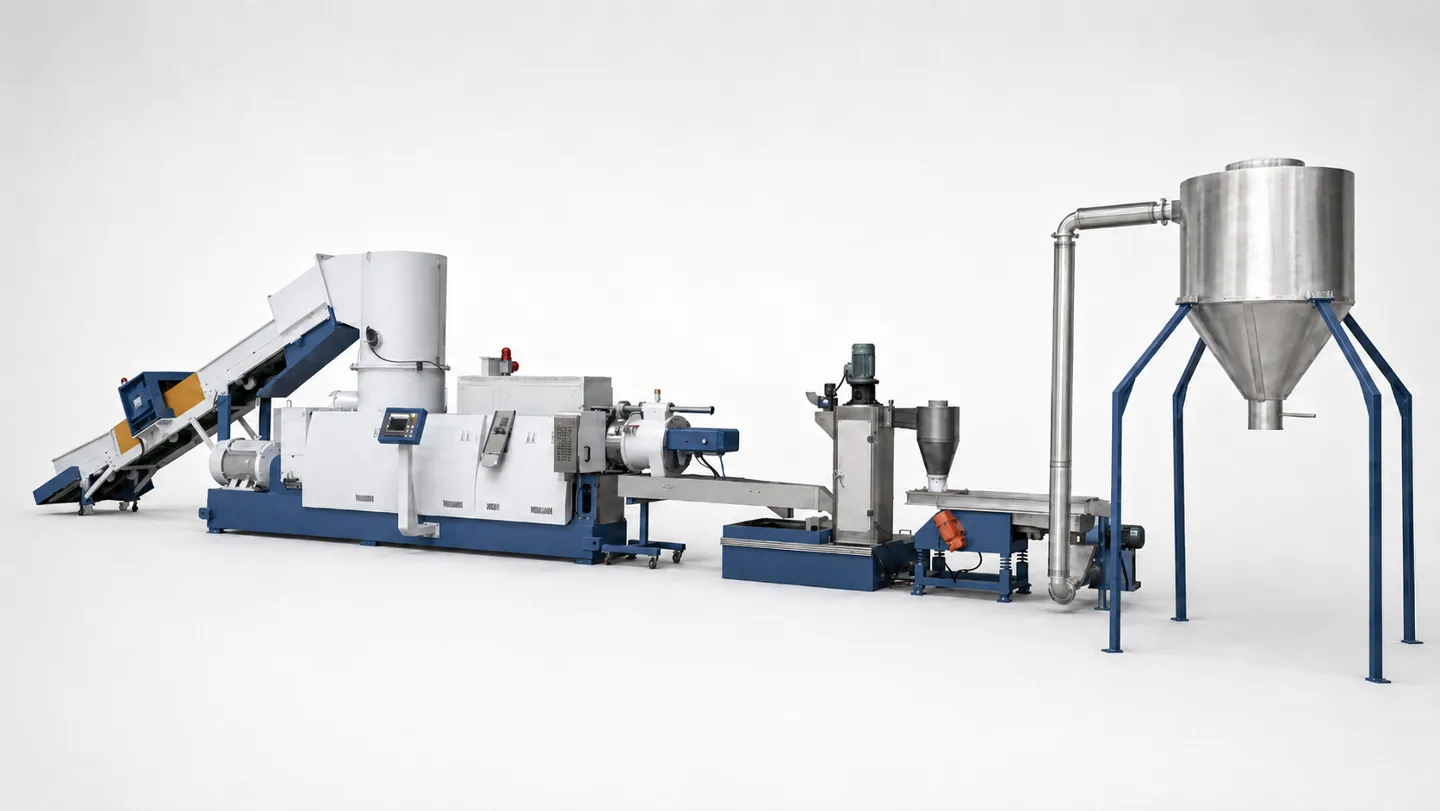
Choose a pelletizing line for prepared film, flakes, rigid regrind or suitable foam scrap. Match the feeding system, extruder, filtration and pellet cutting to your material, required pellet quality and production target.
Choose by Feedstock and Application
Start with the polymer, material form and intended pellet use. Open the relevant line page for its process options and specifications.
PP/PE Film and Woven Bags
Select compaction or other assisted feeding for low-density film and fibrous scrap. Choose extrusion, degassing and pellet cutting as compatible parts of the same line.
Explore film pelletizingPET Flakes
Start with sorted, clean flakes and a defined moisture target. The featured single-screw PET route requires properly dried feed to limit hydrolysis and intrinsic-viscosity loss.
Explore PET pelletizingRigid PP/HDPE Regrind
Match hopper feeding or a force feeder to flake size, bulk density and flow. Specify melt filtration for the actual contamination and required pellet application.
Explore rigid flake pelletizingEPS Foam and Styrofoam
Reduce bulky EPS into a feed form the extruder can handle. Assess compaction, degassing and pellet cooling around material condition and throughput.
Explore EPS pelletizingEVA Foam: Material Assessment
Confirm EVA formulation, crosslinking, fillers and contamination using representative samples. A recovery route must be evaluated before assuming the foam can be melt-processed.
Discuss an EVA routeRecycling and Compounding
Use twin-screw processing where the project calls for stronger mixing or devolatilization. Formulated compounds also require appropriate additive dosing and dispersion.
Explore twin-screw recyclingPlastic Pelletizing Lines and Extruder Systems
Compare the routes below by their intended use. Cutter-compactor describes feed preparation, single- or twin-screw describes extrusion, and water-ring or strand describes pellet cutting. These choices can be combined in one system.
Film Feeding & Water-Ring Systems
PP/PE Film Pelletizing Machine
A film recycling route combining stable feeding, extrusion, degassing, filtration and pellet cutting. Specify incoming moisture and print or contamination levels.
Cutter CompactorCutter Compactor Pelletizing Line
Cutting and compaction prepare low-density film, raffia and woven scrap for extrusion. Match preconditioning to feed moisture and heat sensitivity.
Water RingWater Ring Pelletizer for PP/PE Film & Woven Bags
A PP/PE recycling system featuring water-ring die-face cutting. The cutting method can be combined with a suitable feeding and extrusion configuration.
Material-Specific Pelletizing Lines
PET Flakes Single-Screw Pelletizer
Single-screw processing of clean, properly dried PET flakes with vacuum degassing, melt filtration and underwater pelletizing. Define moisture and IV targets.
Rigid RegrindRigid PP/HDPE Plastic Flake Pelletizing Machine
Extrusion for prepared rigid PP and HDPE flakes, with feeding and filtration selected around flake flow and contamination.
BOPP FilmBOPP Film Pelletizing Line for Recycling
Feeding and temperature control for BOPP production scrap. Review printing, coatings and laminations before specifying the process.
NonwovenPP Meltblown Nonwoven Pelletizing Line
Controlled feeding and extrusion for PP meltblown and nonwoven production scrap. Review fibre handling, heat sensitivity and melt-flow requirements.
EPS FoamEPS Foam Pelletizing Line for Styrofoam Recycling
A route for bulky EPS scrap with material preparation, extrusion, degassing and pelletizing configured around the actual feed condition.
EVA FoamWaste EVA Foam Recycling Pelletizing Line
A specialist EVA recovery route requiring sample assessment of crosslinking, formulation and intended reuse before confirming the equipment configuration.
Extrusion & Compounding Platforms
Single-Screw Pelletizer for Plastic Recycling
An extrusion platform for defined thermoplastic feedstocks. Specify screw design, feeding, venting, filtration and cutting for the material.
Recycling PelletizingTwin-Screw Extruder System for Plastic Recycling
For prepared flakes and regrind requiring melt homogenization, vacuum devolatilization and filtration before pellet production.
CompoundingTwin-Screw Compounding & Extrusion Line
For formulated compounds requiring controlled additive feeding, mixing and dispersion, including filled or reinforced recycled materials.
Match Feeding, Extrusion and Pellet Cutting
These are starting points for configuration, not fixed equipment packages. Final selection depends on moisture, contamination, melt behaviour, required pellet properties and a defined throughput basis.
| Feedstock / application | Feed preparation | Extrusion / melt treatment | Pellet cutting | Confirm before selection |
|---|---|---|---|---|
| PP/PE film, raffia, woven bags | Cutter-compactor or other assisted feeding | Single-screw route; venting and filtration as required | Water-ring or another material-compatible method | Feeding stability, moisture, printing and filtration |
| Clean PET flakes | Metered, properly dried flakes | Featured PET single-screw route with vacuum degassing | Underwater cutting on the featured PET line | Feed moisture, IV retention and melt quality |
| Rigid PP/HDPE flakes | Hopper or force feeding to suit flake flow | Material-specific single-screw with melt filtration | Select for melt flow and pellet specification | Flake size, bulk density and contamination |
| EPS foam | Size reduction and suitable densifying or forced feeding | Degassing extrusion for prepared EPS | Material-compatible cutting and cooling | Stable feed, gas removal and pellet handling |
| EVA foam scrap | Sample-specific preparation | Confirm a suitable recovery process after material trials | Confirm with the validated process | Crosslinking, formulation, fillers and intended reuse |
| Prepared recyclate with demanding melt treatment | Controlled feeding matched to the scrap | Twin-screw recycling with suitable devolatilization and filtration | Choose for melt properties and pellet quality | Melt homogenization and volatile load |
| Formulated recycled compounds | Main dosing plus side feeding where needed | Twin-screw compounding with controlled mixing | Strand or another formulation-compatible method | Additive dosage, filler dispersion and formulation |
Swipe horizontally to view the full table on mobile.
How a Plastic Pelletizing Line Works
Prepared thermoplastic material is fed, melted, treated and cut into pellets. The positions of filtration and degassing vary by line design; required feed preparation is confirmed before extrusion.
Prepare & Feed
Dry or otherwise condition the feedstock as required. Match the hopper, feeder or compactor to material form and bulk density.
Melt & Degas
The extruder melts and conveys the polymer. Venting or vacuum degassing reduces entrained gas and volatile components within the selected process limits.
Filter & Control Pressure
Melt filters retain solid particles according to the filter and material conditions. Pressure controls and, where fitted, a melt pump support steady cutting.
Cut, Cool & Handle
Cut at the die face or form and cool strands before cutting. Match cooling, dewatering and pellet drying to the selected method.
Specify the Conditions Behind Pellet Quality
Pellet consistency and usable output depend on the feedstock and operating conditions. Agree on the material specification, process scope and acceptance criteria before comparing proposals.
Pellet Quality Targets
Define pellet size, moisture, contamination, melt flow and intended application. For PET, include the required intrinsic viscosity and its measurement method.
Stable Material Feeding
Match the feeder or preconditioning unit to bulk density, material shape and flow. Densifying may help loose film or foam feed more consistently.
Screw & Temperature Configuration
Select screw design, temperature zones and residence time for the polymer and required melt treatment. Evaluate mixed or heat-sensitive streams before confirming compatibility.
Degassing & Melt Filtration
Degassing reduces gas and volatile components; melt filtration retains solid particles. Performance depends on process conditions. Do not assume these stages remove all ink, odour, gels or mixed polymers.
Feed Moisture & Pretreatment
Specify acceptable inlet moisture for the chosen extruder. The featured PET single-screw line needs properly dried flakes; a general drying percentage should not be applied to every polymer.
Throughput & Utility Basis
Compare capacity for the same feedstock and operating conditions. Distinguish incoming feed rate from accepted pellet output, and request configuration-specific power, cooling and layout requirements.
Pelletizing Equipment, Extruders, and Recycled Pellets
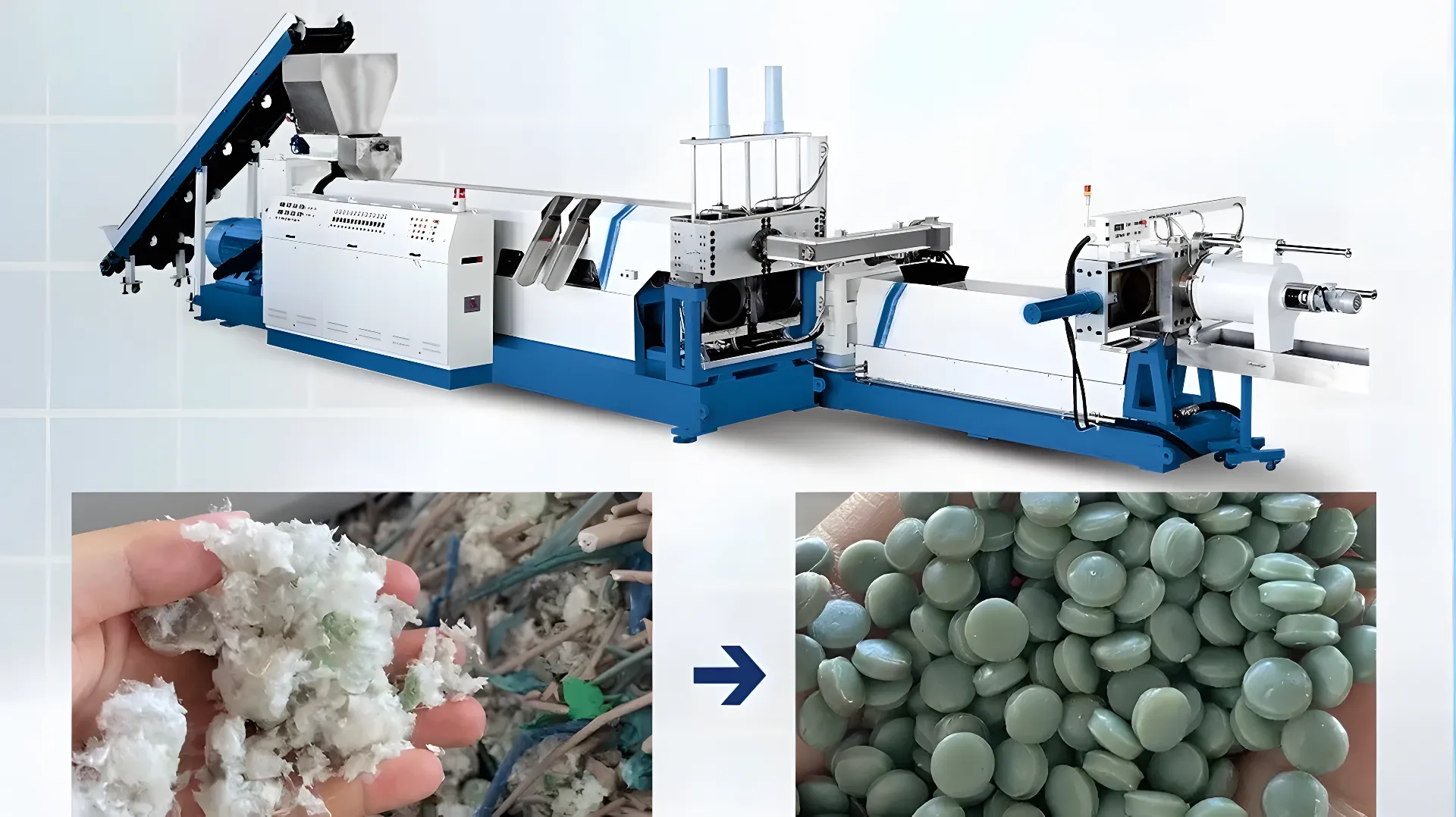
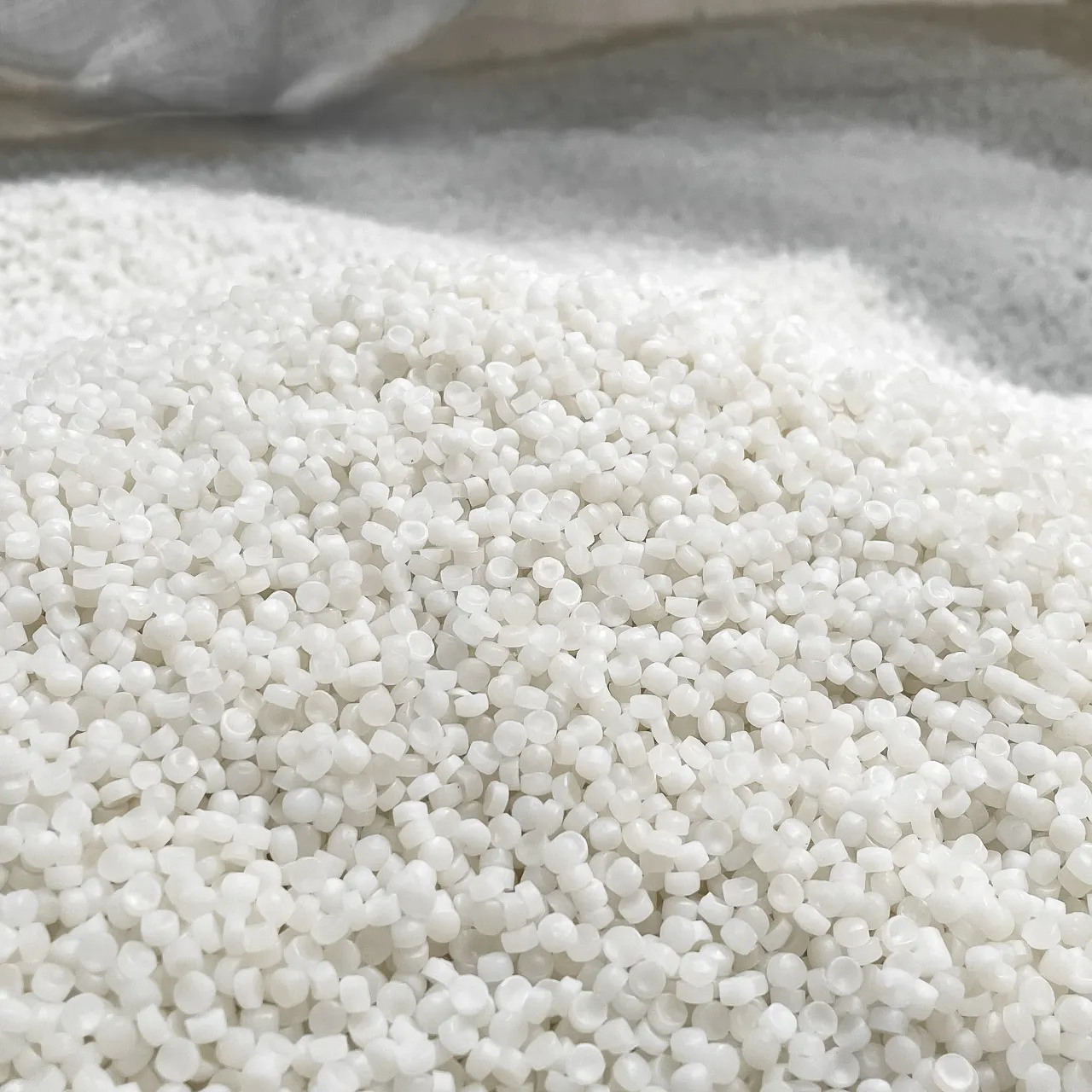
Equipment and pellet examples illustrate different configurations. Feedstock, process selection and agreed quality criteria determine the actual output.
Connect Pelletizing with Washing, Drying, and Material Preparation
Plan sorting, washing and drying around the actual contamination and polymer. For a project spanning several stages, start with the complete Recycling Solutions HUB.
Complete Recycling Solutions
Full line design from shredding, washing, and drying through final pelletizing and packing.
Plastic Shredders
Prepare bulky film, bags, purges, foam, and rigid scrap for stable downstream feeding.
Washing Systems
Select washing to remove the relevant surface contamination. Mixed polymers also require sorting and a compatibility plan.
Dewatering and Drying
Match mechanical dewatering and thermal or dehumidifying drying to the polymer and required inlet moisture for extrusion.
Prepare the Feed and Filter the Melt
These modules support a recycling line. Confirm their capacity and interfaces when specifying an upgrade.
Plastic Film Agglomerator
Prepares lightweight film, woven or fibrous scrap as denser intermediate material for extrusion. Agglomeration alone does not produce finished extrusion pellets.
Melt FiltrationHydraulic Screen Changer
Supports screen replacement and melt filtration in an extrusion line. Specify pressure, temperature, filtration area and screen-change requirements.
Plastic Pelletizer Questions
A few practical questions to clarify before choosing a pelletizing line.
Need Help Selecting a Plastic Pelletizing Line?
Send your material details, current process, and target pellet application. We will recommend a pelletizer configuration with the right feeding system, extruder type, degassing, filtration, and cutting method. New to the process? Read our guide to how plastic pelletizing works before you specify a line.