

Washing systems / Material selection
Plastic washing systems, matched to your feedstock.
Turn contaminated plastic into clean, dry material for the next recycling stage. Select a washing system around your polymer, incoming contamination and required output quality.
PET bottles · PP/PE film · Rigid plastics · Woven bags
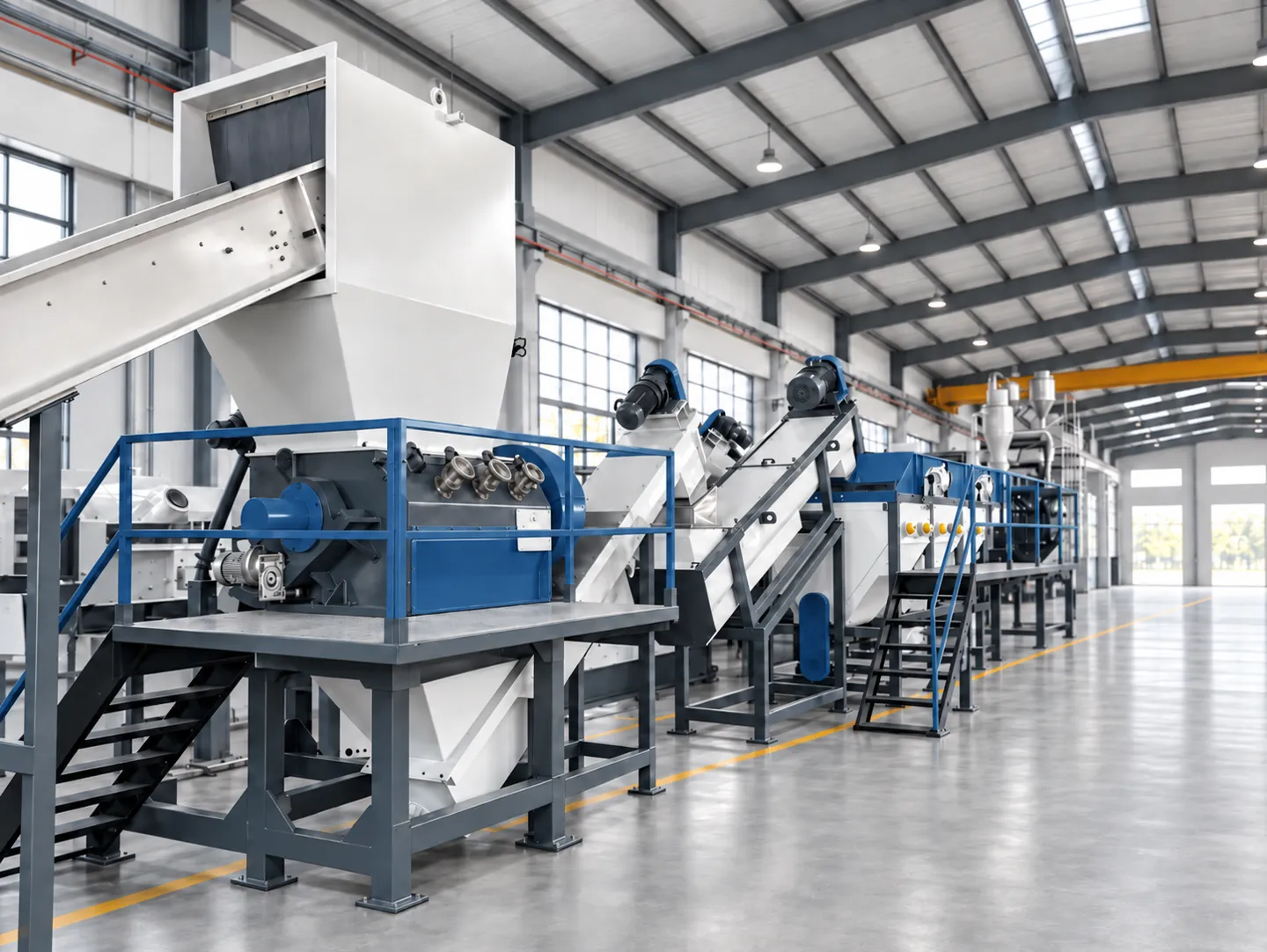
01 / Start with the material
One starting point. Different washing routes.
The right configuration starts with the waste stream. Compare the routes below, then open the dedicated line page for equipment options and material-specific specifications.
PET bottles
Bottles → Washed flakesSeparate caps and labels, manage adhesive residues, and specify flake quality for the intended downstream application.
Explore the PET linePP/PE film
Flexible film → Clean filmAgricultural and packaging films need a process suited to their soil load, bulk density and dewatering requirements.
Explore the film lineRigid plastics
Containers & regrind → Clean flakesSelect crushing, washing and separation for a defined PP, HDPE or PVC stream. Mixed polymers require a sorting plan.
Explore the rigid lineWoven bags & raffia
Woven material → Washed scrapHandle fibrous PP material with controlled feeding and size reduction, followed by washing and suitable drying.
Explore the woven lineContaminated containers
Specialist assessment requiredChemical drums and IBCs need a residue-specific process, safe handling and a wastewater plan before equipment selection.
Explore container washing02 / Build the process
Remove contamination. Prepare the output.
These are the main process functions, not a fixed machine sequence. Stages can be combined, repeated or omitted after reviewing the feedstock.
Prepare & size
Open bales, remove unsuitable objects and reduce the material to a size the washing stages can handle.
Pre-wash & separate
Remove loose dirt and separate materials by density where appropriate. Water-based separation alone cannot identify every polymer.
Wash & rinse
Use friction to scrub surfaces. Add hot washing when the residue and output specification justify it, then rinse away loosened contamination.
Dewater & dry
Match mechanical dewatering, squeezing or thermal drying to the material and the moisture required by the next process.
Check & transfer
Check the agreed output criteria and transfer washed material to storage, packing or a separate pelletizing stage.
03 / Define the specification
A useful proposal starts with your material.
Capacity, utilities and footprint depend on the selected process. Share these four inputs so the proposed washing system can be evaluated against your actual operating conditions.
- Feedstock & contamination
- Polymer type, material form, photographs or samples, and the expected mix of sand, labels, oils or other residues.
- Throughput & operating schedule
- Target feed rate in kg/h, expected contamination or yield loss, and daily operating hours. Distinguish incoming feed from clean output.
- Output acceptance criteria
- Define residual contamination, moisture and particle size for the next process. Agree on sampling and measurement methods before acceptance testing.
- Site & utilities
- Available floor space and access, electrical supply, water quality, heating source and wastewater treatment arrangements.
04 / Inside the line
See how the equipment connects.
View the washing-line video, or explore individual modules when you are planning an upgrade to an existing system.

Explore washing & drying modules
High-speed friction washingContinuous hot washingFriction screw washingDewatering & drying systemsAdding a module requires checking the existing line capacity, transfer points, controls and utilities.
Before you specify
Questions about choosing a washing system
Can one washing system process every type of plastic?
A modular system can accommodate a defined range of feedstocks, but films, rigid plastics and PET bottles have different handling and separation needs. Review polymer compatibility, contamination and changeover requirements before combining streams.
Do I need hot washing or cold washing?
Friction and cold washing may be sufficient for loose dirt and some surface contamination. Adhesives, oils and demanding output requirements may call for a hot-washing stage. The choice should be assessed using representative material and agreed quality targets.
What determines water use and the required floor space?
The washing stages, incoming dirt load, recirculation and discharge requirements determine the water balance. Equipment arrangement, storage and maintenance access determine the layout. Request a project-specific utility schedule and layout instead of relying on a single generic figure.
Does washing alone make recycled plastic food-grade?
No. Washing is one stage in a wider process. Food-contact suitability depends on feedstock control, any required decontamination, process validation and the applicable requirements for the intended use.
What should I send for a washing-system quotation?
Send the polymer and waste source, material photos or samples, target throughput, required output quality and installation location. Include available utilities and floor-space constraints so the equipment scope can be defined.
Let’s define your washing system.
Send your feedstock, capacity target and output requirements. Our team can discuss the washing stages, equipment scope and site information needed for a proposal.