



Plastic Recycling Machines & Turnkey Lines
Turn PET, HDPE, PP and PE film into high‑quality, market‑ready pellets with synchronized washing, drying, filtration and pelletizing — engineered for stable throughput and consistent quality.
About Energycle & Editorial Review
What We Do
Energycle designs and manufactures plastic recycling equipment and turnkey lines spanning sorting, size reduction, washing, drying and pelletizing. Every configuration is tailored to your materials, cleanliness and capacity targets.
Quality & Compliance
Built under an ISO 9001 quality system with CE‑compliant machines. Safety, energy efficiency and maintainability are designed into each module.
How to Engage
Share your feedstock and goals and our engineers will recommend a matched lineup and line layout. For site visits or references, contact us: Contact Sales.
What Is a Plastic Recycling Machine?
A plastic recycling machine — also called plastic recycling machinery, plastic recycling equipment, or simply a plastic recycle machine in some markets — is the industrial system that converts plastic waste into recycled pellets ready for new product manufacturing. Modern plastic recycling machines are typically multi-stage lines combining shredders, granulators, washing systems, drying equipment, and pelletizing extruders. Energycle supplies complete plastic recycling machines and individual machinery for PET, HDPE, PP, PVC, and EPS waste streams. An integrated, modular system that converts sorted plastic waste into clean flakes or pellets through staged size‑reduction, washing, drying and pelletizing.
A plastic recycling machine (often configured as a full line) combines multiple modules to process post‑consumer or post‑industrial plastics. Typical lines include automated conveying, shredding or granulation, intensive washing with separation, dewatering and thermal drying, and finally extrusion with filtration, degassing and pellet cutting. The result is high‑purity flakes or uniform pellets that are ready for reuse in manufacturing.
Our systems are designed to be modular and scalable, so you can start with essentials and expand capacity or capability (e.g., adding color sorting) as your business grows.
500-3000 kg/h
< 1%
98%+
24/7
Why Invest in Professional Recycling Lines?
High ROI & Efficiency
Optimized for low energy consumption per ton and high throughput, maximizing your resale value.
Closed-Loop Quality
Produce pellets suitable for high-end applications like bottle-to-bottle or film-to-film.
Intelligent Automation
PLC Integrated control ensures consistent operation and reduces labor dependency.
Sustainable Compliance
Zero-discharge water treatment options available to meet strict environmental regulations.
From Pain Points to Results
Contaminated & Mixed Feed
Labels, sand, organics and density mix hurt purity and damage equipment.
Intensive Washing + Separation
Friction wash, float‑sink and optional hot wash raise purity and protect downstream equipment.
High Moisture After Wash
Wet flakes cause voids and gels during extrusion and degrade pellet quality.
Dewatering & Thermal Drying
Centrifuge plus controlled drying helps achieve target moisture for void‑free pellets.
Unstable Output Specs
Impurities and volatiles lead to odor, color shift and MFI drift.
Filtration + Degassing Control
Fine filtration and dual‑stage degassing stabilize MFI and color for market‑ready pellets.
How It Works
End‑to‑end process engineered to deliver clean, dry flakes and uniform pellets.
1. Sorting & Separation
Remove metals, glass, paper and separate by polymer/color for higher purity. View equipment →
2. Size Reduction
Shredders and granulators create uniform flakes, improving downstream cleaning efficiency. View machines →
3. Washing & Cleaning
Friction washers, float‑sink and hot wash remove labels, glue and residues. View systems →
4. Dewatering & Drying
Centrifugal dewatering and thermal drying reach moisture targets for extrusion. View dryers →
5. Melting & Pelletizing
Extrusion with filtration, degassing and strand cutting for uniform, market‑ready pellets. See pelletizers →
Explore Our Product Lines
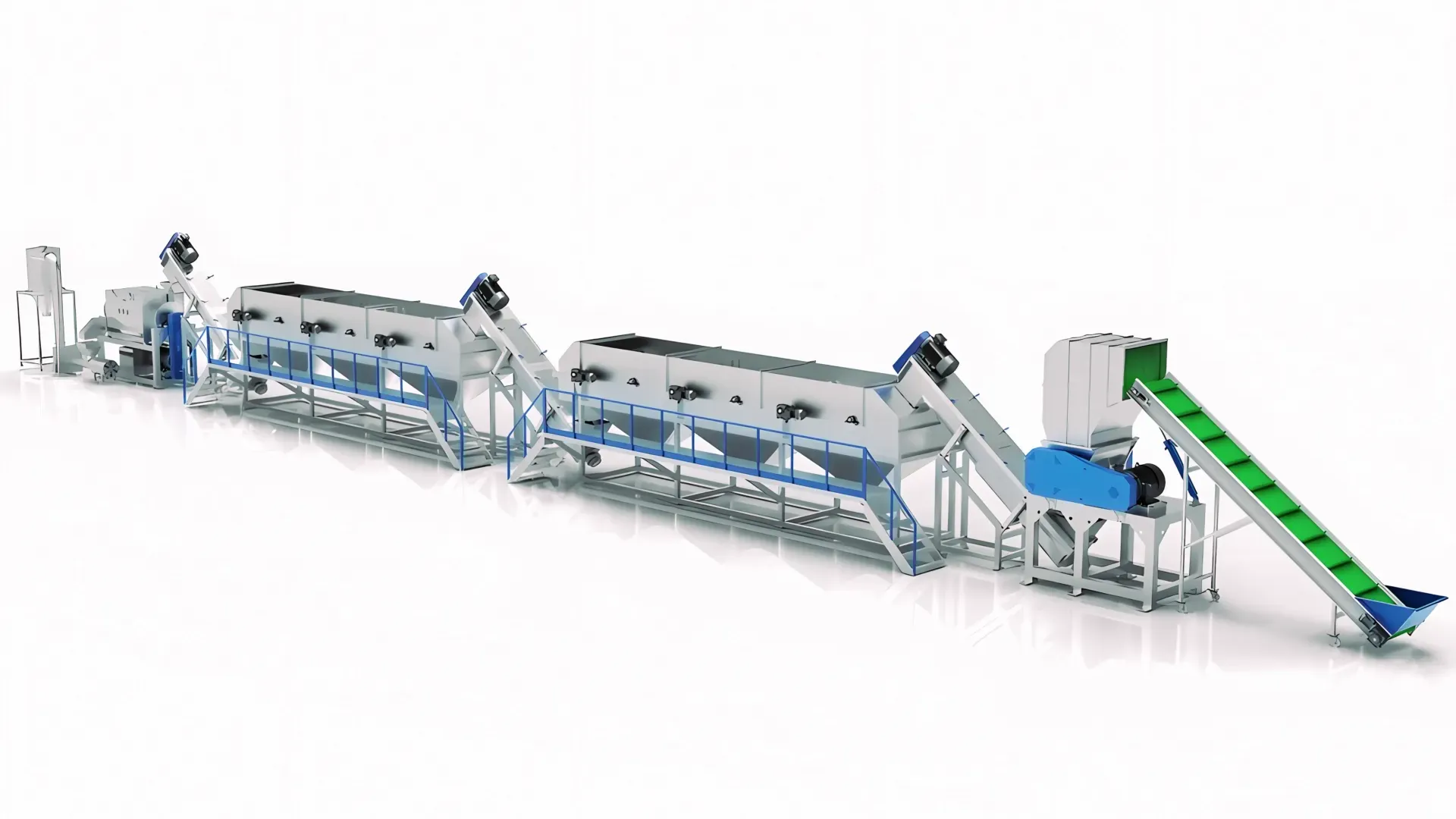
Plastic Washing Lines
Turnkey lines for crushing, washing and drying contaminated plastics. From agro film to rigid bottles.
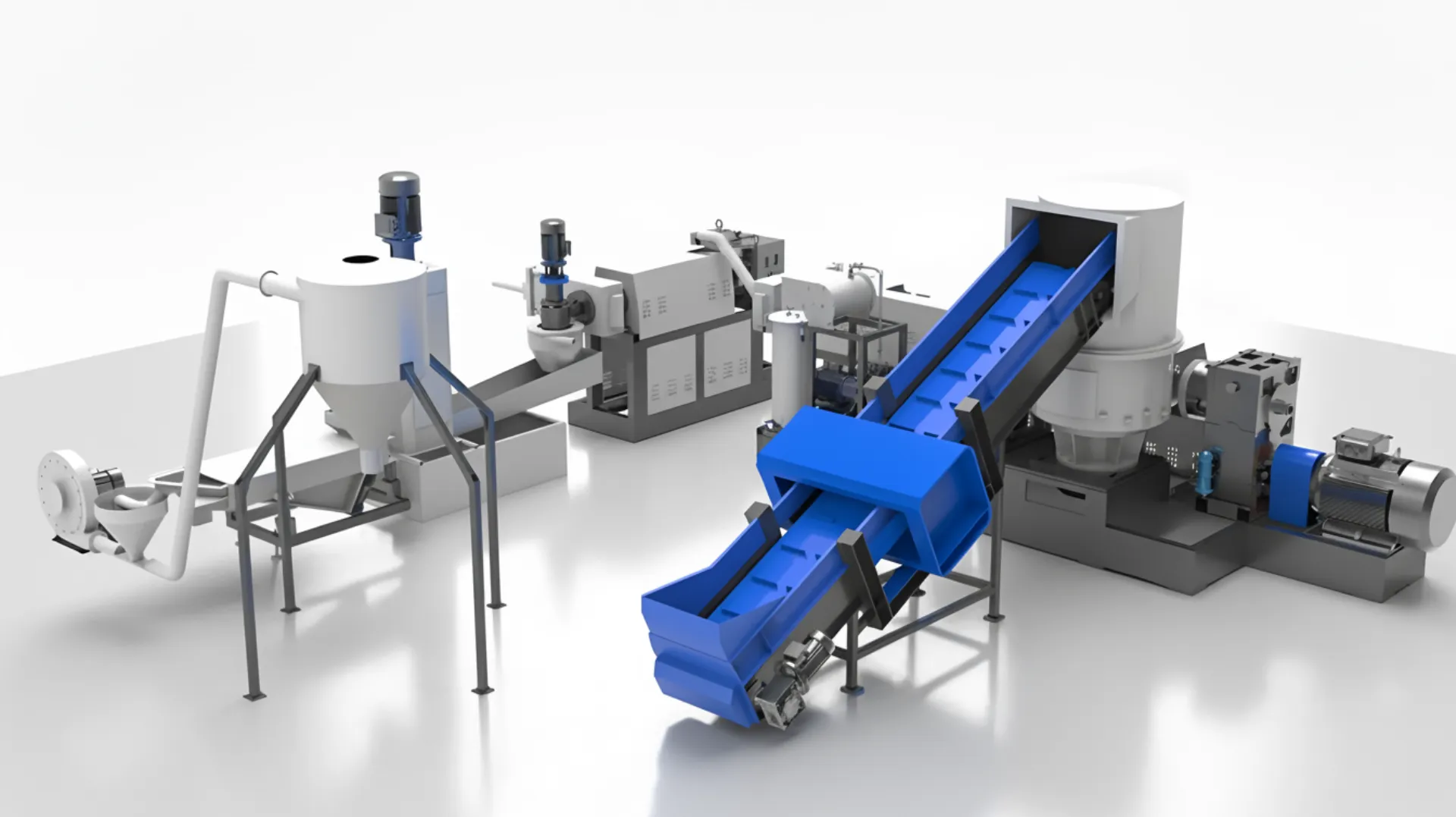
Pelletizing Extruders
High-performance extrusion with filtration and degassing for market-ready uniform pellets.
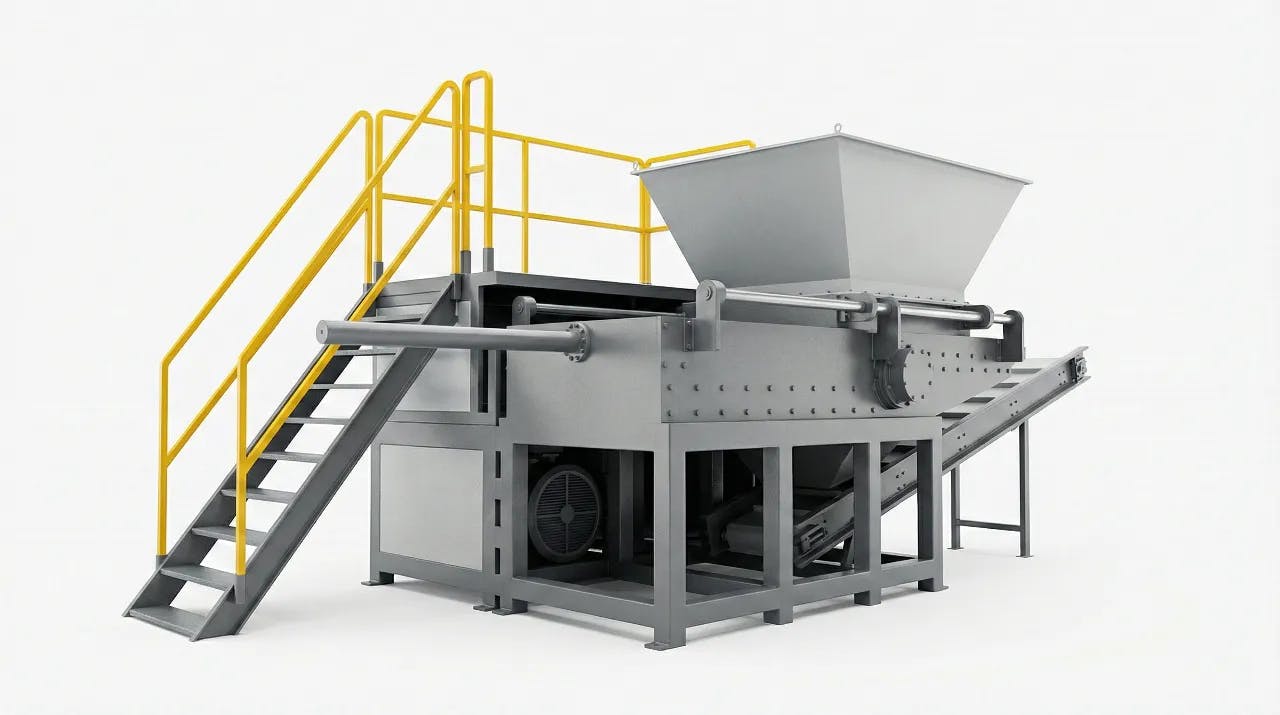
Plastic Shredders
Low-speed, high-torque single and double shaft shredders for tough heavy-duty materials.
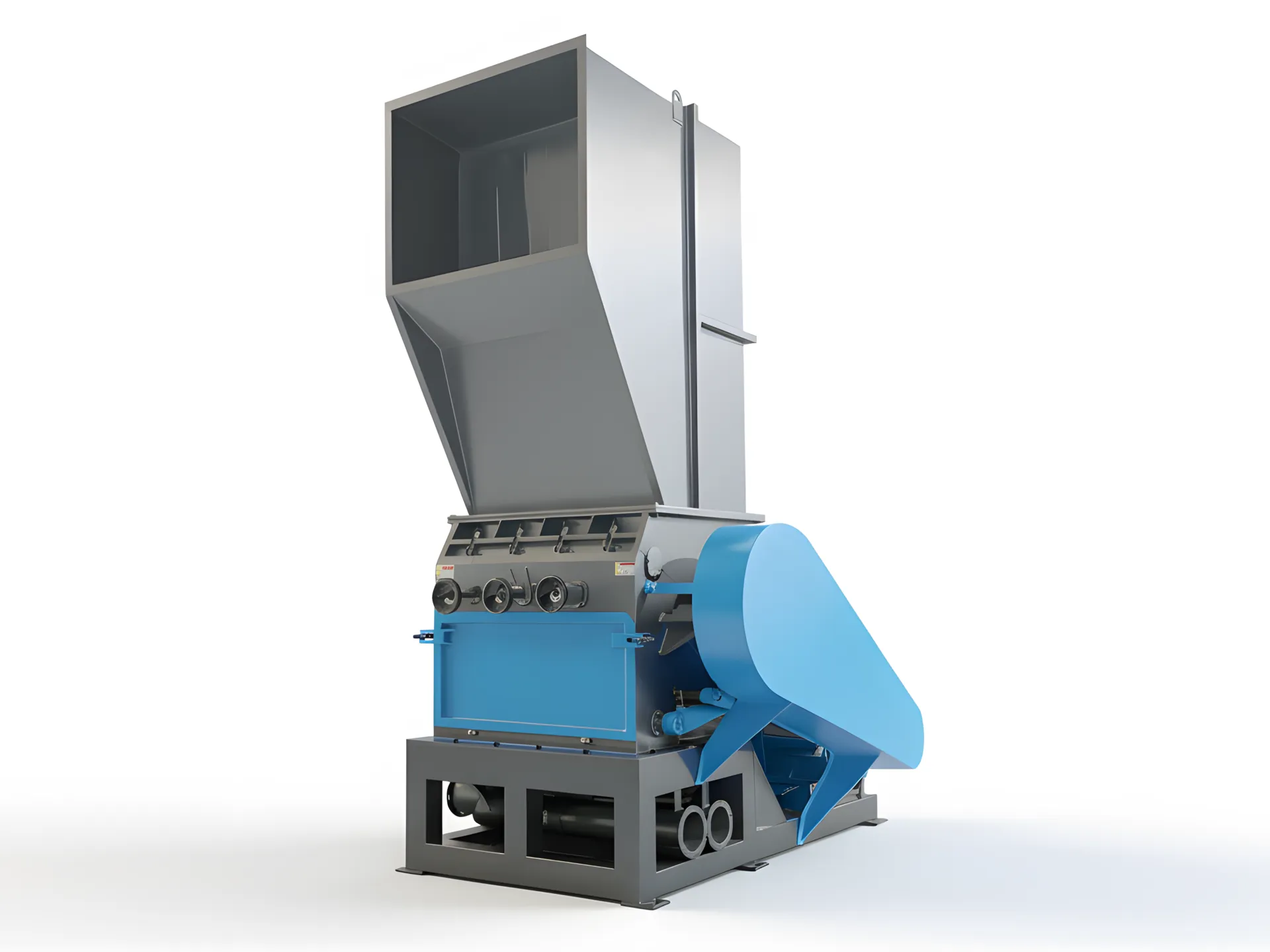
Plastic Granulators
High-speed crushers and grinders to process rigid plastics into uniform, small flakes.
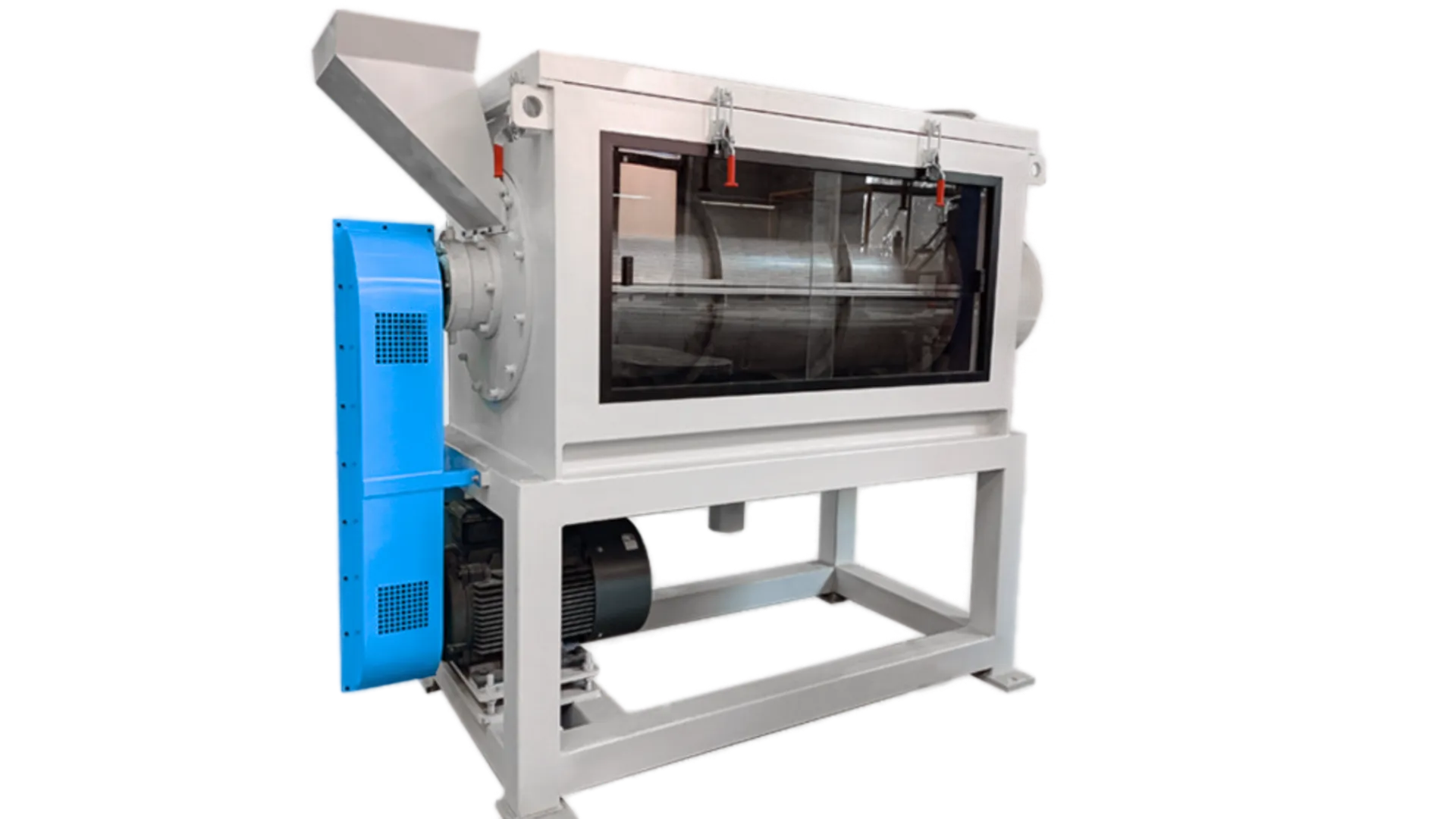
Drying Systems
Mechanical and thermal drying solutions to achieve <1% moisture content for high-quality reuse.
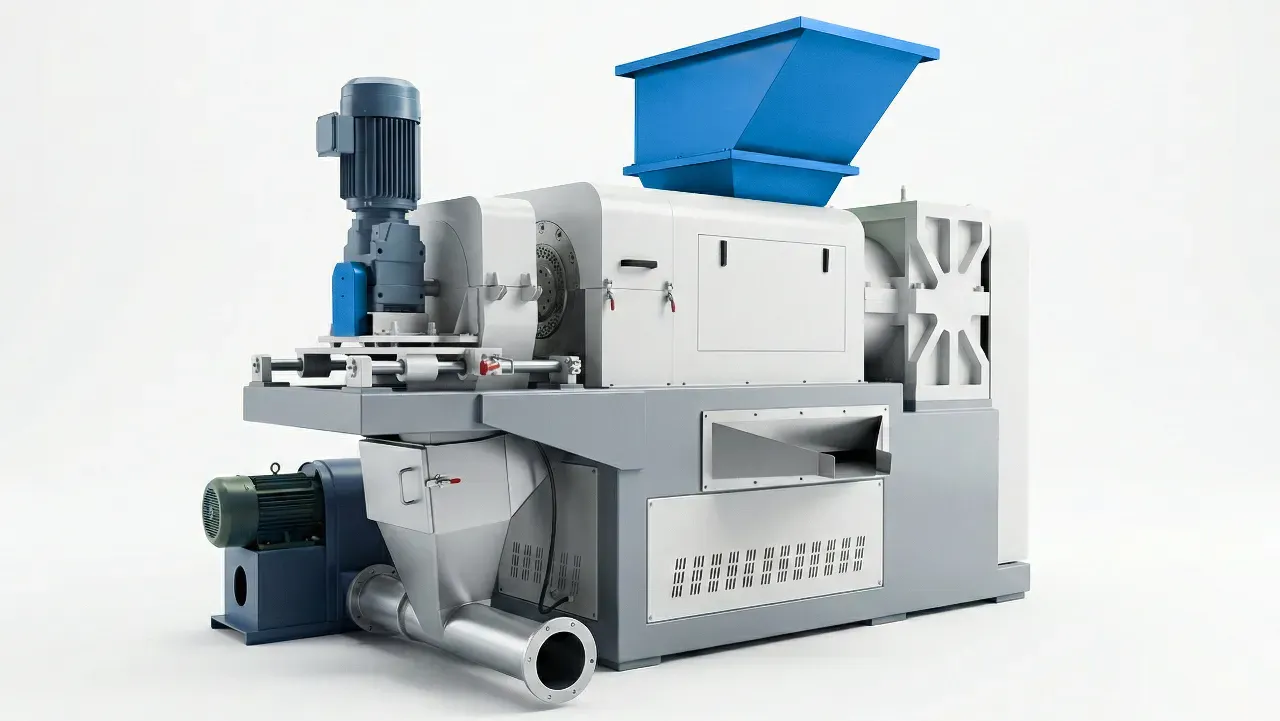
Densification Systems
Highly efficient mechanical dewatering and compacting for washed plastic films and woven bags.
Complete Equipment Range
Every machine you need for a plastic recycling line, from size reduction to pelletizing and baling.
Recycling Lines by Material
Complete line configurations for the most common waste streams.
PET Bottle Recycling Line
Label removal, hot washing and friction washing for fiber-grade or bottle-grade PET flakes.
HDPE Bottle Recycling Line
Shredding, washing and drying for detergent bottles, milk bottles and other HDPE containers.
Rigid PP, HDPE and PVC Washing Line
For crates, drums, pipes and mixed rigid scrap.
PP/PE Film Washing Line
Washing, squeezing and drying for agricultural film, stretch film and bags.
Film Shredding and Densifying Line
Turns clean post-industrial film into dense, free-flowing granules.
PP Woven Bag and Raffia Line
Cutting, washing and dewatering for woven bags, jumbo bags and raffia.
How to Choose a Plastic Recycling Machine
Five steps that decide the right machine or line for your plant.
1. Identify your waste stream
Polymer type (PET, HDPE, LDPE, PP, PVC), form (bottles, film, rigid parts, pipes) and contamination level decide the line configuration. Clean post-industrial scrap may not need washing; post-consumer waste does.
2. Define the output you will sell
Flakes, regrind or pellets, and the end use: fiber, packaging, injection molding or food contact. Higher output grades need more processing stages.
3. Size the capacity
Base it on real operating hours: required capacity = monthly feedstock ÷ monthly operating hours × 1.2. Every machine in the line must match, because the slowest one sets the throughput.
4. Count the total cost of ownership
Include energy, wear parts, water, labor and downtime, not only the purchase price. Our price guide gives budget ranges by machine and line type.
5. Check the supplier’s support
Ask about installation supervision, operator training, spare parts lead time, and reference plants with a similar material and capacity.
What to Include in Your Quote Request
The more of this you send, the more accurate our configuration and price will be.
Input material
Polymer type and mix, form (baled, loose, washed or unwashed), contamination level and moisture content.
Output target
Flakes, regrind or pellets; target specifications such as MFI, IV for PET or residual moisture; and the end use.
Throughput and site
Tons per year, number of shifts, available floor space, and connected power and water supply.
Commercial details
Destination port or site, warranty expectations, and whether you need installation and operator training.
Line Stage Comparison
Which Machine Does What
Most plastic recycling lines combine several machines in sequence. This table shows where each stage fits, what it takes in, and what it hands to the next machine. Capacities are typical industrial ranges and vary with material, contamination, and final configuration.
| Machine | Role in the line | Typical input | Output | Typical capacity | Line position |
|---|---|---|---|---|---|
| Shredder | Coarse primary size reduction | Bulky, baled or rigid scrap, film, lumps, pipes | Large irregular flakes (typically 20–80 mm) | ~300–3000 kg/h | First stage; feeds granulator or washing |
| Granulator | Fine, uniform size reduction | Pre-shredded or smaller rigid scrap | Uniform regrind (typically 4–12 mm) | ~200–1500 kg/h | After shredder; before washing or extrusion |
| Washing line | Contaminant removal | Dirty flake or film (labels, glue, dirt) | Clean washed flake | ~500–3000 kg/h | After size reduction; before drying |
| Dryer (centrifugal / thermal) | Moisture removal | Washed wet flake or film | Dry flake (residual moisture depends on stage) | Matched to line rate | After washing; before pelletizing |
| Pelletizer / extruder | Melt and re-granulate into pellets | Dry, clean flake or regrind | Uniform pellets for resale or reuse | ~150–1500 kg/h | Final stage; output to market |
Swipe to see the full table →
Materials We Process & Typical Capacities
Compatible Plastics
- PET bottles and flakes (food/non‑food grade)
- HDPE/PP rigid containers, caps and crates
- PE film, agricultural film, raffia & woven bags
- Mixed post‑consumer and post‑industrial streams
300-500 kg/h
Compact line offering.
800-1200 kg/h
Balanced throughput.
1500-2000 kg/h
High‑throughput scale.
≤1-2% Moisture
High drying efficiency.
See It In Action
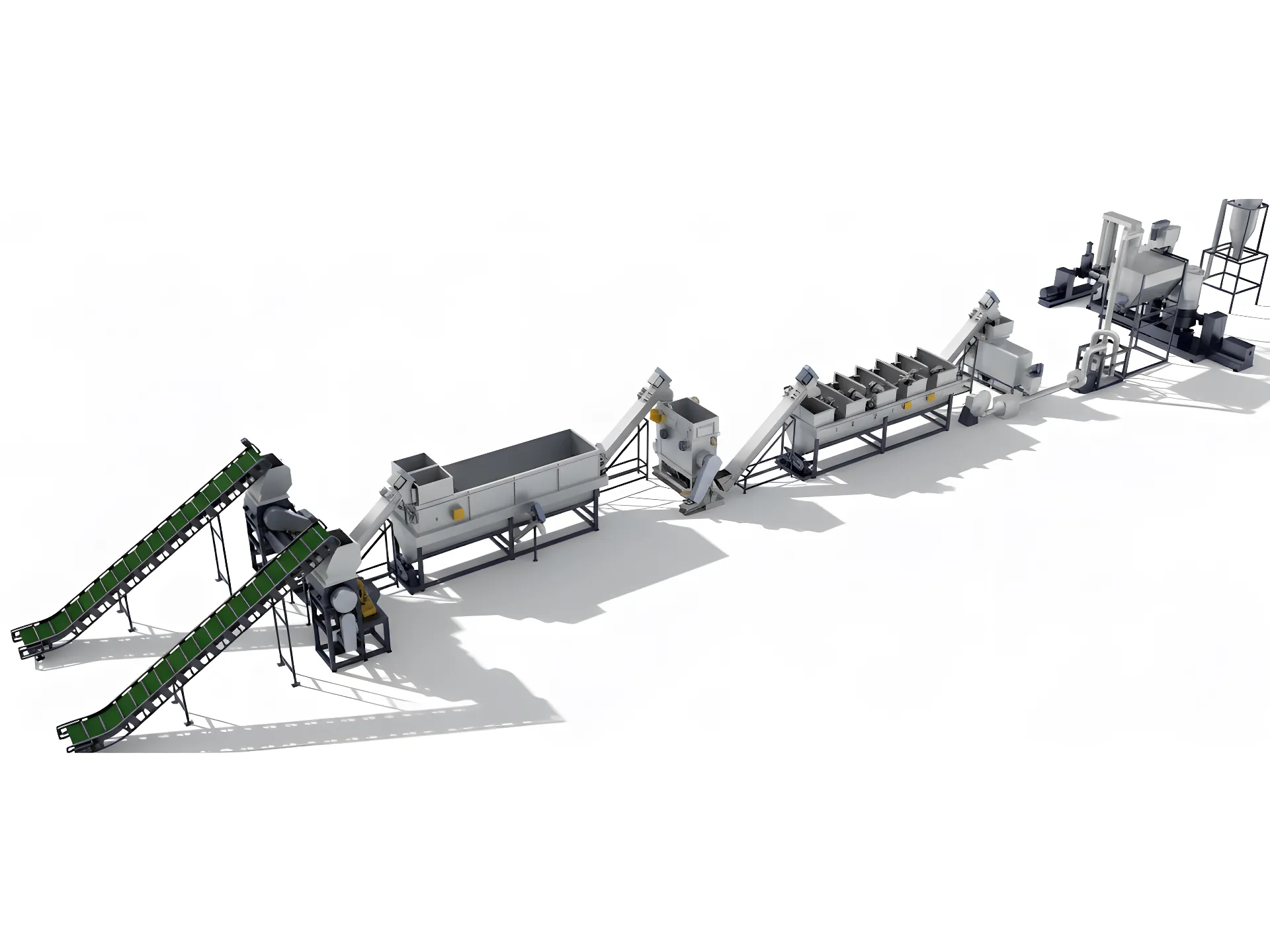
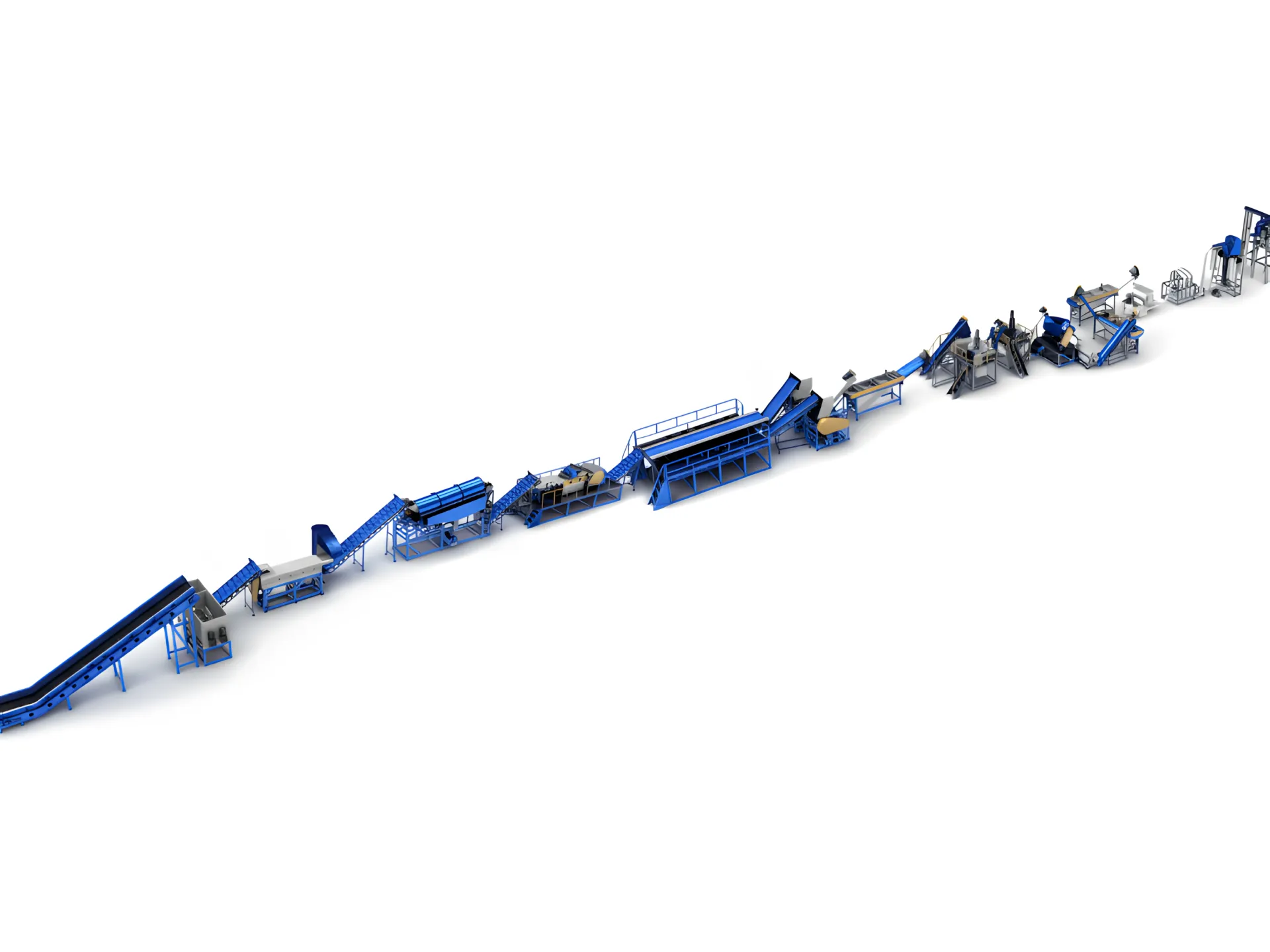
Our Recycling Plants in Action
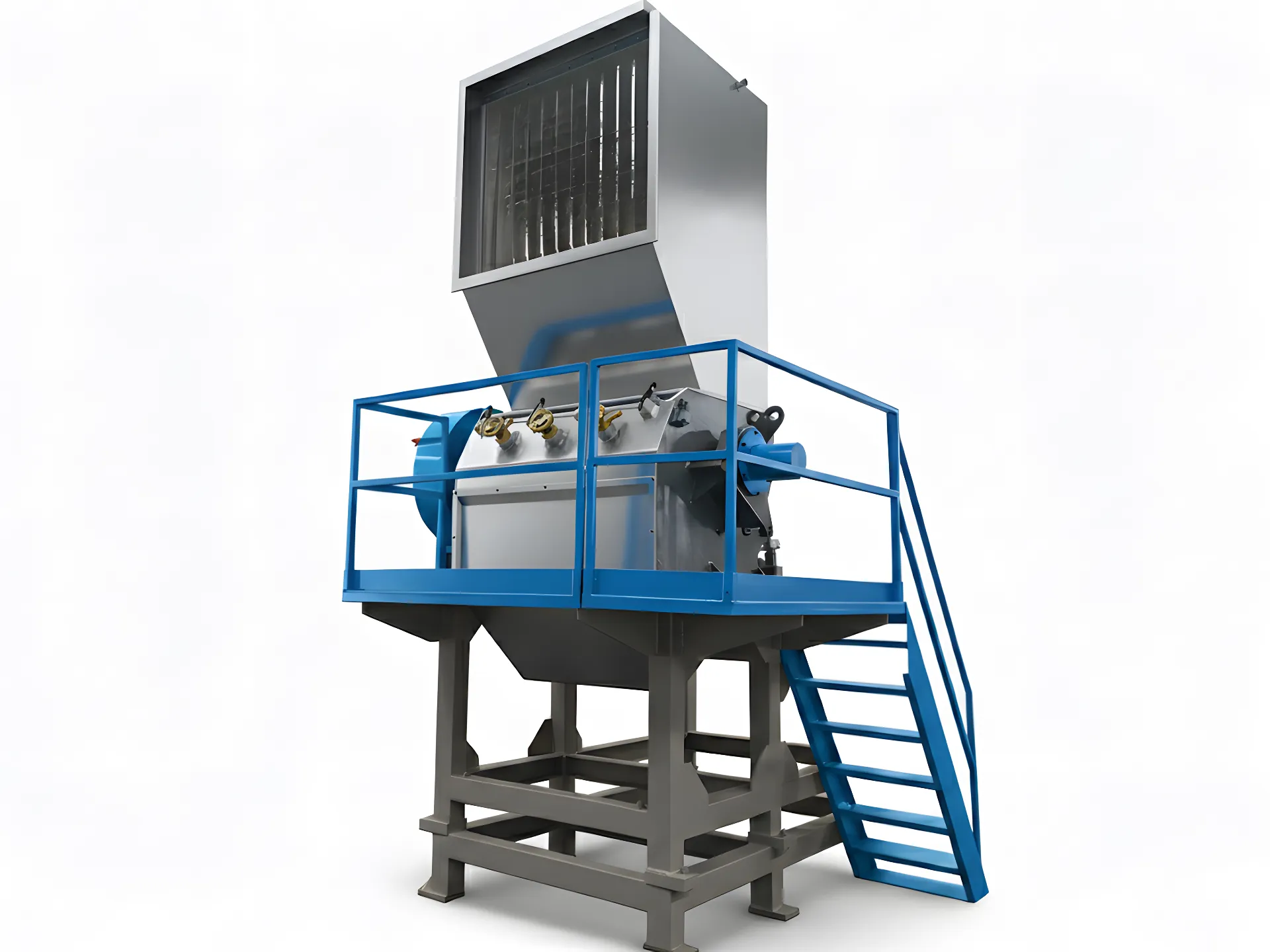
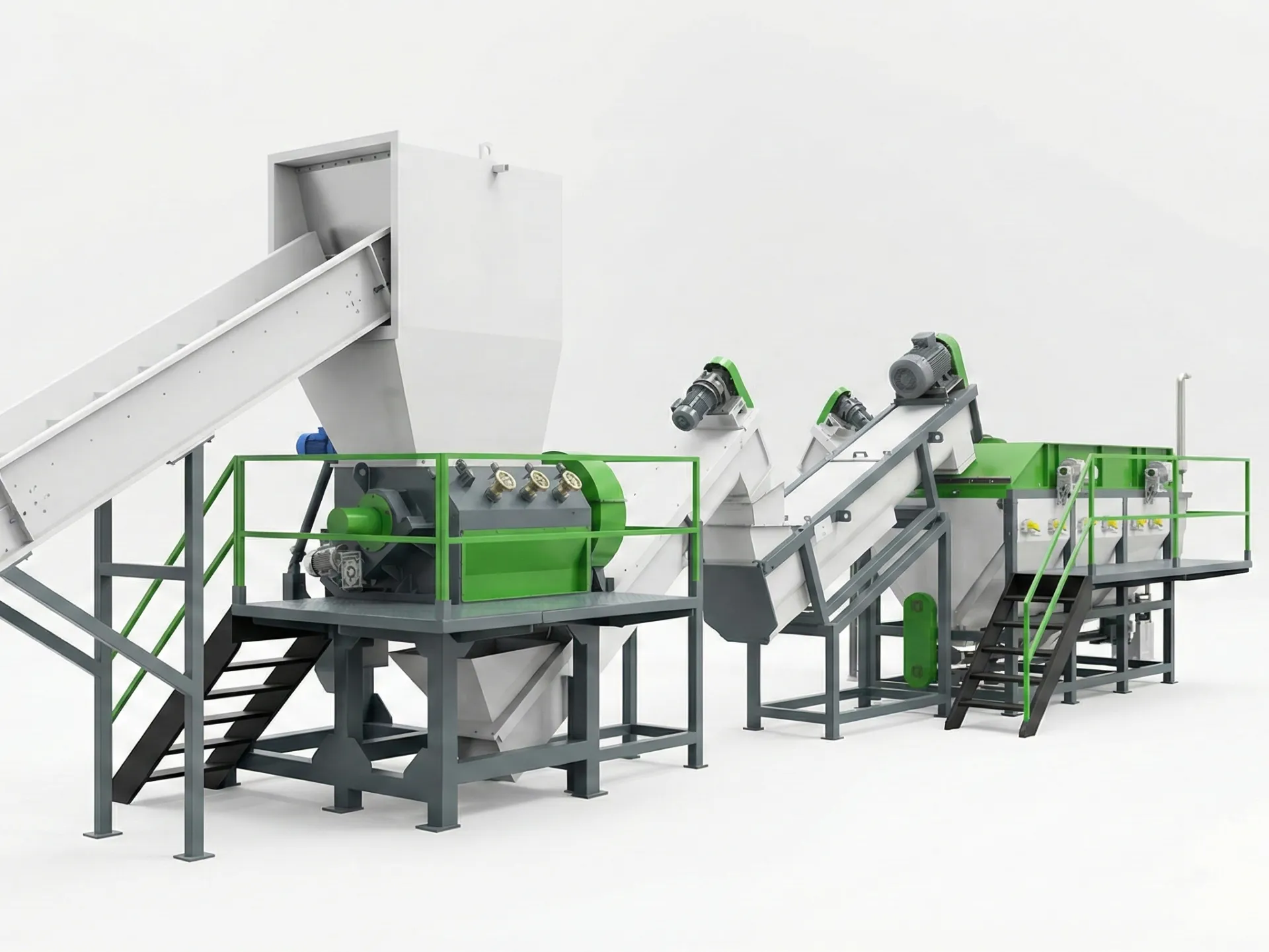
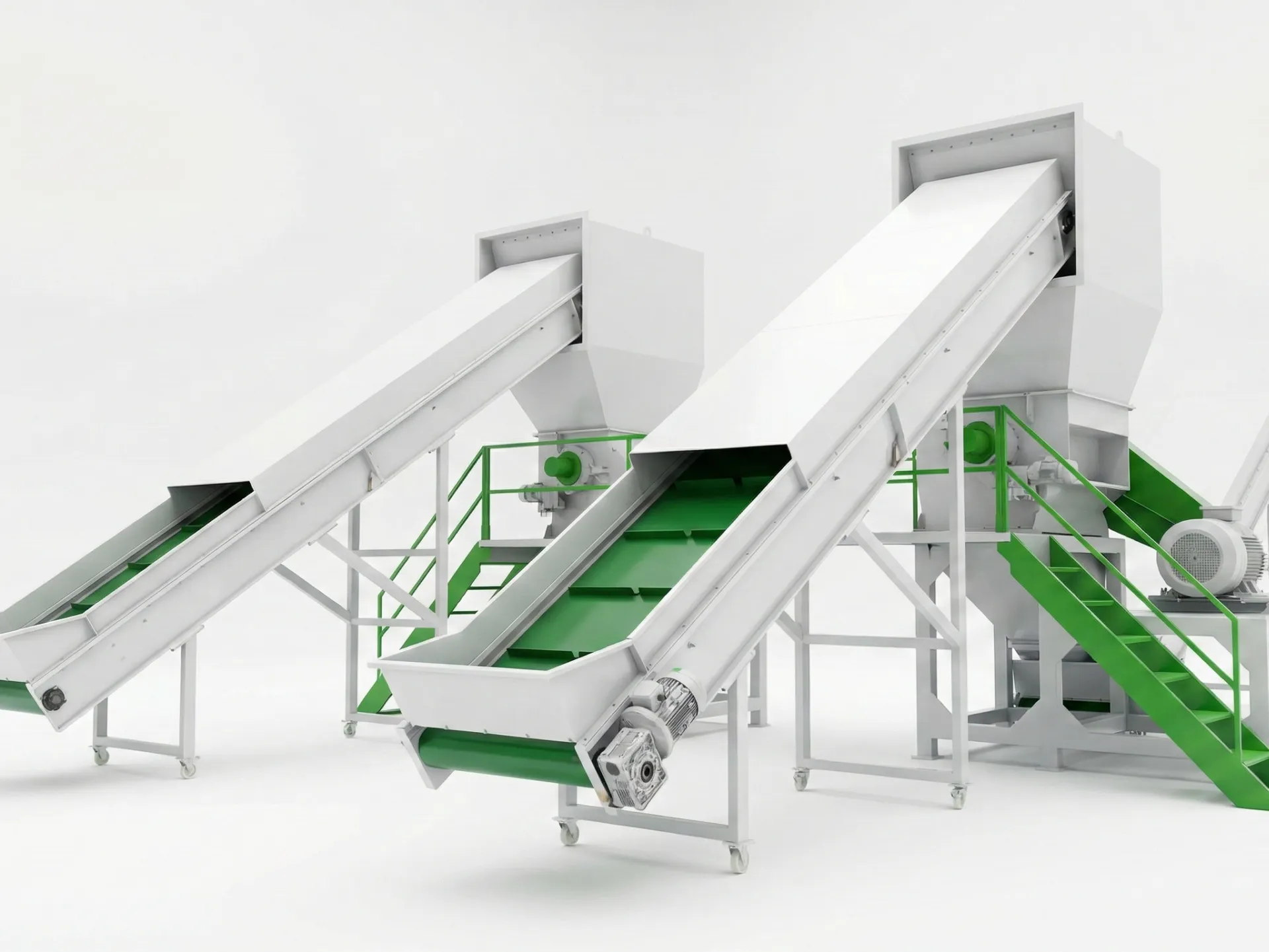
Customer Success Stories
PE Film → Recycled Pellets, Europe
Compact 800 kg/h line with hot washing and cutter‑compactor pelletizing.
PET Bottles → RPET Flakes, Asia
1200 kg/h with label remover, friction wash, dewatering and crystallization.
Frequently Asked Questions
Can the line be customized for my specific type of plastic waste?
What is involved in a “turnkey” project?
What is the typical ROI for a complete plastic recycling line?
What are the lead time and installation timeline?
Are you the manufacturer or a trading company?
Do you ship worldwide? Do you install in India/Sri Lanka?
Do you have reference plants near me?
How much does a plastic recycling machine cost?
What is the plastic recycling machine price in India?
Where is your factory located? Can I visit?
What certifications do your machines meet?
What is a complete turnkey plastic recycling line?
What are the advantages of a turnkey recycling line?
Do I need a complete line or can I start with one machine?
What is the difference between a shredder and a granulator?
Is plastic recycling machinery the same as plastic recycling equipment?
What Our Customers Say
“Throughput hit target within the first week. The washing upgrade lifted purity and reduced filter changes dramatically.”
“Moisture control plus dual‑degassing stabilized our MFI. We now sell into higher‑value applications.”
“Installation was smooth and training was practical. The team helped tune recipes for our mixed feedstock.”
Transform Your Recycling Operation
Ready to achieve 99% purity and lower your OPEX? Tell us about your materials, capacity targets, and site conditions. Our engineering team will propose a tailored solution.
For comprehensive guidance on selecting plastic recycling machines, see our complete plastic recycling machine guide covering types, specifications, 5-step selection framework, and line configurations for every plastic waste stream.