

PP Woven Bags & Raffia Recycling Line
A complete recycling line for post-consumer PP woven sacks, raffia tape and yarn, and FIBC scrap with heavy sand, ink, dust, and residual organics. The system combines controlled feeding, low-speed shredding, wet granulation, intensive washing, staged drying, and optional pelletizing.
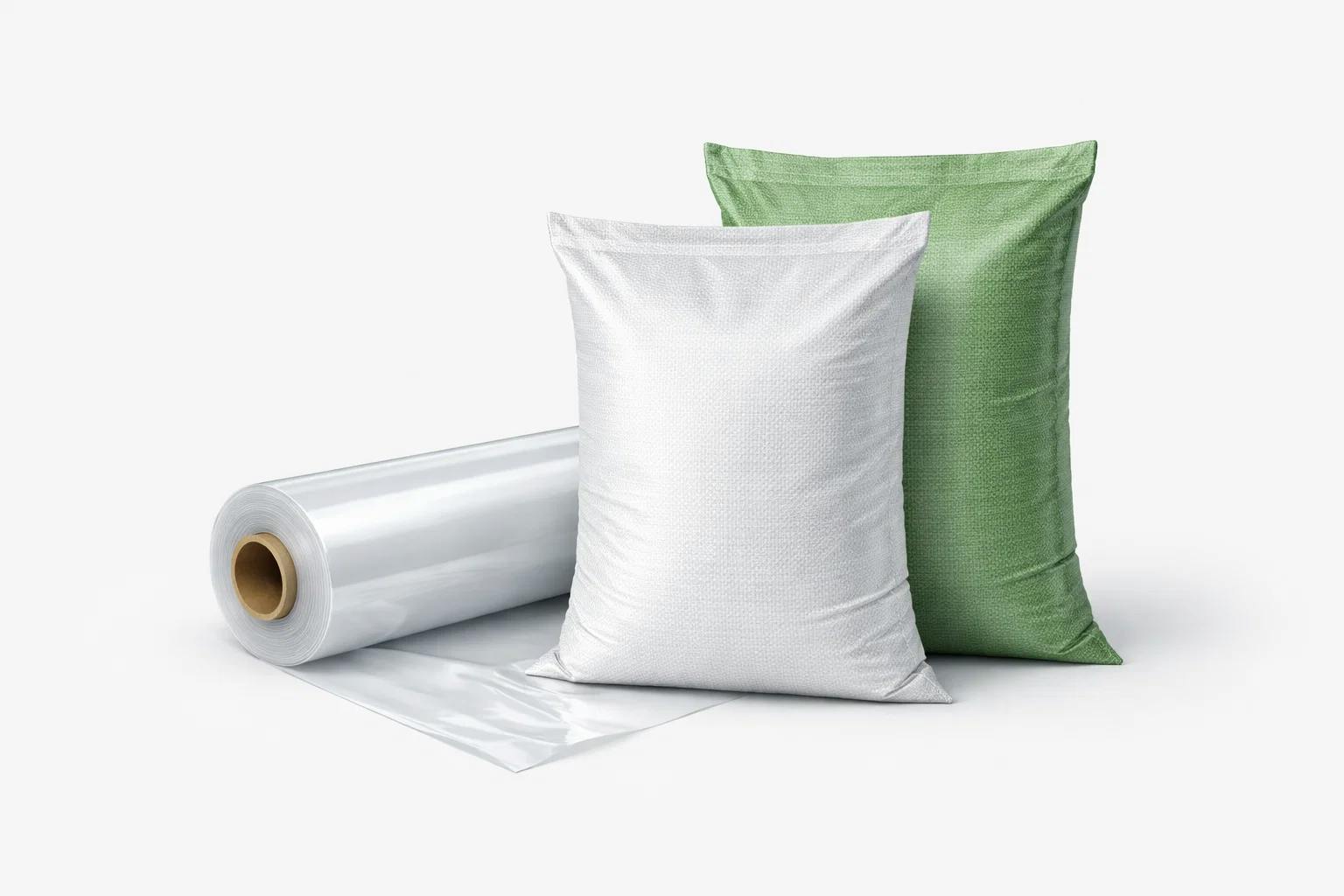
Selection Factors That Shape the Line
Module choice, utilities sizing, and output consistency depend on contamination level, material form, moisture target, and downstream extrusion requirements.
Contamination Tolerance
Built for dusty, printed, sand-laden woven sacks, raffia, and FIBC scrap where contamination level determines wash intensity and module selection.
Flake Size Control
Shredding and wet granulation are configured together to create a stable output size window for washing, rinsing, drying, and pelletizing.
Moisture Targets
Dewatering, thermal drying, and optional squeezing are selected around the residual moisture needed for extrusion or direct pelletizing.
Wear and Service Access
Knife layout, screen selection, and bearing protection are matched to abrasive contaminants so maintenance stays predictable.
Water Loop and Energy Load
Utilities planning is tied to contamination profile, selected wash temperature, and open or closed water loop design.
Automation and Safety Interlocks
Line-level controls coordinate feeding, cutting, washing, and drying while overload and safety conditions are managed automatically.
Supported Feedstock Forms
Share photos, samples, contamination details, and downstream quality targets so we can select the correct wash intensity and drying path.
PP Woven Bags
Cement bags, fertilizer sacks, rice bags, and other printed woven sacks.
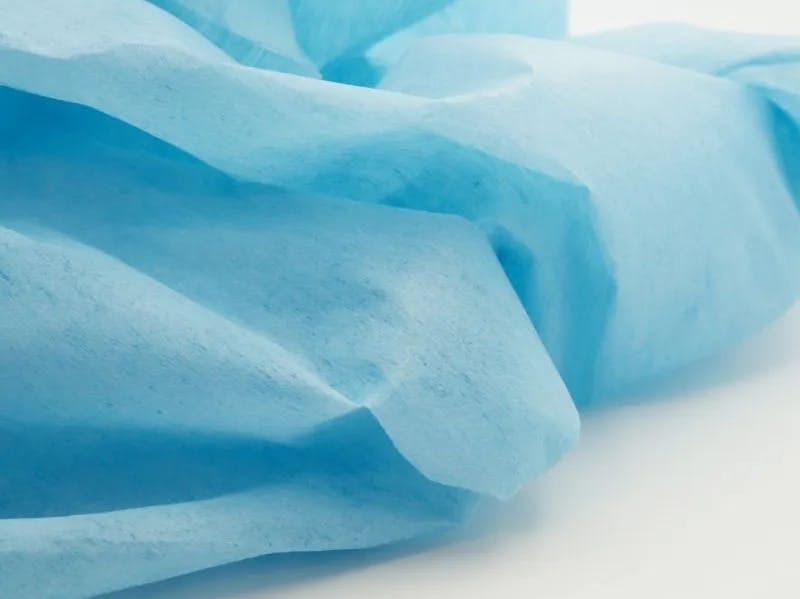
PP Non-Woven
Non-woven fabric scraps and bags, with optional deeper washing.
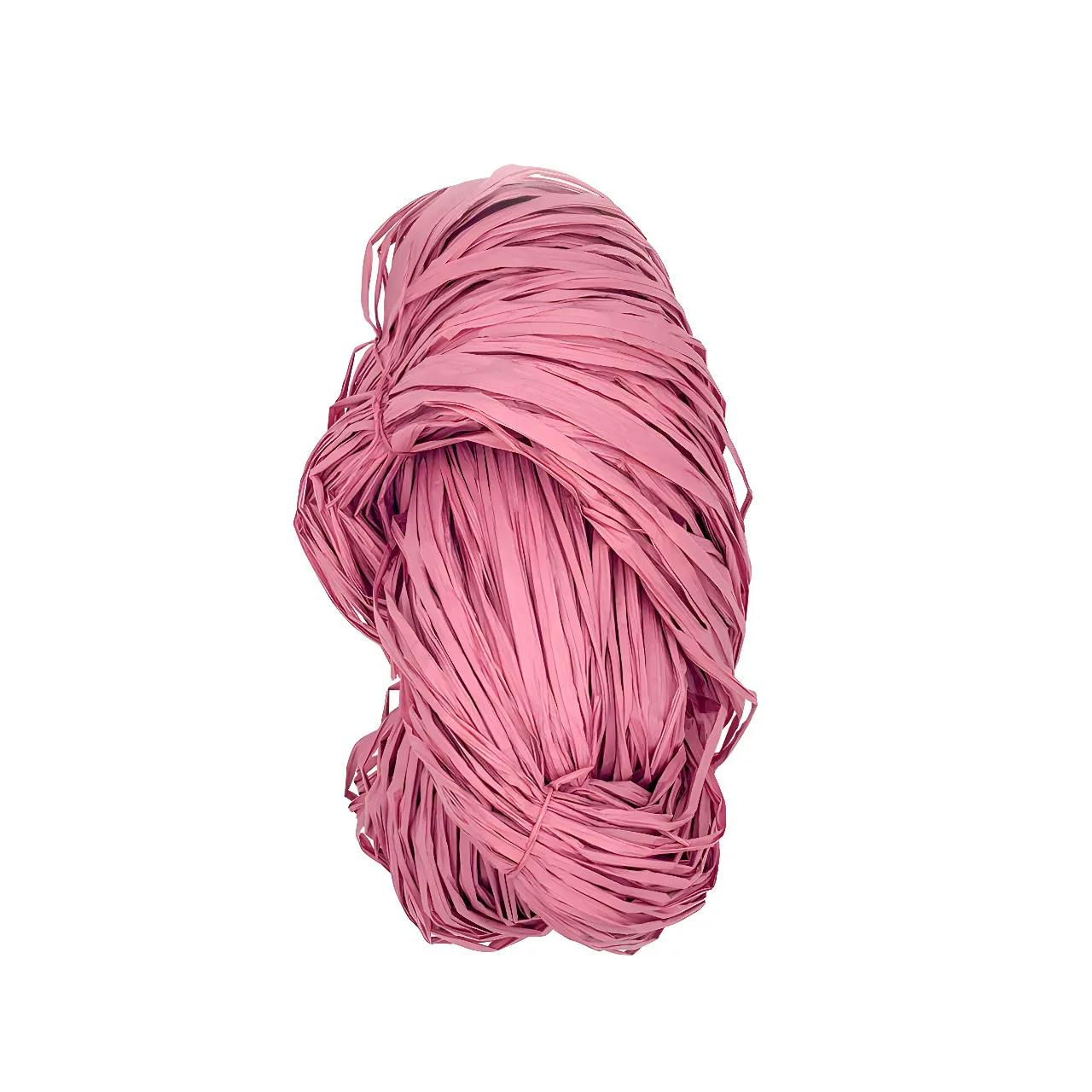
PP Raffia Tape and Yarn
Raffia strips, tapes, and yarn waste from weaving and packaging operations.
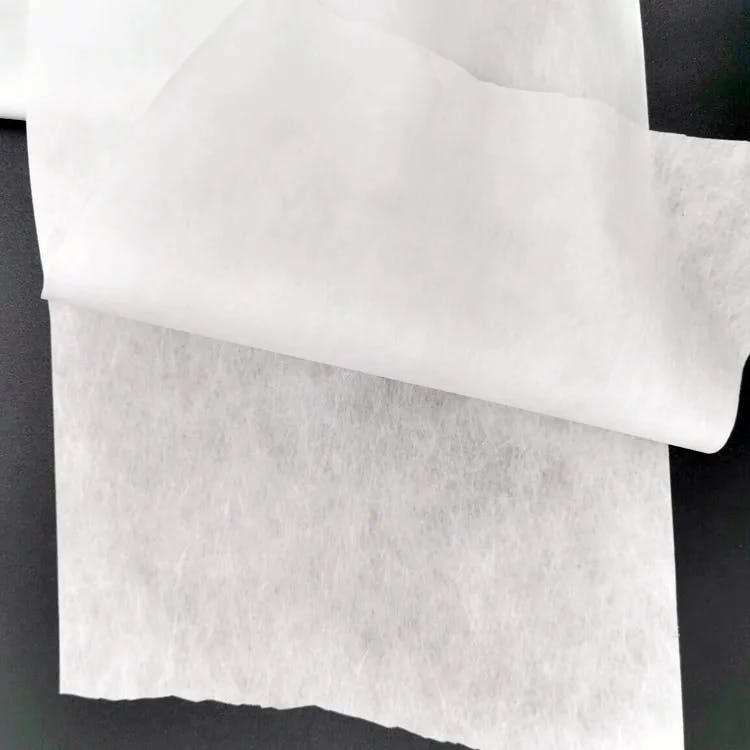
BOPP-Laminated Woven Bags
Printed and laminated woven bags configured around ink, adhesive, and contamination level.
.webp?auto=format,compress)
Jumbo Bags
Bulk bags and big bags, including dusty or sand-contaminated material.
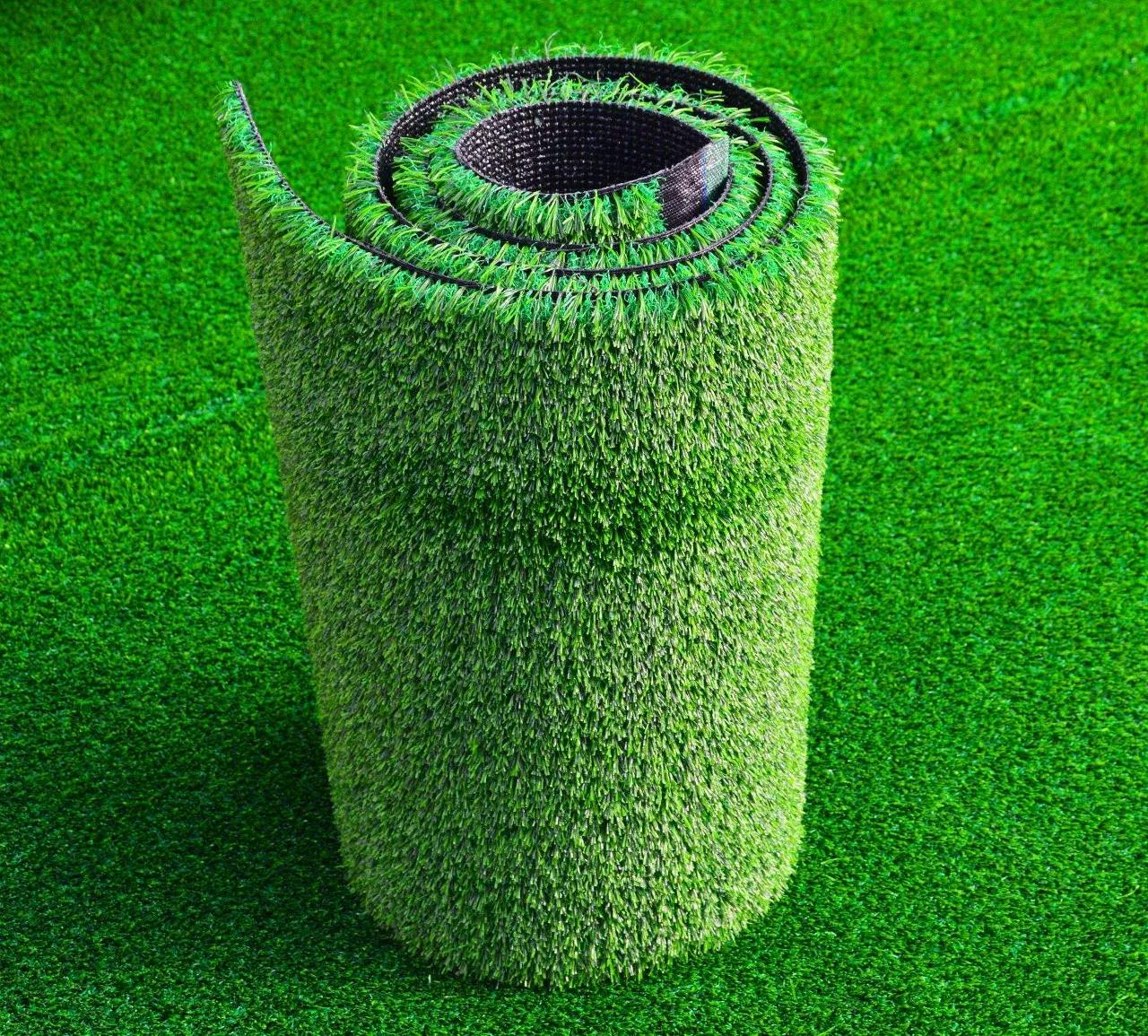
PP Woven Offcuts
Weaving trims, offcuts, and related PP backing scrap, with cleaning intensity selected by dust, sand, and lamination.
From Dirty Woven Scrap to Extrusion-Ready PP Flake
The line follows a sequence from size reduction through washing and staged drying. Final configuration depends on contamination profile, target flake size, and downstream extrusion requirements.
Feeding & Pre-Sorting
Meters incoming woven sacks and raffia while screening out tramp contamination before cutting.
Shredding
Low-speed, high-torque reduction opens woven structure and stabilizes downstream cutting.
Wet Granulation
Water-assisted cutting creates a defined flake size range and starts washing early.
Friction Washing
High-shear scrubbing removes sand, dust, loosened ink, and attached fibers.
Rinsing & Separation
Rinse and density separation improve PP purity while removing heavy contamination.
Dewatering & Drying
Mechanical dewatering plus thermal drying delivers the target residual moisture.
Pelletizing
Optional pelletizing converts conditioned flakes into uniform pellets for storage, dosing, or resale.
Feeding & Pre-Sorting
Metered feeding and incoming contamination checks.
Shredding
Low-speed reduction opens woven structure.
Wet Granulation
Water-assisted cutting defines flake size.
Friction Washing
High-shear washing removes attached contamination.
Rinsing & Separation
Rinsing and density sorting improve PP purity.
Dewatering & Drying
Mechanical and thermal drying reach the moisture target.
Pelletizing
Optional extrusion and water-ring pelletizing.
Utilities and Footprint
Reference utilities and layout envelope by capacity tier. Final sizing depends on contamination level, hot washing, and drying configuration.
| Capacity (kg/h) | Install Power (kW) | Typical Layout Area (m²) | Operators / Shift | Compressed Air (MPa) | Process Water (m³/h) |
|---|---|---|---|---|---|
| 300 | 150 | 350 | 4 | 0.6-0.8 | 3 |
| 500 | 230 | 460 | 6 | 0.6-0.8 | 4 |
| 1000 | 430 | 500 | 6 | 0.6-0.8 | 5 |
Swipe sideways to view the full table.
Note: values are indicative. Final utilities depend on contamination profile, hot washing or heating selection, and drying configuration. Electrical supply is specified by voltage/Hz and start method; water demand depends on open vs. closed loop design.
Core Equipment in a PP Woven Bags Recycling Line
Engineered specifically for post-consumer PP woven sacks, raffia tape, and heavy-duty FIBC big bags to maximize washing efficiency and downstream purity.
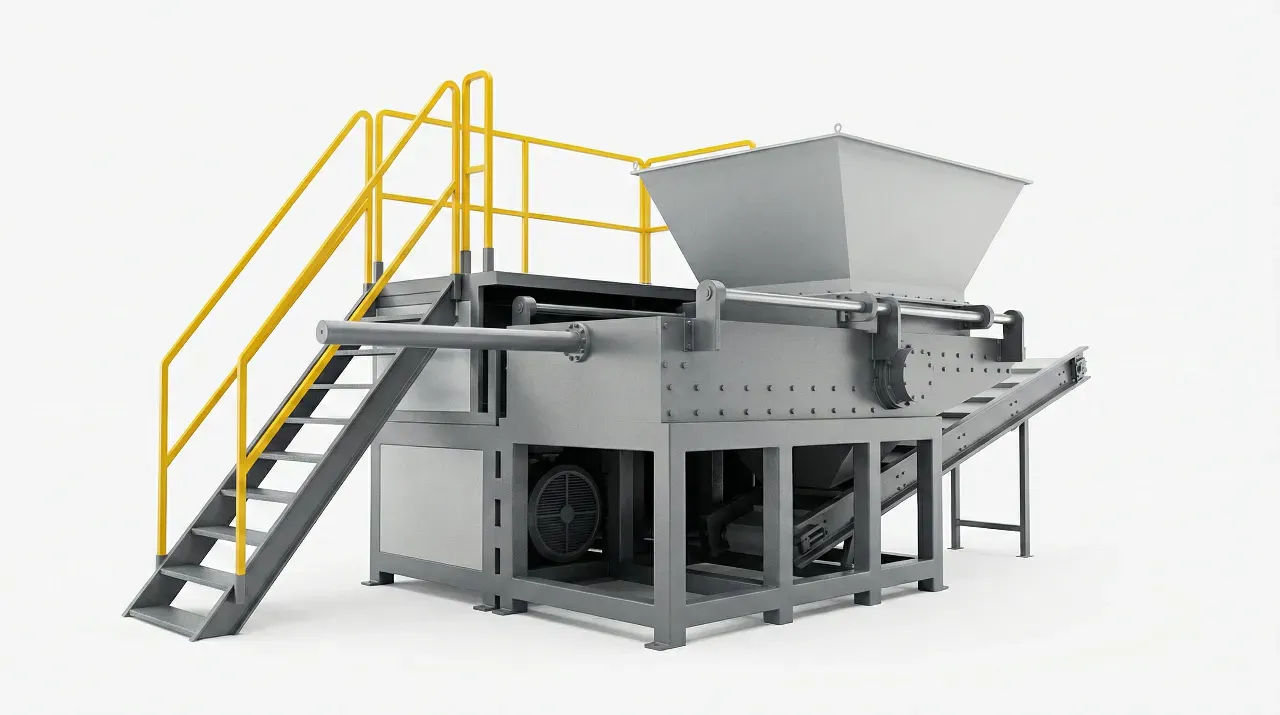
1. Single-Shaft Shredder
Function: Low-speed, high-torque shredding opens tightly packed woven structures, reduces bulk volume of dense woven bags or whole FIBC bales, and stabilizes feeding for downstream wet granulation without high-tensile tape entanglement.
Key Engineering Features:
- Anti-wrapping rotor profile designed specifically for tough woven tapes and filaments
- Hydraulic pusher ram ensures continuous, positive feed into the rotor
- Hardened wear-resistant cutter blades engineered for abrasive dirt and sand
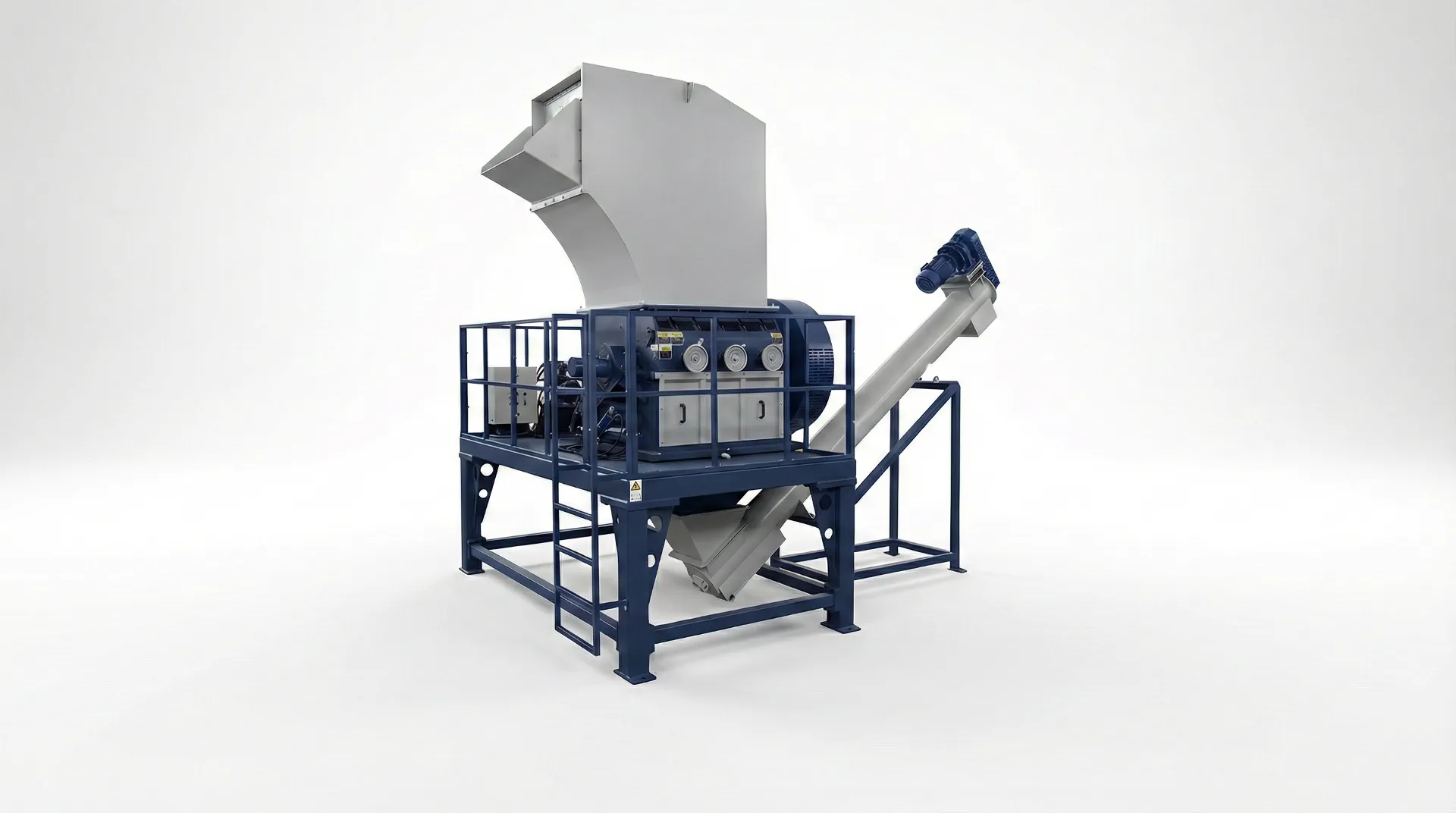
2. Wet Plastic Granulator
Function: Water-assisted cutting cuts shredded woven strips into uniform 12–18 mm flakes. Constant water flushing prevents thermal blade wear, suppresses friction heat, and immediately initiates primary abrasive contaminant wash-off.
Key Engineering Features:
- Water injection inside the cutting chamber continuously washes knives and material
- Double scissor-cut V-rotor geometry minimizes dust, fines, and screen blockage
- Wear-resistant internal liner plates simplify replacement in high-sand operations
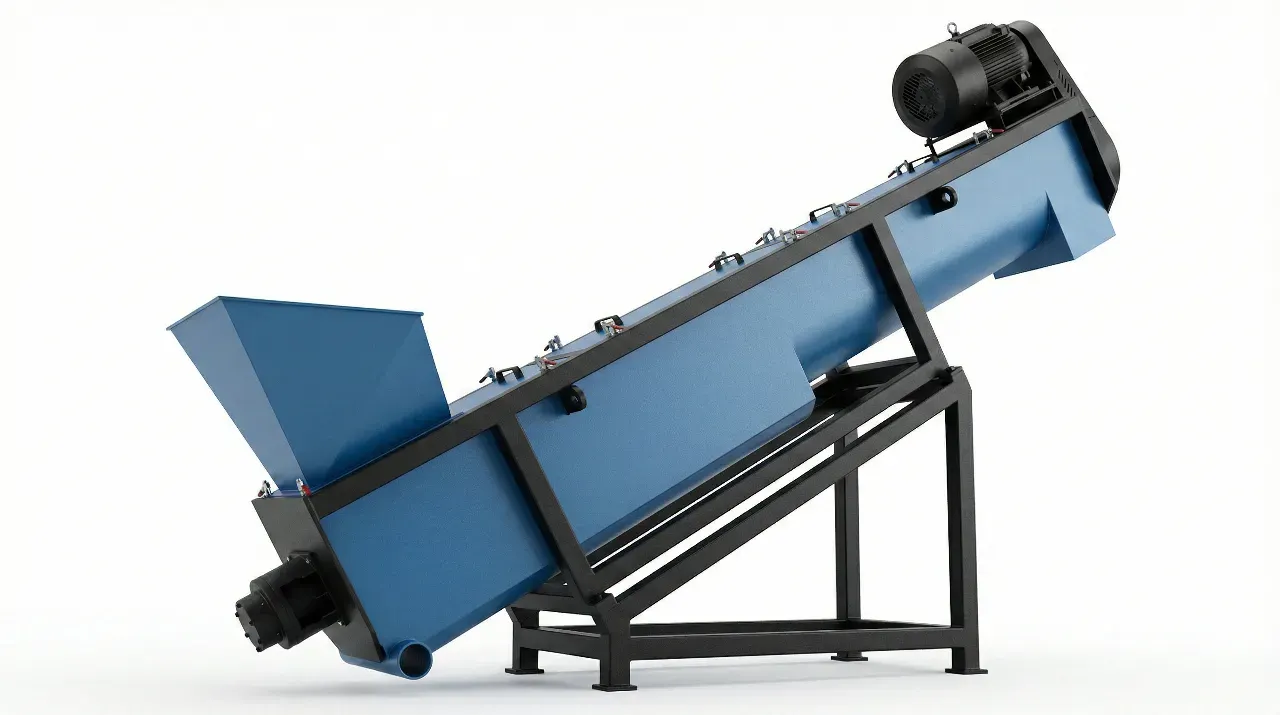
3. High-Speed Friction Washer
Function: High-speed dynamic friction scrubs woven flake surfaces and tape crevices to strip away embedded soil, chemical residues, degraded fiber dust, and surface ink printing at elevated rotor velocities.
Key Engineering Features:
- Dynamically balanced multi-paddle rotor shaft delivering strong centrifugal cleaning action
- Perforated stainless steel screen basket for efficient continuous water and sand discharge
- Integrated spray nozzles to continuously backwash screen holes and prevent fouling
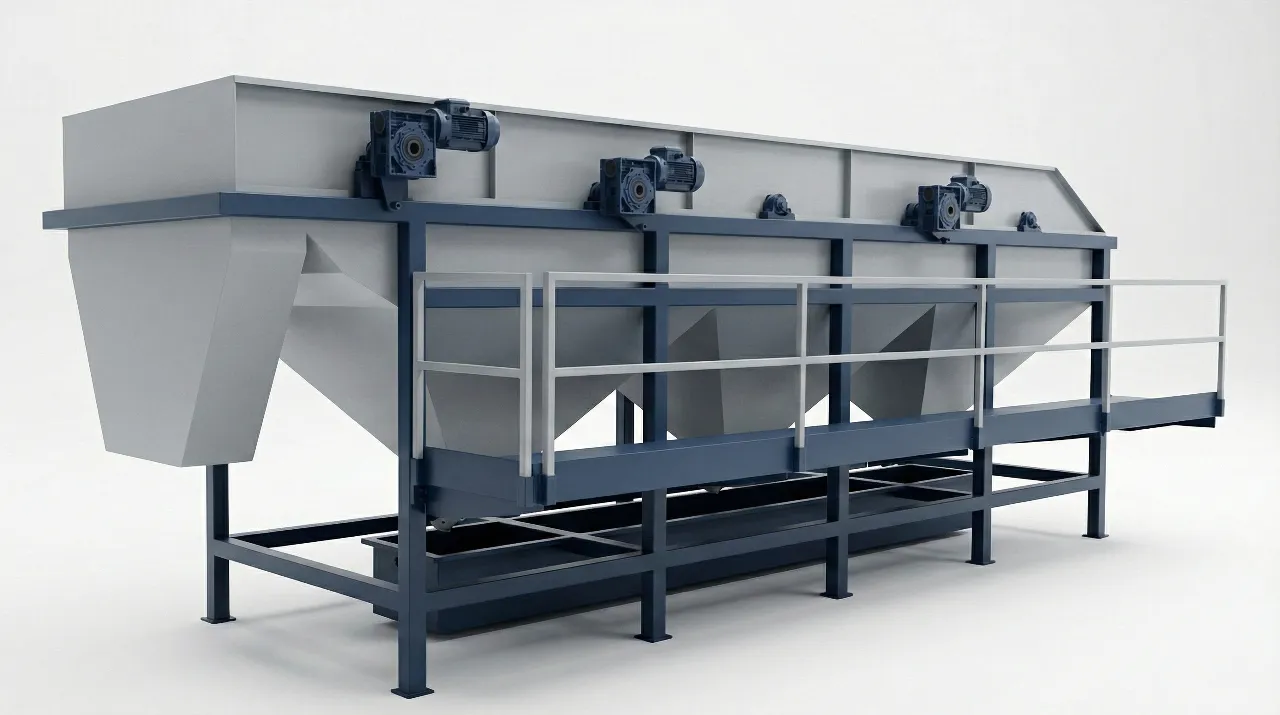
4. Sink-Float Separation Tank
Function: Exploits specific gravity differences in water (ρ = 1.0 g/cm³) to separate light floating PP flakes (ρ ≈ 0.91 g/cm³) from sinking heavy contaminants such as residual sand, rocks, glass, and sinkable rigid plastics (PET/PVC).
Key Engineering Features:
- Multiple motorized paddle drums push floating PP flakes forward steadily
- Heavy-duty bottom screw auger continuously removes heavy settled sediment
- Full SUS304 stainless steel construction with water circulation recycling ports
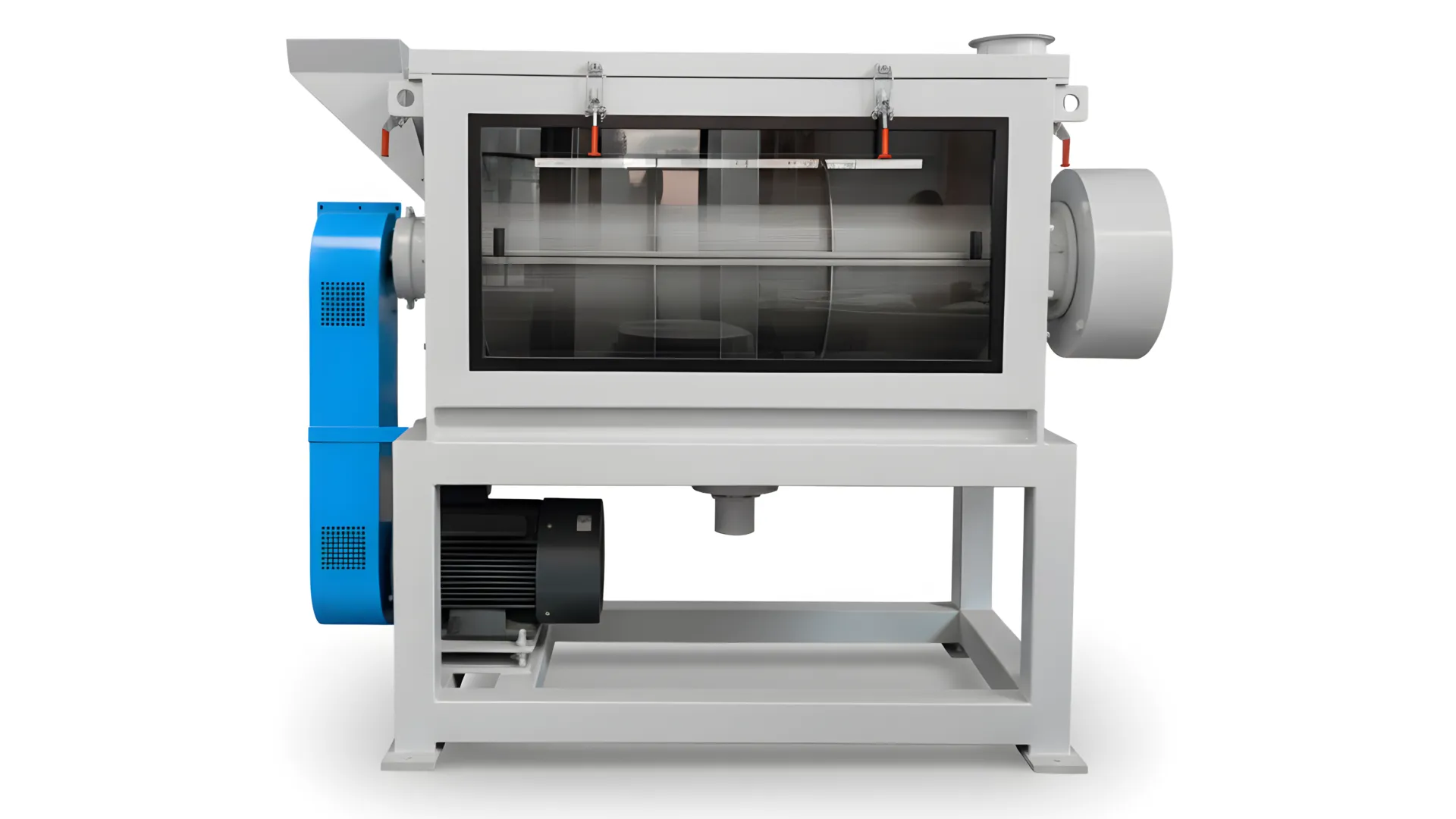
5. Dewatering & Thermal Drying System
Function: A two-stage moisture management system combining high-speed centrifugal dewatering with hot air pipeline drying. It mechanically spins off over 90% of surface water, followed by heated flash evaporation to achieve < 2% residual moisture ready for extrusion or storage.
Key Engineering Features:
- High-G centrifugal rotor reduces free surface moisture rapidly with minimal energy
- Stainless steel thermal piping system with automatic temperature regulation
- High-efficiency cyclone collector for clear solid-gas separation and low fines loss
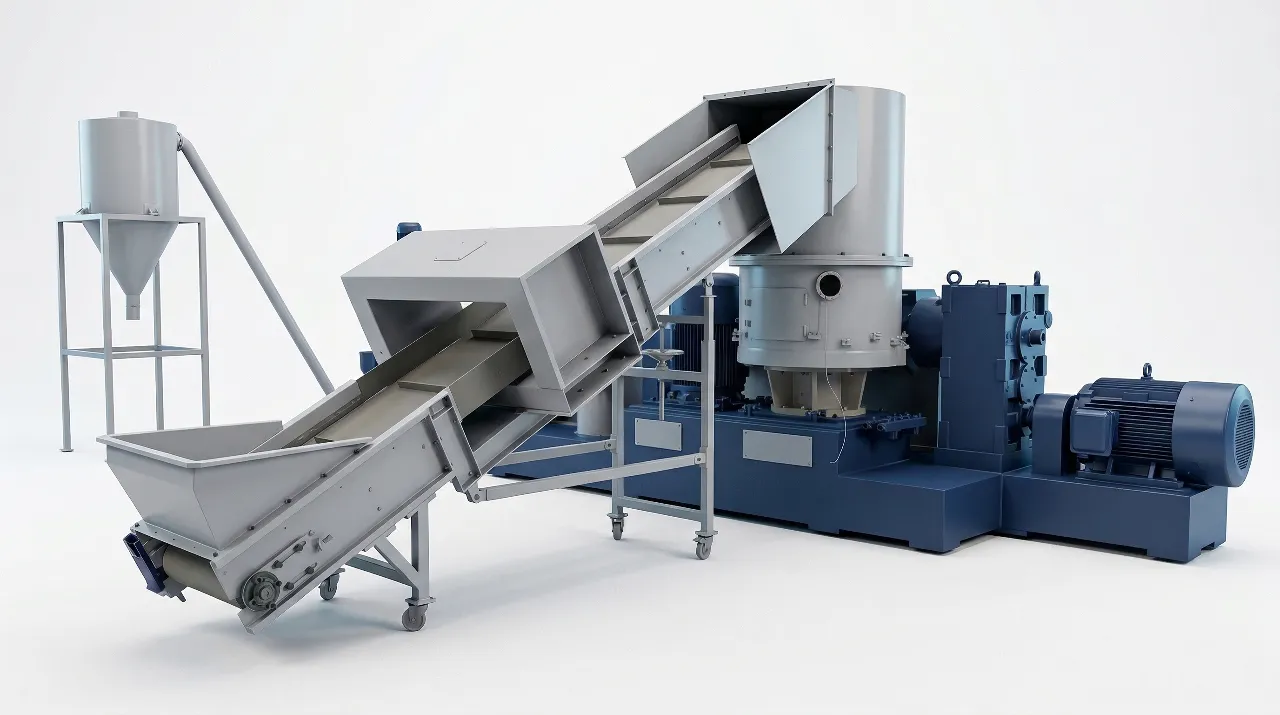
6. Water Ring Pelletizing System
Function: For recyclers requiring high-value end products, this integrated downstream compounding line melts, degasses, filters, and cuts clean PP flakes into uniform, dense, dust-free granules via hot die-face water ring cutting.
Key Engineering Features:
- Compactor-feeder combination prevents fluffy raffia flake bridging and ensures steady extrusion
- Continuous dual-station hydraulic screen changer for uninterrupted melt filtration
- High-precision water-ring pelletizing unit for consistent pellet geometry and bulk density
PP Woven Bags & Raffia Recycling Line Video
Watch the line concept for woven bag, raffia, and FIBC recycling.
Field Performance Notes
Representative operating observations. Actual results depend on feedstock, contamination, utilities, and configuration.
Printed cement sacks with heavy sand load benefited from hot wash and higher friction-wash intensity, reducing abrasive carryover into drying and improving flake cleanliness.
Raffia tape and yarn scrap with light organics used controlled granulation to improve rinse efficiency and stabilize downstream extrusion preparation.
Mixed woven and FIBC scrap required dewatering plus thermal drying to meet the moisture target, with a squeezer selected when higher bulk density was needed.
Technical FAQs
Decision-oriented answers for selecting modules, utilities, and output targets.
A complete line can include shredding, pre-washing, friction washing, hot washing for printed or contaminated bags, rinsing, sink-float separation, centrifugal dewatering, thermal drying, and optional extrusion with water-ring pelletizing.
With proper washing, PP pellets from woven bag recycling can achieve natural or light color, low ash content, stable melt flow, and mechanical properties suitable for injection molding, extrusion, and new woven bag production.
The line processes PP woven sacks, raffia tape and yarn, FIBC scrap, and PP non-woven. BOPP-laminated woven bags can be configured with suitable washing intensity and hot washing if required.
Typical throughput ranges from 300 to 1500 kg/h depending on modules and contamination load. With thermal drying, residual moisture is commonly below 3% when required for stable extrusion, feedstock dependent.
Specify hot washing when ink, oils, glue, or heavy organics must be reduced to meet a cleanliness target. Friction washing plus rinsing is often sufficient for light dust and sand loads.
Yes. Add extrusion and water-ring pelletizing. A squeezer can reduce moisture and increase bulk density before extrusion when inlet water load is high or pelletizing stability is critical.
Yes. Layout, module selection, and control logic are configured around capacity, contamination, utilities, and footprint. Automation can include interlocks, overload protection, and module-by-module permissives.
Plan Your PP Woven Bags Recycling Project
Share your feedstock details, target capacity, contamination profile, utilities, and layout constraints. We will size modules, water loop, drying strategy, and optional pelletizing around your project.
Request a Technical Proposal
Use the form to send your feedstock details, target capacity, and layout constraints.