

Triple-Row Sink-Float Tank
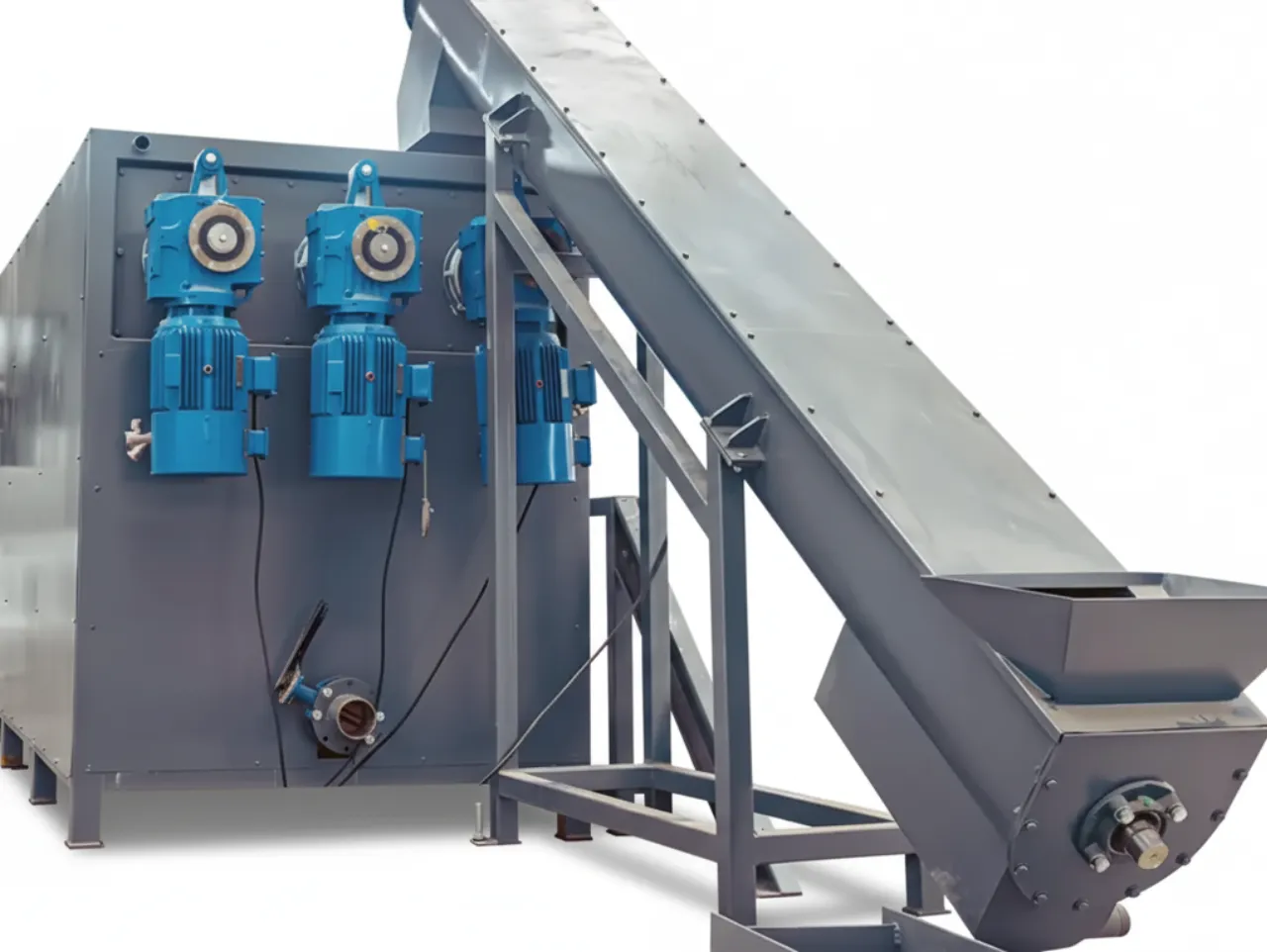
Energycle’s triple-row sink-float tank consolidates three standard separation stages into a single unit, tripling the material travel distance and soak time for significantly higher purity output. Engineered for high-throughput recycling lines processing 1,000 to 3,000 kg/h, the triple-pass design delivers premium separation performance in one compact footprint.
Why the Triple-Row Design Outperforms Standard Tanks
The triple-row sink-float tank is a premium, high-capacity solution built for recyclers who need the highest purity from heavily contaminated feedstock.
Unmatched Purity via Triple Pass
Material travels through three consecutive separation rows within a single tank, giving it three times the travel distance and soak time of a standard unit. Each pass removes additional contaminants, delivering output purity that would otherwise require three separate tanks in series.
3-in-1 Space Optimization
By consolidating three separation stages into one frame, the triple-row tank replaces three individual standard sink-float tanks while occupying a fraction of the floor space. Fewer machines also means fewer water connections, fewer motors to maintain, and simplified line integration.
High-Throughput Capacity
Rated for 1,000 to 3,000 kg/h, the TR-SFT series handles the demands of large-scale post-consumer and post-industrial recycling lines. The multi-row separation channel architecture maintains residence time even at peak feed rates.
Integrated Mesh Filtration
Built-in stainless steel mesh screens at each separation stage capture fines and micro-contaminants before they can recirculate. Screens are removable for quick cleaning without draining the tank or interrupting production.
Heavy-Duty Engineering
All wetted surfaces are fabricated from SS304 or SS316 stainless steel for maximum corrosion resistance. The robust frame construction handles the weight and forces generated by high-volume material flow. Carbon steel exterior options reduce cost where full stainless is not required.
Zero-Downtime Maintenance
Three top-mounted screw conveyors and all mesh screens are designed for in-place servicing. Wear components are bolt-on and can be swapped during scheduled breaks without a full system shutdown, keeping your line running at maximum uptime.
How the Triple-Row Separation Process Works
The triple-row sink-float tank extends the proven density separation principle across three sequential rows, maximizing material exposure to the water column for thorough contaminant removal.
Material Infeed
Pre-washed, size-reduced plastic flakes enter the tank via three top-mounted screw conveyors. The screws distribute material evenly across the first separation row, preventing clumping and ensuring consistent feed density from the start of the process.
Initial Mesh Filtration
As material enters the water column, integrated mesh screens immediately capture fine particulates, label fragments, and micro-contaminants. This pre-filtration step protects downstream separation zones from fouling and improves the clarity of the process water for more accurate density sorting.
Triple-Pass Density Separation
Material flows sequentially through all three rows of the tank. In each row, heavy-fraction plastics (PET, PVC, ABS) sink while light-fraction plastics (PP, PE) float. By the time material exits the third row, it has undergone three complete density separation passes — dramatically reducing cross-contamination compared to a single-pass design.
Purified Output Discharge
Separated fractions are discharged through dedicated outlets at the end of the third row. Floating material exits via paddle-controlled overflow, while sinking material is collected by bottom screw conveyors. Both streams proceed to dewatering with purity levels that often exceed what three standalone tanks can achieve.
Material Infeed
Pre-washed, size-reduced plastic flakes enter the tank via three top-mounted screw conveyors. The screws distribute material evenly across the first separation row, preventing clumping and ensuring consistent feed density from the start of the process.
Initial Mesh Filtration
As material enters the water column, integrated mesh screens immediately capture fine particulates, label fragments, and micro-contaminants. This pre-filtration step protects downstream separation zones from fouling and improves the clarity of the process water for more accurate density sorting.
Triple-Pass Density Separation
Material flows sequentially through all three rows of the tank. In each row, heavy-fraction plastics (PET, PVC, ABS) sink while light-fraction plastics (PP, PE) float. By the time material exits the third row, it has undergone three complete density separation passes — dramatically reducing cross-contamination compared to a single-pass design.
Purified Output Discharge
Separated fractions are discharged through dedicated outlets at the end of the third row. Floating material exits via paddle-controlled overflow, while sinking material is collected by bottom screw conveyors. Both streams proceed to dewatering with purity levels that often exceed what three standalone tanks can achieve.
Standard Tank vs Triple-Row Tank
How the triple-row sink-float tank compares to a conventional single-row design across key performance criteria.
| Feature | Standard Sink-Float Tank | Triple-Row Tank |
|---|---|---|
| Material Travel Distance | 1× (single pass) | 3× (triple pass) |
| Separation Passes | Single | Triple |
| Footprint Efficiency | 1 tank = 1 separation stage | 1 tank = 3 separation stages |
| Best For | Standard contamination levels | Heavily contaminated streams requiring premium purity |
| Throughput Range | 300 – 1,500 kg/h | 1,000 – 3,000 kg/h |
| Soak / Residence Time | Standard | 3× longer |
| Number of Tanks Needed for Equivalent Purity | Up to 3 in series | 1 unit |
Ideal Applications
The triple-row sink-float tank is purpose-built for recycling scenarios where standard single-pass separation cannot meet purity requirements.
Heavily Contaminated Post-Consumer PET
Post-consumer PET bales often contain high levels of PP/PE caps, label residues, glue, and mixed polymer contaminants. The triple-pass separation ensures these contaminants are removed across three stages, producing rPET flakes clean enough for food-grade and fiber-grade applications without additional sorting equipment.
High-Volume Mixed Rigid Plastic Lines
Mixed rigid plastic streams from municipal recycling programs contain a broad spectrum of polymer types. The triple-row tank’s extended soak time and three-stage separation handle variable feed composition while maintaining consistent output purity at throughputs up to 3,000 kg/h.
E-Waste & Appliance Plastics
WEEE housings and appliance panels contain ABS, HIPS, PP, and engineering plastics in close density ranges. The triple-pass design gives borderline-density materials additional time and distance to separate correctly, reducing misclassification rates that plague single-pass systems.
Lines Requiring Food-Grade Output Purity
When the end product must meet food-contact or pharmaceutical-grade purity standards, every fraction of a percent matters. The triple-row tank’s three sequential separation passes deliver the ultra-high purity levels required for these demanding applications, reducing reliance on costly downstream polishing steps.
Technical Specifications
Standard TR-SFT series specifications. All parameters are customizable to match your material, throughput, and facility requirements.
| Parameter | Specification |
|---|---|
| Model | TR-SFT Series (e.g., TR-SFT-5000) |
| Throughput Capacity | 1,000 – 3,000 kg/h |
| Overall Dimensions (L × W × H) | 6,000 × 2,200 × 2,500 mm (customizable) |
| Separation Rows | 3 (triple-pass) |
| Top Screw Conveyors | 3 |
| Motor Power | 15 – 22 kW (total) |
| Interior Construction | SS304 / SS316 stainless steel |
| Exterior Frame | Coated carbon steel or full stainless steel |
| Filtration | Integrated mesh screen filtration at each stage |
| Water System | Closed-loop recirculation capable |
| Voltage | Custom (380V/50Hz, 480V/60Hz, or as specified) |
| Control System | PLC with HMI touchscreen or independent control panel |
| Certification | CE |
| Warranty | 1 year (parts and labor) |
Triple-Row Sink-Float Tank
Energycle TR-SFT series multi-row separation tank.
Reliable Support Throughout the Equipment Lifecycle
From commissioning to routine maintenance, our service team helps keep the triple-row sink-float tank operating reliably and delivering consistent separation quality.
1-Year Limited Warranty
Every triple-row sink-float tank is covered by a 1-year limited warranty on parts and workmanship. Manufacturing defects in structural components, screw conveyors, motors, and control systems are covered; normal wear parts are handled separately.
Commissioning Support
Remote commissioning guidance is included. Optional on-site commissioning and operator training can verify installation, calibrate all three separation rows, optimize water flow, and confirm output purity.
Spare Parts Supply
Replacement motors, bearings, seals, conveyor components, sensors, and other service items remain available for scheduled maintenance and long-term operation.
Technical Assistance
Remote troubleshooting, process optimization, maintenance guidance, and optional on-site service are available when additional support is required.
Frequently Asked Questions
Request a Custom Solution
Tell us about your material type, contamination profile, throughput target, and facility layout. Our engineering team will respond within 24 hours with a tailored triple-row tank specification and pricing proposal.