

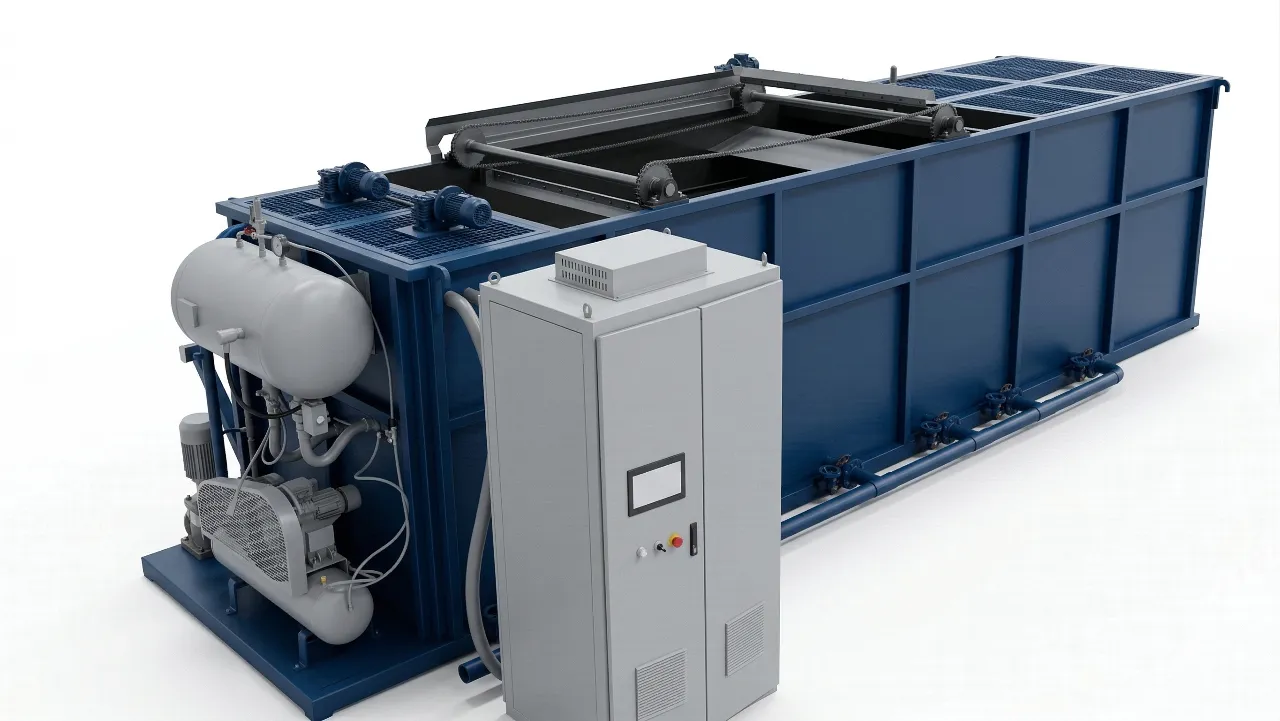
Wastewater Treatment for Plastic Recycling Plants
Dissolved Air Flotation (DAF) Water Treatment System for Plastic Recycling Wastewater
A dissolved air flotation system designed to remove suspended solids, floatable fines, oils, grease, and part of the organic load from plastic recycling wastewater. In closed-loop washing plants, DAF helps stabilize water quality, reduce discharge pressure, and improve water reuse by separating contaminants before they redeposit on clean flakes or overload downstream treatment.
Why DAF Matters in Plastic Recycling Water Loops
Plastic washing lines generate wastewater with fines, fibers, adhesives, oil, detergent carryover, and floating contamination that simple settling often cannot control consistently. DAF is used when water stability becomes an operating issue, not just an environmental one.
Improves Closed-Loop Water Stability
By removing suspended solids and floatable contamination more consistently, DAF helps keep wash water usable for recirculation and reduces the risk of dirt redepositing on cleaned plastic.
Strong TSS and Oil Removal
DAF is effective on the kind of light suspended solids, microplastics, oils, and grease that are difficult to settle out reliably in basic tanks alone.
Supports Water Reuse
Cleaner process water means less fresh water demand, fewer water-quality swings, and a more stable washing line overall.
Useful for Variable Post-Consumer Feedstock
When the incoming contamination swings day to day, DAF helps smooth out the impact on wash water quality better than a purely passive system.
Reduces Environmental and Disposal Pressure
Better wastewater clarification lowers the load on downstream treatment, supports discharge compliance, and can reduce sludge-handling cost when paired with proper dewatering.
Fits as a Core Auxiliary Module
In many recycling plants, DAF is best treated as part of the washing line design rather than an afterthought added once water problems appear.
Typical DAF Applications in Recycling and Industry
Although this page focuses on plastic recycling wastewater, DAF systems are commonly used across multiple industries where suspended solids and floatable contaminants must be removed quickly.
Plastic Washing Line Wastewater
Used after screening and equalization to remove fines, labels, oils, detergent carryover, and microplastics from recycling wash water.
PP Woven Bag and Film Recycling
Helpful where sand, ink, glue, and floating fibers make wash water stability difficult in flexible plastic recycling lines.
Rigid Plastic Washing Systems
Supports bottle, crate, and rigid container washing lines when suspended solids and floating organics need more consistent removal.
Food and Beverage Effluent
Frequently applied where fats, oils, grease, and suspended organics create wastewater loads that require flotation rather than simple settling.
Paper, Pulp, and Fiber Recovery
Useful in process water clarification where light fibers and suspended solids need to be lifted and skimmed efficiently.
Chemical and Industrial Water Treatment
Applied where oily wastewater, pigments, emulsified contaminants, or mixed suspended solids require compact clarification.
How a DAF Water Treatment System Works
The purpose of DAF is to turn hard-to-settle contamination into a floated sludge layer that can be skimmed off while clarified water exits below.
Stabilize the Incoming Wastewater
Wastewater is usually screened and equalized first so DAF sees a more stable solids and chemical load.
Dose Coagulant and Flocculant if Needed
PAC, PAM, or equivalent chemistry helps fine particles and emulsified contaminants form flocs that are easier for microbubbles to lift.
Generate and Release Microbubbles
A recycle stream is pressurized with dissolved air and then released into the flotation tank, creating fine bubbles that attach to contaminants.
Float and Skim the Sludge Layer
Bubble-loaded flocs rise to the surface, where a skimmer continuously removes the floated sludge.
Reuse or Polish the Clarified Water
Clarified water is discharged or sent back into the plant water loop, while sludge moves to dewatering and disposal handling.
DAF vs Settling Tanks vs Basic Screening
These are not interchangeable. Each stage removes a different fraction of contamination, and many real plants use them together rather than choosing only one.
| 결정 요인 | DAF 시스템 | Settling Tank | Basic Screening |
|---|---|---|---|
| Best at Removing | Suspended solids, floatable fines, oils, grease, light flocs | Heavy grit and settleable solids | Large debris only |
| Performance on Light Contamination | Stronger and more consistent | Often weak on fines and emulsified load | Not sufficient alone |
| Role in Closed-Loop Water Reuse | Core stabilization stage | Useful upstream support | Protection stage only |
| Chemical Assistance | Often paired with coagulation and flocculation | May or may not use chemicals | Usually no chemistry |
| Best Use | When wash-water stability and contaminant removal consistency matter | When heavy solids removal is the main task | As the first coarse protection step before real treatment |
기술 사양
These reference models cover common flow ranges for recycling wastewater clarification. Larger customized systems are available according to water load and project requirements.
| 모델 | 모터 파워 | 펌프 유량 | 용량 |
|---|---|---|---|
| APW-5 | 2.2kW | 10 m3/h | 5 m3/h |
| APW-10 | 4.0kW | 12 m3/h | 10 m3/h |
| APW-20 | 4.0kW | 16 m3/h | 20 m3/h |
| APW-30 | 5.5kW | 22 m3/h | 30 m3/h |
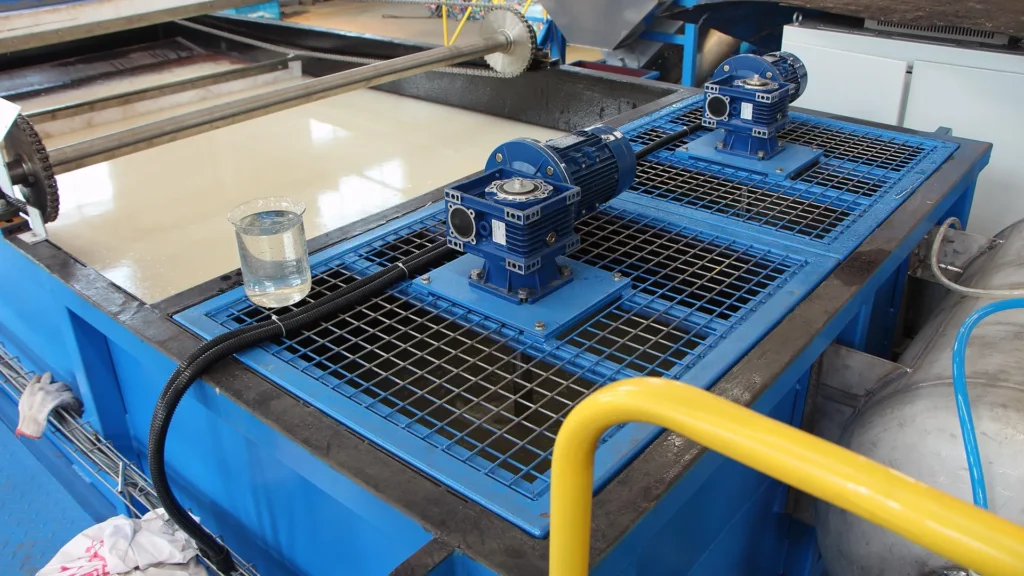
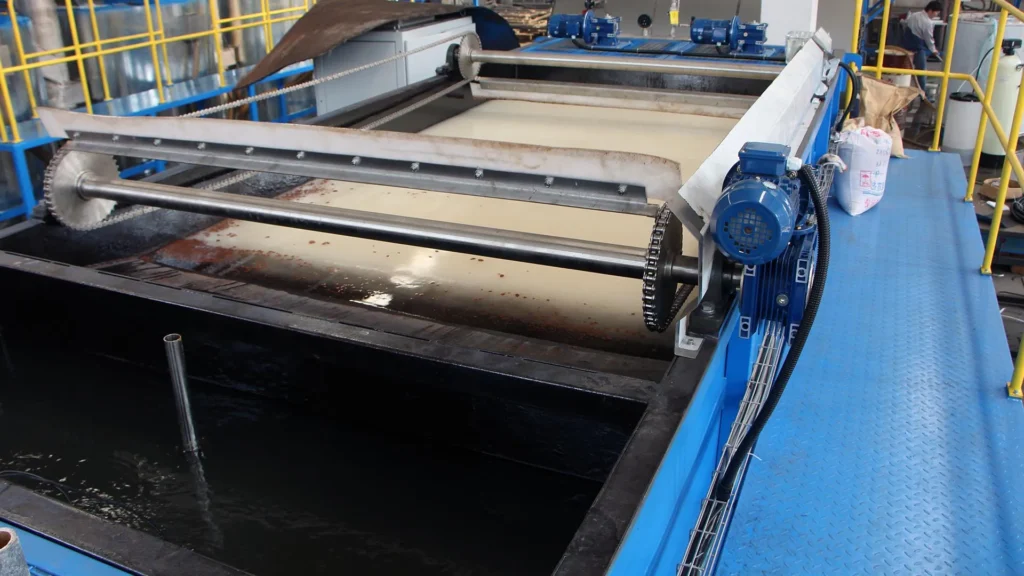
머신 갤러리
Reference views of the DAF water treatment system used for clarifying recycling wastewater.
자주 묻는 질문
Practical questions buyers ask when comparing wastewater treatment options for recycling plants.
DAF is commonly used to remove suspended solids, oils, grease, floating fines, fibers, and part of the organic load from wastewater, especially when the contaminants are too light or too fine for settling alone.
Usually yes. Screening and grit removal protect pumps and reduce abrasive load, while equalization helps DAF run more steadily. In many plants the best design uses screening, settling, and DAF together.
Not every project uses the same dosing level, but many DAF systems work best with coagulants and flocculants because they help fine particles and emulsified contaminants form larger flocs that float more reliably.
In many recycling plants, yes. The exact reuse ratio depends on influent variability, treatment train design, and the water-quality target for each stage of the washing process.
Please share wastewater flow rate, TSS, oil and grease level, pH, temperature, detergent or caustic carryover, and whether the goal is discharge compliance, water reuse, or both.
Need a DAF System for Your Recycling Water Loop?
Send us your wastewater flow, contamination profile, reuse target, and sludge-handling plan. We can help define the right DAF capacity, dosing logic, and integration method for your plant.
