

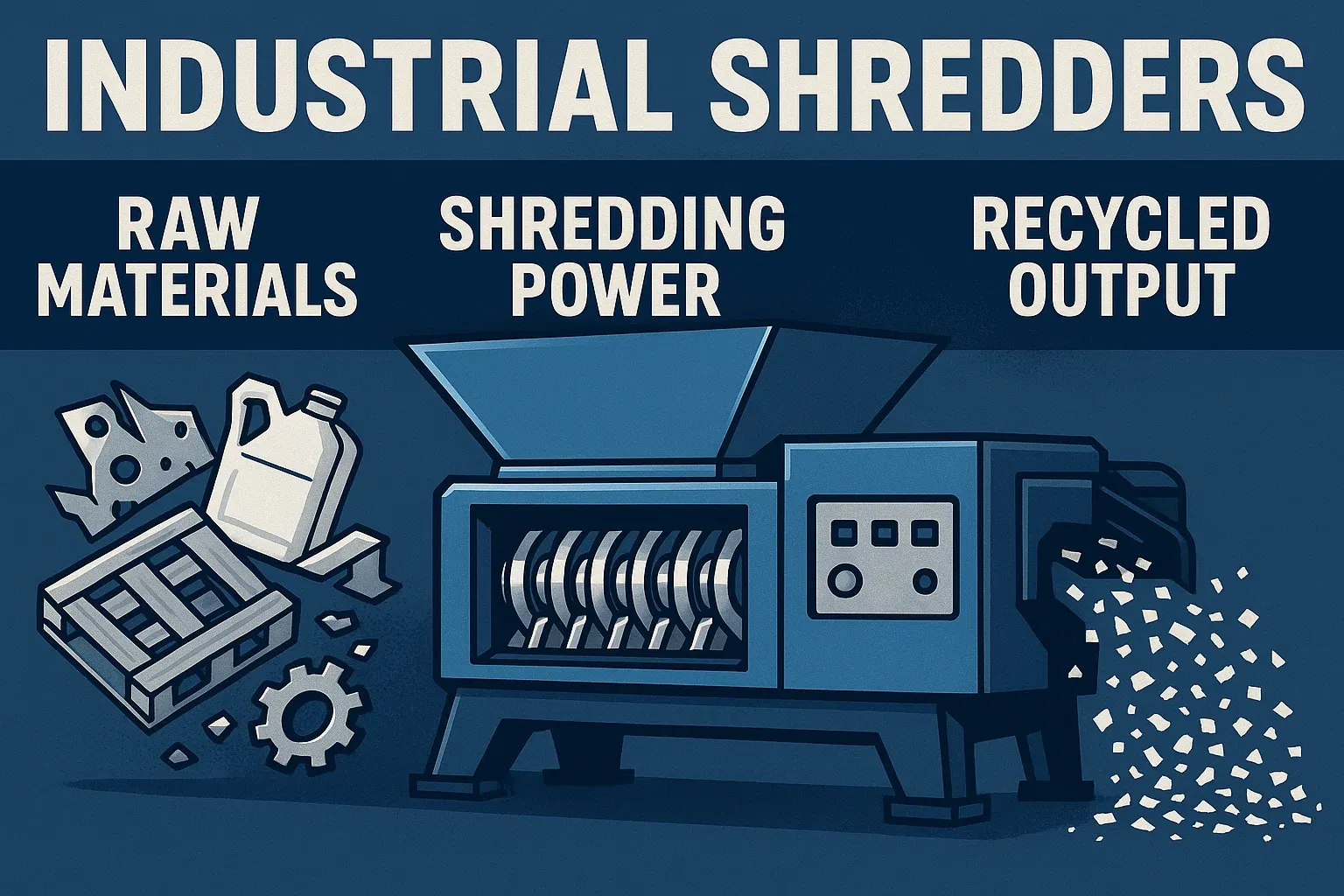
산업용 파쇄기는 단순히 재료를 부수는 기계가 아닙니다. 정밀하게 설계된 기계로, 재료의 기계적 특성을 이용하여 파손을 유도합니다. 100미크론 두께의 LDPE 필름을 처리하든 20mm 두께의 강판을 처리하든, 기본적인 물리적 원리는 동일합니다. 전단 응력이 재료 강도를 초과했습니다.. 이 가이드에서는 크기 축소의 이면에 있는 기계 공학적 원리를 살펴봅니다.
관련 장비: 단일 샤프트 분쇄기 | dual-shaft shredder | all shredder models.
1. 재료 파괴 역학
파쇄기는 주로 다음을 이용합니다. 전단 비록 군대가 인장력 그리고 압축 군대는 조연 역할을 맡습니다.
전단 vs. 인열
- 전단 파괴: 두 개의 마주보는 날이 틈 없이 서로 스쳐 지나갈 때 발생하며, 가위와 유사한 현상입니다.
- 방정식: $\tau = F / A$ 여기서 $\tau$는 전단 응력, $F$는 힘, $A$는 단면적입니다.
- 애플리케이션타이어, 금속, 경질 플라스틱.
- 인장 파괴(찢어짐)갈고리가 재료를 잡아당겨 카운터 나이프나 스크린에 부딪히게 하면서 늘어나다가 끊어질 때 발생합니다.
- 애플리케이션직물, 카펫, 점보 백.
2. 토크 및 절삭력 계산
The “power” of a shredder is rarely about kW; it is about 토크 ($T$).
$$T = (P \times 9550) / n$$
어디:
* $T$ = 토크 (뉴턴미터)
* $P$ = 전력(kW)
* $n$ = 회전 속도(RPM)
엔지니어링 인사이트100kW 모터가 1500RPM(과립기)으로 회전할 때 약 636Nm의 토크가 발생합니다. 동일한 100kW 모터가 20:1 기어박스를 통해 80RPM(분쇄기)으로 회전할 경우... 11,937 Nm 토크의 차이 때문입니다. 이것이 바로 파쇄기가 자동차 타이어를 절단할 수 있는 반면, 분쇄기는 즉시 멈춰버리는 이유입니다.
3. Cutting Geometry: The ‘Bite’
파쇄기의 효율은 다음 요소에 의해 결정됩니다. 경사각 그리고 후크 프로필.
양의 레이크 vs. 음의 레이크
- 양의 경사각칼날 면이 기울어져 있습니다. ~ 안으로 그 절단면.
- 효과더욱 날카로운 절삭력, 더 낮은 에너지 소비량.
- 위험모서리가 약해서 금속에 닿으면 쉽게 깨집니다.
- 네거티브 레이크 각도칼날 면이 기울어져 있습니다. 떨어져 있는 잘린 부분에서.
- 효과: 날카로운 모서리 강도(둔기 충격력)가 높을수록 에너지 소모가 많습니다.
- 가장 좋은: 고철, 전자제품.
조금씩 뜯어먹는 효과
로터 나이프는 특정 방식으로 배열되어 있습니다. 나선형 패턴 (Chevrons) along the shaft. This ensures that only 1 or 2 knives are cutting at any millisecond. If all knives hit the material simultaneously, the “impact load” would stall the motor. The helix creates a continuous, smooth cutting action, stabilizing the amperage draw.
4. 화면 동적 효과
화면은 출력 크기를 결정하지만 주요 병목 현상의 원인이기도 합니다.
- 개방면적비율(OAR)구멍의 비율과 단단한 금속 부분의 비율.
- 기준: 35-45% 개방형 공간.
- 처리량 규칙용량은 OAR에 정비례합니다. 50mm 구멍이 있는 스크린은 20mm 구멍이 있는 스크린보다 OAR이 훨씬 높아 처리량이 두 배로 늘어나는 경우가 많습니다.
- 재순환: Material that doesn’t pass through the screen is carried back up by the rotor (“Carryover”) for re-cutting. Excessive recirculation generates heat and dust (fines), lowering efficiency.
5. 구동 시스템: 유압식 vs. 전기식
- 유압 구동 원리:
- 가변용량 펌프를 사용합니다.
- 이점: Can deliver very high torque at low RPM without overheating. Useful for “unshreddable” jams where fast auto-reverse is needed.
- 전기 구동(VFD):
- 인버터를 사용하여 교류 주파수를 제어합니다.
- 이점: 더 높은 전력 효율(유압식의 경우 95% 대 75%). 낮은 유지보수 비용(오일 누출 없음).
Industrial Shredder Types: Single-Shaft vs Dual-Shaft
The two most common industrial shredder configurations use fundamentally different approaches to size reduction. Your choice depends on the material type, target output size, and throughput requirements.
| 요인 | 단일 샤프트 분쇄기 | 듀얼 샤프트 분쇄기 |
|---|---|---|
| Cutting action | Rotor knives cut against fixed bed knives + screen controls output size | Two counter-rotating shafts with interlocking cutters shear material between them |
| Output size control | Screen determines final particle size (10–80 mm typical) | No screen — output size set by cutter width (50–200 mm typical) |
| Speed / Torque | Medium speed (60–120 RPM), high torque via gearbox | Low speed (15–40 RPM), very high torque |
| 최고급 재료 | Films, bags, fibers, rigid plastics, paper, wood | Bulky waste, tires, metals, e-waste, mixed MSW |
| 처리량 범위 | 200–3,000 kg/h | 500–10,000+ kg/h |
| 가격대 (미국 달러) | $5,000–$60,000 | $15,000–$150,000+ |
| Maintenance focus | Screen wear + bed knife adjustment | Cutter replacement + shaft seal inspection |
선택 바로가기: If you need a defined output size (for feeding a washing line or granulator), choose a single-shaft shredder with screen. If you need to reduce bulky items to a manageable size as a first stage, choose a dual-shaft shredder. Many recycling plants use both in sequence: dual-shaft for primary size reduction, single-shaft for secondary sizing.
Industrial Shredder Applications by Material
Different materials fail through different mechanisms (see shear vs tensile failure above), so each application requires specific cutter design, speed, and screen configuration.
Plastic Recycling Shredders
- 강성 플라스틱 (HDPE pipes, crates, drums): Single-shaft with V-rotor knives, 20–40 mm screen. See our 단단한 플라스틱 분쇄기 configurations.
- PE/PP film & woven bags: Single-shaft with anti-winding rotor design, wider clearance to prevent material wrapping. See film & raffia shredder.
- PET 병: Often processed with a crusher rather than shredder to preserve flake quality.
Metal Scrap Shredders
- Light metals (aluminum cans, copper wire): Dual-shaft at low RPM, hardened tool steel cutters.
- Heavy metals (steel turnings, automotive scrap): Heavy-duty dual-shaft with hydraulic drive for instant reverse on jams. See 금속 스크랩 파쇄기.
Textile & Fiber Shredders
- Textiles require tensile failure (tearing) rather than shear. Hook-style rotors grab and pull fibers against counter-knives.
- Anti-winding features (reverse pulsing, shaft scrapers) prevent fiber buildup on the rotor. See textile waste shredder.
Tire & Rubber Shredders
- Tires need very high torque at low speed. Dual-shaft shredders with 20:1+ gearbox ratios handle steel-belted radials.
- Two-stage process typical: dual-shaft primary (50–100 mm strips) → single-shaft secondary (10–20 mm chips).
- See tire recycling shredder options.
How to Select the Right Industrial Shredder
Before requesting quotes, define these five parameters. They determine 90% of the correct machine configuration:
- Material type & form: What are you shredding? (film rolls, rigid parts, mixed waste, metals)
- Input size: What is the largest piece going in? (affects hopper and rotor diameter)
- 목표 출력 크기: What size do you need out? (determines screen selection or cutter width)
- 처리량: How many kg/h or tons/day? (sizes the motor, rotor width, and drive)
- Downstream process: What comes after the shredder? (washing line, granulator, pelletizer, landfill)
For a step-by-step RFQ process with TCO analysis and factory acceptance test (FAT) checklist, see our Industrial Shredder Buyer’s Guide. For plastics-specific sizing with cutter geometry details, read the Plastics Shredder Selection Guide.
자주 묻는 질문
산업용 쇼드러는 어떻게 작동하는가요?
An industrial shredder works by applying shear force through rotating blades that cut material against fixed counter-knives. The motor drives the rotor through a high-ratio gearbox (typically 15:1 to 25:1), converting speed into torque. Material feeds by gravity into the cutting chamber, where it is reduced until small enough to pass through the sizing screen (single-shaft) or fall between the cutter gaps (dual-shaft).
쉼기와 분쇄기의 차이점은 무엇인가요?
A shredder operates at low speed (15–120 RPM) with high torque for primary size reduction of large or tough materials. A 과립기 operates at high speed (300–600 RPM) with an open rotor and tight-tolerance screen for producing uniform, small particles (3–12 mm). Shredders handle the rough work; granulators refine it. Many recycling lines use both in sequence.
산업용 분쇄기 가격은 얼마인가요?
A small single-shaft plastic shredder starts at $5,000–$8,000 for 200 kg/h capacity. Medium industrial single-shaft units cost $15,000–$60,000 (500–2,000 kg/h). Heavy-duty dual-shaft shredders for metals and tires range from $30,000 to $150,000+. See our 2026 machine price list for detailed pricing by capacity tier.
산업용 써드러서가 필요한 유지보수는 무엇인가요?
Regular maintenance includes: blade sharpening or rotation every 200–500 operating hours (material-dependent), screen inspection for wear and holes, gearbox oil changes per manufacturer schedule, hydraulic system checks (if equipped), and bearing lubrication. Planned downtime for blade changes typically takes 2–4 hours with a trained crew. Read our full shredder blade guide for details on steel grades and service life.
Single-shaft or dual-shaft shredder – which do I need?
Choose single-shaft if you need defined output size (screen-controlled), process films/plastics/wood, or need the shredder to feed directly into a washing line or granulator. Choose dual-shaft if you process bulky mixed waste, tires, or metals and need high-throughput primary reduction without precise sizing. When in doubt, see our application-specific selection guide.
결론
Selecting an industrial shredder requires matching the machine’s cutting mechanics to your material’s failure mode. A high-shear design (for tires and metals) will fail at processing high-tensile fibers (ropes, textiles) due to winding. Understanding the physics of shear stress, torque delivery, cutting geometry, and screen dynamics — covered in detail above — gives you the engineering foundation to evaluate any supplier’s machine against your actual processing requirements.
Ready to specify your shredder? Start with our RFQ checklist 또는 모든 쇼더 모델 보기.
