

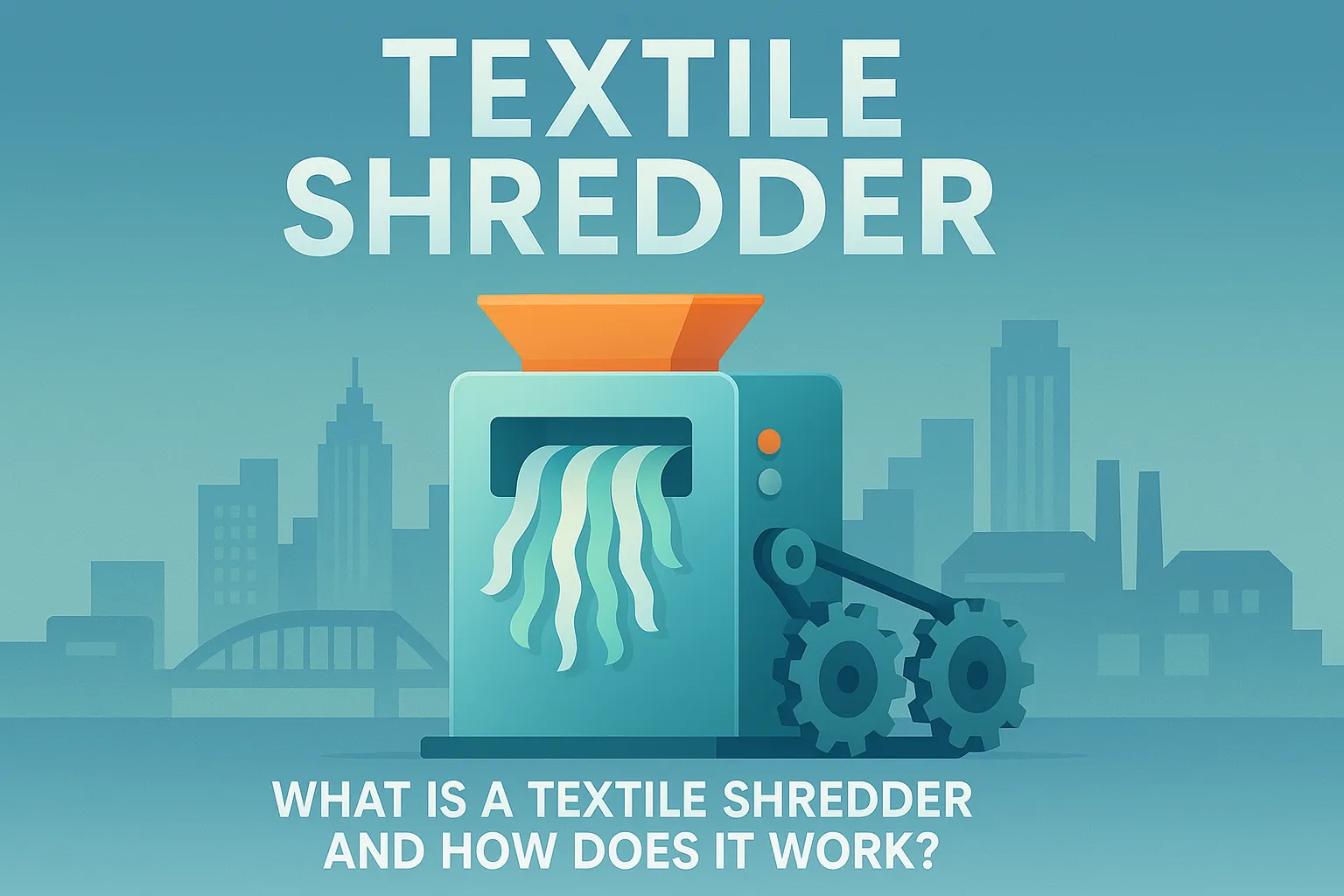
에이 섬유 파쇄기 중고 의류, 생산 자투리, 카펫, 가구용 패브릭, 부직포 및 산업용 섬유를 규격화된 스트립 또는 개섬된 섬유로 절단하는 저속 고토크 기계입니다. 동일한 장비는 다음과 같이 불리기도 합니다: 원단 파쇄기, 천 파쇄기, 또는 의류 쇼더로 불릴 수 있습니다. 올바른 기계는 섬유 구성, 공급 형태, 처리량, 오염, 목표 출력 크기, 그리고 다음 재활용 단계에 따라 다릅니다. 이 가이드는 단축 톱니바퀴, 더블 스파이크, 네 스파이크, 그리고 섬유 개방 시스템을 비교하며, anti-winding 디자인을 설명하고, 천 재활용 라인의 실용적인 선택 프레임워크를 제공합니다.
What Is a Textile Shredder?
텍스타일 절단기는 섬유 재료를 위해 특별히 제작된 저속 고톤수 감소 기계입니다. 같은 장비는 여러 이름으로 판매됩니다: 섬유 파쇄기 is the standard term in the recycling industry, 원단 파쇄기 는 텍스타일 제조와 변환업체에서 더 일반적입니다. 천 파쇄기 dominates retail and commercial searches, and garment shredder 는 사용된 옷과 의류 파괴 서비스에 특히 사용됩니다. 모두 같은 기계 분류를 설명합니다. 표준 플라스틱이나 나무 절단기와 달리, 텍스타일 절단기는 독특한 도전을 극복해야 합니다. fiber winding — 장기적이고 유연한 섬유가 전통적인 기계의 축과 랜더에 뭉치여 막히거나, 운영 중지, 모터 과부하를 유발합니다. 특별히 제작된 텍스타일 쇼드러는 특수한 랜더 지형, anti-winding 키드 디자인, 섬유 제거 기계를 통해 재료가 절단 요소에 쌓이지 않도록 해결합니다.
배출물은 RDF(고형폐기물연료)용 조대 스트립(50–100 mm)부터 부직포 제조 및 단열재용 미세 개섬 섬유(10–30 mm)까지 다양합니다. 효율적인 섬유 파쇄의 핵심은 원료의 조성과 최종 배출 섬유의 용도에 맞춰 파쇄기 기종과 구성을 정확히 매칭하는 것입니다.
Textile Shredder vs. Fabric Shredder vs. Cloth Shredder: Same Machine, Different Names
Buyers searching for a 원단 파쇄기, 천 파쇄기, garment shredder, 또는 산업용 원단 파쇄기 모두 동일한 기계 카테고리를 바라보고 있습니다. 차이는 단순히 용어 - 산업, 지역, 최종 사용에 따라 발생합니다. 이 이름들이 실제 응용 프로그램에 어떻게 맵핑되는지 보여드립니다:
| Term | Most Common User | 일반적인 응용 프로그램 | 기계 유형 |
|---|---|---|---|
| 텍스타일 쇼더 | Recycling plants, MRF operators | Post-consumer textile recycling, fiber recovery | Single-shaft or double-shaft |
| 섬유 쇼더 | Textile mills, fabric converters, manufacturers | Fabric offcuts, mill ends, defective rolls | Single-shaft with screen control |
| Cloth shredder | Garment factories, laundry services, retail | Used uniforms, branded apparel destruction, hospitality linen | Single-shaft, often with shred-to-destroy verification |
| Garment shredder | Brand protection, used-clothing processors | Apparel destruction, charity sorting residue, returns processing | Single or double-shaft depending on volume |
| 산업용 섬유 쇼더 | 대규모 재활용 작업 | 혼합 텍스타일 폐기물, 카pets, 산업 텍스타일의 강력한 처리 | 강력한 단축(90+ kW) 또는 양축(90+ kW)형 |
| 소형/가정 텍스타일 파쇄기 | 소형 공장, R&D, 제작자 | 저량 폐기물, 프로토타입, 샘플 준비 | 콤팩트 단축, 7.5–22 kW |
장비를 공급받는다면, 올바른 질문은 “텍스타일 쇼더나 텍스타일 쇼더가 필요한가”가 아니라 “어떤 섬유 유형, 처리량, 출력 크기를 필요로 하는가”입니다. 이 네 가지 용어 모두 동일한 답변을 가리킵니다: 저속 고톱력 쇼더와 anti-winding 루터 디자인을 갖춘 쇼더입니다. 이 가이드의 나머지 부분에서는 섬유 파쇄기 을 총칭으로 사용하지만, 기술과 선택 기준은 프로젝트가 텍스타일, 천, 의복 파쇄으로 레이블링되었든지 상관없이 동일합니다.
Types of Textile Shredders
Single-Shaft Textile Shredder
하나의 회전 축과 절단 키드가 고정된 베드 키드에 맞서 자르는 방식으로, 크기 스크린이 출력 파티클 크기를 제어합니다. 단쇄축 기계는 가장 많은 uniform output — 하위 과정(비 woven 라인, 섬유 혼합)이 일관된 섬유 길이가 필요할 때 적합합니다. 출력 크기: 10–80 mm까지의 스크린 선택에 따릅니다. 처리량: 200–2,000 kg/h. 우리의 섬유 및 카펫 폐기물용 단축 파쇄기 비원 재료를 위해 특별히 설계된 방향 반대 V-로터 디자인을 갖추고 있습니다.
Double-Shaft Textile Shredder
두 개의 상호 반대 방향으로 회전하는 축에 맞춤형 날이 있는 기계는 텍스타일을 띠로 자르고 끊어냅니다. 더블 샤프트 기계는 high-volume primary shredding 대형 텍스타일 백, 카르펫, 혼합 옷. 자가 공급형이며 — 상반전 회전 축이 재료를 끌어들이는 — 오염된 또는 혼합된 입력을 최소한의 사전 정리로 처리합니다. 출력: 30–150 mm의 띠. 처리량: 1,000–3,000 kg/h. 균일성보다 양이 중요한 초기 축소 단계에 최적입니다.
Four-Shaft Textile Shredder
두 번째 기계는 거친 쪼개기 텍스타일 띠를 쪼개고, 비원 생산, 접착물, 섬유 혼합에 적합한 개별 섬유로 개방합니다. 섬유 개방기는 고속 드럼과 미세한 핀이나 치아(800–1,500 RPM)를 사용하여 절단 날이 아닌 것을 사용합니다. 출력: 5–30 mm 개방 섬유. 이 기계는 일반적으로 두 단계 텍스타일 재활용 라인에서 원본 쪼개기 기계 뒤에 위치합니다. 우리의
Fiber Opener / Fine Shredder
재생되는 섬유 스트립을 거친 두 번째 기계는 이를 개별 섬유로 개방하여 비원료 생산, 접착물, 섬유 혼합에 적합하게 합니다. 섬유 개방기는 고속 드럼에 미세한 핀이나 이빨(800–1,500 RPM)를 사용하여 절단 날이 아닌 것을 사용합니다. 출력: 5–30 mm 개방된 섬유. 이 기계는 일반적으로 두 단계 섬유 재활용 라인에서 주요 섬유 절단기 뒤에 위치합니다. 우리의 fiber shredder selection specs guide.
Textile Shredder Type Comparison
| 유형 | 처리량 | 모터 출력 | 출력 크기 | 가장 적합한 |
|---|---|---|---|---|
| 싱글 샤프트 | 200–2,000 kg/h | 22–132 kW | 10–80 mm (screen-controlled) | Uniform fiber for nonwoven, insulation |
| 이중 샤프트 | 1,000–3,000 kg/h | 30–200 kW | 30–150 mm strips | High-volume primary reduction, baled clothing |
| Four-Shaft | 500–5,000 kg/h | 45–250 kW | 20~80mm | Combined primary + secondary in one unit |
| Fiber Opener | 100~1,500kg/시간 | 15–75 kW | 5–30 mm opened fiber | Fine fiber for nonwoven lines, insulation |
The Anti-Winding Challenge
섬유 파쇄는 다음과 같은 특성으로 인해 플라스틱이나 금속 파쇄와 근본적으로 다릅니다: fiber winding. 장기적이고 유연한 섬유는 회전축을 둘러싸고, 날과 사이에 쌓이고 결국 기계가 멈춥니다. 표준 산업 쇼딩기는 몇 분에서 몇 시간 안에 텍스타일에서 실패합니다. 특별히 설계된 텍스타일 쇼딩기는 다양한 설계 기능으로 이 문제를 해결합니다:
- V-rotor geometry — 난간형 날이 섬유를 끊어내는 나이프 모션을 만들어 섬유가 뒤집히는 것을 방지합니다
- Anti-winding knife profiles — 돌기형이나 날카로운 날자가 섬유를 잡아 자르며 섬유가 슬리드하고 뒤집히는 것을 허용하지 않습니다
- Fiber stripping combs — 회전하는 날과 사이에 고정된 나뭇가지 모양의 요소가 회전축에서 둘러싸인 섬유를 지속적으로 벗겨냅니다
- Wide blade spacing — 자르는 요소 사이의 간격이 커지면서 섬유가 쌓일 수 있는 표면 면적이 줄어듭니다
- Automatic reverse function — 컨트롤러가 섬유 축적으로 인한 모터 과부하를 감지하고, 막힘을 해결하기 위해 루터를 간단히 역전하십시오
When evaluating textile shredders, always request a test run with your actual material. 콘트라스트에서 잘 작동하는 기계는 강하고 더 많이 감싸이기 쉬운 인공섬유(니론, 폴리에스터)에 맞지 않을 수 있습니다.
가공할 수 있는 재료
| 재료 | 예시 | Shredding Challenge | Recommended Type |
|---|---|---|---|
| 사용된 의복/의상 | 혼합 의복 백, 정리된 폐기물, 브랜드 의복 파괴 | 혼합 섬유 + 지퍼, 버튼, 스나프 | 상류에 금속 검출기를 갖춘 의복 파쇄기 |
| Cotton / Natural Fiber | T-shirts, denim, towels | Moderate — fibers break relatively easily | Single-shaft or double-shaft |
| Polyester / Synthetic | Activewear, lining, fleece | High — strong fibers wind aggressively | Single-shaft with V-rotor + strippers |
| 혼합 천fibers | 65/35 폴리-컴포트, 작업복 | 고 — 공정 부분으로 인한 감전 | 단축 anti-winding 디자인 |
| 카펫 | 니론, PP, 폴리에스터 카펫 | 매우 높음 — 백링 + 섬유 + 접착층 | heavy-duty double-shaft + secondary opener |
| 비 woven | 마스크, 위생지, 지구 텍스쳐 | 낮음 — 쉽게 터지고, 감전 최소 | 모든 유형 |
| 가죽 / 가죽 모방 | 신발, 가방, 의자락 | 중간 — 단단하지만 깨끗하게 잘라낼 수 있음 | double-shaft with high torque |
| 산업 텍스쳐 | 컨베이어 벨트, 필터 천, 줄 | 매우 높음 — 매우 강한 섬유 | heavy-duty single-shaft, slow speed |
상세한 재료별 가이드를 참조하십시오 carpet recycling shredder specs 그리고 textile waste shredder.
출력 제품 및 응용
| 산출물 | 섬유 크기 | 최종 응용 | 값 |
|---|---|---|---|
| 초초운 줄 | 50~150mm | RDF (refuse-derived fuel), cement kiln fuel | $20–$60/ton |
| Pyrolysis feedstock | 20–30 mm | Textile-to-char and energy via pyrolysis | process-dependent |
| shredded fabric | 20–50 mm | Wiping cloths, industrial rags, shoddy | $80–$200/ton |
| Opened fiber | 10–30 mm | Nonwoven batting, insulation, automotive felt | $150–$400/ton |
| Fine fiber | 5–15 mm | Fiber-reinforced composites, premium insulation | $250–$600/ton |
| Fluff / dust | <5 mm | Filler material, acoustic panels | $50–$150/ton |
가치 사슬은 명확합니다: 섬유가 미세할수록 고부가가치를 지니지만 더 많은 가공 단계와 설비 투자가 필요합니다. 대부분의 사업장은 1차 조대 파쇄(최소 자본 투자)로 시작한 후 시장 수요에 맞춰 개섬 설비를 증설합니다. 배출물을 열분해 반응기에 투입하는 경우 RDF나 넝마용보다 입도 기준이 훨씬 엄격합니다. 다음 가이드를 참조하십시오: shredding waste textiles for pyrolysis (particle size, wrapping risk and screw-auger feeding).
Complete Textile Recycling Line Configurations
Basic RDF / Fuel Line
백 브레이커 → 더블 샤프트 쇼딩기 → 마그넷 분리기 → 스크리닝. 출력: 콘크리트 킬린 연료용 50–100 mm의 띠. 투자: $150,000–$350,000. 처리량: 1,000–5,000 kg/h.
아래 투자 금액은 완전한 설치에 대한 시장 참조 범위입니다. Energycle는 각 구성의 핵심에서 크기 줄이는 장비를 공급합니다 — 단일 샤프트 쇼딩기, 더블 샤프트 쇼딩기 및 보조 공장기.
Wiping Cloth / Industrial Rag Line
정리(수동 또는 자동) → 단축 톱니바퀴 쇼더 → 금속 검출 → 백링. 출력: 산업용 천을 위한 규격화된 천 조각. 투자: 120,000–300,000 달러. 처리량: 500–2,000 kg/h.
Fiber Recovery Line (Nonwoven / Insulation)
Bale breaker → primary shredder (double-shaft) → secondary shredder (single-shaft) → fiber opener → air classifier → fiber blending → nonwoven card or insulation line. Output: 10–30 mm opened fiber. Investment: $300,000–$1,000,000. Throughput: 300–2,000 kg/h of finished fiber.
Safety: Fire and Dust Explosion Prevention
텍스타일 쇼딩은 연료성 먼지와 정전기가 발생시키며 — 두 가지 조건이 심각한 화재와 폭발 위험을 초래합니다. NFPA 652 (연료성 먼지 기본 사항에 관한 표준)은 모든 텍스타일 재활용 운영에 적용됩니다. 주요 안전 조치:
- Spark detection and suppression — 섬유 분쇄기와 먼지 수집기 사이의 배관에 내장형 스파크 탐지기 설치; 자동 물 증기 차단이 밀리초 내 활성화됨
- 먼지 수집 — 닫힌 캡과 독립적인 추출 장치로 공기 중 섬유와 먼지를 수집; NFPA 652에 따라 먼지 수집기 유지
- Static grounding — 전기 장비, 콘베이 라이너, 배관을 모두 지면에 연결; 방전 방지 밴드 사용
- Metal detection — 파쇄 전 지퍼, 단추, 리벳 및 와이어를 제거하십시오. 금속 마찰 스파크는 화재 발생의 제1 원인입니다.
- Housekeeping — prevent dust accumulation on surfaces; clean regularly; never allow dust layers to exceed 1/32 inch (0.8 mm)
For comprehensive safety guidance, see our textile shredder safety guide (NFPA 652).
5-Step Selection Framework
1단계: 투입 재료 정의
섬유 구성(코튼, 폴리에스터, 나일론, 혼합물, 카pets), 형태(자유 옷, 백스, 롤, 카pets 타일), 오염(지퍼, 버튼, 라퍼 백), 일일 톤 수를 식별. 30% 이상의 합성 내용물은 방전 방지 루터 디자인이 필수 — 표준 분쇄기는 실패합니다.
Step 2: Choose Output Specification
RDF는 두꺼운 줄로만 요구됨(한 개 분쇄 단계). 닦는 옷은 크기별 조각이 필요(한 개 분쇄기 + 분사기). 비 woven 섬유는 미세한 열린 섬유가 필요(두 개 분쇄 단계 + 섬유 열림기). 최종 제품이 처리 단계와 총 투자를 결정합니다.
Step 3: Size for Throughput
Textile bale density is 300–500 kg/m³. A facility receiving 20 tons/day needs approximately 3,125 kg/h shredding capacity (8-hour shift, 80% uptime). Size the primary shredder for peak intake plus 20% margin; secondary stages can be smaller because material volume reduces after first shredding.
Step 4: Verify Anti-Winding Features
실제 재료로 테스트 런을 요청하세요 - 텍스타일 응용 프로그램에서는 이는 협상 불가합니다. 확인 사항: V-로터나 반전 방지 날이지, 섬유 제거 기계, 과부하 시 자동 반전, 수동 정리 없이 지속적인 작동 시간. 좋은 텍스타일 쇼더는 운영자가 섬유 랜드를 정리하지 않고 8+ 시간 동안 작동합니다.
Step 5: Plan Safety Systems
스파크 감지, 먼지 수집, 정전기 배지, 금속 감지를 초기에 예산에 포함하세요 - 이는 후회로는 아닙니다. 이들은 텍스타일 재활용에서 선택 사항이 아닙니다; 대부분의 관할 구역에서 규제 요구 사항이며 투자와 근로자를 보호하는 데 필수적입니다.
유지보수 필수 사항
- 일일: 로터, 베어링, 안전 보호 장치 주위에서 섬유 쌓임을 정리하세요; 먼지 수집 풀을 비우세요; 금속 감지 시스템을 점검하세요
- 주간: 날이 날카로운지 확인하세요 (섬유 섬유는 고정된 플라스틱보다 날이 더 빨리 가라짐); 반전 방지 제거 핀 상태를 확인하세요; 드라이브 벨트와 체인을 점검하세요
- 월간 간행물: 베어링을 보습하세요; 먼지 오염을 위해 전기 연결을 점검하세요; 스파크 감지 및 억제 시스템을 테스트하세요; 스크린 상태를 확인하세요 (단일 축 단위)
- 500~1,000시간마다: 날을 회전하거나 다시 갈아서 갈아주세요; 섬유 마모로 인한 로터 축의 손상을 점검하세요
- 매년: 루터, 베어링, 변속기, 안전 시스템, 구조적 안정성의 전면 검사
Energycle와 함께 시작하세요
Energycle manufactures industrial textile and fabric shredders 면, 폴리에스터, 혼방 섬유 및 카펫에 맞춤 설계된 감김 방지 로터 디자인을 적용하고 있습니다. 당사가 제공하는 솔루션:
- 무료 재료 검사 — 천 샘플(1–2 배럴)을 보내주시면, 비디오 문서화와 함께 전면 씁니다
- Anti-winding guarantee — V-루터 설계는 인공 혼합물에서 8시간 지속적인 작동에 대해 수동 정리 없이 검증되었습니다
- 완전한 라인 설계 — 베일 해체부터 파쇄, 섬유 개섬, 금속 선별 및 최종 섬유 베일 압축까지의 전체 공정
- 안전 시스템 통합 — 라이터 감지, 먼지 수집, 화재 방지가 라인의 일부로 지정되고 제공됩니다
재료 유형, 처리량 요구 사항, 원하는 출력 크기를 가진 귀하의 텍스타일 유형, 일일 처리량, 원하는 출력 섬유 길이를 알려주시면, 적합한 구성을 추천하고 견적을 제공하겠습니다. 저희 textile shredder test run video to see our machines in action.
자주 묻는 질문
What is a textile shredder?
섬유 파쇄기는 직물 폐기물(의류, 카펫, 산업용 섬유)을 재활용을 위해 스트립 또는 개섬된 섬유로 절단하는 저속 고토크 기계입니다. 표준 파쇄기와 달리, 섬유 파쇄기는 긴 연성 섬유가 샤프트에 감겨 걸림 현상을 일으키는 것을 방지하는 감김 방지 설계(V자형 로터, 섬유 박리 빗, 특수 블레이드 프로파일)를 갖추고 있습니다.
How much does a textile shredder cost?
단축 톱니바퀴 천 쇼더는 처리량(200–2,000 kg/h)에 따라 35,000–150,000 달러에 듭니다. 더블 스파이크 모델은 90,000–220,000 달러(1,000–3,000 kg/h)에 듭니다. 완전한 섬유 회수 라인은 원본 및 중간 쇼딩, 섬유 개방, 금속 검출, 전달, 그리고 먼지 수집을 포함할 수 있어 300,000–1,000,000 달러에 이릅니다. 우리의 섬유 파쇄기 가격 및 ROI 가이드 지역 처리비, 판매가치, 전력 비율, 운영 일정과 기계 범위, 운영 비용, 회수 기간을 비교하려면.
Can a textile shredder process carpet?
네, 하지만 카pets는 가장 요구가 많은 텍스타일 쇼딩 애플리케이션 중 하나입니다. 카pets는 나일론이나 폴리에스터 표면 섬유, 폴리프로필렌 백링, 레이퍼드 접착제, 때로는 칼슘 카르bonate 채우물을 결합한 것입니다. 원본 감소를 위해 중무장 양쪽 축 쇼딩 머신이 필요하며, 표면 섬유와 백링을 분리하기 위해 섬유 오프너가 필요합니다. 밀봉 재료로 인해 나이프 소모율은 옷보다 2–3배 빠릅니다.
What is anti-winding design and why does it matter?
anti-winding 설계는 로터 지형, 블레이드 프로파일, 제거 기계가 텍스타일 섬유가 쇼드러 축을 둘러싸고 뭉치는 것을 방지하는 것을 의미합니다. anti-winding 기능이 없으면, 장기적인 섬유는 몇 분 안에 로터 내에 쌓이고, 모터가 멈추고 수동으로 청소가 필요합니다. V-로터 지형과 섬유 제거 표시기를 갖춘 특별히 제작된 텍스타일 쇼드러는 섬유 뭉치 없이 지속적으로 8+ 시간 동작합니다.
What output fiber size do I need?
최종 용도에 따라 다릅니다. RDF/연료: 50–100 mm 스트립(파쇄기 1회 통과). 산업용 넝마: 20–50 mm 조각. 부직포 제조: 10–30 mm 개섬 섬유. 단열재 충전재: 10–20 mm. 섬유 강화 복합재: 5–15 mm 미세 섬유. 배출물이 미세할수록 가공 공정이 늘어나고 설비 투자비가 높아지지만, 훨씬 높은 단가를 확보할 수 있습니다(조대 RDF가 톤당 –인 반면, 고품질 개섬 섬유는 톤당 –).
Is textile shredding a fire hazard?
네 — 텍스타일 절단은 연료성 먼지와 정전기가 발생합니다. 메탈 오염물(자루, 버튼, 전선)이 날개 끝에 부딪혀 화염이 발생합니다. NFPA 652는 텍스타일 재활용 작업에 적용됩니다. 필요한 안전 시스템은 다음과 같습니다: 배관에서의 화염 감지와 억제, 독립적인 먼지 수집, 모든 장비의 정전기 접지, 절단기 upstream의 메탈 감지, 먼지 축적을 방지하기 위한 엄격한 청소 프로토콜.
단쇄축과 양쇄축을 텍스타일용으로 어떻게 선택하죠?
단축 파쇄기는 스크린 제어를 통해 균일한 배출물을 생산하므로 섬유 길이의 일관성이 중요한 경우(부직포, 단열재)에 적합합니다. 이축 파쇄기는 자체 인입 성능으로 더 많은 처리량과 부피가 큰 투입물(압축 베일 의류, 카펫)을 처리하므로 1차 감용 또는 RDF 생산에 이상적입니다. 많은 공정에서 1차 조대 파쇄용 이축 파쇄기와 2차 정립용 단축 파쇄기를 조합하여 사용합니다.
텍스타일 쇼드러의 기대 톤수는 얼마인가요?
단축 섬유 파쇄기는 200–2,000 kg/h를 처리하며, 이축 모델은 1,000–3,000 kg/h, 사축 기계는 500–5,000 kg/h 범위입니다. 실제 처리량은 원료 유형(벌크 상태의 의류가 압축 카펫보다 인입 속도가 빠름), 요구 배출 입도(미세할수록 속도 저하), 수분 함량에 따라 달라집니다. 제조업체의 처리량 사양을 검증하기 위해 항상 실제 원료를 사용한 시험 가동을 요청하십시오.
fabric shredder는 textile shredder와 같은가요?
네 — 텍스타일 쇼더와 텍스타일 쇼더는 동일한 기계를 의미합니다. 텍스타일 밀, 의복 제조업체, 텍스타일 쪽박과 밀끝을 처리하는 변환자는 텍스타일 쇼더라는 용어를 선호합니다. 재활용 공장과 MRF 운영자는 텍스타일 쇼더를 선호합니다. 두 가지 용어 모두 저속 고톱력 쇼더와 anti-winding 루터 지형을 갖춘 섬유를 자르지 않고 루터 주위로 감지 않도록 설계된 쇼더를 의미합니다. 규격, 날짜 디자인, 선택 기준은 동일합니다.
저는 천 브레이커와 의복 브레이커의 차이점은 무엇인가요?
천 쇼더는 천이나 천을 처리하는 모든 쇼더의 일반적인 소매 및 상업 용어입니다. — 세탁 서비스, 호스피스 천 소매 처리, 소규모 텍스타일 재활용에 사용됩니다. 의복 쇼더는 사용된 의복 처리업체와 의복 파괴 서비스(브랜드 보호, 반품 처리, 기부Sorting 잔여물)에 특히 마케팅됩니다. 기계 설계는 동일합니다; 의복 쇼더는 지퍼, 버튼, 스나프, 나사 등이 의복 폐기물에서 피할 수 없기 때문에 상류에 금속 검출기를 포함합니다.
소형 텍스타일 파쇄기를 집이나 작업장 사용으로 구매할 수 있나요?
네 — 저량 작업용 7.5–22 kW 등급의 콤팩트 단축 텍스타일 쇼더가 있습니다: 소형 공장, R&D 연구소, 프로토타입, 샘플 준비용. 처리량은 일반적으로 50–300 kg/h입니다. 실제 가정용 텍스타일 쇼더(5 kW 미만, 단상 전력)는 산업 시장에서 드물며, 텍스타일 섬유는 고톱력이 필요하기 때문입니다. 온라인에서 판매되는 대부분의 “가정용” 단위는 실제 텍스타일에 대해 몇 시간 안에 실패하는 종이 쇼더입니다. 실제 텍스타일 처리를 위해, 소규모로서도 산업 단축 텍스타일 쇼더는 최소한의 요구 사항입니다.
관련 자료
- View EMR-TS Models and Working Widths
- 텍스타일 쇼더 가격 및 ROI 가이드
- Fiber Shredder Selection Specs (2026)
- 열분해용 폐섬유 파쇄: 입도 조절 및 공급
- Textile Recycling Shredder Specs: Mechanical vs Chemical
- Textile Shredder Safety: NFPA 652 Guide
- Carpet Recycling Shredder Specs
- 수직 섬유 및 텍스타일 밀봉기
- Textile Shredder Test Run Video
- Fishing Net Recycling Guide
- 범용 싱글 샤프트 파쇄기
- 플라스틱 재활용 기계: 전체 가이드
탐색하기: 전체 산업용 플라스틱 파쇄기 제품군 보기
