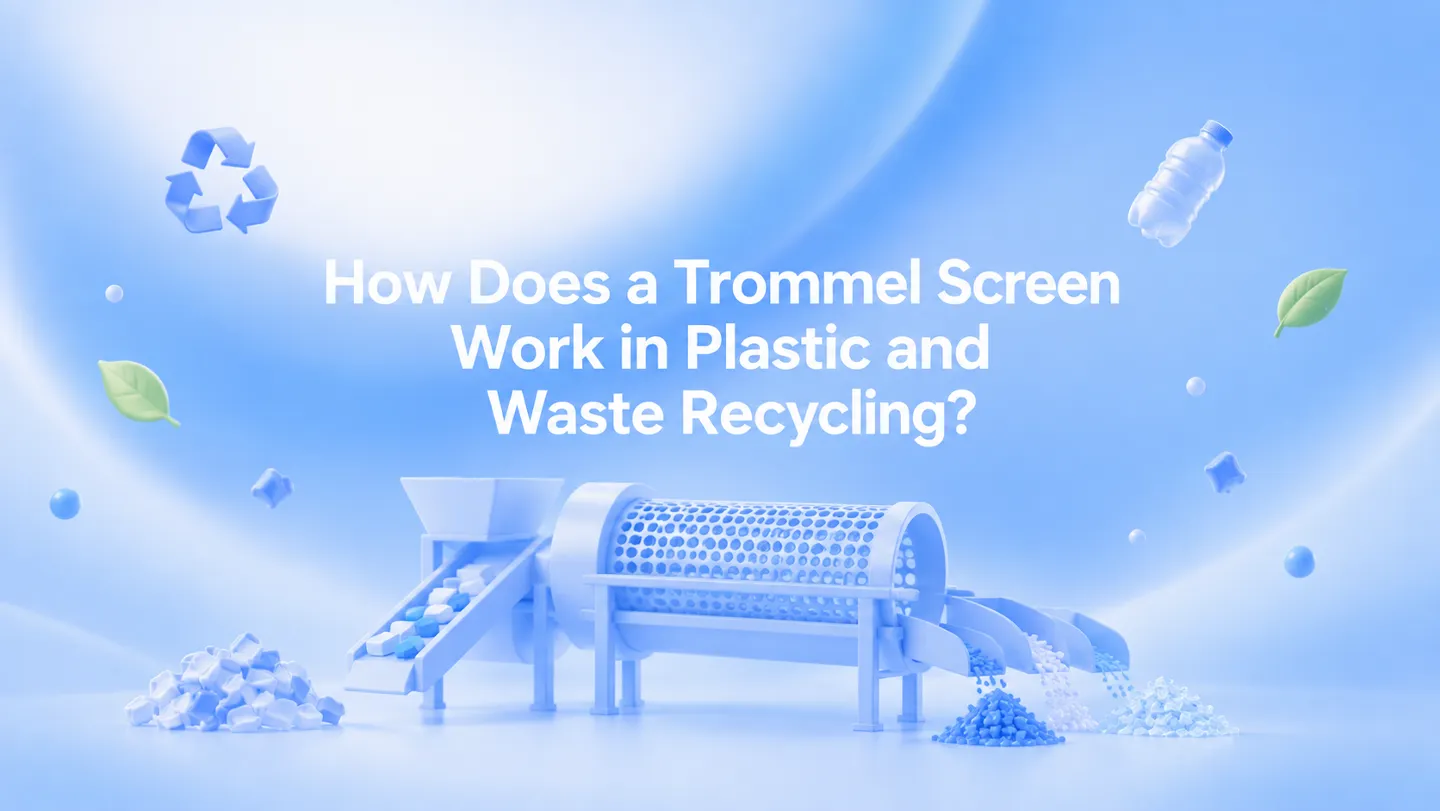
In any industrial recycling operation—whether you are processing post-consumer plastics, municipal solid waste (MSW), or scrap tires—contamination is your b...
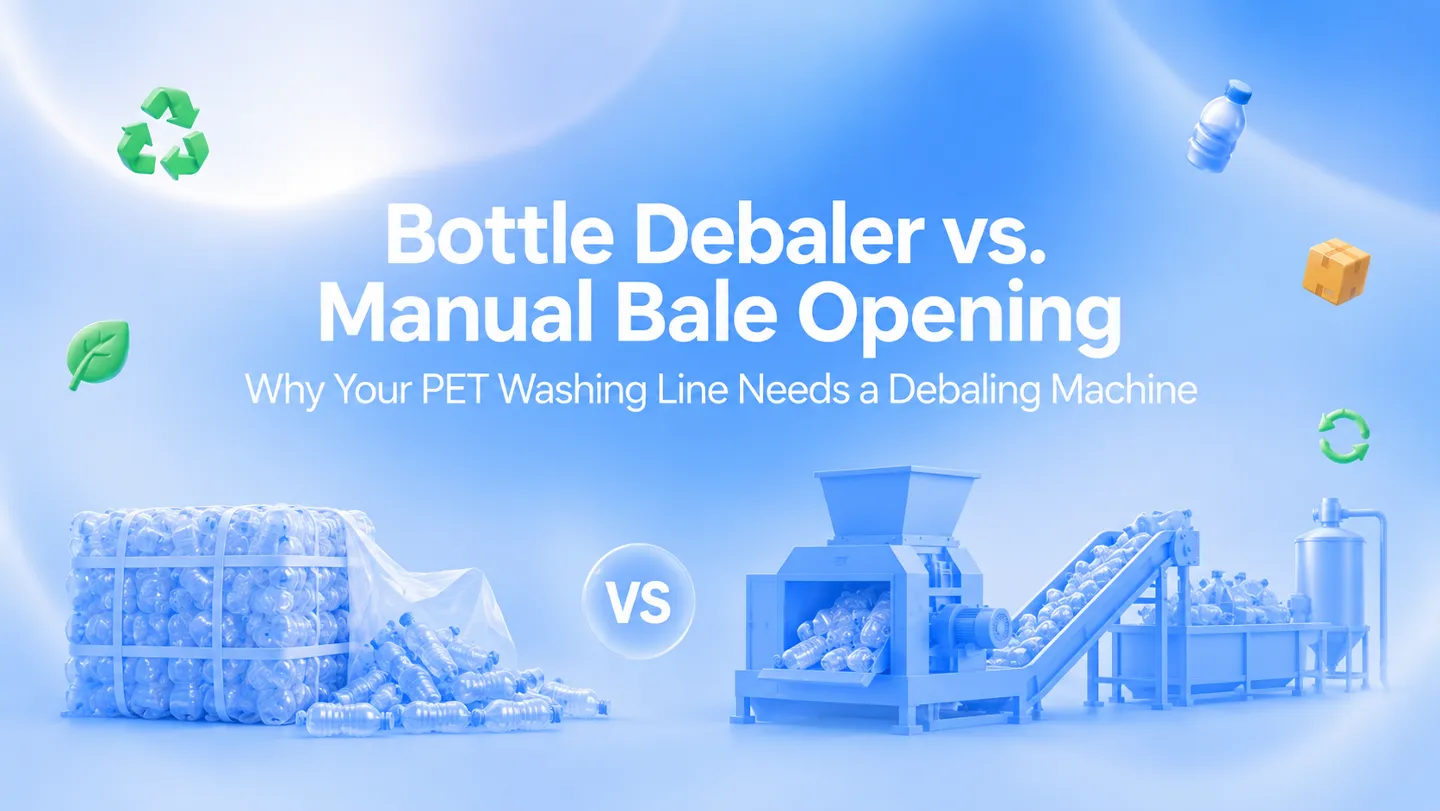
Efficiency in a plastic recycling plant begins at the very first step of the production line. When compacted bales of PET bottles or plastic films arrive at you...
For film waste, the short answer is: choose an agglomerator when you need dense, extrudable feed from LDPE, HDPE, or PP film, and choose a granulator when you a...
An agglomerator is a densification machine that turns light, fluffy plastic scrap — film, bags, raffia, stretch wrap — into dense, free-flowing granules usi...
Choosing between an eccentric eddy current separator and a concentric one comes down to one question: how fine is your non-ferrous fraction? For material above...
An eddy current separator price only makes sense when it is tied to a defined feed material, particle-size range, throughput, recovery target, and supply scope....
An eddy current separator works by exposing conductive, non-ferrous metals to a fast-changing magnetic field. That field induces circulating electrical currents...
A tire recycling business turns a waste stream that governments pay to remove into products that sell by the ton — but the difference between a profitable pla...
A rubber shredder is a low-speed, high-torque machine that cuts tires, conveyor belts, EPDM profiles, and molded rubber scrap into chips that downstream equipme...
A clarifier is the quiet workhorse of almost every wastewater treatment plant — the tank where suspended solids separate from water so the clean fraction can...