


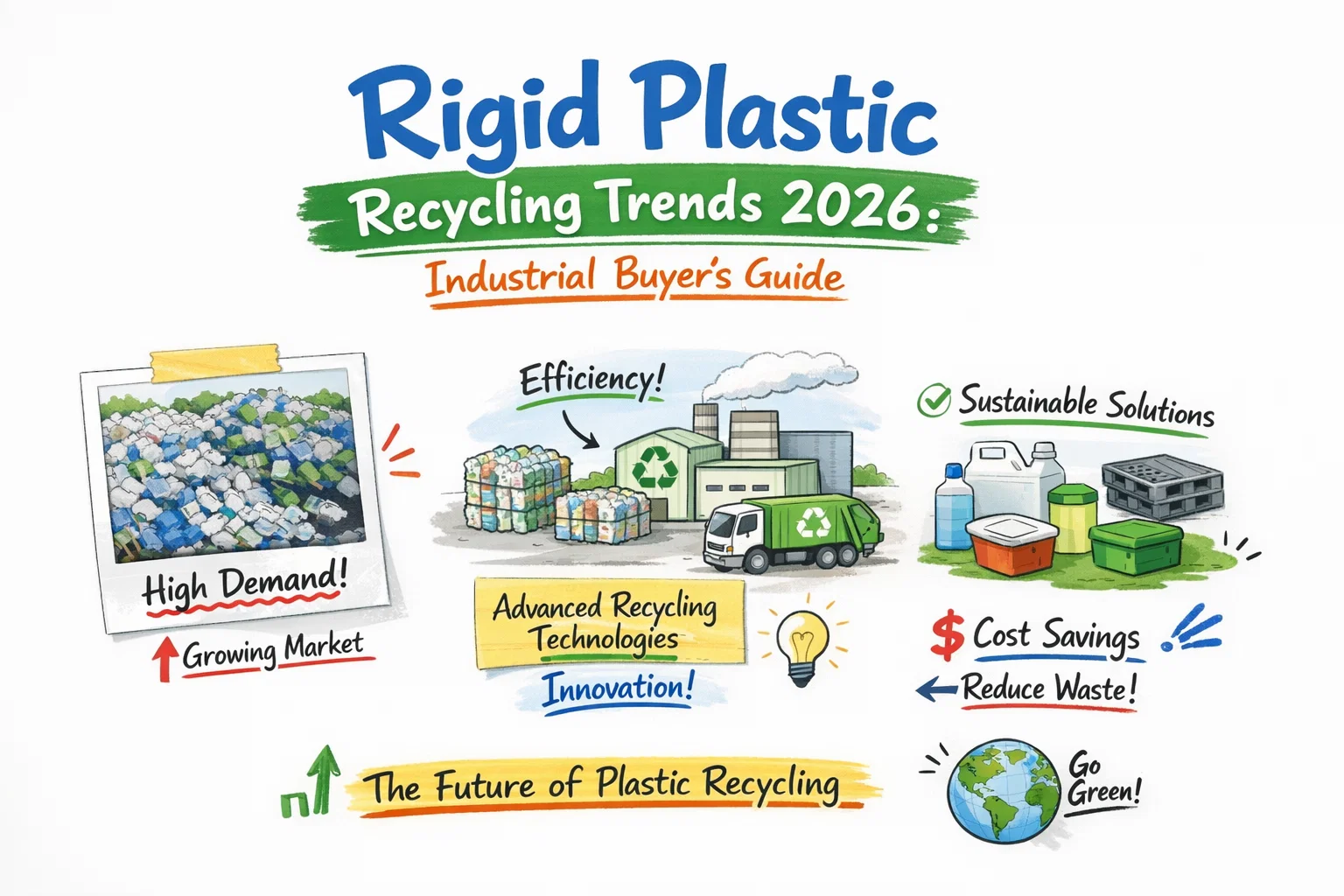
Rigid Plastic Recycling Trends 2026: The Industrial Buyer’s Guide to Profitable Sustainability
The landscape of rigid plastic recycling is shifting dramatically. As we approach 2026, the industry is moving beyond simple “waste reduction” into a highly regulated, profit-driven sector fueled by Extended Producer Responsibility (EPR) laws and global circular economy mandates. For facility managers and recyclers, this is no longer just about being green—it is about operational survival and seizing market share.
What Defines “Rigid Plastic” in an Industrial Context?
Before investing in machinery, it is critical to distinguish your material streams. Rigid plastics are dense, chemically resistant polymers that require heavy-duty processing. Unlike flexible films, they shatter or deform under high stress rather than stretch.
Common Industrial Rigid Streams:
- HDPE (Polyethylen hoher Dichte): Detergent bottles, chemical drums, pipes.
- PP (Polypropylen): Car bumpers, battery cases, food containers.
- ABS/PS (Acrylonitrile Butadiene Styrene/Polystyrene): Electronic waste (WEEE) and appliance casings.
Processing these materials requires more than a standard shredder; it demands a calibrated system capable of handling high-impact loads and stubborn contaminants.
Key Trends Shaping Machinery Choices in 2026
1. The Rise of “High-Purity” Washing Lines
The market for low-grade regrind is shrinking. Buyers in 2026 demand 99.9% purity. This trend is driving a technological shift toward Hot Washing and Friction Washing technology.
At Energycle, we are seeing increased demand for integrated washing lines that can strip oils, chemical residues, and labels from rigid plastics (like HDPE milk jugs or PP oil containers) in a single pass. If your pellets smell or contain adhesive residue, they will sell for a fraction of the market price.
2. Automation and AI-Driven Sorting
With labor costs rising globally, the days of manual sorting lines are numbered. Modern recycling plants are integrating Optical Sorters (NIR technology) directly into their washing lines. These systems automatically eject non-target polymers (like a PVC pipe in a PP stream) before they hit the granulator, protecting your machinery and ensuring consistent output quality.
3. Closed-Loop Water & Energy Systems
Sustainability is not just for the plastic; it’s for the process too. 2026 regulations will scrutinize the water footprint of recycling plants. Leading machinery now incorporates:
Machines equipped with water treatment recycling systems lower your operational overhead significantly over a 5-year period.
4. Handling “Difficult” Rigid Streams (EPR Compliance)
EPR laws are forcing manufacturers to take back difficult items like automotive battery cases Und agricultural chemical drums. These are toxic and hard to process. Standard machines fail here. The trend is moving toward specialized Shredder-Granulator Combinations that can withstand heavy abuse and corrosive residues without frequent blade changes.
The Challenges You Will Face (And How to Solve Them)
✅ The Opportunity
- High Margins: High-quality rHDPE pellets are trading at premiums near virgin resin prices.
- Subsidies: Governments are offering grants for upgrading to efficient machinery.
- Scalability: Modular machinery allows you to start with 500kg/h and scale to 2000kg/h.
⚠️ The Obstacles
- Kontamination: Paper labels, glue, and metal fragments can destroy extruder screws.
- Inconsistent Feedstock: Mixing different melt indexes causes pelletizing failure.
- Instandhaltungskosten: Cheap machinery vibrates excessively, leading to bearing failures and downtime.
Best Practices for Sustainable Operations
To ensure your facility remains competitive in 2026, adopt these operational standards:
- Invest in Pre-Shredding: Never feed whole bales directly into a granulator. Use a low-speed, high-torque shredder first to reduce wear.
- Filtration is King: Use dual-piston screen changers on your extruder. This allows you to swap dirty screens without stopping the machine, maintaining 24/7 production.
- Routine Blade Maintenance: Sharp blades produce less dust (fines) and use less energy. Establish a strict sharpening schedule.
💡 2026 Buyer’s Decision Guide
Before you purchase a Rigid Plastic Recycling Machine, ask the manufacturer these questions to ensure E-E-A-T compliance and ROI:
- Does the washing line include a hot washer? (Essential for removing glues and oils from rigid containers).
- What is the steel grade of the screw and barrel? (Look for bimetallic treatment to resist abrasion from dirty plastics).
- Is the water system closed-loop? (Crucial for lowering utility bills and meeting environmental permits).
- Do you offer local commissioning and spare parts? (Downtime kills profit; ensure your partner is accessible).
Why Energycle? The Advantage for Professional Buyers
The recycling industry is flooded with generic machinery that looks good on paper but fails under the stress of 24/7 industrial operation. At Energycle, we don’t just sell machines; we engineer turnkey recycling solutions tailored to the 2026 regulatory landscape.
Unser Rigid Plastic Washing & Pelletizing Lines are built with heavy-gauge steel and precision-engineered components designed to handle the toughest loads—from HDPE drums to PP crates. We prioritize Intelligent Automation, allowing you to monitor energy consumption and output quality in real-time.
Ready to Upgrade Your Recycling Infrastructure?
Don’t let outdated machinery hold your business back. Embrace the 2026 trends with equipment built for efficiency and high-purity output.
Get a Custom Solution Quote